

We may not be able to eliminate xenophobia entirely, but we can begin to embody a counter-model: the birth of a New Community. This is the heart of EcclesioGenesis—birthing new forms of church and society through a basic faith movement rooted in spiritual formation.
Thomas Ogletree insightfully wrote:
“Eschatology had the effect of generating a dual perspective: a vision of fulfillment in a coming new age, and an orientation to survival in the alien circumstances of the present age. This duality becomes a dialectic. This coming new age takes on substantive, though incomplete, reality in the present. One is already summoned to live on its terms even while one must continue to endure the afflictions of the age that is passing away. A new community, oriented to and based upon the new age, takes form in the midst of institutions which remain under the sway of the old. Consequently, those who dare to live for the new inevitably find themselves in conflict with those who cling to the old.”
To engage in this transformative work, we need discipleship as eschatological existence—a way of living shaped by the realities of the coming new age, yet grounded in the challenges of the old.
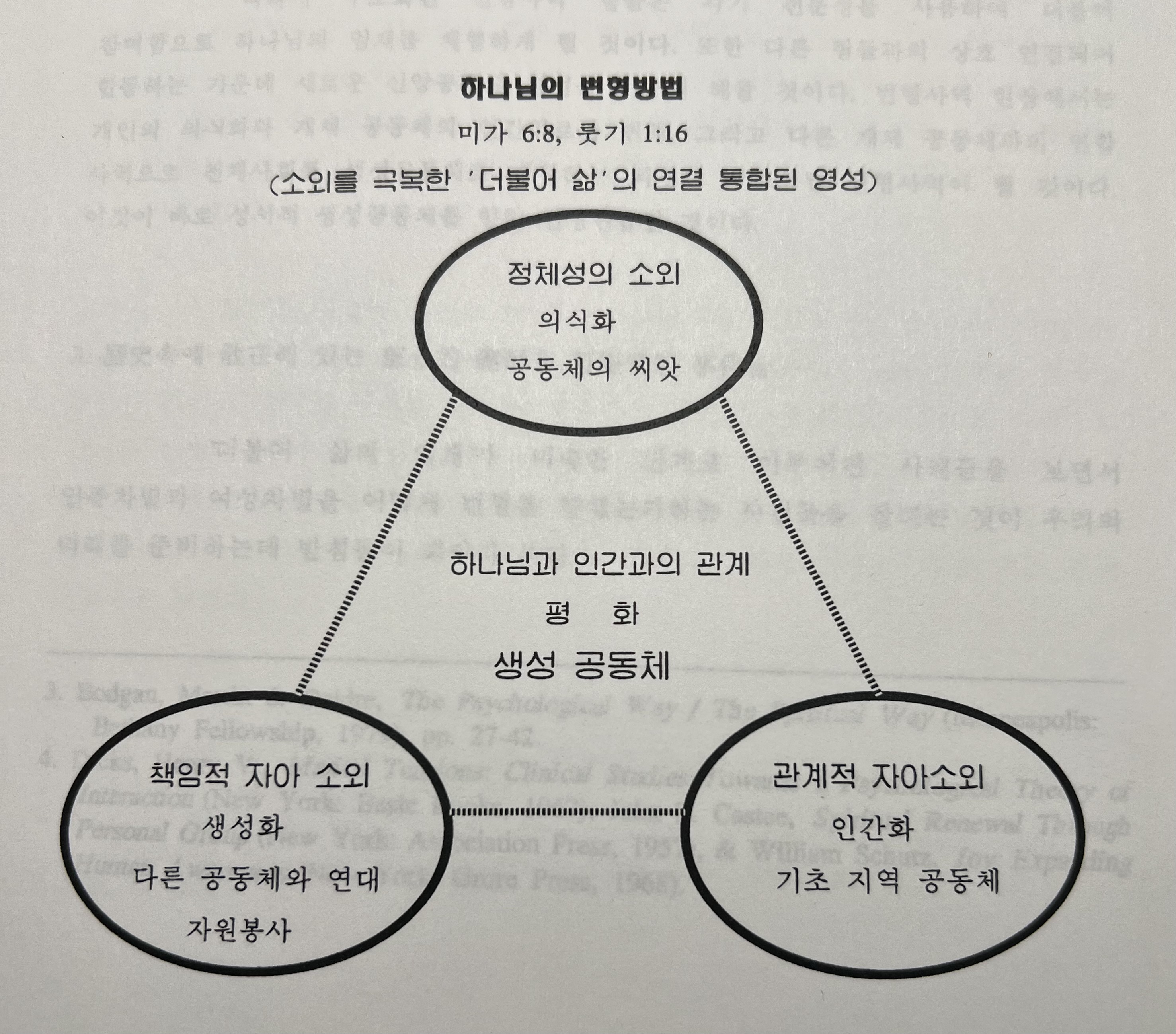
This project will embody that transforming praxis in three stages:
1. Recovering Individual Identity
PRAXIS ON EXODUSGENESIS — A Journey of Self-Discovery
This stage focuses on personal transformation, discovering one’s identity as the image of God, and leaving behind internalized alienation.
2. Recovering Relational Identity
PRAXIS ON CROSSGENESIS — A Journey of God-Discovery
This is the ecclesiological transformation. It emphasizes the relational nature of God, the church, and humanity through intentional small community life rooted in love and mutual respect.
3. Recovering Responsible Identity
PRAXIS ON LIFEGENESIS — A Journey of Eternity-Discovery
This stage focuses on community transformation. It includes not only human communities but also the natural world. It moves from domination of nature to harmony with it, emphasizing justice and stewardship.
Birthing the church in this way is a dynamic and ongoing process—taking place within the context of existing, often alienating structures. Yet it offers an alternative: God’s redemptive action through relationship, moving the deformed humanity from alienation into Shalom.
Three Forms of Alienation from Shalom (in both foreign lands and new homes):
- Alienation from Personal Integrity
→ Requires the mission of Self-Identity
→ There can be no shalom without knowing who I am. - Alienation from Interpersonal Respect
→ Requires the mission of Relational Identity
→ There can be no shalom without knowing what I am in relationship to others. - Alienation from Structural Justice
→ Requires the mission of Responsible Identity
→ There can be no shalom without the church’s willing suffering and solidarity with others to discover where I am.
To “birth the church” is to continually engage in spiritual practices that transform alienation into reconciled life, rooted in true Christian faith for the sake of shalom.
Therefore, this project will focus on practicing the transformation of alienated life into reconciled life through what I call Integral Spirituality:
- Personal Identity – the Integral Self
- Relational Identity – the Communal Self
- Responsible Identity – the Reforming Dynamics of Spiritual Justice
These practices aim to heal the wounds of loneliness, distrust, and low self-esteem—and to build a life together rooted in structural justice, interpersonal respect, and personal integrity.

 Daily Sauntering
You must be logged in to post a comment.