
“Gender Discrimination in the Church and the Restoration of Community”:
1. The Role of the Church in Gender Discrimination
Christianity played a significant role in offering Korean women a pathway to liberation from the oppressive Confucian patriarchal system that dominated the Joseon Dynasty. As historian Moon Il-pyeong has noted, the introduction of Christianity made substantial contributions to dismantling gender discrimination. However, alongside its liberative potential, Christianity also absorbed and internalized the patriarchal power structures entrenched in Korean society, reinforcing them within the Korean church. The failure of Korean Christianity to become a fully liberating force for women can largely be attributed to the conservative theological orientation of early missionaries, who adhered strictly to fundamentalist doctrines such as biblical literalism and inerrancy.
Although these missionaries advocated for gender equality and women’s right to education, their perceptions of women remained rooted in traditional Western Christian gender biases. For instance, the principal of Ewha School, Mary F. Scranton, defined the purpose of women’s education as cultivating the virtues of the “wise mother and good wife,” thereby confining women’s roles primarily to the domestic sphere. Moreover, Mrs. Scranton imposed strict behavioral codes on women under the guise of providing “thoroughly Korean” education.
While women’s liberation was being promoted in certain aspects, it was simultaneously hindered by the convergence of Western Christian gender bias and Korean Confucian patriarchy. In this climate, gender discrimination within the Korean church intensified. In fact, the church has often functioned as a powerful ideological apparatus that has helped internalize and reinforce women’s subordination to men—despite women comprising 70–80% of the church membership.
2. Gender Discrimination Within the Church
From its inception, the Korean church has had a disproportionately large number of female congregants. Given the limited number of male pastors in the early period, many women evangelists (yeojeondosa) played a vital role in church revival and evangelism. Despite their contributions, gender-based wage disparities persisted; in 1922, for example, a female evangelist earned around 20 won compared to 100 won earned by her male counterparts. Additionally, missionaries often expressed dissatisfaction when women evangelists were married, encouraging the appointment of single women instead.
Such patterns of inequality continue even today. In the Methodist Church, although the ordination of women pastors was approved without discriminatory provisions in 1930, a clause was added in 1972 revoking the right of married women pastors to serve as lead ministers—a clause that was only repealed in 1990. In the Presbyterian Church (Tonghap), women demanded the right to be ordained as elders and pastors as early as the 1933 General Assembly, but these proposals were rejected. In contrast, the Presbyterian Church in the Republic of Korea (PROK) began ordaining women elders in 1956 and approved female pastoral ordination in 1974.
Currently, only 7 out of 58 denominations in Korea officially ordain women pastors. Even within these, female pastors often play supportive roles due to the male-preferential attitudes of congregants and the patriarchal church structure, making full pastoral ministry difficult for women. In many instances, churches established and nurtured by women pastors or evangelists are later handed over to male ministers. Furthermore, female evangelists who have served for many years often receive salaries comparable to newly graduated male ministers. In fact, their pay may be just a quarter or a fifth of that given to ordained male pastors. The introduction of specialized roles such as “visitation evangelist” has further devalued the status of female clergy, making such positions synonymous with low wages and limited authority.
The Korean church has thus perpetuated patriarchal domination—long a mechanism for female oppression in Korean society—under the guise of gospel truth. Women are excluded from policy-making bodies, and their roles are limited to servitude. Sacrifice and service are presented as spiritual virtues, relegating women to behind-the-scenes support roles in church events.
In this environment, the emergence of feminist theology aimed at empowering women has been met with severe resistance. It has even been labeled as “a theology more dangerous than communism.” A statement distributed at a 1990 denominational General Assembly opposing the ordination of women read: “To support women’s ordination is tantamount to participating in the Shinto shrine worship. Therefore, the church must expel those who promote women’s ordination just as it condemned neo-orthodox theologians.” Such declarations clearly demonstrate the extent of oppression women continue to face within the Korean church.
The deeper reason behind this is the alliance between the gender-discriminatory ideologies of Western Christianity introduced by missionaries and traditional Confucianism. While Christianity was initially seen as a symbol of women’s liberation, it ended up legitimizing patriarchal domination under the banner of Christian truth.
A unique feature of gender discrimination in Korean history is that it became entrenched alongside the influence of foreign powers. Thus, the issue of women’s liberation in Korea is intimately tied to questions of national identity and self-determination. Christianity is not exempt from this history. The ongoing gender discrimination within the church results from the hybridization of Confucian patriarchy and American fundamentalist theology. In other words, syncretism within the Korean church has contributed to the oppression of women.
Consequently, the pursuit of gender equality within the church must be seen as integral to the restoration of the church’s authentic identity. If the church continues to discriminate against women under the pretense of doctrinal purity, the gospel ceases to be good news for women. The gospel must be a gospel of liberation. Any doctrine that fails to liberate but instead oppresses women is fundamentally anti-gospel. Doctrine must be situated within the historical movement toward liberation.
To achieve this, the church must expose and resist patriarchal structures of domination that align with power. It must identify and challenge the systems that suppress human dignity. Recognizing the patriarchal conditions embedded within the church is a necessary step toward forming a gender-equal community—one that can become a transformative witness for the broader liberation from gender inequality in Korean society.
3. The Church as a Community of Creation: Its Anticipated Role
Has the Korean immigrant church truly offered a vision and model of communal life in the immigrant society? Has it provided a moral foundation? The failure to do so has led to the loss of communal identity within the church. When the church loses this communal nature and instead mirrors the competitive society focused on individual gain, it ceases to be the church in its true sense. Therefore, the recovery of the church’s communal character is not optional—it is an essential mission. Such a recovery is only possible when the church restores its moral and spiritual integrity. Unfortunately, we must honestly confess that the Korean church has not adequately fulfilled this role. Several reasons contribute to this failure.
1) The Church’s Irresponsible Egoism
Firstly, despite facing social disintegration and moral crises, the Korean church has persistently focused on individual salvation and church growth. While both are necessary, an exclusive obsession with these concerns has turned the immigrant church into a self-centered community, concerned only with its own members. A church that is indifferent to the problems of society eventually becomes apathetic toward its own internal injustices and moral failings.
Escaping a world filled with contradictions, injustice, and corruption, many believers have come to understand Christianity as a personal guarantee of salvation and blessing—a safe haven. This interpretation of Scripture and faith is deeply problematic. It resembles primitive religion or shamanism, where ethical responsibilities and community concepts are absent. The focus lies only on personal healing, divine blessings, and accident prevention, with no concern for eliminating the selfish factors that prevent communal life.
In such a church, the image of Christ is obscured, and the church becomes alienated from the world. This “mode of muteness” results in excessive subjectivism, leading to intensified selfishness (“Only Me, Only Us”). Eventually, believers become trapped in an exaggerated self-image and fall into deep alienation. Thus, today’s church must emerge into a space of honest dialogue before God. Otherwise, like the people of Babel, we will continue to pursue material greatness in the name of God.
Secondly, the immigrant church has clung too tightly to a “heavenly faith” disconnected from this world. Faith has been emphasized solely in terms of personal belief, and one’s relationship with God has been considered the only valid measure of faith. However, while turning attention to lofty, sacred ideals, the world has become increasingly violent and corrupt.
Faith without the practice of love, spirituality that bears no fruit in daily life, and vertical faith that lacks responsibility toward neighbors—this is what has led the Korean immigrant church to its moral collapse and crisis of community. The dangerous result is that one may joyfully sacrifice family, work, or business for God, divide the church, or even harm others—all under the name of faith.
Churches have emphasized how to pray, read the Bible, meditate, worship, and tithe, and why attendance is important. Yet, they have failed to train believers in practical love and trust for life in families, schools, workplaces, and communities. This disconnect has left the immigrant church like salt that has lost its flavor. The bitterness of this becomes evident when churches or members suffer due to social issues. Rather than addressing systemic problems, they internalize the anger and resolve it through prayer—returning to God the very responsibility He gave them. This is not piety, but spiritual irresponsibility.
Such compensation psychology—giving anger back to God in prayer—reflects another “mode of muteness”: an extreme objectivism that surrenders everything to God without question. It leads to exaggerated images of God (Exaggerated God) and blind submission (Submissiveness), which can cause self-alienation and, eventually, deep spiritual rage when one feels ignored or abandoned.
The common thread across all these issues—alienation, anger, or egoism—is the loss of dialogue. Life is led into silence. Where dialogue with God and others breaks down due to egoism or blind submission, life withers and dies. True communion and reconciliation only emerge through genuine conversation.
To overcome these misunderstandings, we can turn to St. Bernard of Clairvaux’s four stages of love:
- Love of self for one’s own sake
- Love of God for one’s own sake
- Love of God for God’s sake
- Love of self for God’s sake
Only through radical self-denial can one reach the fourth stage, where love is no longer self-centered but expands to embrace all humanity and nature. True love for God must lead to concern and action toward neighbors. When Jesus told Nicodemus that one more thing was needed for eternal life, He pointed to giving away his possessions to the poor—not to make him poor, but to realize that the poor are his brothers and an extension of himself. This is a true vision of community.
2) The Contradiction of Secular Materialism and Megachurch Ideology in Immigrant Churches
In reality, even churches that emphasize holiness, purity, and female modesty are under the strong influence of secular values—particularly materialism. Success and status are measured by wealth; faith is evaluated by financial status; blessings are equated with material prosperity. Such values are widespread within immigrant churches.
The obsession with worldly success, conspicuous consumption, and luxury is undeniably present. Many churches resemble corporate kingdoms, and internal religious factionalism rivals political infighting. Independent churches are increasing. How often do churches truly collaborate in unified ministry? How often do they contribute to broader social initiatives? Most churches focus only on projects tailored to their congregation’s preferences or numerical growth. Is any training for communal living being conducted within churches?
Furthermore, how often do churches unite to model communal life in society? Despite proclaiming spiritual and moral values, churches are often fixated on material, individualistic, or institutional gains. In this contradiction, we see within churches the same collapse of community that is happening throughout society.
3) The Church as the Last Fortress for Communal Restoration
What can the church do to recover community and demonstrate the wisdom of life together? It must now act. It must train its members. Genuine faith must be both socially engaged and spiritually grounded. The church must lead in transforming the deep-seated patriarchal assumptions of society through both male awareness and female empowerment.
The practice of living together in harmony is at the heart of Christian love. It is not an abstract, idealized life detached from the world. It is a life that can be lived in everyday interactions, among neighbors, and through our daily work. Living in community restores moral and ethical life in Christ.
4. Generative Communities Resisting Gender Discrimination
For many modern feminist activists, women’s response to domestic violence by men cannot simply rest upon advocating traditionally female values such as love and nurturing. They argue that emphasizing such traits is itself a product of internalized miseducation stemming from the socialization process that portrays women as timid and weak. In the current societal order, where women are oppressed and positioned as passive beings in need of protection, it is impossible to establish truly equal and peaceful relationships. A social structure that “protects” women legitimizes and tolerates male violence within the household. Therefore, the first step for women must be to cast off the shackles of fear and the self-deprecating consciousness instilled in them. Feminist activists have asserted that even though most women may be physically smaller than men, that does not justify their becoming victims of unchecked aggression.
Discrimination does not occur among men in workplaces simply based on physical differences—so why should women’s physical condition become a criterion for discriminatory treatment? Women, too, can prepare themselves for self-defense through military training. In combat situations, when male soldiers tremble in fear, female soldiers may courageously advance with a uniquely self-sacrificial spirit, boosting the morale of others. Joan of Arc is a notable example. Today, women serving in the national defense forces of Switzerland and Israel further demonstrate this reality. The highest reward gained by such trained women is a deep sense of self-respect. They no longer feel powerless in the face of potential assault. They send a clear message to the male-dominated world that they can no longer be easily overpowered.
Even though feminists may seek a new consciousness of self-respect to resist male violence, few aspire to match violent aggression with aggression. Rather, they pursue a new model of human identity—one that transcends both dehumanizing invasions of others and the silent consent or support of individual or collective violence stemming from fear. For some feminists, this vision presents a new pathway to realizing the ideal of nonviolence—not as passive submission, but as courageous resistance to injustice that affirms, rather than denies, the humanity of others.
True nonviolence must be grounded in a solid realization of one’s own worth. Acts of violence can never be an expression of one’s true self-worth; instead, they are rooted in the anxiety of weakness, which is easily converted into hostility toward others. The most aggressive men are often those who harbor the deepest fears about their own inadequacies. Nonviolent training must be based on inner development and self-empowerment. A person empowered with true capability will neither tolerate their own moral decline nor that of others.
All oppressors, inevitably, become anti-Christ figures, because Christ, in whom we believe, came to liberate the oppressed from all forms of oppression (Luke 4:18). The logic of gender discrimination—even when unconscious—ensnares not only men but also women. Therefore, Christian faith today bears the mission of urgently healing those infected by gendered cultures, both in society and in the church. The oppressive father, husband, colleague, or pastor must be reborn. Only then can we become Christians who truly work for peace, for national reunification, and for global harmony.
In this light, the fight against gender discrimination is intrinsically linked to the pursuit of peace and facilitates the formation of new relationships. Feminism, at its core, is a movement that rejects the power dynamic of domination and submission. It refuses the logic of victory and defeat, where one side’s triumph must mean the other’s loss—thus perpetuating endless warfare. Feminism challenges all social structures based on power dynamics, from interpersonal gender relations to international competition. Instead, it seeks another kind of power: the power of equality and shared dignity within community. This vision of community is founded on the mutual relationality of life—between male and female, superiority and inferiority, races, humanity and nature, water and air. The guiding principle is this: unless everyone wins, no one wins. Feminist thought has come to recognize that provoking war leads to collective ruin—the destruction of the planet itself. Modern feminism thus realizes that human survival is inseparable from the survival of Earth. A shift in self-consciousness toward desiring the well-being of others in community life will surely bring transformation not only to traditional men but also to traditional women.
The transforming praxis toward a generative community is, therefore, at its core both a feminist and peace movement. When we create spaces for dialogue and begin that dialogue from a place of equality, even if the community looks the same outwardly as before, a new kind of life—a new relationship—is born within it. This is the transforming praxis. It is not a new concept. Radical Christianity has long offered this alternative. It means rooting oneself in a new hope for authentic selfhood and community. This hope affirms that we are one humanity under one God, descendants of one shared ancestry, and participants in one interdependent life community.
On this foundation, we must oppose all social institutions that generate wealth and privilege for a few by impoverishing, corrupting, or excluding others. Whether such institutions oppress and dominate women or pursue false security through nuclear destruction driven by competitiveness—the opposition is the same. Only upon this new hope can men and women together co-create this Earth.
5. A Living Example of a Life-Giving Community
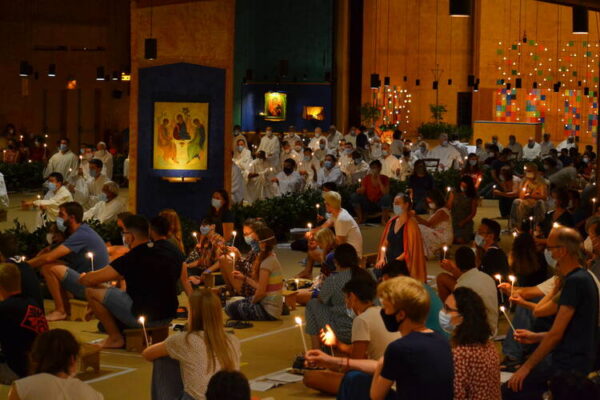
One such example is the Taizé Community, which practices reconciliation and sharing. The Taizé Community began in 1940 when a young man named Brother Roger, the son of a Protestant pastor, came from Switzerland to a small hill in the poor and abandoned village of Taizé, 110 kilometers from Lyon in eastern France. Today, about 90 members from 25 countries form the core of this community, including Roman Catholics, Anglicans, Presbyterians, Lutherans, Methodists, and Baptists. Though their religious backgrounds differ, they have all committed to live together in a community of unity, taking a vow of celibacy. They share everything—material possessions, talents, and love—in the spirit of brotherhood. They strive to live like the early Christian church.
“They devoted themselves to the apostles’ teaching and to fellowship, to the breaking of bread and to prayer. Everyone was filled with awe, and many wonders and signs were performed by the apostles. All the believers were together and had everything in common. They sold property and possessions to give to anyone who had need. Every day they continued to meet together in the temple courts. They broke bread in their homes and ate together with glad and sincere hearts, praising God and enjoying the favor of all the people. And the Lord added to their number daily those who were being saved.” (Acts 2:42–47)
They pray together three times a day—morning, noon, and evening—while working for their livelihoods in various roles such as researchers, writers, teachers, and spiritual counselors. Unlike Israeli kibbutzim or Korea’s Community of Love, a key difference is that Taizé members are celibate men.
While most brothers live in Taizé, some reside in small communities around the world for months or years. Still, they remain part of the same community, sharing in the struggles of the poor and suffering in diverse locations. This also serves as a form of encouragement to churches worldwide. Those seeking God and desiring to follow Christ are always welcome. Taizé has become a meeting place for people from many nations. Its church is now often called the “Church of Reconciliation.” Young Christians are sent to live there for a few weeks and then return to their home churches in Europe with renewed spiritual vigor.
The poor and suffering are always especially welcomed in Taizé. During WWII, Brother Roger received Jews and refugees fleeing the Nazis. Later, he also welcomed war-orphaned children. Unemployed laborers from various European nations and immigrant families from Spain and Portugal found refuge in Taizé. Some of the Vietnamese “boat people” who fled their country a decade ago settled there. Once a year, Brother Roger himself spends time in the most destitute areas of Haiti, Calcutta, Ethiopia, or Mauritania.
The key characteristics of the Taizé Community are:
- Community is only possible through trust, and forgiveness born from trust sustains community life.
- They seek to live a Christ-centered life, desiring to understand God’s love with open hearts—not through emotionalism or denominationalism, but through a transformative faith that changes lives. They follow the Christ who lived as one among humans.
- Each member eventually returns to their home. During their stay in Taizé, they learn about prayer, forgiveness, Scripture, and God through humble sharing. They engage in personal reflection, revisit their past, and share experiences of pain, struggle, and hope. They pray and sing together, and upon returning home, they engage in church life and serve their communities. In this continuity of life, true hope opens up. The transformation found in Christ manifests as change in their local communities.
They refuse to label themselves with the name “Taizé.” Their focus is on the gospel, Christ, the church, love, service, prayer, and faith. In everyday life—at work, in school, among neighbors—they aim to live out these values, building communities of reconciliation rooted in the life of Christ.
Though not a formal school, Taizé received the UNESCO Prize for Peace Education in the fall of 1988. When people from around the world gather to pursue faith together in a divided world, Taizé becomes a living school of faith. If Christians do not serve as agents of trust in their society, workplace, and schools, then who will?
A church formed by people who have reclaimed their identity through this kind of awakened consciousness becomes a community of dialogue and equality. As such, it can transform society into a life-giving community through volunteerism. The church thus becomes continually renewed—not just in name or buildings, but in essence. This work is a lifelong practice for Christians until the day God’s reign of freedom, equality, and love is fully realized throughout the world.
[Notes]
- Woo-Jung Lee, A Hundred-Year Journey of Christian Women, (Seoul: Minjungsa, 1985), p. 35.
- Ibid., p. 35.
- See Chapter 6, p. 145, “The Struggles of Women Toward Equality.”
- Ibid., p. 67.
- Ibid., p. 69.
- Korean Association of Women Theologians, A Survey on the Status of Korean Female Ministers, 1989.
- Walter Brueggemann, Finally Comes the Poet, (Minneapolis: Fortress Press, 1989), pp. 44–49.
- Ibid.
- Quoted from the author’s unpublished research paper, The Mysticism of St. Bernard of Clairvaux (Madison: Drew University, 1982):
Bernard of Clairvaux (1090–1153 A.D.), the son of the lord of Fontaines-les-Dijon in Burgundy, entered the New Monastery at Citeaux in 1112. He brought with him around thirty companions, more than doubling the monastic community. Just four years later, he was selected to lead a new foundation named Clairvaux (1115). Due largely to Bernard’s influence, the Cistercians had expanded to 343 houses throughout Europe by the time of his death in 1153. Although Bernard was not the initial leader of this new monastic reform movement, he became a leading figure in Europe during the first half of the twelfth century. His influence was so significant that historians often refer to this era as the “Age of Saint Bernard.”
Cf.:
1. Bernard of Clairvaux, Saint Bernard on the Love of God, trans. Terence L. Connolly (Westminster: The Newman Press, 1951);
2. ———, The Steps of Humility, trans. George Bosworth Burch (Notre Dame: University of Notre Dame Press, 1963);
3. Watkin W. Williams, Saint Bernard of Clairvaux (Manchester: Manchester University Press, 1952);
4. Ailbe John Luddy, Life of Saint Bernard (Dublin: Browne & Nolan, 1963);
5. Bruno Scott James, Saint Bernard of Clairvaux (New York: Harper & Brothers, 1957);
6. Georges CAT taut, Saint Bernard of Clairvaux, trans. Ena Dargan (Dublin: Clonmore & Reynolds, 1966). - Translated by Soon-Im Lee, “The Taizé Community – Prospects for a New Community Movement,” Christian Thought (Seoul: The Christian Literature Society of Korea, May 1989), pp. 47–53.


 Daily Sauntering