
Chapter 10: Developmental Pastoral Competency for Transforming Praxis
Based on the theoretical analysis of the research questions examined thus far, the study group proposed a pastoral experiment focused on humanizing ministry through the Korean-American Women’s United Mission, as a way to practice transforming praxis for the purpose of church formation. Through this biblically grounded transforming praxis aimed at ecclesiogenesis, it is hoped that all forms of alienation caused by discrimination may be transformed into peace. It also aims to bring liberation to women in intercultural families who suffer the unbearable burden of racial and gender-based discrimination and dehumanization.
The initial subject of this experimental pastoral ministry was the Embury Korean congregation, and since October 1993. From the beginning until the present, the Korean-American Women’s United Mission, which was born as a result of this experimental ministry, has naturally become a central participant. Furthermore, the intercultural families living in and around New York City are also included in the scope of this study. Even before the proposal of this thesis was accepted in October 1991, the Korean-American Women’s United Mission had already been founded on August 23, 1991, through the author’s vision of generative ministry (saengseong sa-yeok, 생성사역). As mentioned in the introduction, a simplified but intentional process of conscientization, humanization, and generation was conducted to receive approval from the members of Embury Church.
The first phase of this process is conscientization—a healing journey where individuals reclaim their identity. Once the conscientized individual rediscovers the possibility of dialogue, the restoration of a relational self within the framework of equality becomes the foundation for the church’s authentic identity to emerge—this is the generative process. When relationships are formed as a basic community, the church moves to the third phase, where it voluntarily engages in service to recover the responsible self. This is the priestly image of a chosen people sent into the world. At this point, the church truly becomes a missional church—a space where individuals can find the foundation for their identity and calling.
Summary of the Goals, Implementation Strategies, and Evaluations of This Experimental Ministry
1. Goal of Transformation
To implement these goals, an Integral Spirituality Workshop was established within the Korean-American Women’s United Mission (KAWUM), offering annual training sessions to fulfill each objective.
1) Transforming Practice for Identity Formation
Disintegration within families caused by alienation and inner division can begin to be healed by recovering the lost self. For this purpose, the Integral Spirituality Workshop offers a basic spiritual training course for personal healing once a year. The training is conducted in a three-day retreat format, including psychological assessments, counseling, lectures, Bible study, and worship. Tools and materials used—drawn from the author’s own training and described further in the section on pastoral competency development—include:
- (1) MMPI-2 (Minnesota Multiphasic Personality Inventory)
- (2) MBTI (Myers-Briggs Type Indicator)
- (3) Lecture on Self-Discovery I (Homecoming)
- (4) Focusing – for anger treatment
- (5) Lecture on Self-Discovery II (Enneagram)
- (6) Experiencing God – Rainbow Meditation
- (7) Breathing and Fasting (brief sessions before gatherings)
2) Transforming Practice for Relational Self Formation
Family conflicts and high divorce rates are common issues in immigrant communities. Improving spousal relationships is essential for building healthy families and, by extension, a healthy church. The formation of the relational self within the family lays the groundwork for authentic ecclesial identity and readiness for mission.
Domestic violence was identified as one of the most serious relational issues in immigrant life. In response, the study group established a project for abused women as part of the second phase of training in the Integral Spirituality Workshop II-1. This training aims at humanization through relational improvement. Couples who complete this program can become effective missionaries against domestic violence. This training is also conducted annually in a retreat format, similar to Phase 1. Tools used include:
- (1) Conflict Inventory & Self/Partner Knowledge Inventory
- (2) FIRO-B & FIRO-F (interpersonal needs assessments)
- (3) Relationship Therapy
- (4) Getting to Yes (negotiation strategy)
- (5) Six Thinking Hats (creative problem-solving)
After completing the Phase 2 couples’ training, couples may—after applying what they’ve learned for about three months (but within ten months)—participate in a family spirituality training session with their children. This session addresses issues between parents and children and is also offered once every two years in retreat format. Participation requires both parents and children to attend together. Tools include:
- (1) Music therapy
- (2) Healing through self-created skits
- (3) Joint lectures for parents and children
- (4) Separate lectures for parents and children
- (5) Movement therapy
Graduates from this program can then join the team working in domestic violence prevention.
3) Transforming Practice for the Responsible Self
Once couples and families have completed the above training and have participated in domestic violence prevention efforts, they may move on to the third phase: life-practice training, which focuses on recovering the responsible self. This phase represents the ultimate stage of liberation from alienation and serves as an active, preventative strategy against social darkness.
This phase is lived out through voluntary suffering, in which participants form life-giving base communities within society. A key training context is the ministry to marginalized sex workers in immigrant communities. Practical training for transforming praxis is conducted through such outreach. Tools used include:
- (1) Networking: organizing support circles among sex workers and volunteers
- (2) Voluntary Suffering:
- Prison visitation (Bible study, worship, counseling for those on probation)
- Support for probationers (shelter, vocational/faith education, participation in renovation or construction projects, interpersonal healing, counseling, and spiritual formation)
- Fundraising campaigns
2. Implementation Strategies for Achieving the Goals
1) Implementation Strategy Plan for Achieving Transformational Goals
(1) Transforming Practice for Identity Formation
Basic Course (Individual Workshop)
Integral Spirituality Workshop (I)
- First Session Held: July 18–20, 1994 (conducted as a summer camp for intercultural families)
- Target Participants:
1. Anyone aged 18 and older may participate.
2. After completing the basic training, participants are encouraged to choose the intermediate course after practicing for 3 months and within no more than 8 months. - Group Size: Designed for 20–40 participants (35 attended the first session).
- Frequency: Begins each year in May and is offered once every 3 months.
- Duration: Thursday to Saturday (3 days)
- Location: Rotates regionally (e.g., Wisdom House in Connecticut)
- Facility: Held at a retreat center or hotel (e.g., Catholic convent)
Celebrating Life
<Personal Training Schedule>
| Time | Day 1 | Day 2 | Day 3 |
|---|---|---|---|
| 8:00 AM | Registration & Breakfast | Breakfast | Breakfast |
| 8:30 AM | Room Assignment | ||
| 9:00 AM | (1) Mental Assessment | (6) Self-Discovery I-3 | (9) Self-Discovery II-1 |
| (2) Personality Test | |||
| 10:15 AM | Break | Break | Break |
| 10:30 AM | (7) Focusing | (10) Self-Discovery II-2 | |
| 12:00 PM | Lunch | Lunch | Lunch |
| 1:30 PM | (3) Self-Discovery I-1 | (5) Personal Counseling | |
| 3:00 PM | Break | Break | Break |
| 3:30 PM | (4) Self-Discovery I-2 | (5) Personal Counseling | |
| 6:00 PM | Dinner | Dinner | Dinner |
| 7:30 PM | (5) Personal Counseling | (8) Experience & Healing | |
| 10:00 PM | Sleep | Sleep | Sleep |
(2) Transforming Practice for Relational Self
The church, when individuals find their true identity in God, naturally becomes a community of relational selves, as God is relational. Therefore, the church is not about events but about people. In other words, the church is the place of the cross, where relationships between God and humans are formed. The church can be understood as a collective identity.
Then, as an extended family, what can the church do today to counteract gender discrimination? Training in living together toward wholeness of life is essential. In response to dehumanizing alienation that disrupts communal living, this project aims to support women who suffer from domestic violence through the Korean-American Women’s Mission Fellowship. This project presents a policy alternative for healing and restoring the relational self.
<1> Problem Analysis
Wife battering most frequently begins within the first two years of marriage, and the rate decreases as the marriage continues. However, more women who were physically abused before marriage experience abuse than those who begin experiencing abuse ten years after marriage. This suggests that early tolerance or initiation of abuse is related to frequent, repeated violence.
From the perspective of the abused, initial tolerance of violence often leads to long-term, habitual victimization. For the abuser, failure to control the first act of violence often results in entrenched behavior that becomes increasingly difficult to heal or correct.
Commonly cited reasons for abuse—based on client reports—include violent temperament, alcohol dependence, extreme jealousy, and infidelity. While abusers may cite one of these as a justification, in reality, the underlying causes are often complex and interrelated: violent temperament combined with alcohol dependence, financial issues with inferiority complex, premarital sexual relations with jealousy, dissatisfaction with sexual life along with infidelity—all can lead to violence.
Such complex motives often lead to habitual wife abuse. While most violence is carried out by hand or foot, some cases involve weapons, burns from cigarettes, or stripping and beating—severe forms that often cause major injuries or trauma. Mental illness was reported in 62 cases, revealing the severity and brutality of domestic violence.
In many cases, even after severely harming their wives, abusers show no remorse—instead, they reoffend, confine, or expel their wives with shameless attitudes.
In such situations, abused wives often either endure silently, run away, or simply apologize to avoid further harm. Many feel helpless. Moreover, men who abuse their wives often also abuse their children. These consequences can severely damage not only individual families but also the growth and health of the Korean-American community.
<2> Policy Alternatives
• Public Awareness Campaigns (To be maintained throughout the initial 5-year plan)
Efforts must be made to eliminate gender-based discrimination. This must be a community-driven project, not the task of a single individual. It must be made clear that traditional gender role teachings have enabled the conditions for abuse.
- Promote gender equality through books, newspapers, and broadcast media.
- Ban media content that glorifies or encourages violence.
- Create a cultural norm within the Korean-American community that violence is never acceptable under any circumstances.
- Corporal punishment of children must not be justified.
- Raise awareness about the ignorance surrounding wife abuse and correct these misunderstandings.
- Widely educate the public about the seriousness of domestic and child abuse and provide clear guidance on protective measures:
(First, call 911. After receiving a “complaint” number from the police, if personal safety remains at risk, go to the county family court where a judge can issue an Order of Protection. This legally prohibits the abuser from approaching the victim. If violated, police may arrest the abuser. This is grounds for divorce.)
• Community-Based Actions (To be implemented within the first year of the 5-year plan)
Phase 1 – What Local Community Institutions Must Do:
- Although general protective laws for abused women exist, legal safeguards tailored to Korean women’s unique circumstances must be developed. This includes Korean-language hotlines and legal follow-up, even under sexual harassment laws.
- Organizations advocating for women’s rights and human rights must be activated. Many such organizations must emerge within the Korean community to raise awareness, provide counseling, and push for institutional change.
- Early identification, prompt support from hospitals and counseling centers, connections with police, and swift legal aid from attorneys are all essential.
- Thorough education for staff in counseling centers and hospitals must be implemented. The community must not conceal these issues but bring them to light and raise public awareness.
Phase 2 – Early Detection and Early Intervention
Early Detection
- Community members
- Police stations
- Hospital emergency rooms
- Orthopedic clinics
- Schools
- Churches
- Other public gathering places
- Counseling centers (e.g., Women’s Helpline, Family Counseling Centers, Legal Counseling Centers, Child Counseling Centers, Youth Centers, Health Counseling Centers, Human Rights Counseling Centers, etc.)
Early Intervention
- Crisis Intervention and Protection:
Upon discovery, the abuser must be reported to the police and arrested or restrained. The violence must be stopped immediately, and the victim should be evacuated from the scene. It would be helpful to establish emergency shelters in each county. - Emergency Medical Treatment for Victims:
Since abuse often leads to fractures, concussions, eye injuries, and miscarriages, emergency treatment is necessary. Psychiatric symptoms may also be present, so it is necessary to designate hospitals capable of treating abused wives with federal or New York State approval. Alternatively, victims should be referred to county psychiatrists, state mental hospitals, or community-based mental health clinics for outpatient treatment. - Mental Health Facilities:
Specialists with training in emotional and psychological recovery must be assigned to help victims regain self-esteem and overcome emotional and social isolation. - Measures for the Abusive Husband:
Psychiatric evaluations must be conducted for the abuser under legal authority. Treatment should aim to heal both the victim and the abuser to prevent further harm. If the entire family (children and parents) are victims, comprehensive family healing should occur in parallel. - Cooperation with Related Organizations:
- Religious Institutions:
Spiritual healing methods should be explored through clergy members. Special ministries may be conducted through designated or specialized churches. - Emergency Shelters:
Shelters with confidential phone numbers and addresses must be established for emergency evacuation. Victim locations must remain confidential for safety.
- Religious Institutions:
Phase 3 – Tertiary Prevention
Tertiary prevention involves ensuring that violence does not recur after early detection and treatment, and helping the victim establish an independent life apart from the abusive husband. In reality, first, second, and third-stage prevention must often proceed simultaneously for effectiveness.
To succeed in tertiary prevention, a strong and cooperative network is essential, including emergency shelters, counseling centers, job training centers, government offices, police stations, legal services, churches, addiction treatment centers, and medical institutions. Measures should be prepared both separately and jointly for the husband and for the wife and children.
<3> Healing Principles
Long-term treatment is required. Rebuilding independence takes time due to shattered self-esteem and chronic helplessness. Rushing treatment may lead to adverse effects such as suicide, homicide, or abandonment of treatment. If divorce is not an option, lifelong therapeutic support may be necessary.
The primary therapeutic goal is to rebuild the victim’s independence. Boosting self-esteem is key, and educational support on human rights, life’s meaning, and women’s rights should accompany it.
If the husband’s abuse results from a specific mental illness and that illness is successfully treated, divorce is not recommended. Instead, the wife should be educated about the nature of the illness, treatment, prevention, and home care.
If the abuse is due to a personality disorder without mental illness and continues, the wife should be helped to live independently, including divorce. In such cases, it is essential to arrange for legal protection in advance to restrain the husband’s violence.
Training should also be provided to help the woman recover or acquire economic and occupational functions. This is necessary before or after divorce, and even if she ends up living again with the abusive husband.
Before divorce, it is best if the wife can live separately from her husband. The longer this period, the more effective it is in rebuilding independence.
If the wife cannot divorce and must live with her husband, she must learn ways to avoid abuse. Even violent husbands have weaknesses. She should find methods to escape violence, such as threatening police reports, divorce, or hospitalization. However, these can sometimes provoke worse abuse. If the husband is drunk, verbal reasoning will not work—she must simply leave the scene carefully.
When abuse seems imminent, the wife might consider being hospitalized or escaping. Although avoidance is not always possible, it is important to seek the best methods to avoid violence.
Even after divorce, there is a risk of retaliation from the husband. The woman must maintain strong connections with legal and support agencies for protection.
Post-divorce, therapeutic help must continue. Emotional support is often needed to cope with despair, depression, and suicidal thoughts. Realistic support is also required for issues such as employment, child education, and social stigma toward divorced women.
Final Thoughts
Spousal abuse cannot be treated as merely a personal or family issue, nor can it be solved through isolated efforts. It must be addressed as a fundamental human rights issue at the community level. A united Korean-American community must actively and continuously work to prevent violence and protect the promise of a brighter future for the next generation.
< 4 > Conclusion
There must be continuous and fundamental healing efforts for abusive husbands, along with legal oversight functions to prevent the recurrence of violence. Women should not be subjected to unfair or one-sided rulings, so the monitoring role of women’s human rights organizations must be strengthened. The Korean-American Women’s United Mission is developing programs with the following focus areas to serve abused women and survivors of sexual violence.

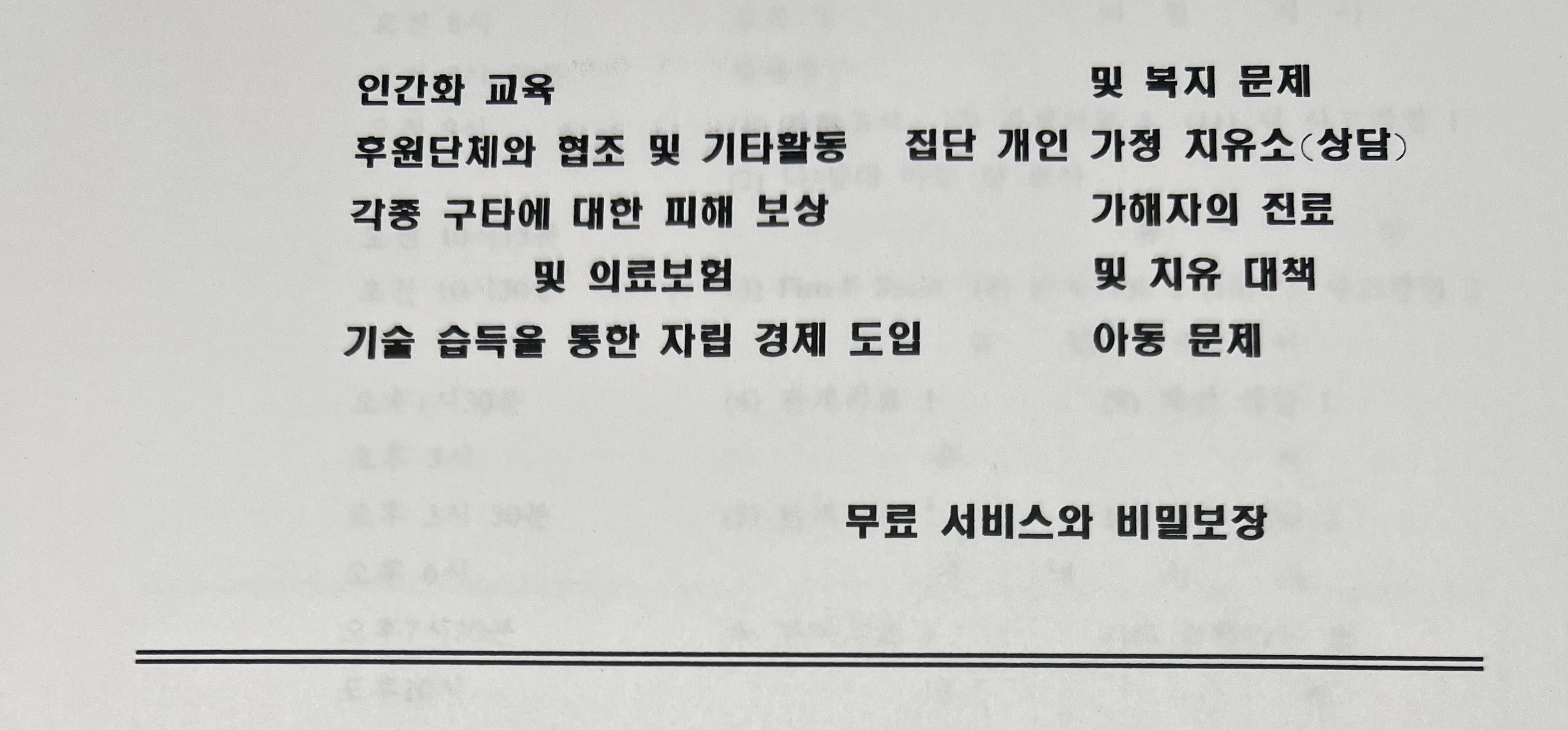
Service for Abused Women and Sexual Assault Survivors
- Faith Education
- Community Education & Early Detection
(Family, School) - Early Intervention
- Awareness Campaigns
- Emergency Hotlines
- Emergency Shelters
- Advocacy and Companionship
- Court Advocacy Design
- Role of Research Departments and Hospitals
- Legal Reform
- Skills for Sustainable Living
- Humanization Education and Welfare Issues
- Collaboration with Support Organizations and Other Activities
- Group, Individual, and Family Healing Centers (Counseling)
- Compensation for Various Types of Abuse
- Including Medical Insurance
- Treatment and Healing Plans for Perpetrators
- Economic Independence through Skill Acquisition
- Children’s Issues
- Free Services and Confidentiality Guarantee
Above all, the prevailing social norms must be transformed. It is our urgent task on earth to reform society so that all people may come to a proper understanding of true values and human rights, recover their authentic selves, and realize that genuine happiness lies in living together with true justice, mutual respect for one another’s dignity, and shared freedom.
< 5 > Relational Training
Beginner Course (Couples Workshop) – Integral Spirituality Workshop (II-1)
First Implementation Date:
Planned for the first time in June 1995.
Eligibility:
- Only those who have completed the basic training.
- After completing the basic training, participants are encouraged to practice for 3 months before selecting the intermediate course, preferably within 8 months.
- Married or engaged couples.
Group Size: Targeted for 10–20 couples.
Time: Begins every April, offered once every 3 months.
Duration: Thursday to Saturday (3 days)
Location: Rotates by region.
Facility: Held at a retreat center or hotel.
Corner Stone of Relationship (Relational Identity)
Couples Workshop Schedule
| Time | Day 1 | Day 2 | Day 3 |
|---|---|---|---|
| 8:00 AM | Registration & Breakfast | Breakfast | Breakfast |
| 8:30 AM | Room Assignment | ||
| 9:00 AM | (1) Conflict Survey | (7) Relationship Therapy 4 | (11) New Way of Thinking 1 |
| (2) Self/Partner Awareness | |||
| 10:15 AM | Break | ||
| 10:30 AM | (3) Firo-F Scale | (8) Relationship Therapy 5 | (12) New Way of Thinking 2 |
| 12:00 PM | Lunch | ||
| 1:30 PM | (4) Relationship Therapy 1 | (9) Individual Counseling 1 | |
| 3:00 PM | Break | ||
| 3:30 PM | (5) Relationship Therapy 2 | (9) Individual Counseling 2 | |
| 6:00 PM | Dinner | ||
| 7:30 PM | (6) Relationship Therapy 3 | (10) How to Receive Approval | |
| 10:00 PM | Sleep |
Intermediate Course (Parent-Child, Family Workshop)
Integral Spirituality Workshop (II-2)
Eligibility:
- Only for couples and their children who have completed Intermediate Course II-1.
- After completing II-1, practice for 3 months and choose II-2 within 8 months.
Group Size: For up to 15 families.
First Implementation Date:
Planned for mid-August, following the June 1995 couples workshop.
Time: Begins every March, offered once every 3 months.
Duration: Thursday to Saturday (3 days)
Location: Rotates by region.
Facility: Held at a retreat center or hotel.
Corner Stone of Relationship (Relational Identity)
Parent-Child & Family Workshop Schedule
| Time | Day 1 | Day 2 | Day 3 |
|---|---|---|---|
| 8:00 AM | Registration & Breakfast | Breakfast | Breakfast |
| 8:30 AM | Room Assignment | ||
| 9:00 AM | (1) Orientation | (7) Child Training | (12) Child’s Self-Esteem |
| (2) Self-Assessment | |||
| 10:15 AM | Break | ||
| 10:30 AM | (3) Stress Management | (8) Child’s Social Behavior | (13) Future Planning |
| 12:00 PM | Lunch | ||
| 1:30 PM | (4) Parental Thoughts | (9) Solving Relationship Problems | |
| 3:00 PM | Break | ||
| 3:30 PM | (5) Parental Work | (10) Managing Anger | |
| 6:00 PM | Dinner | ||
| 7:30 PM | (6) Parental Supervision | (11) Study Habits | |
| 10:00 PM | Sleep |
(3) Responsible Self-Formation Praxis
The Church holds a responsible position in society. This reflects God’s choice of Israel to stand as a priest before the world. The relational self must now form a foundational community that reclaims the identity of a responsible self within society. When selves created in the image of God gather within the Church—the body of Christ—this assembly becomes a unified body through a likeness that reconnects with God. This body, in turn, must form life-giving relationships with various social groups. Unless it divides and shares itself like living cells, the foundational community hardens like spoiled milk and begins to resemble self-serving organizations, losing its function as an instrument of blessing to the world. It then forfeits its place among the chosen.
Thus, the Church’s identity as a responsible self is not merely a matter of choice but of blessing. Without such a formation process, the Church is no longer a priest to the world but degenerates into a secular interest group. Though its religious form may remain, the generation of life has ceased. The process of forming the Church as a responsible self is essentially the path of volunteer service. Volunteering itself is a form of integral spirituality, embodying the voluntary service Jesus Christ exemplified. This is how individuals, saved and freed through the Exodus, come together at the Cross for equal dialogue, form the body of Christ (communion), and carry out the Church’s active ministry in society, serving as life-giving yeast.
Yeast and seeds both symbolize self-giving for the resurrection of many lives. This is the fullness of God’s love and the fulfillment of God’s call to us.
As a Church moving toward eternity as a responsible self, this also entails a ministry of preventing community destruction. This is considered a crucial aspect of pastoral ministry. The following volunteer project is proposed to practice this type of generative community. One of the most marginalized communities in society is women involved in prostitution—perhaps the most difficult group to approach. This is not only a Korean issue but one increasingly visible in immigrant communities, including in areas like Manhattan. It represents the height of dehumanization. The commercialization of the sacred sexuality gifted by God is not only a tragedy but a manifestation of human sinfulness.
We must not scapegoat sex workers but rather, like Jesus, offer them living water, as He did to the woman at the well in Samaria. The dehumanization caused by prostitution is our collective problem and responsibility. It is precisely here that the Church’s life-generating mission becomes possible—bringing with it the blessing of integral spirituality, or eternal life.
Currently, there are no separate shelters, health clinics, or welfare centers specifically for sex workers in the Korean-American immigrant community. They rely on general homeless shelters and social welfare centers. The entire immigrant community must work toward deeper analysis, healing, and the formation of generative communities. A single sex worker is still our sister. Together, we must examine society’s unconscious biases and contradictions, diagnose the social pathologies, and jointly develop strategies of analysis and response. Healing must follow—treating root causes, providing medical care, and offering preventative education and faith-based restoration. Welfare systems should help rebuild lives and prevent recurrence through sustained research and intervention.
The goal is to raise individual awareness, humanize relationships, and train volunteers to engage in the healing of society. This is how we collectively move toward a future of healthy, generative communities.
Six reasons are identified for the past failures to address prostitution:
- No praxis of generative communities was attempted.
- Though missionary zeal and spiritual experiences existed, there was a lack of professional methods (in health, medical care, and education).
- Instead of comprehensive, long-term strategies, short-term programs were used.
- There was a lack of financial support and committed volunteers.
- Focus was on police arrests of women without addressing root causes.
- Most importantly, there was no theology of the Cross—no redemptive event that called for self-awareness and the transformation of alienation into communal life and volunteer service.
When over 300 Korean-American churches in New York and New Jersey unite in prayer, the immigrant community can reclaim the image of God in which it was created.
<1> The Problem
Among Asians already facing racial discrimination in the U.S., Korean women suffer dual discrimination. Those most burdened are women who came to America through interracial marriages and, after experiencing trauma and divorce, drift into massage parlors—estimated at over 60%. This reality demands the Church not fall into destruction like Sodom and Gomorrah, but rather become like Nineveh, repenting and being saved. A “Welfare Center for Sex Workers” should become a response to God’s call to overcome racial and gender discrimination.
Through this, the Church—constantly being renewed as the body of Christ—becomes the risen and eternal body of Christ in this world.
<2> A Comprehensive Welfare Center for Sex Workers
Existing mission centers offer:
- Psychological counseling
- Social welfare counseling
- Fellowship
- Worship and Bible study
Government-funded women’s centers provide benefits (including job and language training) when requested. However, sex workers often lack the self-awareness necessary to initiate change. Therefore, a Comprehensive Welfare Center for Korean-American Sex Workers is proposed:
Korean-American Women’s United Mission Comprehensive Welfare Center
(Departments and Services)
| Healing | Skills Training | Life Welfare | Prevention & Awareness | Education | Research & Formation |
|---|---|---|---|---|---|
| Root Cause Treatment | Beauty | Employment | Maternal Health | Bible Study | Social Pathology Research |
| Psychological Counseling | Sewing | Self-Employment | Sex Education | Worship | Seminars/Workshops |
| Mental Therapy | Beauty | Side Jobs | Health Education | General Education | Collaborations, Adoptions |
| Computer | Community Marketplace | Planning & Evaluation | Legislative Proposals | ||
| Disease Treatment | Credit Union | General Schooling | Language, Community Bonding | ||
| OB-GYN | Dormitory | (U.S./Korea) | |||
| Urology, Dental | Networking | ||||
| Long/Short-Term Treatment | Volunteer Training |
2) Strategy for Achieving Transformative Goals
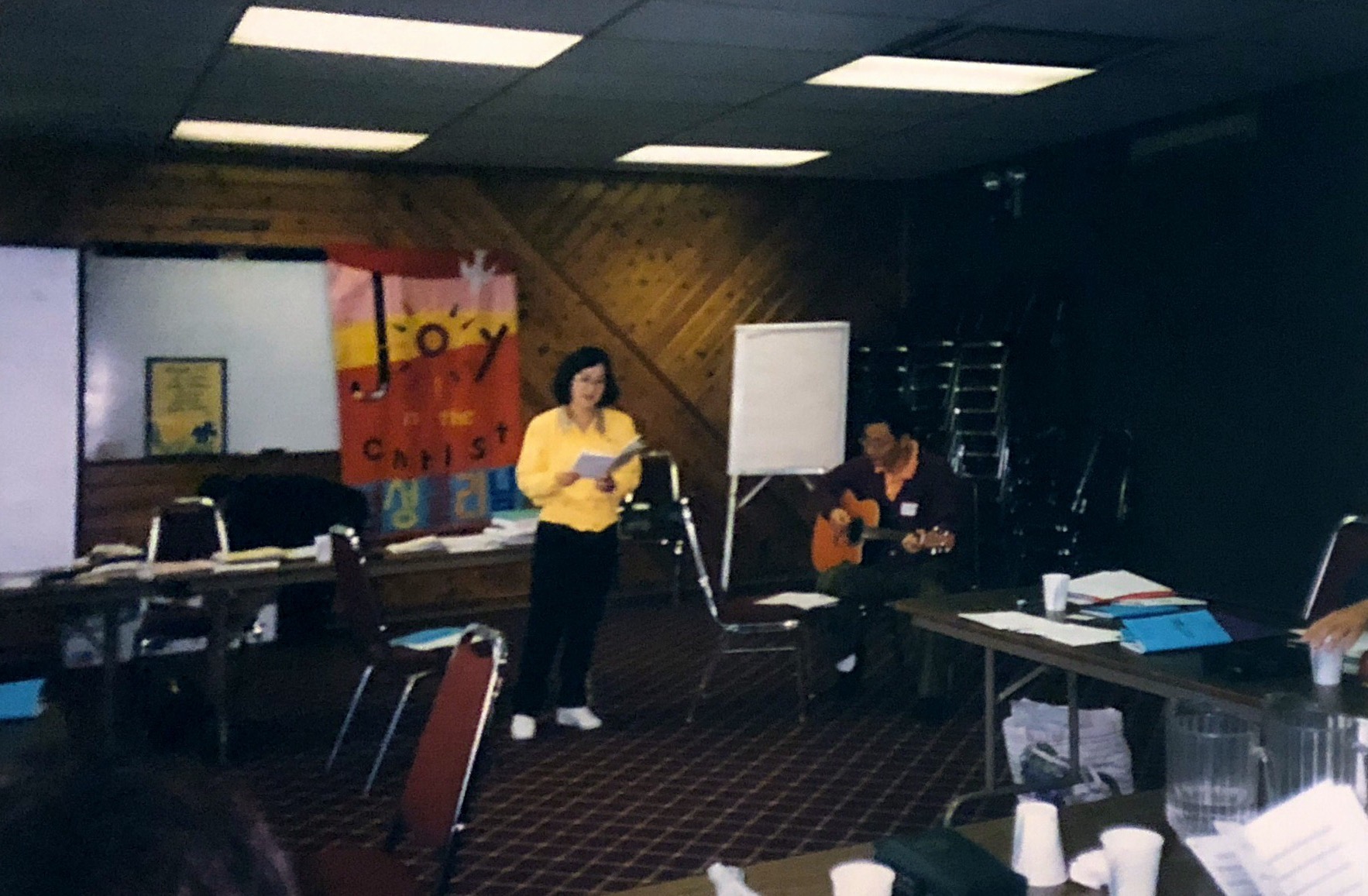
Three workshops are designed to help individuals affirm their identity and prepare to live in community. Each workshop lasts 3 days. The first stage (individual identity) has already been conducted. The second stage (relational identity) will begin with a couples’ workshop in June 1995 and a family workshop in August 1995.
(1) Individual Identity Formation Workshop
- Title: “Celebrating in Christ”
- Scripture: Micah 6:8, Ruth 1:16
- Methods: Psychological testing (MMPI-2), MBTI, Enneagram, Meditation, Focusing (anger), Fasting
(2) Relational Identity Formation Workshop
- Title: “Corner Stone”
- For couples and families
- Scripture: Micah 6:8, Ruth 1:16
- Methods: Conflict inventories, FIRO-B, relationship therapy, “Getting to Yes,” “Six Thinking Hats,” music and drama therapy
(3) Responsible Identity Formation Workshop
- Title: “Team Spirit”
- Start: October 1995
- Scripture: Micah 6:8, Ruth 1:16
- Areas: Prison ministry, parolee care, construction work, grace-centered counseling, spiritual education
- Methods: Monthly gatherings, networking, caring and expanding systems, voluntary suffering, Creative activities(Education, training, performance, and exhibition).
3-Hour “Living Together” Workshop
A short, multipurpose program
Duration: 3 hours
Audience: Anyone
Location: Quiet setting
Contents:
- Alternating solitude and community practice
- Declaration of life together
- Worship and shared life with God
- Journey through 1 Corinthians 15:42–58
- Stages of personal grief and communal healing
- Rest and reflection
- Creating another shared life
- Living with God (prayer)

 Daily Sauntering
You must be logged in to post a comment.