
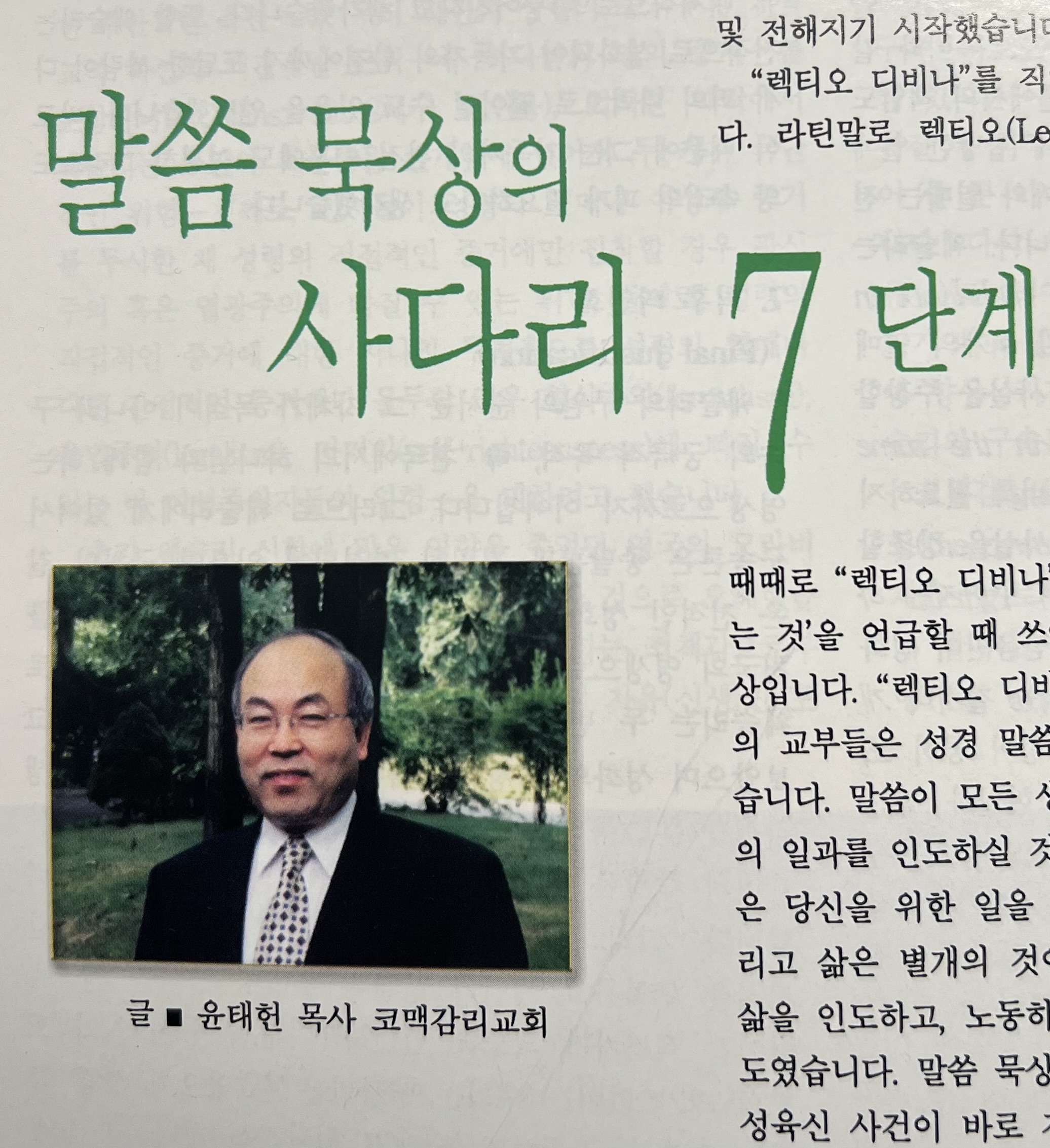
By Rev. TaeHun Yoon, Long Island Korean United Methodist Church, Commack, NY (Retired in 2014 from the Holston Annual Conference, Southeastern Jurisdiction)
(United Methodists in Service, July/August 2002, Volume 5, Number 4, pp. 16–18)
The “Seven Steps of the Ladder of Scripture Meditation” is an adaptation of the traditional monastic method of Lectio Divina into the context of immigrant churches. This method, long practiced by monks in monasteries, has been reshaped to suit the everyday spiritual life of ordinary believers—enabling them to draw closer to God and engage in deeper spiritual communion through the Word in the midst of their daily lives.
The term Lectio Divina originally referred to the way the Desert Fathers meditated on Scripture. It was later systematized into four stages (Lectio, Meditatio, Oratio, and Contemplatio) by Athanasius of Alexandria, and further developed and passed down by the monks of the Benedictine tradition.
Literally translated, Lectio Divina means “Divine Reading.” In Latin, Lectio means “teaching” or “instruction,” so the term has sometimes referred simply to the biblical text itself or to the act of reading. However, the original meaning goes much deeper. Lectio Divina is not merely a spiritual reading practice. For the Desert Fathers, Scripture was understood to be a “school of life” and a “school of prayer.” They believed the Word governed all rules of life and guided their daily activities. “Have you heard the Word? That Word will surely do its work in you.” For them, meditation, prayer, and life were not separate—they were one. Meditation and prayer shaped their day, and the very act of living and laboring was itself a form of Scripture meditation and prayer. They believed their lives were the unfolding of the Incarnation—the Word becoming flesh—right in their midst.
With this same conviction, the program of the “Seven Steps of the Ladder of Scripture Meditation” was born—designed to apply and develop this spiritual tradition in the reality of immigrant church life. It seeks to make the Incarnation alive again in the daily lives of immigrants through the transformative power of Scripture meditation.

Basic Premise: Receptive Prayer
Beyond spoken words and written letters lies the deeper presence of God’s Word. To hear this profound voice of God, our inner being must first be open and lifted toward God in worshipful posture. There must be a reverent awe that blesses God and waits only for Him. In addition, our souls must be emptied and clear, creating the space necessary for God’s Word to enter. This is the stage of humility.
Only then can the spiritual dialogue with God and His Word flow freely and circulate within us—this is the state of being filled with the Holy Spirit. These three—or perhaps more—conditions must be met to enter into what we call “Receptive Prayer.”
Receptive prayer is not a monologue, but a spiritual communion based on the Word. If there is a prayer of request, there must also be a prayer of reception. If there is a prayer of offering, there must also be a prayer of receiving. If there is a “speaking” prayer, there must also be a “listening” prayer. Listening prayer is receptive prayer. It is to actively welcome and acknowledge God, who desires to come to us daily—even moment by moment.
When the will and life of God effectively communicate through the channels of our personality (such as extroversion and introversion, sensing and intuition, feeling and thinking, tradition and receptivity), we experience the Word becoming flesh through our lives. This entire prayer process is what we call “Receptive Prayer.”
Receptive prayer may take many forms, but it must be centered on Christ, beginning and ending in Him. When we entrust ourselves into God’s hands, God receives us, and through the act of offering ourselves, we too become able to receive God. This is the event of Immanuel happening within us.
If in our daily lives we continually engage in Word and prayer, and God is in us and we in Him, then the event of Immanuel is occurring. It is nothing less than the incarnation of the Word in our lives. A life where God is with us—that is the most blessed life. The mystical union between the Church (believers) and Christ—this is the most blessed state.
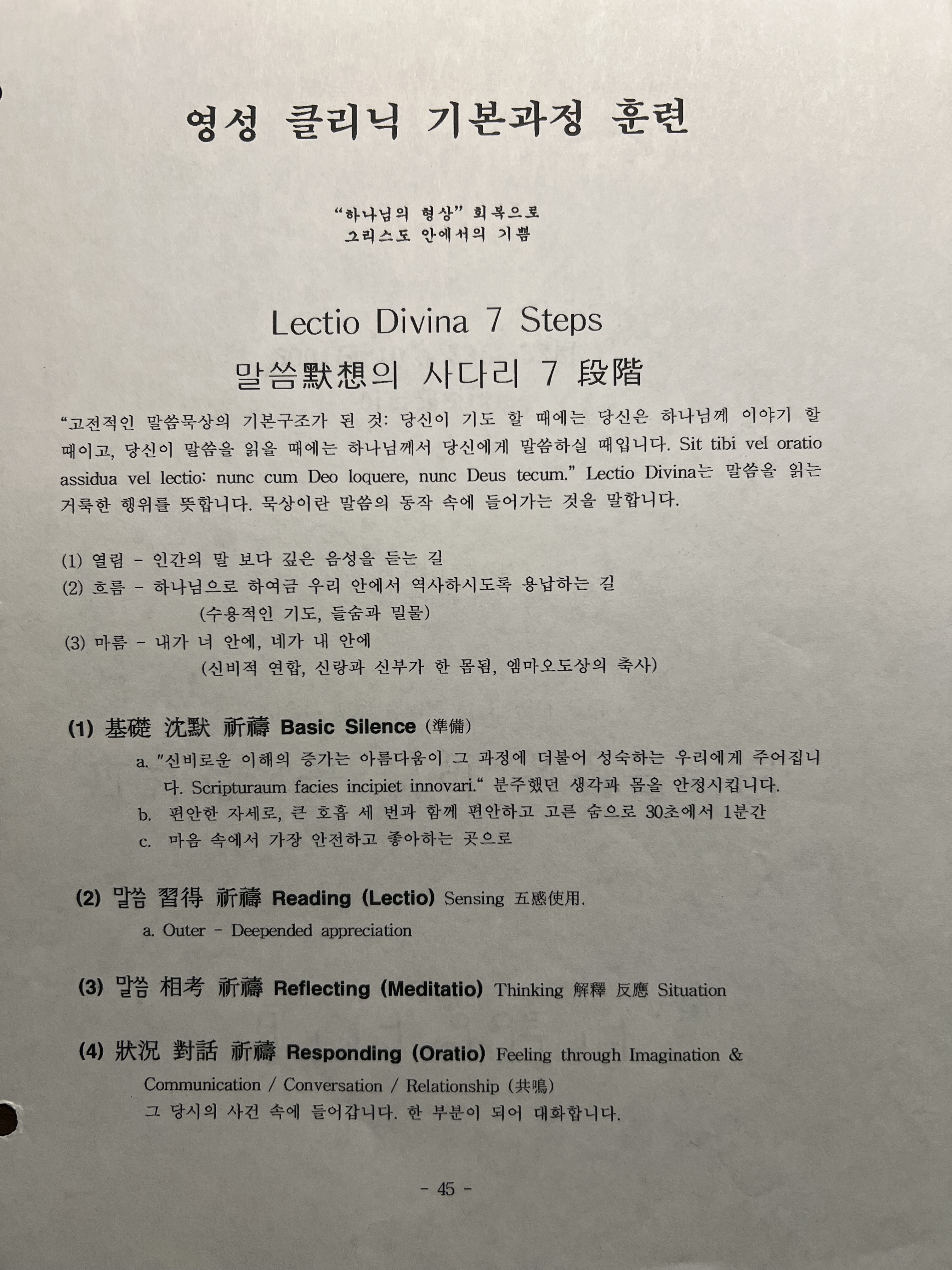
Introduction to the 7-Step Ladder of Scripture Meditation
Step 1: Foundational Silent Prayer
Begin with quiet prayer—this preparatory stage calms the mind and body after sleep or a hectic day. Sit comfortably, breathe deeply three times, then breathe evenly for 1–2 minutes. Imagine yourself in your most peaceful inner place—a sanctuary crafted from your personality and habits—safe, secluded, and deeply restful.
Step 2: Scripture Internalization Prayer
Engage your five senses—sight, hearing, smell, taste, touch—to absorb Scripture. Read or listen silently or aloud. Some may walk outdoors listening to audio Scripture. Use whatever medium connects you with the Word for about 3 minutes.
Step 3: Scripture Reflection Prayer
Delve into the context and meaning of the passage. Reflect intellectually with tools like commentaries. Reconstruct the biblical setting and consider God’s intent both then and now. Allow Midrash-like internal dialogue for about 3 minutes.
Step 4: Situational Conversational Prayer
Immerse yourself imaginatively into the Scripture scene. Visualize and resonate emotionally by identifying with a character or aspect of the passage. Let your feelings and spiritual being harmonize with the Holy Spirit. This contemplative encounter may bring tears as you enter the inner sanctuary of God’s presence—for about 2 minutes.
Step 5: Holy of Holies Silent Prayer
Now enter complete silence. In this stillness—where intellect, will, and emotions rest—you listen intuitively for God’s subtle voice. You receive whatever emerges: color, light, image, presence. Here the soul rests in divine peace. This is a moment of mystical union—about 3 minutes of listening.
Step 6: Prayer of the Manifestation of the Word
Allow the Scripture to come alive in your day. Without forcing it, let God’s guidance unfold naturally, accompanied by joy and spiritual power. This is living the Word, day-long.
Step 7: Inner-Acts Style Recording Prayer
Track your spiritual journey. After the silent prayer, write down what came to you. Then, at day’s end, journal how Scripture unfolded in your life. Twice-daily entries become a precious personal narrative—your own inner Book of Acts—for about 2 minutes each time.
A daily session of around 15 minutes is ideal; if it exceeds 30 minutes, simplify by focusing on one verse without multiple layers of interpretation.
Closing Reflection
As St. Augustine said, scripture is water shallow enough for a child to splash but deep enough to drown an elephant. When we immerse ourselves, the Word shapes us into Christ-like vessels. In this “emptying,” Christ shines through. The practice brings true freedom, rest, emotional and spiritual healing, and empowerment for leadership in God’s mission. It fosters a lifelong delight in one verse of Scripture—repeatedly meditating on it like a cow chewing cud—and joyfully conversing with God throughout the day.
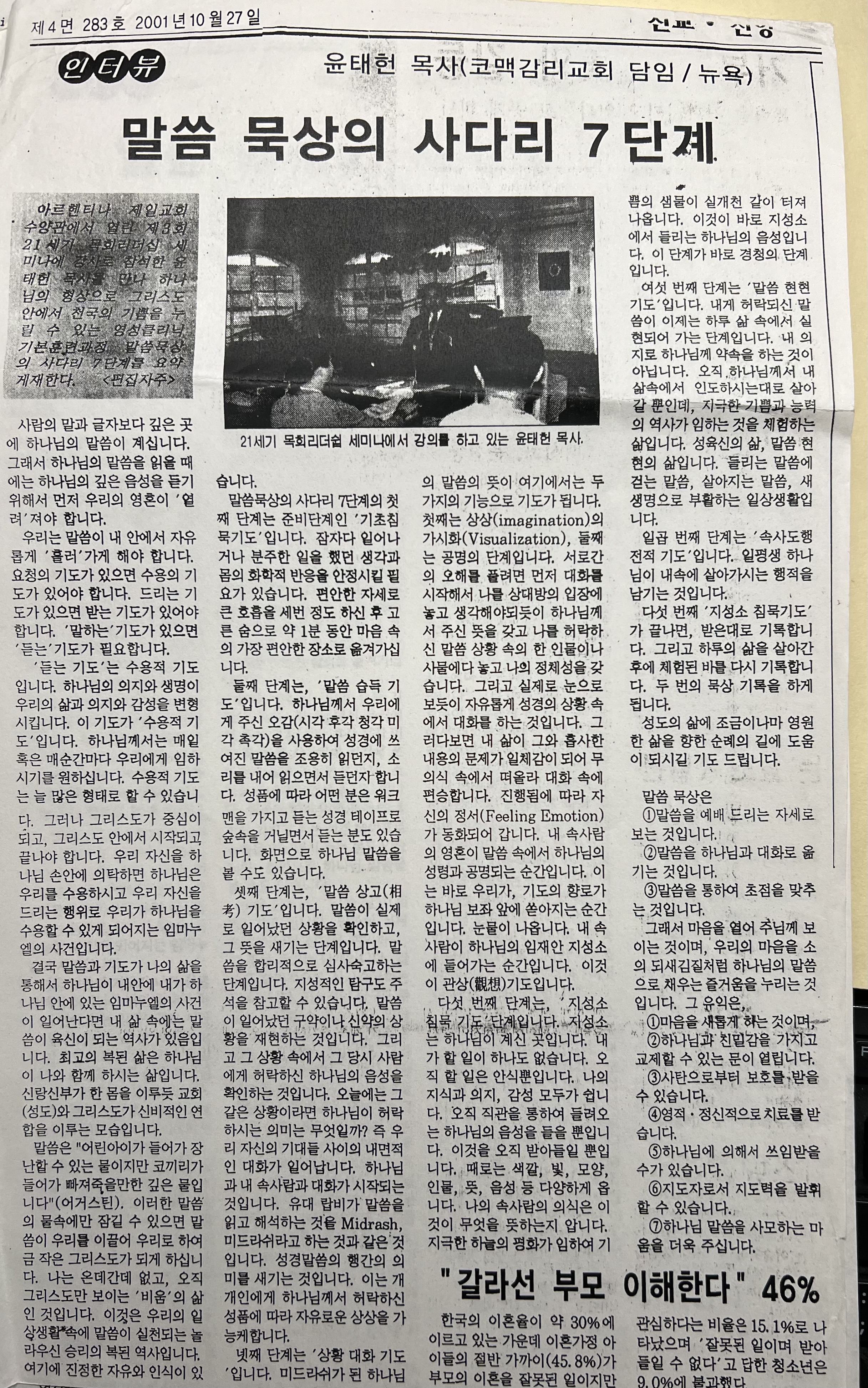
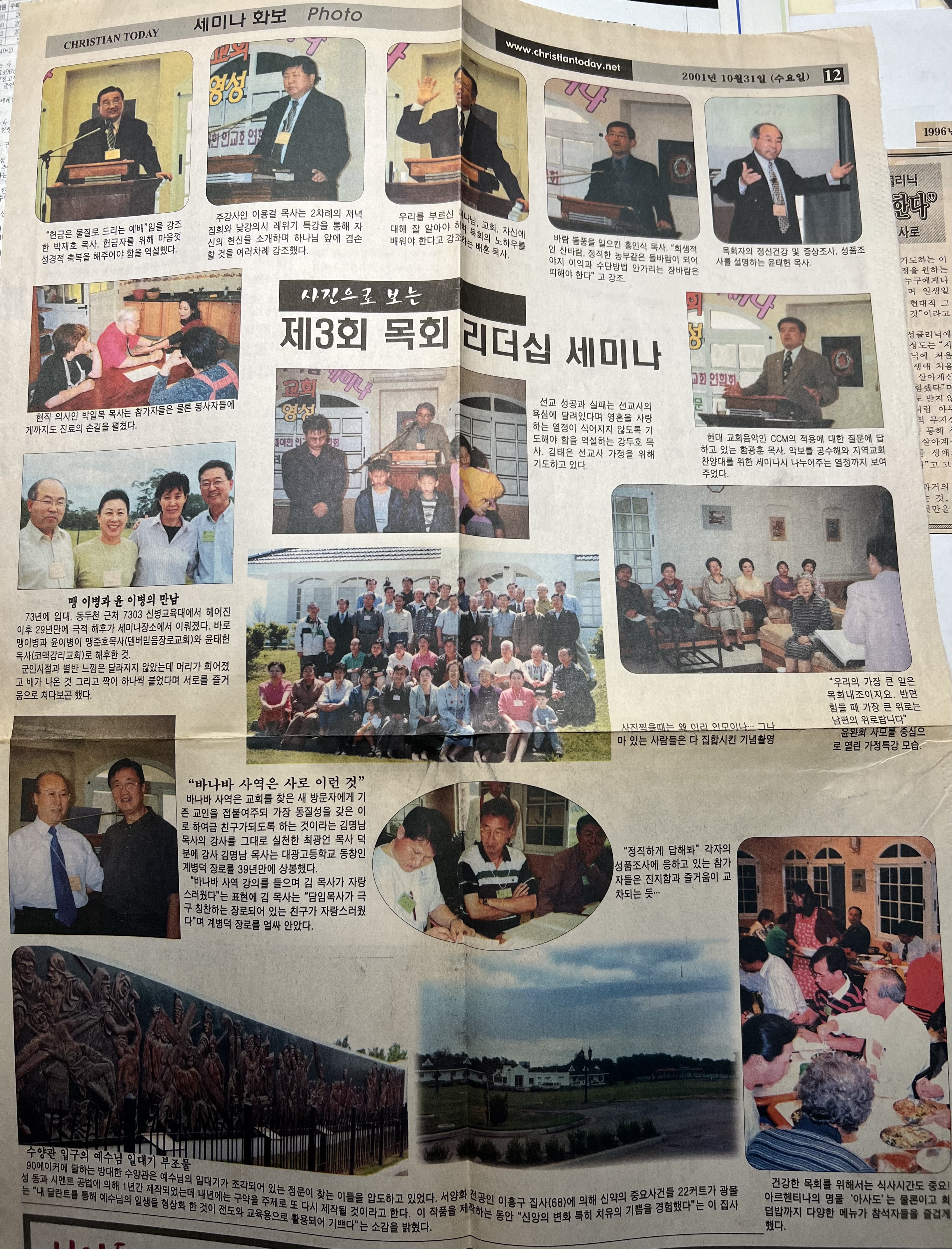
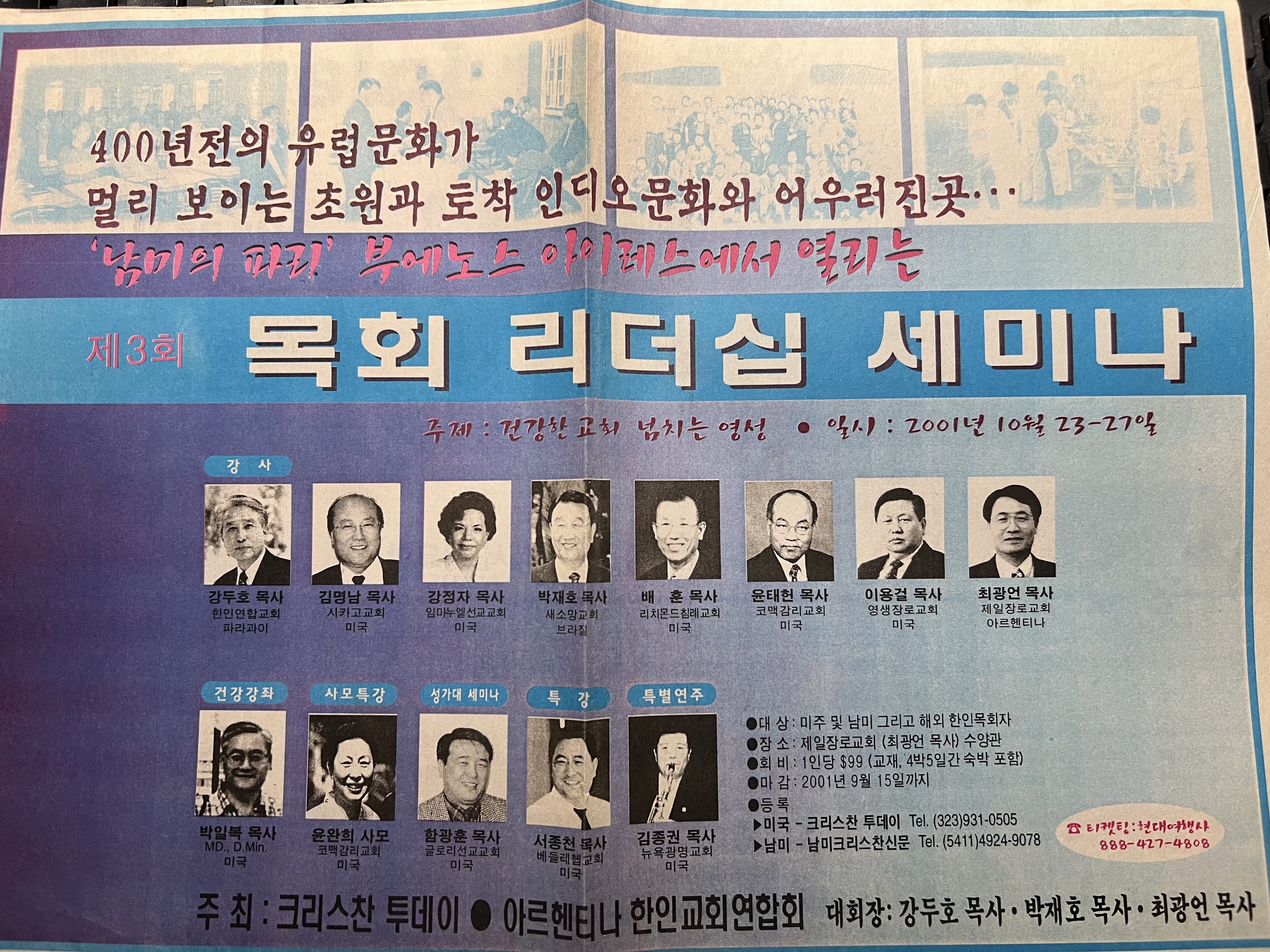
This presentation was delivered at the 3rd 21st-Century Pastoral Leadership Seminar (October 2001, Argentina First Church Retreat). It ties into the upcoming article “Spiritual Clinic for a Healthy Church, Abounding Spirituality” in the Sept/Oct 2002 issue of United Methodists in Service.



 Daily Sauntering