(Pastoral Letter from the Parsonage, First Story in the ‘Those Who Remained in the City’ series)
by WanHee Yoon, 2001
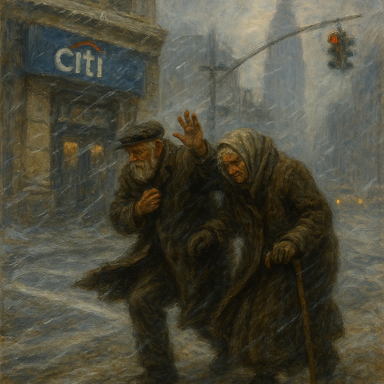
The intersection by Citibank is always bustling. As usual, I barely manage to park and drop a twenty-five cent coin into the meter. Just then, across the street, I notice a shabby-looking elderly couple. The man, who looked at least ninety, stood in the wind, desperately trying to flag down passing cars. A few steps behind him, the woman was panting heavily, clearly out of breath. Curious, I approached, and the old man grasped at my coat as if clinging to hope.
“Is something wrong? Do you need help?”
His eyes were filled with urgency. He tried to speak, but I couldn’t understand him at first. He repeated the same phrase, straining his voice:
“Please take us home! It’s only ten minutes from here, but we can’t make it.”
The wind tugged at his coat as if hurrying him along. A passing patrol officer stopped briefly.
“They need help getting home, but they don’t have a car. Should I call a taxi?”
The officer looked to the old man, who shook his head.
“No money for a taxi.”
“Then wait here just a moment. I’ll run into the bank.”
I knew I couldn’t hesitate any longer. Relief flickered across their faces. The officer thanked me and left. After finishing my errand, I returned to the windy corner where the couple waited, holding hands tightly.
“My car is across the street. Can you cross with me?”
They shook their heads.
“We can’t walk.”
The old man’s voice was faint. “Then please stay here. I’ll bring the car around.”
There they stood, beside the solid Citibank building, looking as fragile as the second hand of a dying clock.
The old man watched every movement of his wife, worried she might get hurt climbing into the car. Her worn gray dress shimmered with the grime of age under the noon sun. Each step she took was like moving a house—slow, heavy, deliberate. Leaning desperately on her cane, she finally settled into the back seat, groaning through the towel pressed to her mouth.
“You both seem unwell. Why did you come out today?”
“We had to take care of something at the bank.”
“Do you have children?”
“No.”
I sensed they were among those who hadn’t managed to leave the city—those who remained.
New York is a place where new immigrants easily find work and settle. Its convenience draws people in, forming communities of shared language and skin color, each shaping its own culture. But descendants of long-settled white immigrants often flee the city’s changing environment, cultural clashes, crowding, crime, and rising taxes. They move to quiet suburbs or warm Florida, while New York becomes a paradise—of sorts—for newcomers.
Everyone in New York is busy. Watching people from a car window, it’s rare to see anyone relaxed. Even acquaintances, when they bump into each other, say, “I’m busy—let’s catch up later!” and vanish into the crowd. Life is a tightrope walk, each day a balancing act. And tightrope walkers don’t have time for deep relationships.
If you’re not busy or tired, you’re not a true New Yorker. No one strolls the streets leisurely—day or night. If you see someone doing that, they’re either homeless or a tourist.
Yet, there are those who don’t belong to the busy and tired masses. They dislike the city but have never left it. They remain in the homes they’ve always known, while longtime neighbors—once familiar and caring—have moved away. The new young residents leave at dawn and return at dusk. Weekends offer no chance to connect; they’re off traveling or catching up on chores. The old neighbors who once helped and cared for each other now live far away. These remaining souls live like forgotten people.
Immigrant communities gather by ethnicity and language, building new cultures together. But how many days have these elders spent dialing the phone, hoping to reach a new neighbor?
“Hello, new neighbor! The house you live in once belonged to someone who came and went daily, exchanging greetings. The yellow forsythia in the backyard was planted forty years ago by a young mother after her first child was born. The oak tree you cut down last summer was planted by her grandfather. We used to enjoy summer barbecues under its shade. But since you moved in and put up that iron fence, I don’t know who you are. All I know is that you always seem busy and tired. All summer long, I never once heard laughter from your new outdoor pool. Last night, I sat by the window hoping to see your face. But all I saw was your back as you rushed inside and shut the door.”
Even now, they quietly lift the receiver, listening for a new neighbor’s voice.
Many live alone in large houses, or just as couples. Some elderly residents in nursing homes have relatives who manage their empty homes. Lights turn on automatically in the evening. Mail is collected through PO boxes. Lawn care is handled by management companies. Immigrants often don’t know who their neighbors are or what they do. Tragically, some elderly die alone or collapse into comas unnoticed. Many install emergency alarms in their homes or on their bodies. Seniors form local groups and check in daily by phone. If someone doesn’t respond, they quickly contact family, friends, or medical professionals. Their daily jokes include phrases like “waiting to expire” or “already expired.”
As I suspected, the couple lived among neighbors of different skin colors. A young man in the driveway ignored them as they struggled to get out of the car. It took nearly ten minutes for them to climb the steps and open the door. Like a slow-motion film, they waved gently to me as I stood waiting. On impulse, I opened my wallet and placed my card in the grandmother’s stiff hand.
“Ma’am, if you ever need a ride or help, please call me.”
Her breathless face seemed to brighten with a moment of peace.
Where they had stood by the Citibank building, a crumpled newspaper now swirled in the wind. Someday, we too will be carried away by the breeze of time, leaving this city behind. Or perhaps, one day, we’ll find ourselves among the forgotten ones—standing quietly, asking for help.


 Daily Sauntering
You must be logged in to post a comment.