
January 24, 2026, noon—
the first small snowflakes
drift through the air and disappear.
The time has come.
From this afternoon until Lord’s day night,
fear and a strange sense of expectation
quietly rise together.
For days
the forecasts have kept changing,
their certainty revised hour by hour.
Store shelves grow bare—
food, batteries, plywood—
emptied by hands preparing in advance.
Flights vanish one by one,
grounded by warnings that this may be
the worst ice storm
since January 1982.
The city spreads
calcium and magnesium chloride
across the roads,
and the governor politely asks
that we remain indoors.
I failed to repair the generator.
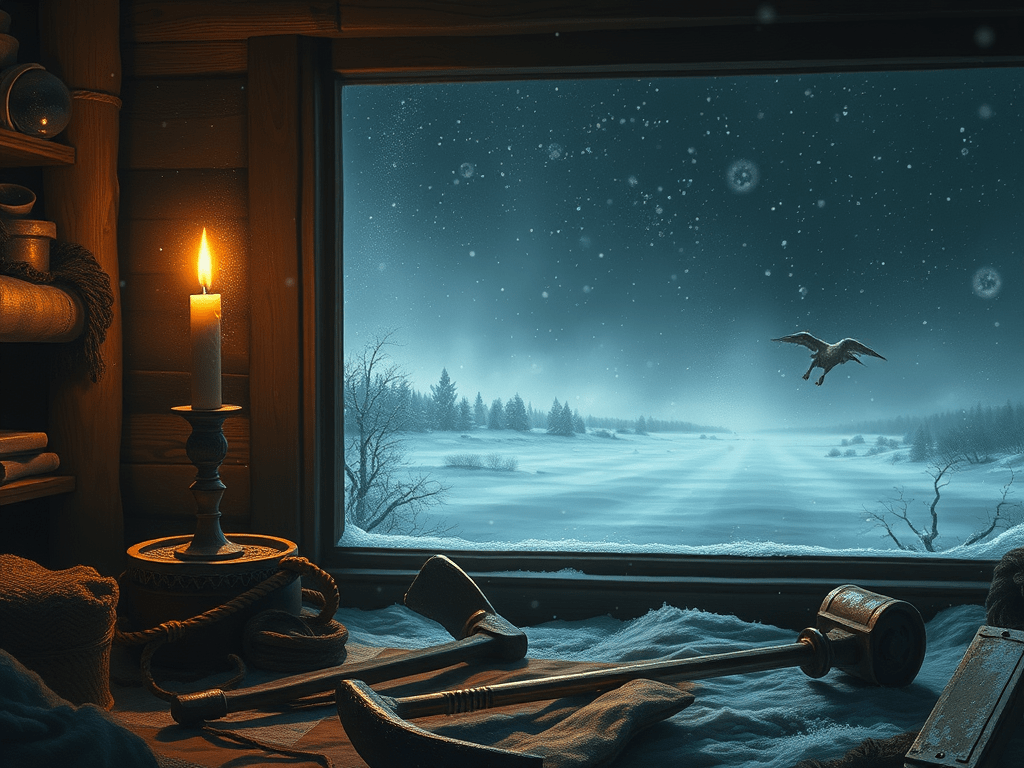
Instead, I gathered up my tools,
gave up further attempts,
came back inside,
and simply set them down.
So the waiting begins—
they call it hibernation—
fear climbing
an endless ladder
without a sound.
The internet may go out—
all conversations cut off.
The village of news, in an instant,
and we may be exiled
from this earth we once called
a single village.
I imagine myself confined to one room,
warming it with candlelight,
getting by on cold bread
for my meals.
Fear settles in,
and the long waiting too—
waiting for winter snow
as one waits for Godot,
at the edge of a cliff
over an endless valley of darkness.
In a room pared down to the primitive,
only instinct stands watch,
and everything else
loses its voice.
— TaeHun Yoon
Note: “Godot” – Samuel Beckett’s Waiting for Godot is a landmark modern play in which two characters endlessly wait for an absent figure—Godot—while exploring the meaning of life, absurdity, and hope. It is regarded as a defining work of the Absurd Theatre and a turning point that reshaped twentieth‑century drama. Two vagrants, Vladimir and Estragon, wait for “Godot,” whom they believe will bring them some form of salvation or meaning. But Godot never appears. They talk, argue, reconcile, and even contemplate suicide, yet in the end they remain in the same place, saying, “Let’s come back tomorrow.”Original Title: En attendant Godot First Performance: 1953, Paris, Genre: Tragicomedy blending elements of tragedy and comedy

 Daily Sauntering
You must be logged in to post a comment.