
A few years ago, during our summer vacation, our family traveled with the children to visit historic sites connected to important figures in American history. Among them, we visited the historical sites of Abraham Lincoln, the 16th president, whom we had long admired and who is often called the “Father of America’s Second Founding.” We toured the final battlegrounds of the Civil War, the small room in Gettysburg where he drafted the famous speech declaring “government of the people, by the people, for the people,” and Ford’s Theatre, where he was shot by John Wilkes Booth on April 15, 1865. Finally, we stood before the massive, solemn statue of President Lincoln overlooking the U.S. Capitol. In the dignity of that statue, we could see the founding spirit of Lincoln—respected and loved across generations—shining like a jewel. As we took a family photo in front of the statue, we felt a deep sense of pride as Korean Americans.
Recently, however, news reports from Korea showing the severed heads of Dangun statues—the seated images of Dangun Wanggeom*, the first ruler of Gojoseon**—brought me great frustration and shock. No one knows exactly who committed these acts, but it is suspected that a religious extremist, believing the statues violated their doctrine, carried out this senseless destruction. Seeing the mutilated images of Dangun, I found myself repeatedly touching my own neck, feeling deep guilt, ignorance, and grief as a Christian.
History is the root of a people and the mirror that holds their spirit. A nation that denounces or destroys its own history carries a shame that cannot survive in the 21st century. Because history exists, we can use it as a mirror to improve the present, and we can hold brighter hopes and dreams for the future. It is something to be proud of that our people had Dangun Wanggeom as their first ruler and that the era of Gojoseon existed. That nation governed the entire Korean Peninsula and Manchuria and is said to have been a powerful state with a highly advanced culture. What we have long known as the “Dangun myth” is now being revealed by historians to have been a narrative shaped by Japanese colonial rule to erase Korean national identity. Historical research is a precious task that awakens national pride. Whether glorious or shameful, history must be preserved and taught to future generations. By knowing and understanding history, we gain identity, purpose, and an understanding of who truly shapes history.
During the thirty years of military dictatorship in Korea, although hunger was somewhat relieved, we lost far too much. Among the greatest losses were our national values and identity. Without pride in our heritage, we lived carelessly, governed recklessly, pursued selfish gain, and allowed religious belief to justify exclusion or contempt toward others. I find myself reflecting on whether we have become a coarse people in this way. In the Bible, God dwells within the history of the Israelites. Figures like Abraham, Moses, Joshua, and David were individuals used for the sake of their nation. The fact that our ancestors were not adherents of a particular religion does not make our history useless or our people without worth. Rather, it is our mission to rediscover and pass down the resilient spirit of our ancestors—who endured barren and sorrowful hardships, who fought for liberation and peace—so that future generations may inherit it. History must be researched, excavated, and widely shared so that our people may regain pride and a firm sense of identity.
Every nation’s religion contains its history, and its history contains its religion. When Dangun was confined to the realm of myth, some people worshiped him as a religious figure. But now, Dangun Wanggeom has stepped out of myth and stands confidently before history. Dangun thought represents the worldview and identity of our people in that era. Yet without proper understanding and education, the hastily erected Dangun statues scattered here and there have become objects of idolatry and targets of attack—an unfortunate situation indeed.
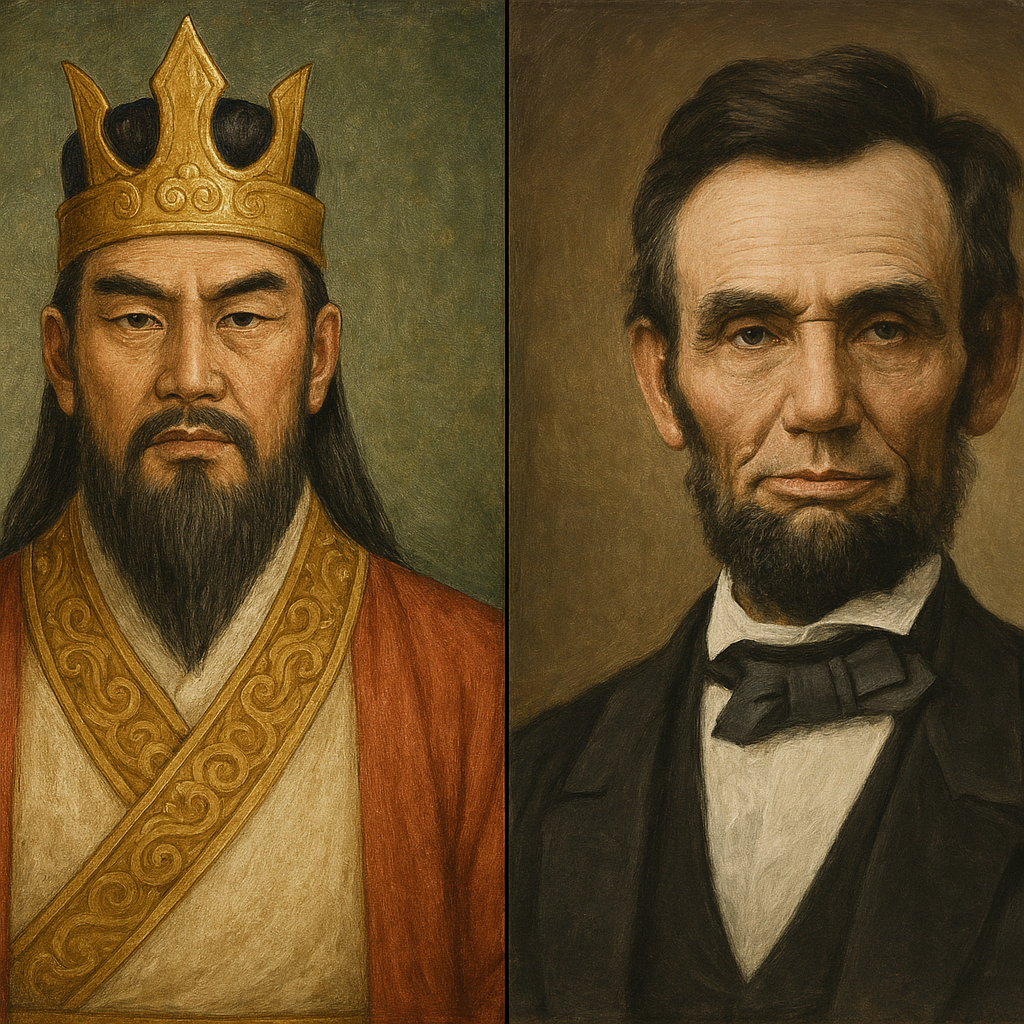
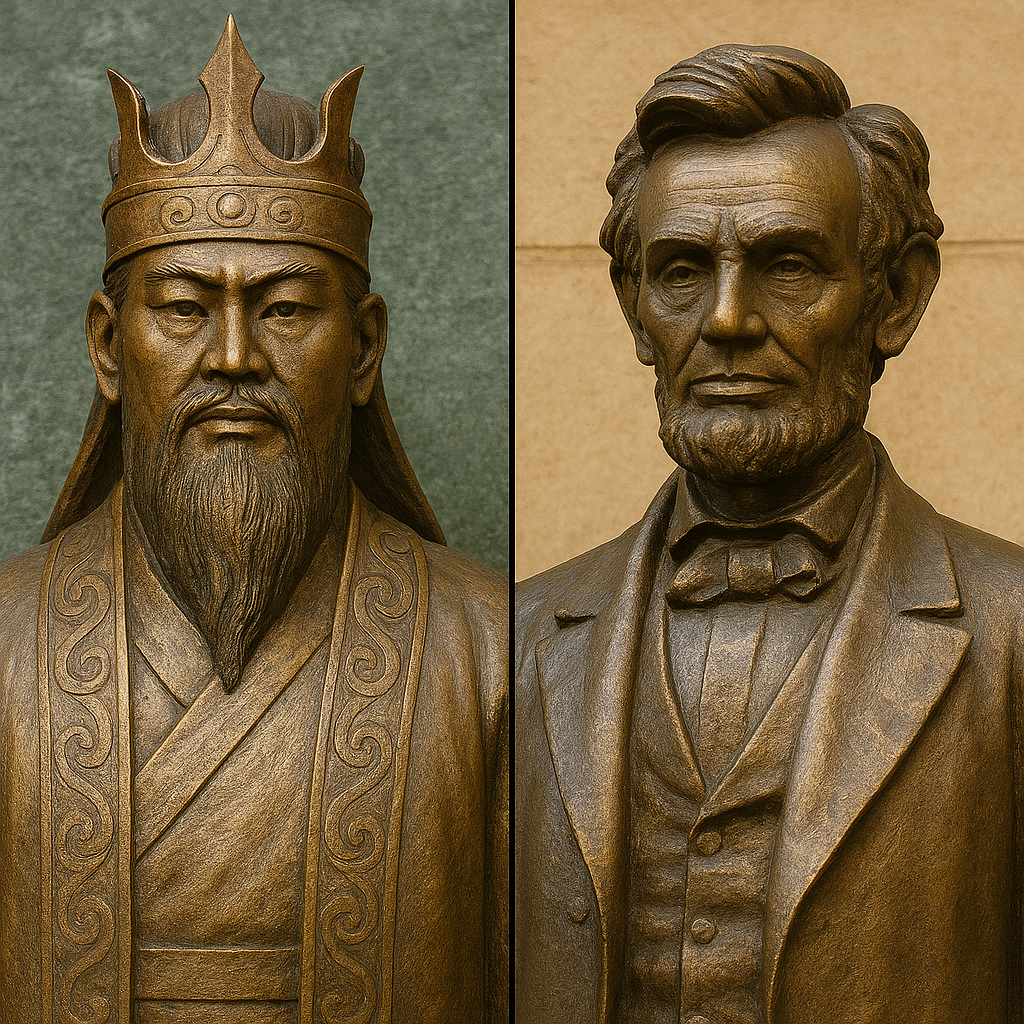
I imagine a day when, in our homeland, the statue of Dangun will stand proudly like the statue of Lincoln—recognized as a founding father by future generations. I imagine a day when countless descendants of the Korean people, scattered across the world, can rediscover their pride and roots, breathing in the fresh fragrance of their ancient history.
— Yoon Wan‑hee, July 19, 1999
* “Dangun Wanggeom” – Name: 단군왕검 (Dangun Wanggeom), Role: Founder and first ruler of Gojoseon, Korea’s earliest recorded kingdom, Era: Traditionally dated to 2333 BCE, Status: A mytho-historical figure—central to Korean origin stories and national identity
** Gojoseon is traditionally said to have been founded in 2333 BCE by Dangun Wanggeom, a legendary figure born from a heavenly prince and a bear‑woman. This origin story appears in the Samguk Yusa and symbolizes the emergence of Bronze Age culture in Korea. The name “Gojoseon” means “Old Joseon”, distinguishing it from the later Joseon Dynasty (1392–1910).

 Daily Sauntering
You must be logged in to post a comment.