In the bulletin of an American church, I once read a layperson’s article titled “The Path to Healing Ourselves.” It began with these words:
“Our church is facing a difficult time. Beneath it lie anger and pain. More than ever, we need reconciliation and mutual understanding. We hope that when the new pastor arrives, our wounds will be healed. But a friend told me that their church once welcomed a new pastor with the same hopes—yet those hopes were not fulfilled. She said, ‘True healing begins only when there is a desire within us to be healed.’”
Hearing that was disappointing. I wondered, Where can the beginning of healing be found?
Turning to Scripture and prayer, I became convinced that God could lead us toward it. I would suggest four simple steps:
- Let us accept each other’s experiences as they are—even the actions each believed to be right.
- Let us admit that past wounds may not be fully resolved, and begin again from where we stand today.
- Let us set aside the need to decide who was right and who was wrong.
- Whatever the other person says, listen with respect, believing that from their perspective their words are sincere. Listening without argument or prejudice will not harm us.
Perhaps we might also reflect on the ministry of a former pastor in this way:
What meaning did that pastor help me discover in my life?
What inspiration or challenge did I receive through him?
What in me was changed?
And what do we truly need now?
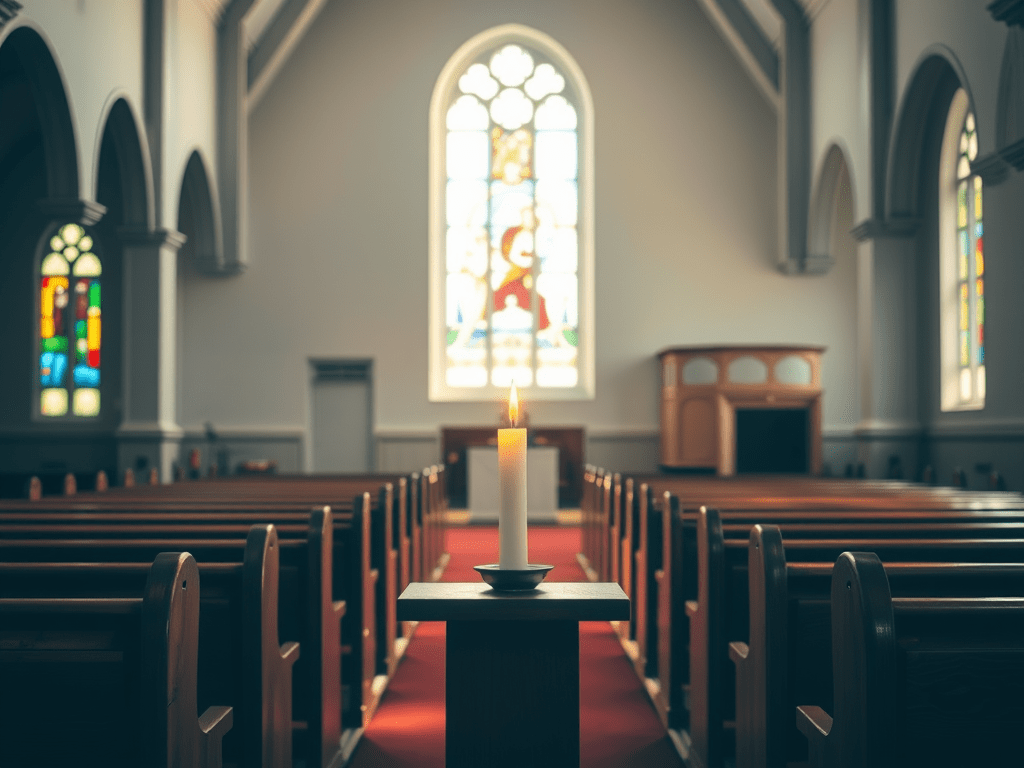
The article was written by members of a congregation that had recently said farewell to their pastor after months of conflict and division. In the empty place left behind, the members longed for reconciliation with one another.
It is easy to think that Korean churches alone face such struggles, but American churches experience them as well. Congregations sometimes face deep tension when new generations arrive, when different expectations of ministry collide, or when racial and cultural diversity enters communities that were once homogeneous.
In such moments, churches are tested by differences of generation, opinion, faith expression, and culture. Sometimes they grow through the struggle; sometimes they scatter.
Wherever people gather, a place can become either a field of conflict or a birthplace of creativity and beauty. When conflict arises, hearts easily divide like oil and water. Both sides may feel justified, yet wounds are left behind.
As Helen Keller once said, the most beautiful things in the world cannot be seen or touched; they must be felt with the heart. That insight invites us to ask whether reconciliation and forgiveness truly live within our own hearts.
Within human nature there is something called vested interest—the instinct to defend what we believe belongs to us because we arrived first or labored first. History shows how dangerous that instinct can become. It has fueled injustice, discrimination, and violence.
Even today, racial prejudice and cultural pride reveal how deeply this desire for privilege can shape human relationships. Yet it is not limited to race or politics. It appears in schools, workplaces, families, and even in churches—communities that confess unity in Christ.
I once saw a congregation complete the beautiful construction of a new sanctuary, only to watch a group of members leave afterward. Perhaps there were understandable reasons. Yet the departure left a small number of believers struggling to carry the burden of debt and responsibility. It was heartbreaking.
Human hearts can be easily stirred—even by misinformation in newspapers or media. A single false report can shake a community or even a nation. Yet while we listen quickly to such voices, we often fail to listen carefully to the truth of God’s Word.
The spiritual life, as writer Howard Macy observed, can never be pushed to the margins. It remains an unexplored frontier. To live within that world requires courage, effort, and openness to the untamed work of God’s Spirit.
Those who have been transformed by grace are called to live a new spiritual life. But that life requires effort—more effort than simply returning to the familiar habits of the past.
When the struggle for privilege quietly grows within a congregation, it divides the body of Christ. Sadly, many conflicts within churches arise from this hidden competition for position and influence.
The empty place left after conflict—after a pastor departs, after wounds are exposed—can become either a deeper division or the beginning of healing.
May we choose the path of healing.
— WanHee Yoon
August 19, 1998

 Daily Sauntering