
One of requirement of TH501-01, Drew Theological School on September 15, 1982
My journey toward pastoral ministry began in 1971 when, as a seminary sophomore, I felt a deep conviction that truth must be understood in three interconnected ways: through lived experience (“Sitz im Leben”), academic study, and personal faith. This realization led me to live in the Songjungdong slum along the banks of the Chungkaechun canal, where I sought to immerse myself in the struggles of the marginalized and learn firsthand about community development.
Life in the slum was harsh. The shanty public toilets were appallingly inadequate—without doors, partitions, or basic privacy—and every morning, over 140 residents waited in long lines for their turn. Initially, I hesitated to use them, but as I witnessed the daily indignities the people endured, I felt compelled to act. I worked to mobilize the community to improve the facilities, although many residents, accustomed to their hardships, were resigned to the situation. They explained that during the rainy season, the toilets would often be destroyed by floods, and they would simply rebuild them afterward.
Through these challenges, I gained a deeper understanding of worship as a practical, transformative act rooted in serving others. I realized that applying situational ethics, guided by Martin Luther’s acknowledgment of human sinfulness before God, could bring real change to the community. This experience shaped my understanding of the Church’s role as a force for reformation and true Christianity in the secular world. It was here, amid the suffering and resilience of the people, that I first heard and recognized God’s call.
My seminary studies culminated in a thesis on social ethics, focusing on Dietrich Bonhoeffer’s concept of “Mandat.” I was deeply moved by Bonhoeffer’s emphasis on living out faith through humble service, inspired by the incarnate and crucified Jesus Christ.
Faith in the Military Service
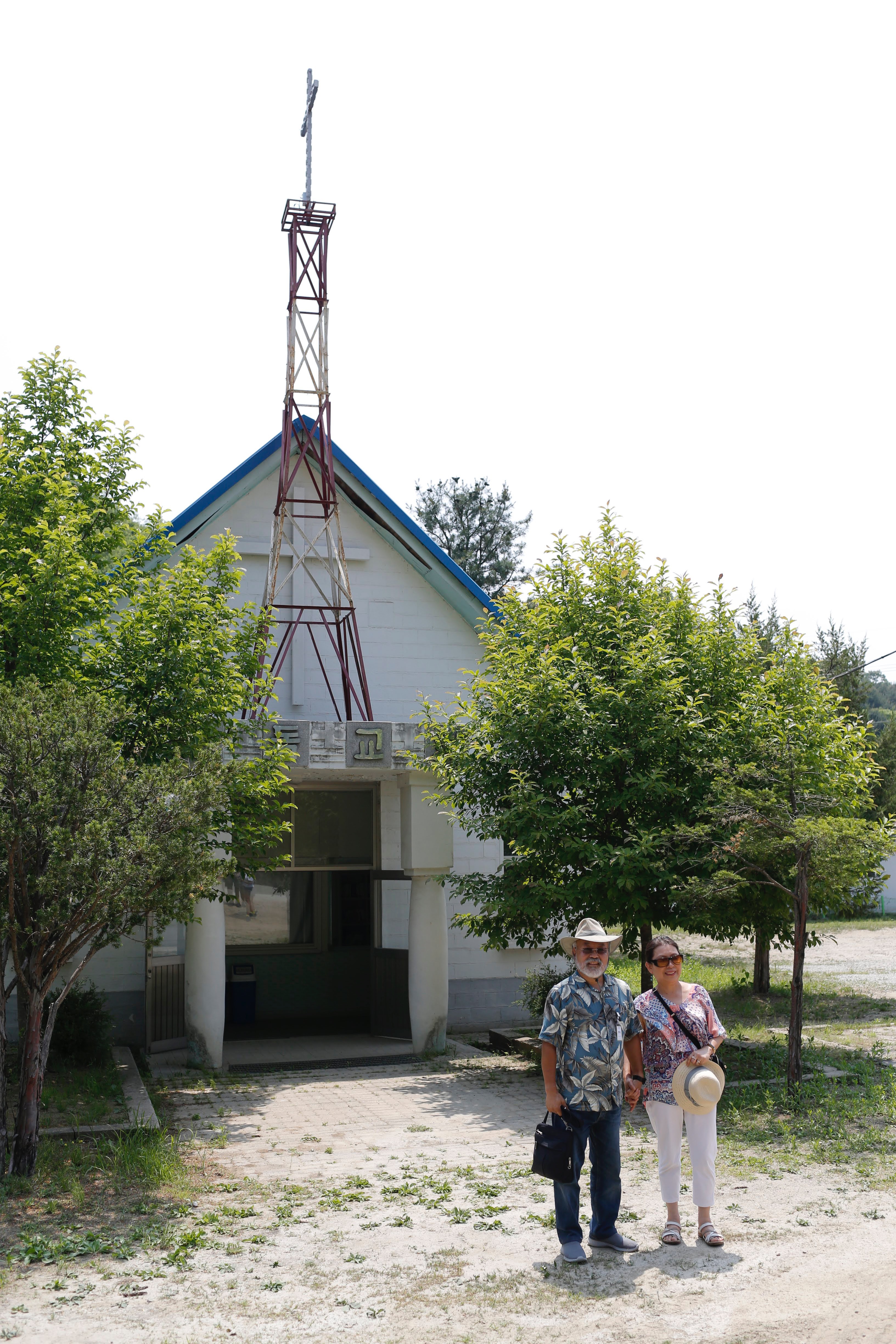
From 1973 to 1975, I fulfilled my mandatory military service as a drafted soldier. Even during this time, God provided opportunities for ministry. I served as a chaplain for my 155mm artillery unit near the DMZ and was entrusted with building a church on the base—without any military funding. Despite the challenges, I worked alongside the soldiers, and we constructed a place where we could gather to worship, even as we heard the ominous propaganda broadcast from North Korea’s loudspeakers nearby.
Marriage and a New Season of Challenges
After completing my military service in 1975, I married a remarkable woman who had faithfully supported her mother, younger brother, and sister after the death of her father. Despite her family’s struggles, her deep faith drew me to her. I knew that her faith was more valuable than beauty, wealth, or social status.
Once her siblings had graduated from high school, we married and moved to Busan in 1976, where I worked as a associate pastor in Buam Methodist Church for a year, the a faculty member. Teaching seminary students the general philosophy and writing art critiques provided a good income. However, I often stayed out late, spending time with poets and artists, and neglected my responsibilities at home.
At the same time, I became actively involved in organizing students and civilians in the Busan-Masan region to protest against the oppressive military government. The Pu-Ma Uprising and the tragic Gwangju Massacre left deep scars on my heart. The military regime responded to the demonstrations with brutal force, and the assassination of President Park Chung-hee followed soon after. Witnessing the violence and turmoil made me realize my own limitations and the futility of relying solely on human strength.
A Second Calling: From Korea to the Desert
As the political situation deteriorated, I felt increasingly unsafe. With my wife and young daughter, I made the painful decision to leave Korea and seek refuge in the United States. On December 2, 1980, we arrived at Chicago’s O’Hare Airport, then to Bradley Airport in Hartford, Connecticut where my brother had lived, carrying little more than the hope of starting anew.
As I adjusted to life in America, I observed the challenges facing the Korean-American community. Unlike other immigrant groups, Koreans seemed to struggle with identity and purpose. I wondered how we could contribute meaningfully to our new country. This realization stirred within me a renewed sense of calling. God’s voice echoed in my heart, reminding me of the prophet Isaiah’s response: “Here am I! Send me!” (Isaiah 6:8). I knew then that my journey was not just about seeking freedom but about answering God’s call to pastoral ministry.
A Commitment to Serve as a Pastor
The temptations of wealth and worldly success were ever-present, but God’s call was stronger. I applied to Drew Theological School to continue my theological training. I wanted to dedicate my life to preaching, teaching, and serving as a pastor wherever God would send me.
This calling has shaped every step of my journey. I have experienced God’s grace through trials, learned the value of humility from the example of Jesus, and committed myself to living out my faith through service to others. I will continue to echo Isaiah’s words and follow God’s voice, trusting Him to lead me as I walk the path of a sinner redeemed by His grace.
To God be the glory.

 Daily Sauntering
You must be logged in to post a comment.