
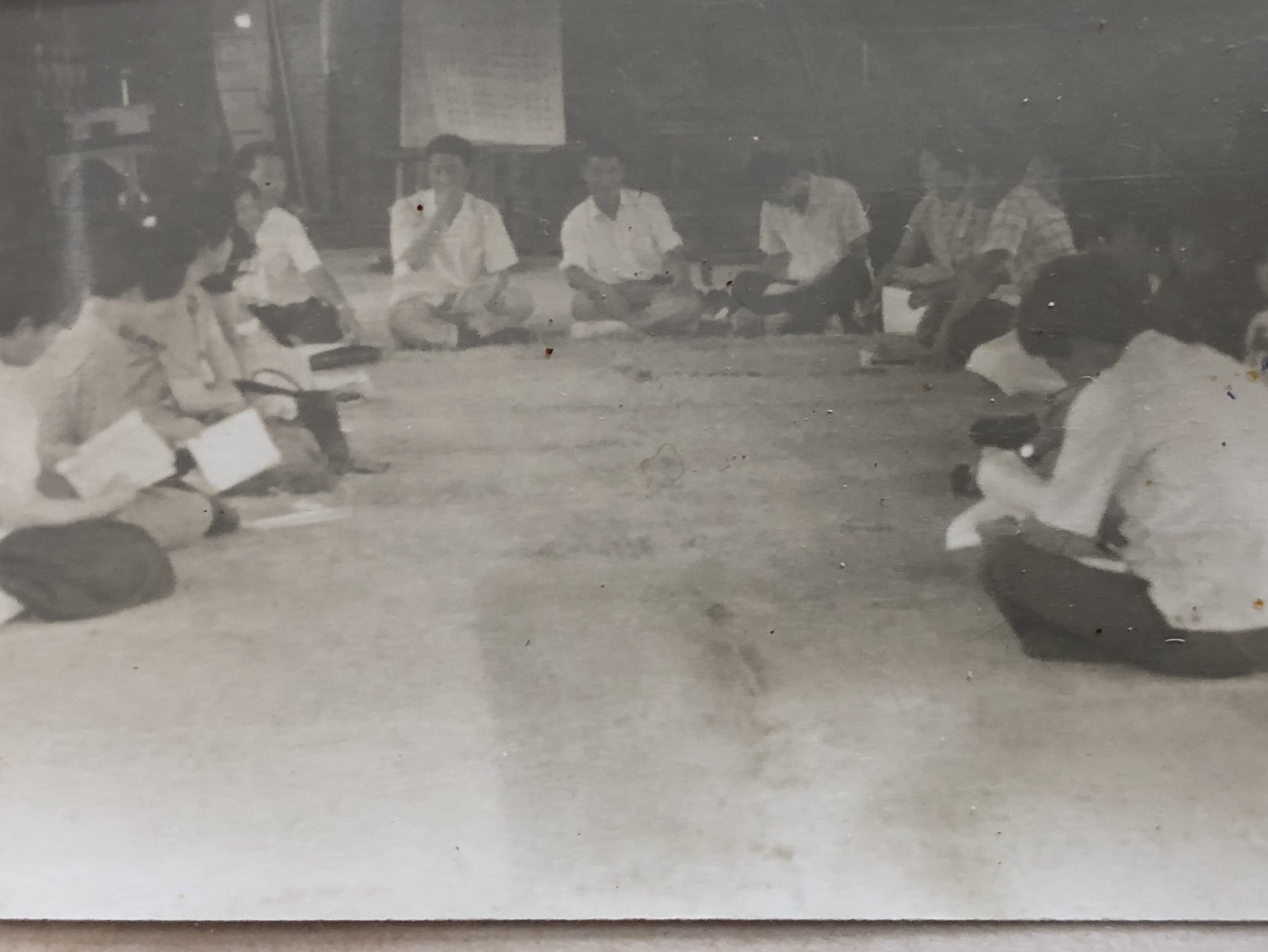
at the South Orange United Methodist Church on Sunday, New Jersey, in March 18, 1984
Dear friends in Christ,
Today, we gather not only as individuals of faith, but as people who carry a deep and shared national history. As Koreans, we are living out a story that echoes the Exodus of Israel and the salvation story that unfolds in Christ. Our national journey is not just political—it is profoundly spiritual. Christ walks with us through our suffering, and in Him, we find our hope.
Our history tells a powerful story. Under Japanese imperialism, we lived as captives. Our ancestors cried out for liberation, for the dignity of self-rule, and in 1945, by God’s grace, we were liberated. But as we know, liberation was not paradise. Instead, it became the beginning of a new wilderness.
Korea was divided—South and North—with conflicting ideologies. In 1950, a devastating war broke out, a tragedy where Koreans turned against Koreans. Nearly four decades have passed since our liberation, yet the scars remain. The division deepens, and the wounds are slow to heal.
In those years, we have endured revolutions and political upheaval. We have seen economic growth, yes—but also injustice, corruption, and inequality. The society we dreamed of—a nation where human rights are honored and justice prevails—remains far ahead of us. Though we were liberated from colonial rule, we are still journeying through a wilderness of suffering. Like Israel, we walk a path of 40 years—perhaps more—toward a promised land we have yet to fully see.
Yet, there is hope.
Through suffering, we have grown. We have learned the values of democracy. We have developed resilience and vision. Our pain has become a teacher, forming within us the character of a people who seek justice, truth, and peace. In the wilderness, God is shaping us—not just as a nation—but as a people ready to inhabit a new kind of promised land.
And in the midst of this national journey, the Gospel has taken root. For over a century, the message of Christ has been proclaimed in Korea. Though the early Catholic Church was persecuted, and the Protestant mission faced hardship, the Good News endured. Today, the resurrection life of Christ is transforming us. We are no longer bound to the old creation. We are being made new.
Christian communities are emerging—communities of creative love, where people live not by power, but by grace. These are only the beginnings. We await the fullness of the Kingdom of God, but already, the Spirit is at work among us.
The Gospel supports justice and liberation, but it points us to something deeper: the liberation of the human heart, the transformation of creation through love. This work of Christ is not bound to any one political system or ideology. The church has survived through colonialism, war, and dictatorship—because it belongs not to this world, but to Christ.
Still, the church does not stand outside history. We are called to be salt and light in the world. We seek the will of God in the realities of our time—social, political, and economic. Some among us are called to be prophets, others teachers, others peacemakers. Each has a role in building up the body of Christ.
Yet we face enemies in the wilderness. Not just external ones, but spiritual ones—unbelief, injustice, greed. These are the antichrists that try to destroy the community of love. So we fight—not with violence, but with faith. This is Missio Dei—God’s mission—to bring about His Kingdom on earth.
But let us not forget the deeper truth. We must never win battles only to lose the war. We must not achieve political success at the cost of our humanity. We must not seek social reform while losing sight of the community of love that Christ calls us to build.
As Jesus said, “The Sabbath was made for man, not man for the Sabbath. So the Son of Man is Lord even of the Sabbath” (Mark 2:27-28). Systems, institutions, movements—they exist for people, not the other way around. Christ is working even now to bring new life to humanity—and He invites us to join Him in that sacred work.
This is the meaning of our suffering. It is not in vain. We suffer with Christ—and therefore, we hope with Christ. The cross leads to resurrection. The wilderness leads to promise. And through it all, Christ is with us.
Let us walk with Him, in courage, in love, and in hope.
Amen.

 Daily Sauntering
You must be logged in to post a comment.