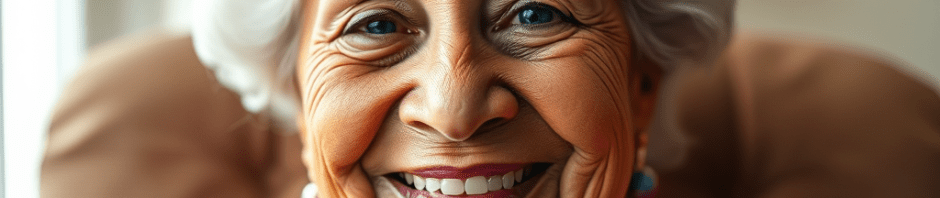
This year, Mrs. Louise Wegi, now 92 years old, decided to sell her car.
Though two years younger in appearance than her actual age, she was still working part-time as a secretary in a law office. Petite in stature and always neatly dressed, she presented herself as well as any young person. She favored pink and blue outfits, never forgetting to accessorize. Her necklaces and earrings, all handed down through generations, were sources of endless stories. Whenever anyone admired them, she would recount their history—when and where they had been purchased, who had given them to her, and what occasion marked their passing down. The missing stones or out-of-fashion colors didn’t matter to her; what mattered was the lineage of the pieces. Her cheerful face, humor, wisdom, and kindness won her deep respect and affection from everyone.
But the signs of aging, slowly appearing year after year, were inevitable. She finally acknowledged she could no longer drive the gray car she had purchased back in 1965. She advertised it in the newspaper and sold it at a good price. Considering most Americans change cars every four years, her car had been blessed with a careful owner. Though 26 years old, its odometer read only 25,000 miles—what most people would drive in two years. This showed her life was stable and without great upheaval; living in the city, she often used buses and trains instead.
“How do you feel about selling the car?”
“Well, first, I’ll save money on insurance. Second, I won’t have to worry about losing it!”
Her thinking was always positive.
“Let’s pop some champagne when the car is driven away!”
“Good idea! After all, we must admit to ourselves when the time has come… Things we could do ten years ago, we cannot always do today.”
Born in 1900, she often emphasized that what she had learned after nearly a century of life was summed up in one word: gratitude. Married at 19, she obeyed her husband’s wish that she not work outside the home. But when he died of cancer in 1950, she supported herself for more than forty years as a secretary.
With a 55-year-old daughter living in a hospital due to cerebral palsy, she even counted as blessings the simplest abilities—being able to dress oneself, to eat by oneself. She spoke with pride that her greatest blessing in life was having a daughter with cerebral palsy, for that daughter opened her eyes to God, gave her a grateful heart for even the smallest things, and became, in her words, “the greatest gift of God.”
“The saddest thing about growing old,” she said, “is having to endure the frailty of the body. When you are young, the body follows the will and spirit. But in old age it is different. Even when the mind urges one step forward, the legs no longer move.”
Her steps grew slower than the year before, and she often spat when she spoke. Yet she faithfully attended church and community programs for seniors, taking responsibility and serving as much as her strength allowed.
I remembered another elderly friend who once told me: “In old age, just knowing you are still among the living is enough satisfaction.” She had served over forty years as a high school English teacher, and after retirement lived alone in a large house. Quiet and reserved, Francis did not like socializing much. Soon after retiring, her health declined rapidly. Finally, she entered a private senior apartment, and within a year, passed away.
“For the first three months, I checked the mailbox every day, hoping someone might send me a letter. But after three months, I gave up even that hope.”
That lonely echo was shared by someone who had visited her for the last time. When news spread that she was moving into the senior apartment, her friends felt both sadness and relief. The facility was renowned for having excellent doctors, nurses, and care 24 hours a day, yet no one could stop her from going.
It was only after spending half my life that I learned to see myself clearly. I regret that for a long time I valued only material “comfort,” making my family suffer and tormenting myself with coldhearted ambition. I now repent of those barren years, and recognize I too am growing old.
“Everything is meaningless, utterly futile; nothing has real value.
What do people gain from all their labor?
Generations come and go, but the earth remains forever.
The sun rises and sets, hurrying back to where it rises.
The wind blows south and north, swirling round and round.
Rivers flow into the sea, yet the sea is never full;
the waters return to the rivers and flow again.
All things are wearisome, more than one can say.
The eye never has enough of seeing, nor the ear its fill of hearing.
What has been will be again; what has been done will be done again;
there is nothing new under the sun.
Is there anything of which one can say, ‘Look! This is new’?
It was here already, long ago.
No one remembers the former generations,
and even those yet to come will not be remembered
by those who follow them.”
(Ecclesiastes 1)
Just as King Solomon lamented the vanity of life, so I also glimpse the fleeting nature of time in my elderly friends.
“At this age, marriage, raising children, wealth, and fame no longer mean anything to me. What I hold onto now is simply gratitude—the joy of living one more day in health, without being a burden to anyone.”
As her car disappeared into the distance with its new owner, Mrs. Louise Wegi slowly waved her hand. At some point in life, she had grown accustomed to letting go of what she once possessed.
Standing in the cold winter wind, her small figure looked like a statue covered with the dust of time, bearing the sign “Past,” unmoving from its place.
(Letter from the Parsonage – Those Who Remained in the City, Story Ten, 1992)
© WanHee Yoon


 Daily Sauntering