The shaman threads the moon on high,
A silver knot in midnight sky.
She spins beneath its haunted glow,
Where truth and shadow come and go.
The willow drinks from steel’s sharp tongue,
Its roots still hum the songs unsung.
A borrowed light, a fleeting breath,
A vow to rise beyond all death.
At crossroads thick with ash and flame,
The people call the lost one’s name.
The incense curls, the pig’s head bleeds,
The tyrant sows his bitter seeds.
A birch breaks stone with quiet grace,
Its roots reclaim the buried place.
They stretch beyond the sunset’s red,
Through sleepless nights where hope has bled.
The serpent slides through smoky glass,
A whisper drifts as shadows pass.
Time bends to hear the voiceless plea—
Denied by chains, yet set soul free.
In yards where birch stakes pierce the ground,
Tall towers rise, the roads are bound.
Yet stones still hold their breath in pain,
While silence sings its cold refrain.
The roots dream dust, tomorrow’s sand,
A future shaped by trembling hand.
The bear eats garlic, weeps alone,
Its grief adrift, by none yet known.
The station hums, the dance is done,
The crowd dispersed, the tale begun.
The bear gives birth to bitter truth,
A cry of dust, the cry of youth.
Cheoyong* once sang, then turned away,
His voice a stone lost in decay.
“Don’t break the wall,” the elders pled,
“Stack stones until they crown your head.”
I fear today, yet still I stand,
And pray to walk tomorrow’s land.
Through cracks in walls my steps abide,
Where dance and sky no more divide.
Hair veils the grave, a sacred line,
Where earth and heaven intertwine.
The cars that circle, lost in trance,
Are shamans too, in broken dance.
The spearhead shakes, the incense bleeds,
The birch still breathes, the bear still feeds.
One step, one word, the silence stirred,
A wind that leans, an unheard word.
The cosmos shivers, cold and wide,
No shelter left, no place to hide.
Its mouth agape, it spills the night—
Ten thousand cries for what is right.
[Beginning Series – Part 4]
© TaeHun Yoon, 1972 (Rewrite in 2025)
* Cheoyong was a mythical figure from the Silla Kingdom (57 BCE–935 CE), said to be the son of the Dragon King of the Eastern Sea. During the reign of King Heongang (875–886), Cheoyong came ashore at Gaeunpo (modern-day Ulsan) and joined the royal court. The king gave him a wife, and Cheoyong settled in the capital, Sorabeol (now Gyeongju).
One night, Cheoyong returned home to find his wife in bed with a stranger. Instead of reacting with anger, he sang and danced:
“Under the bright moon in the capital I reveled the night away. Back home, I found four legs in my bed. Two are mine—but whose are the other two? She was mine, but has been taken. What can be done?”
The stranger, revealed to be a plague spirit, was so moved by Cheoyong’s grace and restraint that he vowed:
“From now on, if I see even your image, I will never enter that house.”
This tale gave rise to the tradition of hanging Cheoyong’s mask or image on doors to ward off evil spirits—especially during year-end exorcism rites.
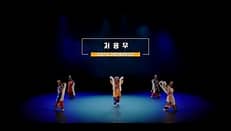
🎭 Cheoyongmu: The Dance of Cheoyong
The story inspired Cheoyongmu, Korea’s oldest surviving court dance. Originally performed solo to drive away disease and misfortune, it evolved into a five-person masked dance representing the five cardinal directions (East, West, South, North, Center), each dancer wearing a robe of symbolic color.
Cheoyongmu is now recognized as:
A UNESCO Intangible Cultural Heritage (since 2009)
A Korean Important Intangible Cultural Property (since 1971)

 Daily Sauntering
You must be logged in to post a comment.