
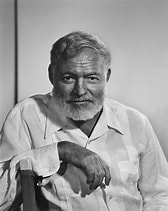
In recent days, the tragic story of the great American writer Ernest Hemingway’s family has once again stirred the hearts of many. Last week, his only remaining descendant, his granddaughter, died under mysterious circumstances at the young age of 41, bringing the family line to a sorrowful end.
Margaux Hemingway, granddaughter of the Nobel laureate known to us for The Old Man and the Sea, was found dead in her apartment in Santa Monica, California, her body severely decomposed. Her death revealed again the long chain of tragedy that had haunted the Hemingway family. Though she had been beautiful, intelligent, and famous, many believe she took her own life — just as her grandfather, Ernest Hemingway, did when he could no longer endure his depression. His brother, sister, and father also committed suicide. Such a legacy of suffering, passed down through generations, fills one’s heart with grief and sorrow.
There is an old saying: “The sins of the father are visited upon the children.” A child raised under a violent father may vow never to repeat his father’s cruelty, yet later finds himself, without knowing it, doing the same. Those who grow up in morally corrupt environments often live unethically as adults, causing pain to those around them as if it were natural.
In the Bible, before Abram became Abraham, he went down to Egypt and lied to Pharaoh, calling his wife Sarai his sister, and thus received sheep, cattle, servants, donkeys, and camels in exchange (Genesis 12:10–20). Later, his son Isaac, facing famine, stayed in Gerar. Fearing that the men might kill him for his beautiful wife Rebekah, he too lied, saying she was his sister — and almost lost her to King Abimelech (Genesis 26:6–10). The father’s actions were repeated in the son’s life. We often summarize such stories with the phrase, “You reap what you sow.”
Yet, there are also countless stories of children who rise above the sins and weaknesses of their parents. Some grow up in homes where the father is a severe alcoholic, yet they mature into admirable and joyful people, living lives others envy. These children do not hate or resent their father; rather, they understand him, pity him, and love him silently.
There are wives who endure lifelong suffering under an alcoholic husband, yet no one around them ever notices their deep pain. This is because they never complain or speak bitterly about their husband in front of others. They bear everything in faith, holding on to the hope that one day he will be healed and set free. Their faith and quiet endurance influence their children deeply — the children come to trust their mother and, in turn, love the God she believes in.
When the blood of Christ flows through such a family, the seed of sin can no longer take root. The power of the Lord’s blood is strong enough to transform not only an individual life but an entire family lineage.
The Apostle Paul cried out to those who remain in the perishable “body of flesh” without putting on Christ:
“Just as we have borne the image of the earthly man, so shall we bear the image of the heavenly man. I declare to you, brothers and sisters, that flesh and blood cannot inherit the kingdom of God, nor does the perishable inherit the imperishable.”
— 1 Corinthians 15:49–50
Ernest Hemingway was a man of towering intellect, who reached the pinnacle of literature through language, emotion, thought, and imagination. He was undoubtedly one of the great writers worthy of our respect. Yet, despite his genius, his family story ended in tragedy.
One cannot help but wonder — if the blood of Christ had reached his family, how different might his life and his descendants’ lives have been? What priceless legacy might they have left for humanity?
“Though I am weak and unworthy, Christ is with me, and I have become a child of God — how can I not rejoice?”
Such a morning prayer suddenly turns into a hymn, filling the heart with humble gratitude.

 Daily Sauntering
You must be logged in to post a comment.