
© Yoon, Wan-Hee, 1996
Last week, my youngest son told me he had a school assignment — an interview project about the life of Dr. Martin Luther King, Jr.
Among his questions was this one: “Why do we need to remember his birthday?”
That question gave me a chance to reflect again on the great impact Dr. King’s life had on the history of humankind.
I found myself asking: Who, in our age, is a true leader?
And how does history lift such a person into eternal remembrance as a leader?
People often say that the modern age is like a ship adrift upon the waves of history, having lost its captain.
Though many claim they wish to do well, nationalism and self-interest seem to come first.
Because of this, it is hard to find leaders truly devoted to the common good.
In Korea, even the imprisoned former leaders swept up in the movement to “set history straight” will leave their marks on the nation’s story — and their lives will serve as lessons for future generations.
A leader, once he begins to desire the position of standing before others, has already lost the true qualification for leadership.
For within such desire hides not the humble spirit of service, but the urge to secure wealth, power, and influence — to use leadership as a tool for control.
Some may seize power through coups, bribery, or manipulation; they may even receive cheap applause and false respect.
But time strips away the layers of glamour, and when they finally stand before the tribunal of history, their truth is laid bare.
Under such false leaders, people suffer oppression, confusion, and the decay of moral and creative life.
It is nothing less than a tragedy.
Among the true leaders my family deeply respects stands Dr. Martin Luther King, Jr.
Each year, we attend the memorial services and events in his honor, and each time, we are reminded anew that he was indeed a true leader.
He did not become a world leader — honored with the Nobel Peace Prize — because he sought greatness.
He never thought of himself as particularly gifted or qualified.
He was simply a young Black Baptist pastor in a small church in Montgomery, Alabama — a friend of the poor, the elderly, the children, and even the troublemakers of his neighborhood.
He never schemed for power; instead, he walked beside the weak and the suffering.
One day, when a woman named Rosa Parks was arrested for refusing to give up her seat on a segregated bus, he helped lead a bus boycott — and won.
His single purpose was to break the chains of racial injustice and oppression.
He reaffirmed that freedom, justice, and equality — the founding ideals of America — should belong to all people.
The torch he lit for liberty spread throughout the nation.
Soon, people began to see in him their leader — a man who could see their pain, speak of it, and rise against it.
Upon the foundation of his pure dream, an entire generation began to stand.
On August 28, 1963, in Washington, D.C., Dr. King renewed the vision of the American Dream.
He gathered both the oppressed and the oppressors before the prophecy of Isaiah:
“Every valley shall be lifted up, every mountain and hill be made low;
the uneven ground shall become level, and the rough places a plain.
And the glory of the Lord shall be revealed, and all flesh shall see it together.”
(Isaiah 40:4–5)
He believed in the coming of God’s justice —
and until that day, he was willing to pray, to suffer, even to go to prison, believing that freedom’s dawn would surely come.
I am proud that such a leader arose — and could arise — in America, our second home.
Even within our Korean-American community, there are many who are called “leaders.”
Some are preparing to return to Korea to pursue political careers;
others have sought positions of leadership for the sake of honor or name.
But true leadership must not serve personal ambition.
It must bear the pains of our immigrant community and dedicate itself to the common good.
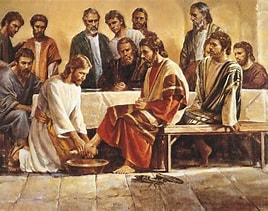
Our model of leadership must be found in Jesus Christ,
who, amid the storms of history, washed the feet of His disciples —
showing that the true leader is always the servant.
(Letter from the Parsonage, O Souls That Leap Like Deer, Fifteenth Story)

 Daily Sauntering
You must be logged in to post a comment.