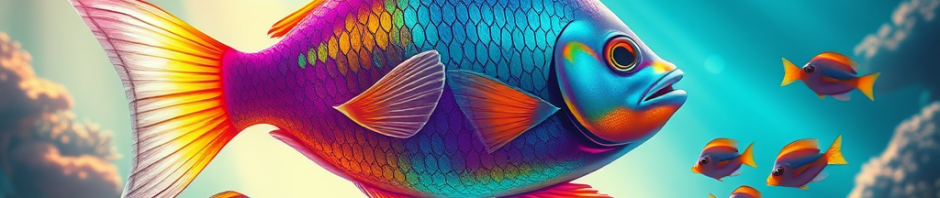
Among children’s storybooks, there is one titled The Rainbow Fish by Marcus Pfister. It’s a book you’ll find in nearly every elementary school library. The story teaches children the joy of living in community and the value of sharing—and I found it deeply applicable to my own life.
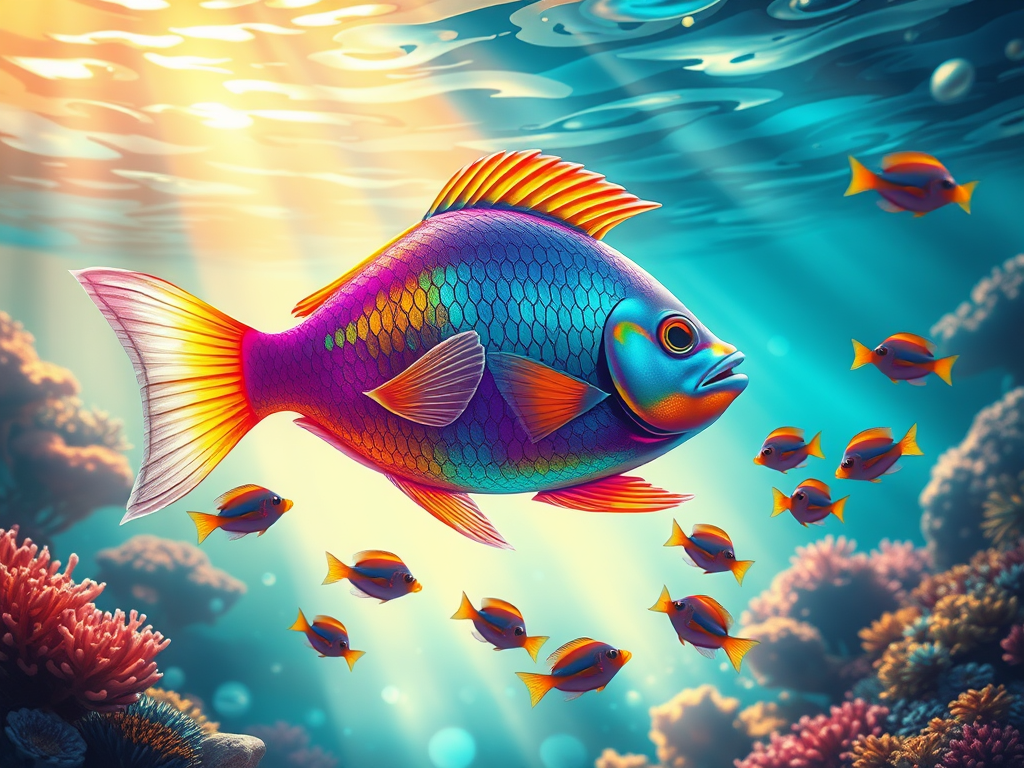
In the story, a rainbow-colored fish lives in the sea. Unlike any other, it has shimmering, multicolored scales that make it the envy of all the other fish. The rainbow fish, proud of its beauty, believes it is special and avoids mingling with others. One day, a small fish approaches and asks for just one of its beautiful scales. The rainbow fish refuses. After that, the other fish stop speaking to it, and it becomes lonely.
Eventually, the rainbow fish seeks advice from a wise old octopus, who tells it to share its scales. So the next time the small fish appears, the rainbow fish quickly gives away one scale. Soon, other fish gather and ask for one too. The rainbow fish shares all but one of its scales. In doing so, it discovers a new kind of beauty—one that shines among others—and finds joy and happiness living together with them.
Growing up in Seoul during the 1960s, I lived in an environment so harsh it could be described as chaotic. The streets were filled with disabled war veterans, orphaned children, reconstruction sites, clouds of dust, displaced families, and the stench of waste from Cheonggyecheon stream*.
My family was part of that struggle. My parents worked tirelessly to make ends meet, and my father, in his late forties, suffered from heart disease. Yet day and night, my parents brought homeless children into our home—washing them, feeding them, dressing them in our saved clothes, and letting them sleep under our roof. They searched for their relatives, wrote letters, and sent them back to their hometowns when possible.
As a child, I resented this. I was hurt when my cherished clothes were given away without hesitation. I often thought, “We’re not rich—why should we help others?” That rebellious question lingered in my heart.
But sharing one’s resources and life is a sacred act—a key that opens the door to miracles. Though giving brings more joy than receiving, I still find myself stingy with generosity. Sending a card, making a call, picking flowers for a neighbor, visiting the sick and lonely, looking deeply into someone’s eyes… these simple acts are often pushed aside with the excuse of being too busy.
This autumn, the rainbow-colored fish has returned to my life—like a whisper from the Lord, reminding me to rediscover joy and worth through true sharing.
- Cheonggyecheon (Korean: 청계천, Korean pronunciation: [t͡ɕʰʌŋ.ɡje.t͡ɕʰʌn]) is a 10.9-kilometre-long (6.8 mi) stream and public space in downtown Seoul, South Korea. A natural stream sourced from the Suseongdong Valley in Inwangsan, it was historically maintained as part of Seoul’s early sewerage until the mid-20th century, when post-Korean War rapid economic development and deteriorating conditions prompted the filling of the stream with concrete and the construction of an elevated freeway, the Cheonggye Expressway, in its place. In 2003, the city government began an urban renewal project to remove the expressway and restore the stream, which was completed in 2005 at a cost of over ₩386 billion (approximately US$281 million). The Cheonggyecheon restoration project initially attracted significant public criticism, but since its opening in 2005 it has become popular among residents and tourists. (Wikipedia)

 Daily Sauntering
You must be logged in to post a comment.