
Every year, among the events held just before Christmas, there was a visit to the prison. It was a bleak day—the weather was so gloomy that it looked like it might snow at any moment, the wind was whipping hard, and the temperature had dropped below zero, making everything feel desolate.
The state prison is located in the town of Coxsackie in Green County, about three hours’ drive from New York City. This is where some of our children are now incarcerated. While at times there have been as many as fifteen Korean-American youths there, this year there were nine. We thoughtfully prepared Christmas gifts for them and went to visit.
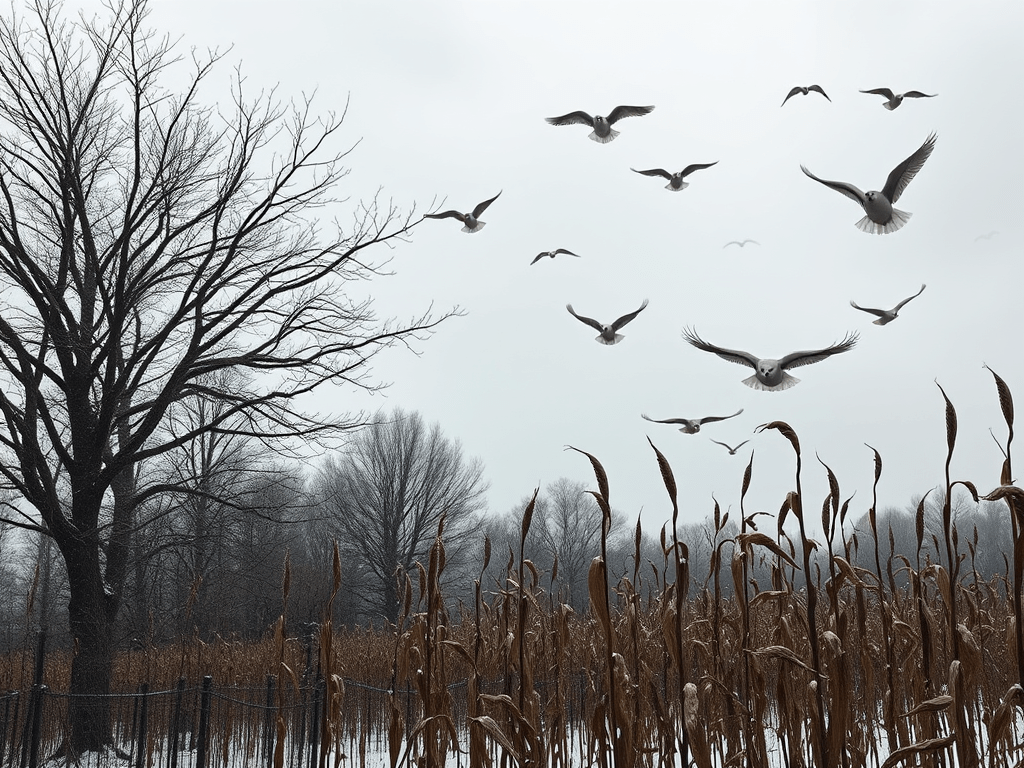
At the entrance to the prison, far removed from residential areas, lay an expanse of bare, skinny apple trees, and on one side, an endless field held chopped corn stalks lying exposed to the cold wind. If not for the winter birds occasionally flying in flocks and the swaying of tall trees, the scene would look like a landscape painting. Looking at this scenery—the very scene the Korean-American youths gaze upon, hands and feet bound, amidst the stern faces of other inmates—and putting myself in their shoes, my vision began to blur with a hazy mist.
At the prison entrance, after confirming my identification and signing the necessary forms that had been sent in advance, special invisible ink stamps were placed on the back of my left hand—stamps only visible under a black light. Then, after passing through several iron gates, we were led to the small chapel where the Korean-American youths were waiting inside the prison.
A young man whose face looked familiar offered an awkward greeting, and the first-timers barely managed to lift their heads, seemingly shy. We sat among the youths and shared the Holy Communion prepared by the pastor, confirming that we are all part of the body of Christ. We prayed for the grace of the mystery—the experience of being born into a new life by eating the flesh and drinking the blood, which is the life of Christ.
“I don’t know how to speak Korean.” “I’m not good at English.” “I’ve been here for two and a half years.” “I came in two days ago.” “I have to stay here for five and a half years.” “I have three more years here.” Although I didn’t know whose fault it was or why they ended up there, they muttered these things like monologues. Even their drab blue uniforms could not hide their underlying purity and innocence. One could tell at a glance that they were all the precious sons of a family.
As the correctional officer knocked, signaling the time for roll call, we quickly hugged each of the children who were getting up to leave. I looked into their tear-filled eyes and told them, “If you receive Jesus, you can become a fine person even here! You must cling only to Jesus.” As they heavily turned to leave, my eyes conveyed the desperate thought, “The living Jesus I know and have experienced could change their lives immediately…”
Our footsteps on the way back were heavy. And we couldn’t help but confess and repent before God. How often had we confused my children with our own duplicitous life, or outright stifled their dreams by trying to impose our own unfulfilled ones? The discord between our spouses and we completely shattered their peace, inflicting wounds and already digging an irreversible chasm in their hearts. Mentally, I begged for forgiveness from those wearing the prison uniforms, sharing in a common responsibility and pain. Their parents may have been their biggest enemies.
It is impossible to recover a child to the starting point after they have been carelessly transplanted to a foreign land, abandoned while the parents only focused on work day and night, and finally drawn into the darkness. Thinking of the agony of the parents who cannot sleep at night, tormented by self-reproach and grief after sending their children to prison, all our souls wandered in the silence of the night sky, where white snowflakes were falling.
“The people walking in darkness have seen a great light; on those living in the land of deep darkness a light has dawned” (Isaiah 9:2).
I rely on the hope that this Christmas, Isaiah’s song—sung 2,700 years ago to an age that had lost hope—will bring comfort to our wandering souls.
“Then will the eyes of the blind be opened and the ears of the deaf unstopped. Then will the lame leap like a deer, and the tongue of the mute shout for joy. For waters will gush forth in the wilderness and streams in the desert” (Isaiah 35:5-6).
 Daily Sauntering
You must be logged in to post a comment.