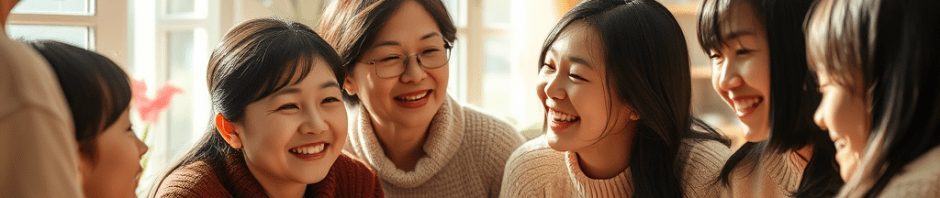
“Now, let’s begin our Q&A game. Question 1: What are the three universities your parents like the most?” “Me! Harvard, Yale, and Stanford!” “Yes, correct! Question 2: Who is your parents’ ideal marriage partner for you?” “Yes. A Korean person who graduated from an elite university.” “Correct again. Question 3: What are your parents’ favorite sports or games?” “Yes. First, golf. Second, watching videos. Third, playing hwatu (Korean card game).”
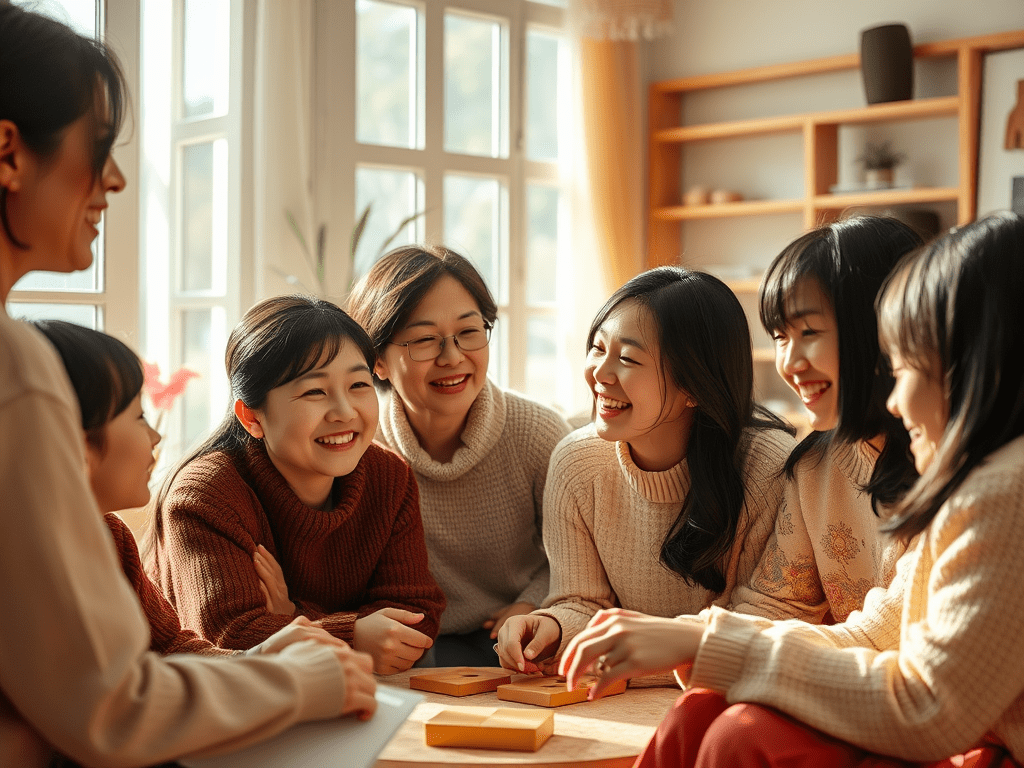
The room—packed with Korean women at the Scarritt Bennett Center in Nashville, Tennessee—erupted in laughter. This game took place at the National Korean (United Methodist) Women’s Missionary Training held late last month.
Leaders of women’s missionary groups from across the country gathered with their second‑generation daughters for the shared purpose of mission. During the training, there was a special session called “Conversation With the Second Generation,” where mothers and daughters opened their hearts to one another. Out of about 180 participants, around 20 second‑generation daughters attended. The program was designed to pull out from under the carpet all the hidden conflicts and tensions between parents and children, and to narrow the emotional distance between them.
Through this time of conversation, we learned that the struggles of our children are not as simple as parents often assume. As individuals living between two cultures, they endure deep, complex conflicts and pains—far more severe than we had imagined.
As I sat in that session, listening to the unreasonable demands adults often place on their children, and seeing the wounded hearts of these mature second‑generation young adults, I felt ashamed as a parent. Yet at the same time, I experienced more deeply that it is not parents who raise children—it is God who nurtures them, heals their wounds, and strengthens them through every trial.
The daughters shared their struggles and pains under the theme “My Mother’s Garden.”
Testimony 1
“When I was young, my brother and I were the only Asians in our school. The kids constantly tested us. They pushed us down to see whether we fell the same way American kids did, or differently. It was unbearable. But I still went to school every day.
When I came home, I had to cook dinner for my parents who returned late, and I took care of my younger brother like a mother. When my mom went to PTA meetings without understanding a word of English and told me to interpret for her, I felt overwhelmed.
I hated being Korean. I hated our language and culture. I wanted more than anything to become American as quickly as possible. I refused to speak Korean at home for a long time…
But now, at 28, I look back at my mother’s garden. Yes, there were weeds and unnecessary insects growing there. But my mother still made me bloom.”
It was the tearful confession of a young woman who is now an attorney with a beautiful family of her own.
Testimony 2
“I grew up with my divorced mother. I hated that she sacrificed everything for me, placing all her hopes and expectations on me. I treated her coldly and harshly.
When I finally met the man I loved and brought him to meet her, she couldn’t say a single word because of the language barrier. I felt embarrassed. I thought she looked foolish and small.
But now I see—my mother was the one angel God sent to me. She carried the thorn of divorce in her garden, and yet she made me bloom.”
This was the choked‑up confession of another young woman, now an engineer.
Hearing these daughters’ tearful testimonies, every mother in the room wept as if watching her own children grow up all over again. Though we parents try our best, our imperfections leave scars on our children’s hearts, and our love often limps along. Yet seeing how mature our children truly are—how fair and clear their judgment can be—we felt a surge of relief and gratitude, knowing that God has been protecting them all along.
A Mother’s Confession
After the young women spoke, a mother in her sixties shared an unforgettable confession. She had immigrated in the 1960s. Her father was a doctor, her husband was a doctor, and she herself was a nurse. She raised three children in a privileged home and expected all three to become doctors. Having known nothing beyond the medical world, she had no understanding of other professions or of society at large.
Like many Korean families, she sent all three children to Phillips Academy, an elite prep school, and then to top universities. But her children’s lives went in directions she had never imagined, and she became furious.
Her eldest daughter, after one year of college, insisted on marrying an Englishman. The mother opposed it with all her might, but the daughter secretly went to city hall and got married. The mother felt the sky collapse.
Then her second child, a son, dated a blonde woman. After watching his parents’ reactions, he too secretly went to city hall and married her. The mother felt utterly defeated and prayed daily with tears for her children to change.
But in the end, she realized it was not her children who needed to change—it was she herself. She had to accept that her children’s world could never be the same as hers.
This year, she married off her youngest daughter, age 32. The son‑in‑law is “half Korean,” and she said it brings her great comfort and joy to finally have a “Kim‑seobang” (Korean son‑in‑law), even if only half. The son‑in‑law’s mother is American, but his father is Korean, and she was delighted by that.
“When I finally allowed my children to live the lives they wanted, our relationship was restored. I believe this was God’s answer to all my prayers. I have finally found happiness again.”
Her testimony was a profound lesson for every mother with unmarried children.
The Meaning of True Dialogue
What relationship is as deep and unbreakable as that between parent and child? But true dialogue is not one‑sided commands or expectations. Dialogue happens only when both sides consider each other’s position, share feelings, and seek understanding.
We must acknowledge that the world of the parent generation and the world of the children are vastly different—and seek harmony and reconciliation there.
One of the greatest lessons from this national training was this: If Korean churches and communities truly want to keep the second generation, we must respect them as full persons and seek to understand them. If we do, they will not leave us.
And the wall between parent and child— only when we break down our own prejudices, customs, and one‑sided thinking can we all enter the space of true dialogue.
— Wan‑Hee Yoon, Letter from the parsonage, November 1, 1999

 Daily Sauntering
You must be logged in to post a comment.