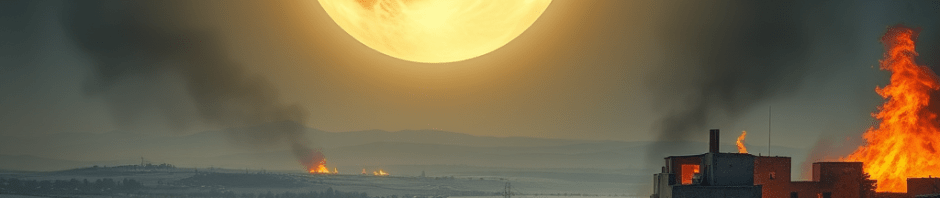
(with the shadow of war)
At the edge of winter
when the first full moon
hangs—
not yet spring,
not wholly winter—
memory stirs.
Not my memory alone
but the slow breathing
of ancient villages,
smoke rising from fields
where farmers of the Three Kingdoms
burned the tired grass,
small deaths of insects,
brittle stalks of the passing year—
fire preparing
what frost could not finish.
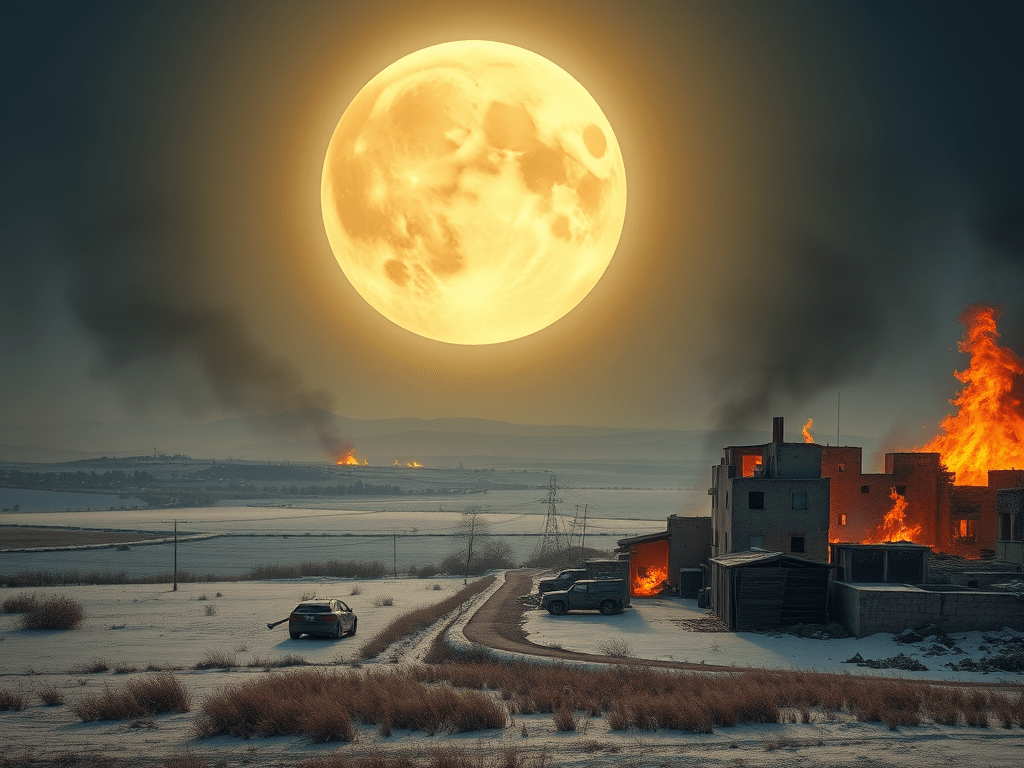
And beneath the moon
a murmuring prayer
older than speech itself:
Let the land remember life.
But tonight
another fire enters my thoughts—
not the fire of fields
nor the straw moon-house
at the gate of Joseon,
but the red fire
falling over towns of the Middle East.
There the moon also rises.
Children also look upward.
But the flames
are not prayers.
They climb from broken roofs,
from streets without sleep,
from the breath of war.
And I stand far away
before this festival fire—
safe behind the careful line,
watching sparks drift upward
while somewhere
another flame
consumes a night
that cannot celebrate.
My chest holds both fires:
the old fire of cleansing,
the terrible fire of killing.
Which one is the truth of our age?
The crowd cheers
as the moon-house collapses inward.
Paper wishes scatter into ash.
Yet my hands come together
not in festival joy
but in a quiet struggle of prayer.
Let the fires of war
grow tired.
Let the flames that destroy
remember the work of the field—
to clear,
to renew,
to prepare the earth for life.
Before the first full moon
I whisper into the rising sparks:
Let the winter of hatred
become ash.
And somewhere
beyond the smoke of nations
open again
the narrow road of spring.
* The Fire of the First Full Moon – “Jeongwol Daeboreum Fire Rituals”
The fire rituals of Jeongwol Daeboreum are not merely festivals—they are deep communal ceremonies in which people burn away the misfortunes of the past year and pray for abundance and peace in the year to come.
Daljip burning involves setting fire to a large structure made of rice straw at the moment the full moon rises. The higher the flames rise, the greater the blessing is believed to be.
Torch play is a ritual in which villagers carry torches around the fields to drive away evil spirits.
Field burning is a practical custom that burns away pests and weeds in the fields, while also serving as a prayer for a good harvest.
All these fire rituals symbolize purification and petition. Fire burns away the misfortune of the old year and purifies the new one. The moon symbolizes abundance and life. The community represents unity and hope.
Although these traditions have evolved into cultural festivals with modern safety considerations, the mystery of fire and the prayers of the community still live within them.
– TaeHun Yoon, 3/14/2026

 Daily Sauntering