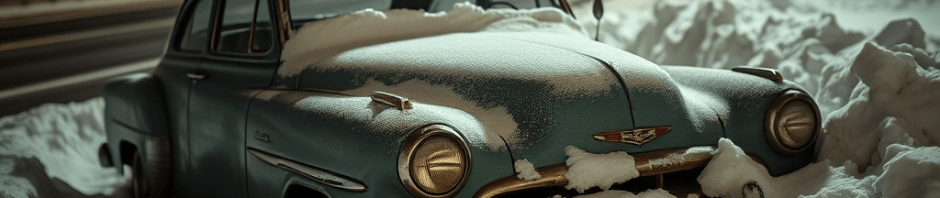
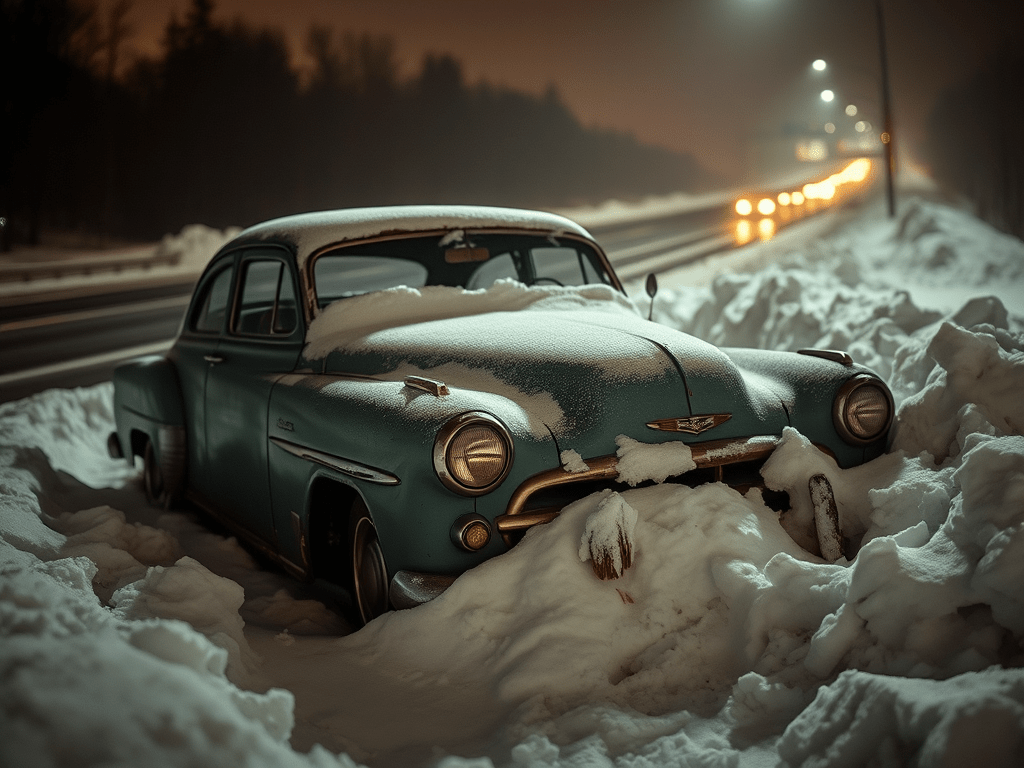
Snow had piled up like mountains along every street, and the wind was fierce that cold night. It was past eleven, and my husband still hadn’t come home. Worried, I kept watching the headlights of passing cars through the window. He was never this late. Just as my anxiety grew, the phone rang.
My husband said the engine had died on the highway and that he would be home soon in a tow truck. I felt relieved that he was safe, but another fear quickly followed: What will happen to the car?
Our old car—ten years old that year—felt like a member of our family. It had passed 100,000 miles nearly four years earlier, and after the odometer broke, we no longer knew how far it had traveled. It lived in “eternal youth.” Though it wheezed and rattled loudly, and the doors squeaked enough to wake the neighborhood, it never failed us on the road.
I still remember the day, ten years earlier, when that shiny gray car pulled into our driveway. Our three young children ran to it like excited puppies, each claiming a seat. My husband, for the first time, lifted his shoulders proudly before the family. We celebrated our new car by driving joyfully along the Hudson River in the full bloom of spring. Even our American neighbors said, “That’s a good car!” and rejoiced with us.
It wasn’t a luxury car, but to us it was our most precious possession. Every morning it carried the children to school, then spent the day running errands—groceries, visits, pickups—never resting. It became more than transportation; it became my closest companion.
On good days, it was my private stage where I sang like a soprano at the top of my lungs. On heavy days, it carried me down the highway with no destination, letting me breathe. When I honked impatiently for the children to hurry out, the car silently rebuked my lack of patience.
We also shared unforgettable memories on a family trip to Canada. All five of us squeezed into that small four‑cylinder car, packing the trunk, under the seats, and even four bags on the roof. Yet it never once broke down. After the trip, we discovered the wheels had been worn down to the inner metal supports from the weight and distance—but the car had endured it all. From then on, our affection for it only deepened.
Time passed. The daughter who had been in fourth grade was now in college, driving that same car. Perhaps its lifespan was longer than we expected. Sometimes I whispered to the aging car, “Please, just last until she graduates,” knowing it was an unreasonable request, but also knowing it came from love.
There had been a few minor accidents, and we replaced the front bumper once or twice, but the engine had always remained strong. In recent years, as the car aged, small problems appeared here and there, but the mechanics cared for it faithfully, replacing parts and tending to it with skill. Its old age was still healthy.
So when I saw the car that night—covered in snow, hanging from the tow truck, its breath gone—it broke my heart. I hoped vaguely that the mechanic’s touch would revive it again. But after inspection, he said the coolant had leaked, the engine had overheated, and it could no longer be used.
“…The engine is gone? It can’t die! That car is part of our family!” I wanted to beg them to save it.
For the first time, I thanked God for the ten years we had driven safely, and for a car that had served us faithfully all its life, giving its last breath to protect its driver.
How can the heart feel such sorrow over a car? Looking at the empty driveway, I felt most pained remembering how we had overloaded it on the Canada trip. I regretted the times I slammed the door in frustration. I realized how easily I had taken its lifetime of service for granted.
If losing an old car hurts this much, how much more painful will it be when someone we love suddenly leaves the highway of life? Ah—let me promise never again to wound the hearts of those I love. Let me say: let us live our remaining time beautifully and meaningfully. What more do we expect from one another than to stand side by side, heart leaning on heart? When someone leaves, they cannot return.
Through the drifting winter snow, the familiar rattling sound of our old car— the sound I felt would come up the driveway at any moment— slipped quietly into the pages of time.
— Yoon Wan Hee, June 4, 1997

 Daily Sauntering
You must be logged in to post a comment.