“Did you know she had tuberculosis?” The social worker’s voice crackled through the phone—startled, confused.
“…As I told you yesterday, that was the first time I had ever met her.” Her voice settled a little. “Is there truly no way to find any relatives or documents connected to her?”
“Well… if what she said yesterday is true, she left her belongings at a Korean restaurant and asked me to retrieve them. I’ll try to go soon.”
The social worker repeated her plea several times—please check quickly—before hanging up with a sigh of partial relief.
It had been about two weeks since the 105th Precinct first contacted us. A homeless Korean woman had been wandering around the station, refusing to leave, and for three nights had slept on a chair inside the precinct.
After interviewing her, my husband realized she needed both a medical exam and psychiatric care, so she was sent to the city hospital. From there she was transferred to a psychiatric facility, and the hospital asked us to help locate any relatives.
The psychiatric ward was filled with women—Black, white—disheveled hair, unfocused eyes, pacing the halls or muttering to themselves. Those in more severe condition were locked behind doors, pleading with passersby to open them.
Her name was Lee Pil‑soo. She looked about forty‑five, with clear skin, double‑lidded eyes, and long permed hair. During our first fifteen‑minute meeting in the visitation room, she sat perfectly straight, posture unbroken. At times she was overly polite; then suddenly she would glance around nervously and whisper that wicked people in the ward were trying to harm her, that she had just reported them to the police.
She begged us to retrieve two bags she had left at a Korean restaurant.
To my surprise, her words were true. Skeptical of a psychiatric patient’s memory, I called the restaurant—and indeed, there were two bags labeled “Mrs. Kim,” just as she had said.
The large suitcase was heavy. Carrying it out of Flushing, I wondered whether it might contain documents that revealed her past. The roads felt rougher than usual, full of potholes. Someday, when New York’s finances improve, these streets will be smooth again, I thought. No—someday, when the hearts of immigrants are healed, when their wounds are mended and their dreams restored, then we will all look back and say: There was a time when we drove on the torn, patched roads of longing, sorrow, and homesickness.
As I opened her suitcase, my heart trembled. Each item felt sacred, carrying the scent of her life. What had her dreams been?
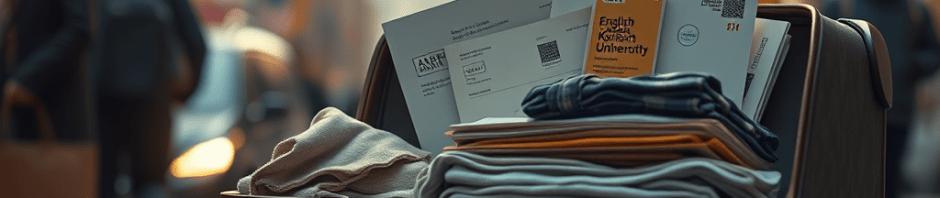
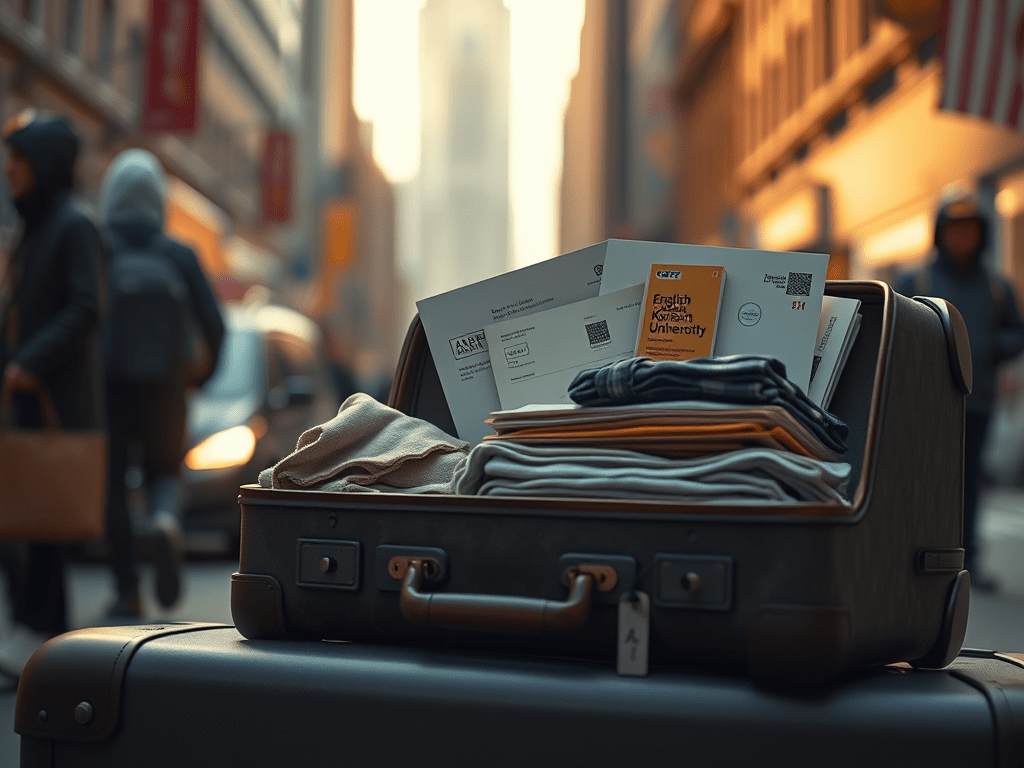
The inside was neat and orderly. Underwear folded cleanly, winter and summer clothes separated and wrapped in white plastic. Between the clothes were papers—an English‑Korean dictionary, pencils, GRE prep books, envelopes from American universities, admission documents stamped February 5, 1985. Her expired passport held a photograph of a young woman smiling brightly, full of hope.
There were blank postcards, a carefully kept black‑and‑white photo of a handsome man, and an old Mother’s Day card. Between them lay a single photograph wrapped in white paper— a picture that struck me deeply.
A grandmother stood on a bridge before a rural Korean reservoir, dressed in a pale hanbok, hair neatly pinned, smiling gently. Her mother. It could be no one else.
Suddenly, longing for my own mother surged over me like a wave.
How many years had her mother grieved after sending her young daughter across the ocean? How many nights had the daughter, in her loneliness and turmoil, held that smiling photograph for courage? How many dreams had shattered before that radiant name—Mother—as she wept through the night?
A mother’s heart is one, whether in Korea or anywhere in the world.
I remembered poet Kim Nam‑jo’s confession: “All the burning and offering of my life belongs to my mother and me together—God alone knows this.”
Gathering the scattered pieces of the woman’s belongings, I felt as though I were gathering fragments of her broken life. And then I began writing a long letter—to her mother, who might still be alive somewhere.
“Mother, At last I take up my pen. Forgive me for loving you yet never saying, ‘I love you, Mother.’ It has been more than ten years since I told myself that when a new life began for me, I would run to your side. Mother, the letters that never reached you—I release them into this spring air. The dreams I could not complete, I will lay gently into this earth. The hungry desires, I will shed with humility. Mother, I am returning to the soil‑scented warmth of your embrace, where the buds of my life first began. If this is the final station of my journey, I know you will not blame me. You—my defender, my resting place, the one who will greet me barefoot at the gate— Mother, I pack my broken dreams back into this suitcase. Receive me. Forgive me. Your unfilial daughter.”
— Yoon Wan-Hee, June 16, 1997

 Daily Sauntering
You must be logged in to post a comment.