Crossing the river of creation and prophecy, Cradling an armful of the Holy Spirit’s flames Above a compass that has lost its way.
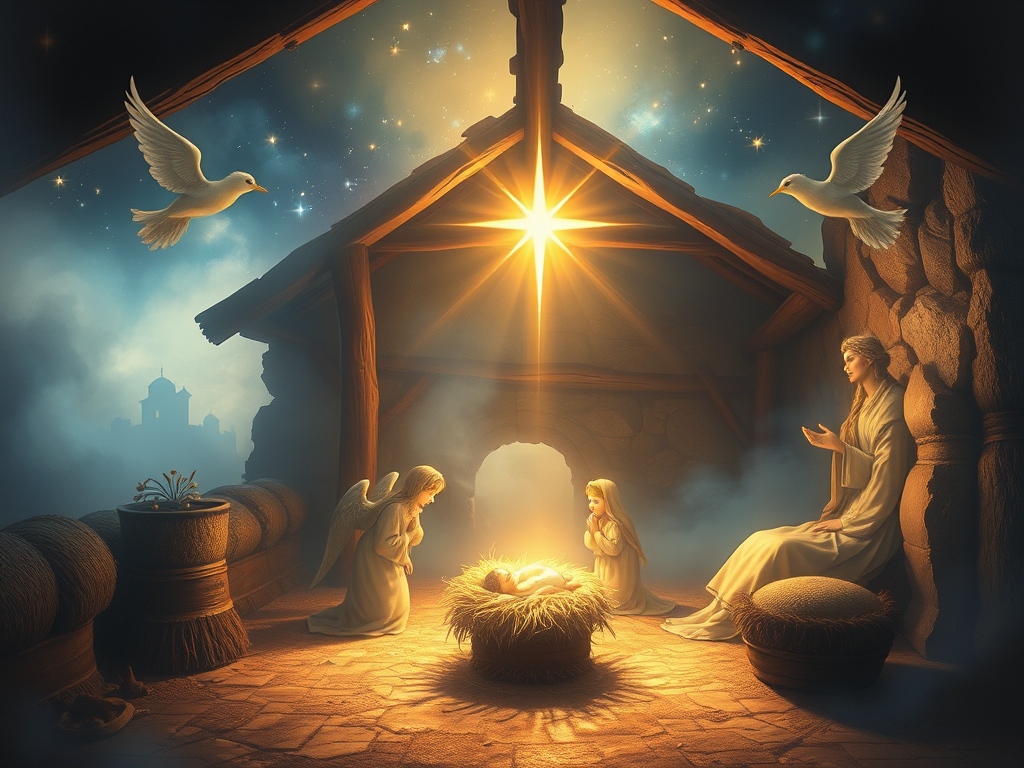
The Baby is coming! Beyond the throne of David’s city, Over the manger in Bethlehem, To become a lone volcano In frozen Sodom and Gomorrah, To push aside the boundary between heaven and earth.
The Baby is coming! In the trumpets of peace of Heaven’s armies and angels, To sweep away the terror of war, To break the chains of sin, To place in our hands the sword of love, To give us eternal life.
O King of Peace! O Lamb of atonement! Come deep into the shattered soul. Burn this humble thatched cottage With the breath of love, And build there a palace of peace.
Officiant: Today we affirm the vows that sustain a marriage. These are blessings, not burdens—guiding lights for your shared journey.
1. Remember the first love. Cherish the tenderness and delight of your earliest days together. Couple:We will.
2. Mark the days. Celebrate birthdays and anniversaries. Let the table be a place of harmony and joy. Couple:We will.
3. Tend the garden. Your home is a garden of love. Nurture it with balance, patience, and peace. Couple:We will.
4. Do not compare. Never envy another’s spouse. Treasure the one beside you. Couple:We will.
5. Speak together. Discuss all things. When conflict arises, let patience be the bridge back to peace. Couple:We will.
6. Guard your words. Avoid jokes or words that wound. Speak healing, not harm. Couple:We will.
7. Love and respect. A wife lives on her husband’s love; a husband lives on his wife’s respect. Couple:We will.
8. Live with measure. Shape your household with wisdom. Plan with honesty. Couple:We will.
9. Speak gratitude often. At least three times each day, say “I love you” and “thank you.” Couple:We will.
10. Seek God together. In Him, your spirits unite. In that union lies the deepest joy. Couple:We will.
Officiant : These vows are the pillars of your home, the melody of your days, and the light that will guide you through every season. May your love be steadfast, your joy abundant, and your union blessed.
Blessing Prayer
Officiant: Let us pray.
Gracious God, You are the giver of love, the keeper of promises, the One who binds two hearts together.
Bless this couple, that their home may be a garden of peace, their words a fountain of kindness, their days a song of gratitude.
Grant them patience in trial, joy in celebration, and strength in every season.
May their love reflect Your love, their union reflect Your grace, and their journey together be filled with light, laughter, and faith.
One candle here, lighting hope, for the days I had already folded away and called despair, and for all the broken relationships in which I now beg for forgiveness.
One candle here, lighting love, for the wrongs I did to others, for the wrongs others did to me, all of them I long to see melt away before the burning warmth of the Lord.
One candle here, lighting joy, as you come to the stable-like place that is my life, lay your holy body there and make it pure, so that unending praise may never cease.
One candle here, lighting peace, for all the countless times in a day I sink in gloom, for the discord when I am farthest from my own true self; even when alone, I long to pull hard at the oars of peace.
One candle here, lighting the coming of the Savior, and on the road where your grace leads me, a rich fragrance overflows on the fields of this life.
It was nearing Christmas. At the adoption agency, a 13‑month‑old boy named Freddy had been waiting for months, but even at Christmas he had no home to return to. Freddy was bright, with a charming smile, already walking and mimicking words. Yet no one wanted him. Freddy had been born without arms. The agency searched everywhere for adoptive parents, but everyone wanted only healthy children without disabilities.
One day, a truck‑driver couple, married for 18 years but childless, submitted papers requesting a child. They had long wished to adopt, but their limited finances had led to repeated rejections. When the caseworker visited the Pearsons’ home, an empty swing hung from a tree in the yard, swaying in the wind. During the interview, the couple declared confidently: “Though we have little money, we have stored up enough love to give any child who comes to us.”
The caseworker hinted that a 13‑month‑old boy was waiting for parents. Their eyes lit up. “We can raise him well. I’ll make him a baseball player—I was one in school!” The wife chimed in: “Yes, we’ll take him swimming, play baseball in the park… we’ll do everything together.”
The caseworker handed them Freddy’s photo and carefully explained: “Freddy was born without arms.” The couple gazed silently at the picture. The husband asked, his voice trembling with excitement: “What do you think, dear?” She smiled brightly: “…Soccer! We can teach him soccer, can’t we?” He nodded: “Exactly. Is sports really so important? He can head the ball, kick with his feet… and he can study at university too. Arms aren’t everything in life! We’ll start saving now for his education.”
The next day was Christmas Eve, when joy descends upon the world. The Pearsons waited in the adoption office, filled with nervous happiness, worried that Freddy might reject them or cry.
Soon the door opened. “Merry Christmas!” said the caseworker, smiling broadly as he brought Freddy in. The Pearsons, tense and tearful, knelt awkwardly, gazing at the child. Bundled in a thick winter coat, Freddy hesitated, pressing his face against the caseworker’s leg in fear. The Pearsons smiled gently, arms wide: “Freddy! Come, come to Mommy and Daddy.” Freddy looked back and forth between them, frozen. Then the caseworker nudged him: “Freddy, go to your parents. It’s Christmas—you must go home now.”
“…Christmas?” Freddy paused, then waddled slowly toward their open arms, breaking into a run. The Pearsons, overwhelmed with tears, embraced him tightly, as if to swallow him whole, the three melting together in joy and gratitude.
From the window, as snow fell thickly, the caseworker watched the family depart, feeling as though he were celebrating Christmas for the very first time. (Excerpted from Chicken Soup for the Soul #4)
Dwight L. Moody once said: “There may be counterfeit love, counterfeit hope, counterfeit faith—but there is no counterfeit humility.” He praised the humility of Jesus, born in a manger. This year again, the Lord’s gift—the beautiful Christmas gift—comes to us, leaving His heavenly throne to bear our sorrows. Because of this gift, even in despair we are invited into dazzling moments of hope and tomorrow’s promise. May this Christmas gift be ours again this year.
성탄절이 가까워 오고 있는 때였 다. 양자결연기관에, 13개월 된 프레디라는 백인남자 아이가 들어온 지 가 여러 달이 되었지만, 프레디는 성탄절에도 돌아갈 집이 없었다. 프레디는 총명하고, 방긋방긋한 웃는 모습은 참으로 귀여웠으며, 벌써 걷기도 하고 웬만한 단어도 따라하였다. 그러나, 프레디는 아무도 원치를 않았다. 프레디는 태어날 때 양팔이 없이 태어났기 때문이다. 양자결연 기관에서는 프레디의 양부모 될 사람을 찾아보려고 백방으로 알아보았지만, 누구나 건강하고 신체에 문제가 없는 아이들만을 원하였다.
어느 날, 결혼한지 18년이나 되었지만, 아이가 없다는 트럭운전사 부부가, 아이를 원한다는 서류를 보내 왔다. 그들은 진작부터 아이를 양자하고 싶었으나, 재정이 약함으로 인해 벌써 몇 군데로부터 거절을 당한 상태였다. 대리인이 피어슨씨의 집을 방문하니, 집 마당에는 빈 그네가 나무에 매달려 있은 채 바람에 흔들리고 있었다. 대리인은 그들 부부를 면접하자, 그들 부부는 당당히 말하였다. “우린 비록 돈은 없지만, 어떤 아기가 오든지 충분히 줄 수 있는 사랑은 저축해 두었습니다.” 대리인은 그들 부부에게 13개월 남자아이가 양 부모를 기다리고 있다고 넌지시 말하였다. 그들 부부는 눈이 반짝였다. “저희들은 그 애를 잘 키울 수 있어요. 저는 그 애를 야구선구로 꼭 키우고 말겠어요! 저는 학생 때 야구선수였거든요!” 부인이 맞장구쳤다. “그럼요. 우린 그 애를 수영도 데리고 가고, 공원에 가서 야구도 하고… 무엇이든지 다 함께 할거예요” 대리인은 흥분한 부부에게 프레디의 사진을 내밀었다. 그리고 조심스럽게 말 하였다 “프레디는 날 때부터 팔이 없이 태어났어요…”그들 부부는 말없이 아이의 사진을 들여다보았다. 남편이 들뜬 음성으로 물었다. “여보 어떻게 생각해?” “…! 축구! 아이에게 축구는 가르칠 수 있잖아요?” 부인이 환하게 미소지었다. “맞아! 사실 운동이란 뭐 그리 중요한 것인가? 팔이 없으면 머리로 공을 받고 발로 찰 수도 있고…, 대학공부도 얼마든지 할 수 있잖아? 사실 팔이 삶의 전부는 아니야! 우린 아이의 대학진학을 위해 지금부터 열심히 저축할꺼에요!”
내일이면 성탄의 기쁨이 온 누리에 내려지는 성탄절이었다. 피어슨씨 부부는 긴장과 행복감에 젖은채, 양자결연 사무실, 대기실에서 기다리고 있었다. 그들은 행여 프레디가 그들을 싫어하거나, 울면 어떻게 할까를 염려하며 서로의 숨소리조차 죽인채 기다리고 있었다.
잠시후, 문이 열리며 “메리 크리스 마스” 프레디를 데리고 나오는 대리인이 활짝 웃었다. 피어슨씨 부부는 잔뜩 불안과 긴장 속에 눈물까지 글썽이며, 무릎을 땅에 댄 채 엉거주춤하며 아이를 바라보고 있었다. 아이는 두꺼운 겨울코트로 무장을 한 채, 두려움으로 잠시 망설이며 대리인의 다리에 얼굴을 비비었다. 피어슨씨 부부는 어정쩡한 미소를 지으며 “프 레디! 자 어서와! 엄마 아빠에게 오거라”하며 팔을 활짝 벌리었다. 프레디 는 대리인과 피어슨씨 부부의 얼굴 을 번갈아 보면서 얼굴 색이 굳어진 채, 움직일 줄 몰랐다. 그러자, 대리인은 프레디의 등을 밀었다. “프레디! 자 어서 엄마 아빠에게 가거라. 이젠 성탄절인데 집에 가야지?” “…성탄 절?” 아이는 다시 한번 주춤거리더니, 양부모의 벌려진 팔 안으로 천천히 뒤뚱거리며 걷다가 점점 빠른 걸음으로 달려들어갔다. 눈물이 뒤범벅이 된 피어슨씨 부부는, 기쁨과 감사함으로 신음을 하며, 아이를 삼키기라도 하듯이, 와락 부둥켜안고 세명은 뜨겁게 어우러졌다.
대리인은 흰 눈이 펑펑 쏟아지는 가운데, 멀어져 가는 그들 가족을 창가에서 바라보며, 난생 처음 성탄절 을 맞은 듯이 기뻐하고 있었다. (Chicken Soup for the Soul #4에서 발췌)
디엘 무디는 “세상에 날조된 사랑과 날조된 소망, 날조된 믿음은 있어 도, 날조된 겸손은 없다”라고 하여, 말구유에 오신 예수님의 겸손함을 찬양하였다. 올해도 우리의 질고를 감당하시기 위해, 그 하늘보좌를 버리시고 오시는 주님의 선물, 이 아름 다운 성탄 선물 때문에, 우리는 절망 중에도 내일의 소망과 희망의 눈부신 시간 속으로 초대된 것이다. 올 해도 이 성탄선물이 우리 모두의 것 이 되기를 기도한다.
Could we ever truly lose Jesus? I once saw a church’s worship announcement board that displayed the sermon titles like this: For the 11 a.m. service: “Jesus: Walking on Water” And beneath it, for the 7 p.m. service: “Let’s Go Find Jesus.”
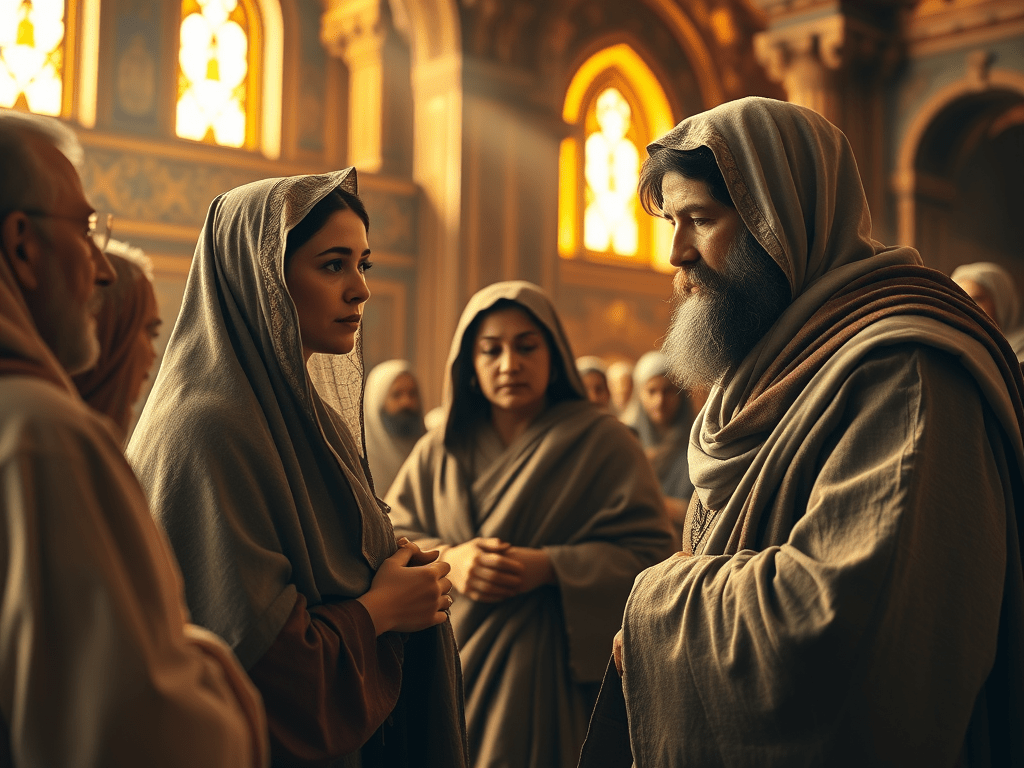
When I think of mothers who lose sight of their child even for a moment and suffer with worry, I can imagine, at least in part, what Mary and Joseph must have felt. They had gone up to Jerusalem for the Passover festival. As they traveled back home with a large group of relatives and neighbors, their twelve-year-old son did not return to them that evening. Assuming he was with friends, they waited—but he never came. When they began searching, they discovered he was not among the village children. They turned back, walking the same road for another day and a half. Finally, they found him in the Temple, still discussing Scripture with the elders. We can begin to understand the deep anguish Mary and Joseph felt during the three days they searched for their eldest son.
When they finally found Jesus in the Temple, relief and frustration came together. They scolded him—but the boy’s answer felt almost impossible to grasp. I would like to use his reply as our Christmas’ message.
Luke 2:49 is translated in various ways: The Revised Standard Version has, “Did you not know that I must be in my Father’s house?” The Jerusalem Bible, similar to the King James Version, reads, “Did you not know that I must be busy with my Father’s affairs?” Elisabeth Schüssler Fiorenza suggests another possible translation: “Did you not know that I must be with my Father’s people—my family, my kin?” (Interpretation, 10/82, p. 401)
These three translations may be summarized as:
My Father’s house
My Father’s work
My Father’s people
These do not contradict one another. Rather, taken together, they invite us—at the beginning of a new year—to devote ourselves more earnestly to “the movement of seeking Christ.”
(1) In My Father’s House
This is the place where God is present, where God has promised to meet His people. For Christians, there is no single “holy place,” no single “Jerusalem,” because God meets us anywhere. Whenever we preach, listen, worship, or receive Holy Communion—wherever these things take place—God truly encounters us.
What is clear for us is this: the kingdom of heaven is “neither here nor there.” If I am not where I am meant to be, then I am, in truth, nowhere. Where I meet God the Father—that is my Father’s house.
It may be in the deep interior of my soul, in lonely places where no one else may enter—in the Holy of Holies, where only God is present.
“Did you not know that I must be in my Father’s house?” At the age of twelve, Jesus teaches humanity where we are meant to be.
(2) About My Father’s Business
The church is where we gather to offer thanks and praise to God and where we join in God’s love through service and obedience toward our neighbors.
Mark Twain once described some churchgoers as “envelopes mailed without an address.” To spend our one precious life that way would be tragic. When we were born, God clearly sent us out as “envelopes with an address”—sent for God’s work. To receive that address is to live actively, energetically.
(3) Among My Father’s People
Human gatherings exist so that we may be stirred to life. Those who are zealous create opportunities for those who are not; and those who lack zeal offer gratitude and encouragement to those who labor in front. Wherever God’s people gather, I believe the life-giving breath of God—the Holy Spirit—will fill that place.
In the coming Yuletides, may every gathering of God’s people truly become God’s house. The movement to seek Jesus must become our daily life in God, drawing many into the grace of the Lord.
My earnest prayer is that the joy Mary and Joseph felt when they found Jesus on the third day will overflow in your lives throughout the year.
우리가 정말 예수님을 잃어버릴 수 있을까? 어느 교회의 예배 안내판에서 이런 설교 제목을 본 적이 있습니다. 11시 예배: “예수: 물 위를 걸으심” 그리고 그 아래 저녁 7시 예배: “예수를 찾자.”
순간 아이를 잃어버려 마음을 졸이는 어머니들의 심정을 떠올려 보면, 마리아와 요셉이 어떤 마음이었을지 조금은 짐작할 수 있습니다. 그들은 유월절을 지키기 위해 예루살렘에 올라갔다가, 많은 친척들과 이웃들과 함께 고향으로 내려가는 길에 열두 살 예수님이 그날 저녁까지 돌아오지 않았음 알게됐겠지요. 친구들과 함께 있겠거니 하고 기다렸지만, 예수님은 끝내 나타나지 않았다고 합니다.
다음 날,찾기 시작했으나, 동네 아이들 사이에도 없다는 사실을 알게 되었습니다. 그들은 다시 예루살렘으로 하루 반나절 길을 되돌아 걸었습니다. 그리고 마침내 성전에서 장로들과 성경을 토론하고 있는 예수님을 발견했다고 성경 말슴은 전하고 있습니다.
사흘 동안 장남을 잃어버렸던 마리아와 요셉의 두려움이 얼마나 깊었는지 우리는 이해할 수 있습니다.
성전에서 예수님을 찾았을 때, 부모의 마음은 반가움과 걱정이 뒤섞였겠지요. 그들은 예수님을 꾸짖었지만, 소년의 대답은 엉뚱했습니다. 저는 그 대답을 올해 성탄절 메시지로 삼고자 합니다.
누가복음 2장 49절은 여러 가지로 번역됩니다. Revised Standard Version(RSV): “내가 내 아버지의 집에 있어야 하는 줄을 모르셨습니까?” Jerusalem Bible(KJV와 유사): “내가 내 아버지의 일에 힘써야 한다는 것을 모르셨습니까?” 엘리자베스 쉬슬러 피오렌자(Elisabeth Schüssler Fiorenza)는 또 다른 번역을 제안한다: “내가 내 아버지의 사람들—나의 가족, 나의 친족들과 함께 있어야 한다는 것을 모르셨습니까?” (Interpretation, 10/82, p.401)
이 세 번역은 다음 세 가지로 요약될 수 있습니다.
내 아버지의 집
내 아버지의 일(사업)
내 아버지의 사람들
이것들은 서로 충돌하는 것이 아니라, 성탄를 맞는 우리에게 더욱 깊이 “그리스도를 찾는 일”에 정성을 다하라는 초대의 말씀이라고 여겨집니다.
(1) 내 아버지의 집에서
여기는 하나님이 임재하시는 곳, 하나님이 그분의 백성을 만나겠다고 약속하신 자리입니다. 그리스도인에게는 어떤 특정한 “거룩한 장소,” 특정한 “예루살렘”이 따로 없습니다. 우리가 어디에서든 설교가 선포되고, 말씀을 듣고, 예배하고, 성찬을 나누는 그 자리에서 하나님은 우리를 만나주십니다.
우리에게 분명한 것은 이것입니다: 하나님 나라란 “이곳도 저곳도 아닌 곳”이라는 사실. 내가 있어야 할 곳에 있지 않다면, 나는 사실 아무 곳에도 없는 것입니다. 내가 하나님 아버지를 만나는 그곳이 바로 아버지의 집입니다.
그것은 내 영혼 깊은 곳, 다른 누구도 들어올 수 없는 외로운 자리— 오직 하나님만 계신 지성소일 수도 있습니다.
“내가 내 아버지의 집에 있어야 하는 줄을 모르셨습니까?” 열두 살의 예수님은 인간이 있어야 할 자리를 우리에게 알려주십니다.
(2) 내 아버지의 일에 대하여
교회는 하나님께 감사와 찬양을 드리며 모이는 곳이고, 이웃을 향한 봉사와 순종으로 하나님의 사랑에 참여하는 곳입니다.
마크 트웨인은 어떤 신자들을 “주소 없이 발송된 편지봉투”라고 묘사했습니다. 우리의 단 한 번뿐인 소중한 삶을 그렇게 산다면 참으로 안타까운 일이겠지요.
우리가 태어날 때, 하나님은 분명 우리를 “주소가 적힌 봉투”로 세상에 보내셨겠지요. 그 주소는 바로 하나님의 일입니다. 그 주소를 받는다는 것은 활기차게 사는 것을 의미하고요.
(3) 내 아버지의 사람들 가운데에서
사람의 모임은 우리를 살아 움직이게 하기 위해 존재합니다. 열심 있는 사람은 열심 없는 사람에게 기회를 만들고, 열심 없는 사람이나 열심을 낼 수 없는 형편의 사람들은, 앞에서 수고하는 이들을 향해 감사와 칭찬을 보냅니다.
그럴 때, 하나님의 백성이 모이는 곳마다 나는 하나님의 생기—성령의 바람이 가득할 것이라 믿습니다.
다가오는 성탄과 새해에, 하나님의 백성이 모이는 곳마다 참된 하나님의 집이 되기를 바랍니다.
예수님을 찾는 운동은 곧 우리가 하나님 안에 머물며 많은 사람들을 주님 앞으로 인도하는 삶이 되어야 한다고 봅니다.
마리아와 요셉이 사흘 만에 예수님을 찾았을 때 느꼈던 그 기쁨이 이 글을 읽는 여러분의 성탄과 다음 한 해에 가득하기를 주님의 이름으로 간절히 기도합니다.








 Daily Sauntering
You must be logged in to post a comment.