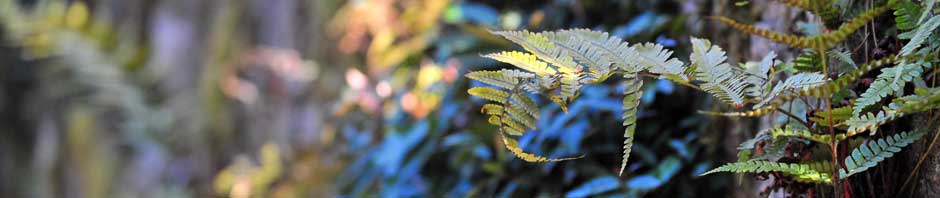
There is a quiet music in the steps that wander through the woods— a sound that rises from beneath fallen browns and fading grays.
Light-green whispers, yellow gleams, violet sighs, white breaths, and again the greens, the tender pinks— until suddenly the forest breaks open into the bright brass of gold.
All year long, life has stretched itself toward the sky— from the first thaw of ice to only yesterday— climbing out of the deep earth in a bold fortissimo. Now it softens, settles into a gentle pianissimo.
And with this soft farewell, the forest quietly prepares next year’s orchestra.
Its instruments— now gold, then brown, soon wrapped in winter white— will grow silent. The great symphony rests.
Yet under the frozen crust something does not freeze: a deep, slow bass— a lullaby— guiding every wandering soul into peace.
Autumn’s path is a dazzling symphony. The crunch beneath my feet, the brief brilliance carried on every leaf— these are the keys that unlock the gates of heaven.
Come—let us walk into the forest now, to welcome autumn, to hear its final performance, and step toward that heavenly museum whose doors are just beginning to open.
Would you not like to meet God this autumn— and walk gently through His abundant heart?
There was an incident in which Rita, a neighbor, tried to send a homeless cat far away for adoption, but failed.
For several years she had noticed a white cat living in her barn. She would feed it and sometimes keep it company, sharing life together in small ways. But as the cat grew, it began catching the birds that gathered nearby, and this became increasingly unpleasant to watch. After much thought, Rita placed an ad in the newspaper: “Looking for someone to adopt a lovely cat.”
A few days later, a call came from a man with an unfamiliar voice: “I am a middle-aged man living alone, and I will raise your cat as if it were my own child.” It was welcome news. Whether human or animal, living outside without family or shelter is a harsh environment. Rita had often felt uneasy on cold or snowy days, thinking of the cat in the barn. But now, with a trustworthy guardian promising to raise it “like a child,” she felt relieved that the cat’s miserable life might finally be left behind.
Yet only days later, a terrified voice came again from that man. Despite the new environment and the love and attention of its new guardian, the cat—hardened by its homeless life—began chewing through every cord in the house, starting with those connected to the computer and TV. With its rough claws, it shredded the leather sofa and furniture. It even used flowerpots as toilets, and when its owner tried to approach kindly, the cat unleashed its wild instincts without restraint. As time passed, the house became a complete disaster. Within three days, the kind man declared he could no longer keep the cat.
In our own home, we also live with two cats indoors, sharing affection. Both were adopted from an animal shelter at only three or four weeks old. At first, we hesitated when advised that indoor cats should have their claws removed. How could we possibly pull out the claws of a living creature? Yet after a few days, we realized that to live together peacefully with these young cats, we had no choice but to entrust the veterinarian with removing their front claws.
Just as harmony between humans and animals is not easy, so too is living together in community among humans. Especially in the church: though it may seem we entered voluntarily, in truth each of us was invited by Jesus’ special call of salvation. Through the church, we must continually train ourselves to meet one another’s thirst for love and to strengthen each other—not by our own judgment, but by Jesus’ way.
And yet, even in such a sacred place, we often fall into confusion and pain. This happens because the “front claws” of our unchanged judgments wound and tear at the church. To drive the church into suffering is ultimately to harm our own lives. Unless our character is transformed by Christ, our souls remain homeless.
The news that Rita’s cat had returned to the barn somehow stirs a deep and lasting ripple in my heart.
이웃에 살고 있는 리타가 홈리스 고양이 한 마리를 멀리 양자 보내려다가 실패한 사건이 있었다.
그것은 몇 년 전부터 헛간에서 흰색 고양이 한 마리가 살아가고 있는 것을 발견하여 먹을 것을 주기도 하고, 가끔 말동무가 되는 가운데 함께 지내오고 있었다. 그런데 이 고양이가 커가면서 주변에 모여드는 새들을 잡아채 가는 것이 여간 눈에 거슬리는 것이 아니었다. 요리 저리 궁리하던 리타는 신문에 광고를 냈다. “사랑스런 고양이 양자 할 분을 찾습니다.”
며칠 후에 낯선 음성의 남자로부터 전화가 왔다. “나는 혼자 사는 중년의 남성인데 당신의 고양이를 자식처럼 키우겠습니다.”라는 반가운 소식이었다. 사람이나 짐승이나 돌봐주는 가족이나 집 없이 밖에서 산다는 것은 얼마나 열악한 환경인지 쉽게 상상할 수 있다. 리타는 그동안 날씨가 춥거나, 눈이 오는 날에는 헛간의 고양이 생각에 종종 맘이 편치 않았었다. 그러나 이제는 그 비참한 삶을 뒤로하고 “자식처럼 키우겠다”라는 믿음직스러운 보호자가 생겼으니 얼마나 다행인지 모를 일이었다.
그런데 며칠 후 그 중년의 남자로부터 공포에 질린 음성이 전화기를 통해 들려왔다. 홈레스로 거친 삶을 살아왔던 고양이는 새 환경과 새 보호자의 사랑과 관심에도 불구하고 집안의 컴퓨터, TV에 연결된 전기줄로부터 시작하여 줄이란 줄은 다 이빨로 끊어놓고 가죽소파와 가구들을 그 거친 발톱으로 여기저기 찢어놓기 시작했다. 그리곤 집안의 화분을 변기로 사용할 뿐만이 아니라, 친근하게 다가가는 주인에게 야성의 근성을 마음껏 발휘했다. 시간이 갈수록 집안은 겉잡을 수 없이 수라장이 되어버렸고, 그 친절하던 남자는 삼일 만에 ‘양자 포기 선언’을 하게 되었다.
우리 가정에도 두 마리의 고양이가 실내에서 정을 나누며 함께 살아가고 있다. 두 마리 모두 생후 삼사 주만에 동물 보호소로부터 데려온 것이었다. 그런데 실내에서 함께 사는 고양이들은 발톱을 빼내야 한다는 조언에 한동안 망설일 수 밖에 없었다. 어떻게 살아있는 고양이의 발톱을 생으로 뽑아 내지? 그러나 며칠 후 우리는 이 어린 고양이들과 함께 살기 위해서는 동물병원에 고양이의 앞 발톱을 의뢰할 수밖에 없었다.
인간과 동물의 조화처럼 인간과 인간사이에 공동체를 이루며 함께 살아가는 일은 서로에게 쉽지 않은 것이 사실이다. 특히 우리가 속해있는 교회는 내가 자원해서 들어 온 곳 같지만 그곳은 각자 예수님의 특별한 구원의 초청이 있었음이다. 우리는 교회를 통해 내 생각과 판단이 아닌 예수님의 방식으로 서로의 갈증된 사랑을 채워주고 힘을 복돋아 주는 훈련을 끊임없이 해야만 한다.
그런데 이런 신성한 곳에서 우리는 종종 혼란과 고통 속에 빠져있게 되기도 한다. 그것은 변화되지 못한 내 판단의 앞 발톱들이 교회를 상처내고 허물어버리기 때문이다. 교회를 고통 속에 몰아넣는 일은 결국 내 자신의 삶을 해하는 일이 아닐 수 없으며, 나의 인품이 그리스도로 변화받지 않고는 영혼의 홈레스로 남을 수밖에 없다.
리타의 고양이가 헛간으로 되돌아왔다는 소식은 왠지 내 마음 속에 두고두고 깊은 파문을 일으킨다.
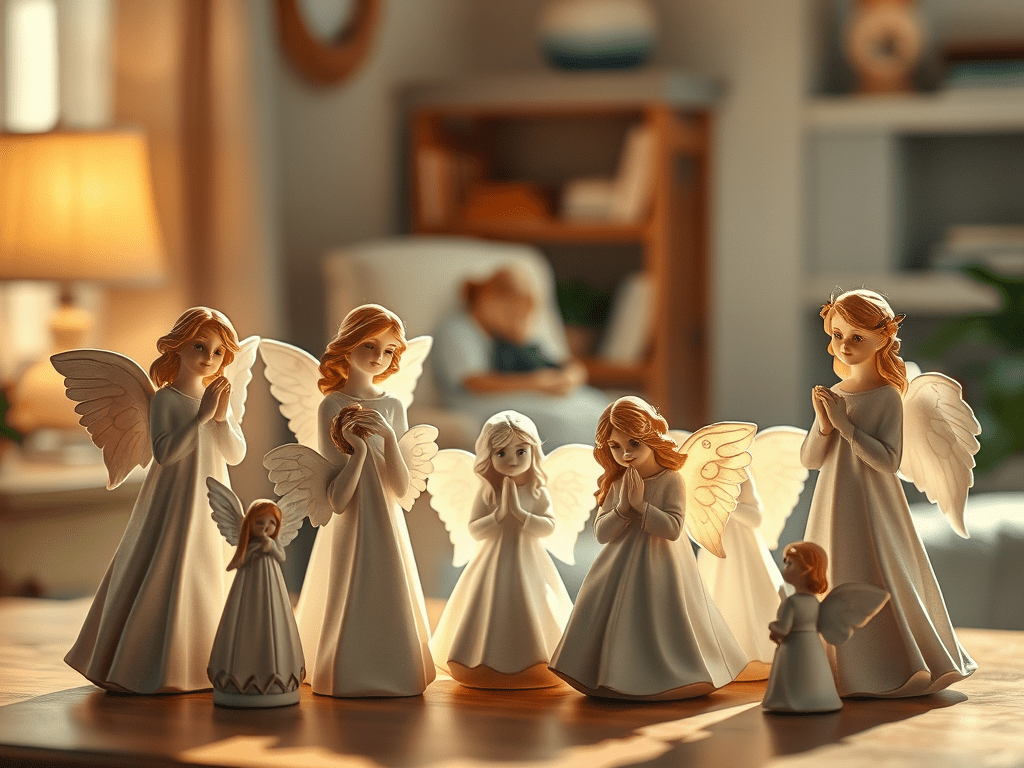
Among the church families, there is one home so filled with angel figurines that it could be called an “angel museum.” Looking closely at each figure, you see angels praising, angels dancing, angels praying, angels guiding the way, guardian angels, angels proclaiming peace, angels of flowers, and more. Gathered from travels across the United States and abroad, these angels came in every shape and size. Each expressed a beauty so mysterious and exquisite that every empty space in that home was occupied by sculpted angels.
This couple had an only daughter named Cindy. From birth, Cindy carried multiple disabilities and was never able to live independently as a human being. Her life was spent moving between hospitals and care facilities. The couple called her their “Special Angel,” and devoted themselves to her with the utmost love and care. Yet, in her fortieth year, Cindy passed away before them. After her departure, the couple poured all their passion into collecting angels, soothing their longing for their daughter through this devotion.
When I think of angels, a particular image remains in my heart. It is a picture that hung in the church education building during my Sunday school days: a lost little sister trying to cross a mountain stream. The current looked swift and frightening, and the children stood frozen in fear. Behind them stood a beautiful angel with great wings, protecting them. Even in my unconscious childhood world, angels were always present in such a beautiful form, standing by my side.
Yet, there are angels who do not match our imagination at all. These angels come to us as the physically disabled, the mentally challenged, sometimes as those living at society’s lowest depths, as lives covered in wounds. The suffering and poverty they endure cannot help but be heavy burdens and pains. They need ceaseless love, attention, and quiet fellowship.
So then, what is the role of such angels? Surely their mission is to sanctify us. Through their weakness and imbalance, our souls learn compassion and love. Through their unhealed pain, we are made to acknowledge human limitation. In the suffering they endure with every breath, we discover that the moments we take for granted are in fact immense gifts of grace.
And yet, we cannot deny that angels also dwell within us. When we take time to visit a nursing home, when we suddenly remember someone forgotten and reach out, when we send a friendly smile to a stranger, when we send a warm card to the lonely, when we show concern for those we once ignored, when we discover and affirm another’s talent, when we live each day quietly as a calling—at that moment, do we not become angels ourselves? Thanks to neighbors who live unaware that they are angels, the world today seems all the more beautiful and worth living in.
교인 가정 중에 천사박물관이라고 칭할 정도의 온갖 모양의 천사를 수집해 놓은 가정이 있다. 천사 의 모양 하나 하나를 들여다 보면 찬양하는 천사, 춤을 추는 천사, 기도하는 천사, 길을 안내하는 천사, 수호천사, 평화를 선포하는 천사, 꽃의 천사 등. 미전역과 각 나라 여행 때마다 구해온 천사들은 모양과 크기도 가지각색이었다. 모두가 신비스러울 정도의 극치의 아름다움을 표 현한 채, 그 가정의 빈 공간이란 공간은 조형의 천사들 이 모두 차지하고 있었다.
그들 부부에게는 신디라는 무남독녀가 있었다. 태어날 때, 여러가지 장애를 복합적으로 안고 태어났던 신디는 이 땅에 살아간 동안 한 번도 인간으로써 독립된 삶을 영위해보지 못했었다. 신디는 평생을 병원과 보호소 등을 전전하며 살아갔었다. 부부는 그녀를 “특별한 천사 (Special Angel)’라고 부르며, 온갖 극진한 정성과 사랑을 다해 돌보았지만, 40세가 되던 해에 신디는 먼저 세상을 떠나고 말았다. 신디가 떠난 이후, 그들 부부는 천사 수집에 온갖 정열을 다하며 딸에 대한 그리움을 달래고 있었다.
천사라 하면 내 마음 속에 남아있는 특별한 그림 한폭이 있다. 그것은 주일학교시절에 교회 교육관에 걸려있던 천사 그림인데, 길을 잃은 어린자매가 산중에서 시냇 물을 막 건너려하는 장면이다. 물살이 급해보이는 시냇 물 앞에서 두려워 어쩔줄 모르는 아이들 뒤에는, 날개를 크게 단 아름다운 천사가 서서 아이들을 보호하는 장면이었다. 어린 나의 무의식 세계에서도 천사는 언제나 그렇게 아름다운 모습으로 내 곁에 늘 있어주었다.
그러나, 천사들 중에는 우리의 상상력과는 전혀 들어 맞지 않는 천사들이 있다. 그 천사들은 신체 부자유자로, 정신 박약아로, 때로는 사회의 밑바닥의 인생으로, 상처 투성이의 인생으로, 우리 곁에 찾아온다. 이 천사들이 겪는 질고와 가난은 큰 부담과 고통이 아닐 수 없다. 그네들은 끊임없는 사랑과 관심, 은밀한 친교를 필요로 한다.
그러면, 이런 천사들의 역할은 무엇일까? 그들의 사명은 단연코 우리를 성화시키기 위함이 아닐까. 그들의 무기력과 불균형을 통해, 우리의 영혼은 긍률함과 사랑을 배우고, 그들의 완치되지 못하는 아픔을 통해, 인간의 한계를 인정케한다. 저들이 숨 쉴때마다 겪는 고통 속에서, 당연히 누리었던 우리의 순간 순간들이 얼마나 큰 은총의 선물인지를 발견케 한다.
그러나, 천사는 또한 우리 속에도 있음을 인정치 않을 수 없다. 자신의 시간을 쪼개어 양로원을 방문하거나, 불현 듯 잊었던 이들에게 안부를 전하고 싶을 때, 낯선 이들에게 친근한 미소를 보내 줄때, 외로운 이들에게 따뜻한 카드 한 장 보낼 때, 무관심 하던 사람들에게 관심이 가질 때, 남의 재능을 발견해 주고 인정해 줄때, 무슨 일을 하든지 자신의 하루의 일을 사명으로 알고 묵묵히 살아가는 순간 부터 우리는 어느듯 천사가 되는 것이 아닐까? 오늘도 자신이 천사인지도 모르고 살아가고 있는 이웃들로 인해 세상은 더욱더 아름답고 살만한 것 같다.
If we cannot cross between North and South, then at least—let us fly!
Yi Sang*, shedding the old form of his worn wings, cried out, “Let us fly, let us fly!” And Min-Ki*, beyond the black letters of despair, finally took flight—through song and dance.
When East and West soared beyond the Iron Curtain and the Berlin Wall, how could we not also fly? Let us fly, let us fly!
If we cannot pass North to South, then let us at least pass East to West. If we wish to go freely from Kaesong to Gangneung, we must take to the air!
Up in the atmosphere, no longer do we hear the dialects of Gwangju or Busan, Pyongyang or Jeju, local words or foreign ones— only the layered clouds of our heaving hearts.
Let us fly, let us fly! If we cannot go North and South, then let us rise and fall, up and down, even in the cold.
Common words once flowed easily— now they come only in fragments, and even those that once promised to return have fallen silent.
From the breath of fifty million resting souls— whether in Gwangju or Los Angeles, Seoul or Washington, Sinuiju or Hawaii, Kaesong or New York— strange, earnest words tremble and cry out in the dark.
Those sleepless words— one day, unable to wait for dawn, spent the night wrestling with God, murmuring, “Let us fly, let us fly…” Ah, an old story now—
Yet still, from the frozen tips of branches, a fluttering sound: flap, flap!
On New Year’s morning, let us fly high— above every wind, as wind itself.
* Yi Sang (이상, 李箱) was a pioneering Korean modernist poet, novelist, and artist, known for his avant-garde style and deep existential themes. His real name was Kim Hae-gyeong (김해경, 金海卿).
Brief Biography: Born: September 23, 1910, in Seoul (then under Japanese colonial rule), Died: April 17, 1937, in Tokyo, at age 26, Pen Name: 이상 (Yi Sang), written in Hanja as 李箱, Education: Trained as an architect at Gyeongseong Industrial High School,Occupations: Architect, poet, novelist, painter, café owner.
* Kim Min-Ki (김민기, 金敏基) was a legendary South Korean singer-songwriter, composer, and playwright, best known for his role in shaping Korean protest music and theater. He passed away on July 21, 2024, at the age of 73.
Life and Legacy: Born: March 31, 1951, in Iksan, North Jeolla Province, Education: Studied fine arts at Seoul National University, Died: July 21, 2024, in Seoul, from stomach cancer, Kim Min-Ki rose to prominence in the early 1970s with his iconic song “Morning Dew” (아침이슬), which became a powerful anthem for Korea’s pro-democracy movement. Originally performed by Yang Hee-eun, the song was later banned by the authoritarian regime due to its symbolic resistance.
There are times when, after a long conversation, we walk away thinking, “What a waste of words.” Even when both parties seem engaged and passionate, hoping for a constructive conclusion, if the other person remains unmoved—insisting only on their own point—we hesitate to open our hearts again.
Yet even with someone we’ve just met, if they listen with sincere attention, we remember that encounter as joyful and meaningful. The ability to truly listen is a gift. Even in the world of insects and animals, we often see mutual cooperation built on the order of listening.
In the height of summer, after the monsoon rains, a sound rises from the rice paddies and fields: the chorus of narrow-mouthed toads. As rain pours over forests and meadows, puddles form, and these toads—living in the damp underbrush—gather in the muddy water to sing their unrestrained serenade of love, bringing summer to its peak.
What we hear as “maeng-kkong, maeng-kkong” is not the voice of a single toad, but a chorus of several, each listening and responding to the others. The males must find mates before summer ends, and the rainy season is their golden opportunity. When one calls out “maeng-maeng-maeng,” another answers “kkong-kkong-kkong,” signaling their presence to distant females. If a nearby toad doesn’t realize the other is already calling “maeng-maeng-maeng” and repeats the same, the first quickly switches to “kkong-kkong-gong” to maintain harmony.
They take turns in a three-beat rhythm—one side pausing to breathe while the other sings. With gentlemanly order and collaborative effort, they call through the night, drawing females from all around for a wedding feast.
Reflecting on this, we realize how blessed it is to truly listen to one another—like the toads’ duet of “maeng” and “kkong.” Yet in today’s fast-paced, hyperconnected world, listening has become increasingly difficult. Wives plead for their husbands to hear them. Husbands feel frustrated that their wives don’t listen. Children, feeling unheard by their parents, turn to friends who will.
Dale Carnegie once said, “You can make more friends by listening with your ears than by speaking with your mouth.” He illustrated this with dogs: “When dogs see people, they wag their tails and approach with joy. They signal welcome and delight in your presence. If you pet them, they leap with excitement and lick your hand in gratitude. Because dogs consistently show warmth, they quickly become close friends to people.”
In human relationships, few things are more important than listening. True listening is not just hearing words—it is placing your ear to another’s soul, opening the door of your heart. Even if we already know what’s being said, the act of listening is a transparent echo of the soul, as sacred as prayer.
So today, do I only want to speak my own story? Or do I long to hear the cries of those I love?
Remembering the wisdom of summer toads, I pray once more: Before I speak, Lord, grant me the blessing of listening.
대화의 상대 중에 긴 시간을 한참 얘기했지만 돌아 올 때는, “괜히 입만 아팠네” 하고 씁쓸한 기분이 들 때가 있다. 서로가 진지하게 의견을 나누고 흥분하여 뭔가 건설적이고 합당한 결론이날 것 같았지만, 상대방은 원점에 서서 전혀 요지부동하고 자신의 주장만을 관철하고 있다면, 다시는 마음 문을 열어놓기를 주저하는 것이 우리들의 상정이다. 그러나, 처음 만나는 사람일지라도 나의 말에 진지한 표정을 지으며, 저 사람이 내 말에 귀를 기울이고 있다고 생각할 때는 그 만남이 참으로 즐겁고 행복했음을 오래도록 기 억케된다. 남의 말을 잘 들을 줄 아는 것- 곤충이나 동물들의 세계에서도 서로 듣는 질서를 지켜가며 상부상조하는 이치를 우리는 종종 볼 수 있다.
여름철 한창 장마철이 지나갈 때면 논과 밭에서 들려오는 소리가 있다. 그것은 맹꽁이들의 합창이다. 장마비가 사정없이 숲과 들녘에 쏟아지면, 여기 저기 웅덩이들이 파헤쳐진다. 그러면 습한 풀숲에 살아가던 맹꽁이들이 웅덩이의 더러운 흙탕물 속에 들어 앉아 울어 제치는 거침없는 사랑의 세레나데는 한 여름을 절정에 이르게 한다. 그런데 우리가 듣기에는 “맹꽁맹꽁” 하는 맹꽁이의 소리는 결국 한 마리의 것이 아니고, 두서너 마리 이상의 맹꽁이들 이 주변에서 함께 상대방의 목소리에 귀를 기울이면서 우는소리이다. 수컷들은 한 여름이 다 하기 전에 짝 짖기를 마쳐야 됨으로, 그들은 장마철을 절호의 기회로 삼아 사랑을 찾는데, 한 마리가 “맹맹맹” 하고 울어 제치면, 다른 쪽에 있는 맹꽁이가 “꽁꽁꽁”하고 울어 줌으로써, 멀리 있는 암컷들에게 자신들의 주소를 알려주는 역할을 하게 된다. 행여나 귀가 어두운 맹꽁이 이웃이 상대방이 “맹맹맹”하고 우는 줄도 모르고 “맹맹맹” 하고 부르짖으면, 상대방은 얼른 “꽁꽁공”으로 바꾸어 소리 를 낸다고 한다. 사분의 삼박자에 의해 규칙적으로 울어 주는 동안, 한쪽에서는 잠시 목소리를 가다듬고 심호흡을 한다. 서로의 신사도를 지켜주며 절도있는 음성으로 밤새껏 협동작전 함으 로써, 동네방네의 암컷들을 다 불러들여 혼인잔치가 이루어지게 된다.
오늘을 살아가는 우리에게도 맹꽁이의 “맹” “꽁” 합창곡처럼 서로의 음성에 귀를 기울일줄 안다는 것이 얼마나 복된 것인지 새삼 깨닫게 된다. 그러나, 현대의 삶이 복잡해져 가고 슈퍼하이웨이를 달려가고 있는 이 때에 상대방의 음성에 귀를 기울이는 일은 갈수록 힘들어져 가는 것 같다. 아내는 남편에게 자신의 소리를 들어 달라고 호소하고, 남편은 남편대로 부인이 자신의 말에 귀기울여주지 않는 것 같은 섭섭 함과 답답함이 있다. 아이들은 아이들 대로 부모님이 자신의 말에 귀를 기울여 주지 않는다며, 자신의 말에 귀를 기 울여 주는 친구들과 어울리게 된다.
데일 카네기는 “당신은 입을 통해 얻어지는 친구보다, 귀를 통해 더 많은 친구를 얻을 수 있다”라고 말하였다. 그는 개의 예화를 통해, 왜 개들이 사람들보다도 더 많은 친구를 속히 사귈 수 있는가를, 이렇게 설명하였다. “개들은 사람들을 보면 꼬리를 흔들며 당신에게 다가온다. 그들은 사람들에게 보이는 싸인을 해줌으로써, 상대방을 환영하고 있으며 상대방의 현존에 즐거워한다. 만약에 그 사람이 쓰다듬어 주기라도 하면, 개는 흥분하여 펄쩍펄쩍 뛰기도 하고 혓바 닥으로 그 사람을 핥으며 감사해 한다. 이렇게 개들은 언제나 사람들에게 친근감을 갖고있음으로 인해 사람들의 가까운 친구가 되어주고 있다”라고 하 였다.
인간관계에서 상대방의 음성에 귀를 기울이는 것처럼 중요한 것이 없다. 그것은 상대방의 목소리에 만 집중하는 것이 아니고, 그의 영혼에, 가슴에 귀를 대고 마음의 빗장을 열어 둔 채 들어야 옳게 듣는 것이다. 비록 내가 이미 알고 있는 일들일지라도 들어주는 여유는 기도만큼이나 투명한 영혼의 메아리이다.
나는 오늘도 내 이야기 만을 하기를 원하는가? 아니면, 사랑하는 이들의 영혼의 외침을 들어주기를 원하고 있는가? 한여름, 맹꽁이들의 지혜를 생각하며, 오늘도 말하기 전에 먼저 귀를 열고 듣는 복을 주십사고 기도해 본다.







 Daily Sauntering
You must be logged in to post a comment.