From the depths of sleep, toward the countless— night inevitably drifts into morning.
A wind from an age where even suicide leaves no grave moves through buildings, machines, and men.
All the while, summer stirred in restless haste.
Yesterday’s sun— a goddess of vast, eternal sleep.
The silent night flows into September’s sky.
Beyond the turning wheel, carrying the sealed city of Orang, September passes away.
In the forgetting of exits— a single ray of sunlight cannot release me, cannot forget.
And surely, September returns.
Do you know the surrender of Ryu?
Buried in deep sleep, the beginning, a room in retreat.
On a barren September morning, a voice finds its master, scattered into the wind.
Note: Composed during my second year at Seoul Seminary, in the early autumn of 1971—at the time of yet another presidential election for Junghee Park, marking a decade since the beginning of his military regime.
얼마 전에 세 살짜리 어린 남자아이가 911을 눌러 갑자기 혼수상태에 빠진 어머니를 살린 사건이 있었습니다. 아이는 엄마 곁에서 장난 감을 갖고 놀고 있었는데, 갑자기 쓰러지는 엄마를 보고는 놀라서 망연히 울고 있다가, 평소에 엄마가 알려준 911을 생각해냈습니다.
“불이 나거나 무슨 일이 있어, 엄마 아빠가 도움을 줄 수 없을 땐, 911을 돌려라!”
아이는 911을 돌리어 “엄마가 아파요! 우리 엄마가 아파요.”라고 울며 말하였는데, 그 결과 하나밖에 없는 어머니의 생명을 구하게 되었던 것입니다.
저도 911을 그동안 몇 번 사용했 던 기억이 있습니다. 첫 번째는 약 10년 전에, 뉴욕의 한가한 전원 지역에서 살다가 퀸즈 지역으로 이사 하던 첫 날이었습니다. 먼저 살던 곳은 집들이 띄엄띄엄 떨어진 목가적인 풍경 속에, 저마다 다른 집 모양을 갖고 있어 처음 오는 분들도 금방 집을 찾을 수 있었습니다. 그런데 복잡한 퀸즈 지역의 새로 이사 한 목사관은, 골목만 나서면 집들이 모두 똑같은 모양을 하고 있기 때문에, 시골 사람들에게는 여간 흔동이 되는 것이 아니었습니다. 그런데 한참 이삿짐을 나르다 보니, 친정어머니와 한 살이 조금 넘은 막내 아들이 보이지 않는 것이었습니다. 금방 들어오시겠지! 하고 불안한 마음을 달래보았지만, 점점 초조해져서 더 이상 견딜 수 없었습니다. 시간을 따져보니 거의 네 시간이 지났습니다. 유모차에 탄 아들과 어머니가 길을 잃고 헤매고 있음이 틀림없었습니다. 어머니는 한국에서 오신 지 몇 달 안 되어 영어라고는 한마디도 못하시고, 새 주소도 없을 뿐더러, 한 살이 막 지난 아이는 겨우 말을 배우기 시작한 때였습니다. 온 가족은 이삿짐을 나르는 것을 중단하고 차를 타고 주변을 돌아보았으나, 오히려 우리 자신도 집을 잃어버릴 것만 같은 착각이 들었습니다.
우리는 한참을 찾아 헤매다가 더 이상 안되겠구나! 하고는 경찰의 도움을 청하려고 911을 돌리기 시작하였습니다. 그런데 아무리 돌려도 계속 통화중인 신호만이 수화기를 통해 들려왔습니다. 안타까워 발을 동동거리고 있는데, 밖에서 한가롭게 들려오는 어머니의 콧노래 소리와 새소리같이 또랑또랑한 아이의 음성이 들려왔습니다. 알고 보니, 어머니는 아이가 이삿짐을 나르는 데 방해하지 않도록, 새 지역을 샅샅이 익히시며 공원에 가서 지내다가 오신 것이었습니다. 비록 911 을 통해 경찰의 도움을 받지는 못했어도, 911을 돌리면 어떤 도움을 받을 수 있으리라는 사실이 얼마나 위로가 되었는지 모릅니다.
두 번째 911을 사용한 것도 역시 어머니 때문이었습니다. 뒷마당에서 아이와 그네를 타고 노시던 어머니가 그네에서 떨어져 허리를 땅에 부딪치셔서 꼼짝을 못하시는 것이었습니다. 우리는 바로 911을 돌려 앰뷸런스의 도움을 청하였습니다. 앰뷸런스는 5분 안에 목사관에 도착하더니, 네 명의 장정들이 능숙한 솜씨로 어머니를 누인 채 병원 으로 실어 보내주었습니다. 어머니는 지체함 없이 의료진들의 빠른 치료를 받으실 수 있었습니다. 저는 911이 우리 사회에 있음이 얼마나 감사한지 다시 한번 뼈저리게 느낄 수 있었습니다.
하루에도 수천 수만 통의 911을 통해 이 땅의 위급에 빠진 사람들이 도움을 받고, 때로는 생명을 구하게 되는 일들뿐 아니라, 범죄를 미리 예방하거나, 찾아내는 역할도 하고 있습니다. 911은 궁지에 빠진 사람들에게 때로는 생명줄과 같은 귀한 역할을 담당하고 있으며, 이 사회의 생명과 재산을 보호하는 일에 큰 몫을 차지하고 있습니다. 아이들이 학교에 가서 제일 먼저 배우는 것도 911의 사용 방법입니다. 911은 이 땅에 살고 있는 모든 시민들에게 주어진 특권임에 틀림없습니다.
이처럼 우리에겐 육적인 긴급 상황만이 아닌, 영적인 911이 필요할 때가 너무나 많습니다. 그런데 어떤 분들은 영적인 숨이 막 끊어져 가고 있는 상황에서도 끝까지 자신의 힘과 노력으로 버티고 있습니다. 안타깝기 그지없습니다. 머잖아 숨이 끊어지면, 영원히 두 번째의 기회가 주어지지 않을 터임에도 불구하고 구조를 요청치 않습니다. 그리고 오늘도 한숨짓고 눈물을 흘리며 원망하고 미워하며 육신과 영혼 이 썩어가는 중병을 앓고 있습니다. 그러나 어떤 성도님들은 밤이든 낮이든 체면 불구하고 자신의 긴급 상황을 솔직하게 털어놓고 도움을 요청하여 지원을 받게 되는 것을 봅니다. 그리고 나아가서는 주님과 의 일대일의 생명줄을 붙들게 됩니다. 생명줄을 붙잡은 사람은 오히려 자신이 911의 구조요원이 되어 궁지에 빠진 사람들을 돕고 구하는,멋지고 귀한 일꾼이 됩니다
하나님께서는 인간이 에덴동산에서 죄를 짓고 쫓겨날 때에, 이미 911을 하늘에 설치하셨습니다. 누구든지 하늘의 911을 무릎꿇고 돌리기만 하면, 세상의 어떤 문제든지 주 안에서 해결받게 하셨고, 어떻게 해야 행복되고 아름다운 삶을 이 땅에서 살 수 있는지까지도 다 알려주시고 인도해 주십니다. 우리는 복잡하게 생각하고 근심 걱정에 눌려 고통할 필요가 없습니다. 다만, 가장 간단하고 긴급한 심령으로 어린아이가 쓰러진 어머니를 보고 911을 돌리듯이, “하나님! 내가 아파요. 나를 도와주세요! 나의 꿈이 깨어졌어요!” 하고 무엇이든지 기도하는 것입니다. 두고보세요. 우리 주님이 직접 훈련된 하늘의 천사들을 대동하시고, 우리의 영혼과 생명을 구하러 달려 오실 터이니까 요! 하늘나라의 911이 당신과 나를 위해 오늘도 준비되어 있음을 잊지 마시고, 삶의 어떤 정황에서도 주저하지 마세요. 하늘의 911인 기도는 당신과 나의 생명을 하늘에 이어주는 생명줄입니다.
Not long ago, a three-year-old boy saved his mother’s life by dialing 911 when she suddenly fell into a coma. The little boy had been playing with his toys beside her when she collapsed. At first, he cried in shock, but then he remembered what his mother had taught him:
“If there’s a fire or something happens and Mommy or Daddy can’t help, call 911.”
Through tears, the child called and said, “My mommy is sick! My mommy is sick!” That call ended up saving his mother’s life.
I, too, remember times when I had to call 911. The first time was about ten years ago, on the very first day we moved from a quiet countryside town to Queens, New York. In the country, houses were spaced far apart, each one with its own distinct look, easy for visitors to find. But in Queens, the parsonage we moved into was surrounded by rows of nearly identical houses—confusing to anyone, especially for those of us new to the city.
As we were unloading boxes, I suddenly realized that my mother and my youngest son, barely a year old, were nowhere to be found. I thought, They’ll be back any moment, but as the hours passed, worry consumed me. Nearly four hours had gone by. My mother, who had recently arrived from Korea and spoke no English, had taken my son in his stroller. Neither of them knew the new address. Panic set in. We stopped unpacking and drove around desperately searching, but even we felt lost among the unfamiliar streets.
Finally, we decided to call 911. To my dismay, the line was busy every time I tried. My heart sank. Just then, from outside, I suddenly heard my mother’s humming—light and calm—and the clear, birdlike voice of my son. They had simply gone to explore the new neighborhood and had spent time in a nearby park. Although we didn’t receive help through 911 that day, I still felt comfort knowing that if needed, help was just a call away.
The second time I called 911 was also because of my mother. While playing on the swing with my son in the backyard, she fell and injured her back so badly that she couldn’t move. I dialed 911, and within five minutes an ambulance arrived. Four paramedics skillfully lifted her and carried her to the hospital where she received immediate care. Once again, I realized how deeply grateful I was for the existence of 911 in our society.
Every day, thousands of people rely on 911—not only to receive urgent help or save lives, but also to prevent or solve crimes. For those in distress, 911 is nothing short of a lifeline, protecting both lives and property. It is one of the first things children are taught in school: how to call 911. Truly, it is a privilege for all citizens of this country.
But life reminds us that we also need a spiritual 911. There are countless times when our souls face emergencies—yet some people stubbornly endure, relying only on their own strength, even as their spiritual breath fades. How tragic this is! For when that final breath is gone, there will be no second chance. Still, many continue to live in bitterness, sorrow, and resentment, suffering from a deadly illness of the soul.
Yet I have also seen believers who, day or night, without hesitation, cry out in their time of need—laying aside pride, admitting weakness, and asking for help. And in doing so, they find themselves holding onto the lifeline of God Himself. Those who grasp this lifeline are not only saved, but often become rescuers themselves, helping others in spiritual distress.
When humanity fell in the Garden of Eden, God had already installed a heavenly 911. Anyone who bends the knee in prayer and calls upon Him will receive an answer. He not only rescues us from sin and despair but also guides us to live a happy, beautiful life. We don’t need to complicate things or be crushed under worry. Like that little boy who called 911 for his mother, we only need to cry out with the simple urgency of faith:
“God, I’m hurting. Please help me! My dreams are broken. Lord, save me!”
And He will come—rushing to us, accompanied by His angels, to rescue our souls and restore our lives.
Remember: Heaven’s 911 is always ready, today and every day, for you and me. Never hesitate to call. Prayer is the lifeline that connects our fragile lives to the power of Heaven.
I watched a world unfold upon the screen— two nations once one, now divided by the seam of a river: Latvia and Estonia. Yet every year in Valka they gather, their voices crossing the border that cuts through the city’s heart.
Estonian, Latvian, Russian, and now even English— their voices rise, a chorus of memory and hope.
They say, “Song defeated war.” And I believe them. For within their harmony, the silence of division trembles.
Since the Schengen Accord of 1985, the border could be crossed without visas. Now there are no barriers, no waiting walls. Freedom has become footsteps.
And here, on Korean peninsula still divided, I pray— for the day North and South meet not with weapons, but with song.
May that day come swiftly. May it be true. And may we too lift our voices as one—
Sleep unfinished drifts into sleep again, and before my wandering truly ends, my feet are drawn toward a house of gathering.
The cries of Biafra echo in my ears, yet they do not slay the truths that have aged within me. The images of Bengal captured in my eyes cannot extinguish the child I once was, cannot murder that tender spark of innocence.
Summer rushed past, but my wandering faltered, stumbled. Even the funeral dirge of bare bones now carries the scent of rotting graves.
I live and die by the song of exile, wandering as my only refuge, wandering as my only throne of comfort.
There is a self that cannot come, a self that has already gone, a self that was driven away, and still, a self that waits and watches.
This is the festival of moving cells, a riot of fallen leaves beneath the wheels of life. Plague and decay mock the cries of the broken, the pleas of those who bleed unseen. Summer crushes the prayers of autumn, and yet, life presses on.
Thus, summer is frantic, leaving an empty zone behind, a place my heart cannot fill.
O wandering soul, incapable of earnestness! O exiled self, never truly mine!
From every day, every hour, every moment, suddenly— tomorrow departs before I can reach it.
Tomorrow, the one I barred from coming, returns only as sorrow, eternal and unrelenting.
Beneath the blue leaves, deeper than despair, I carve the hollow spaces, and with every breaking “today,” I find within me the urge to dissolve, to self-destruct.
Yet the broken do not stumble in agony. O broken one, whose senses are numbed! This is the end of your weakness, this is the end of both you and me.
Despair! Despair! Despair!
But even in despair, there is a rhythm, a quiet reflection, a whisper that waits beneath the leaves: that wandering may yet find its purpose, that sorrow may yet be transfigured into grace.
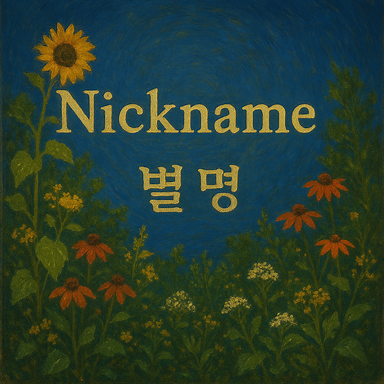
제가 어렸을 때, 가족은 저에게 두 가지 별명을 붙여주었습니다. 하나는 ‘소’였고, 다른 하나는 ‘울보’였습니다.
아버지는 제가 조용하고 온순했기 때문에 저를 ‘소’라고 부르셨습니다. 마치 곁에 하루 종일 앉아 있어도 존재감을 드러내지 않는 아이 같았기 때문입니다. ‘울보’라는 별명은 제가 말로 제 마음을 잘 표현하지 못해, 목소리 대신 눈물로 이야기하곤 했기 때문에 생긴 이름이었습니다.
오랫동안 저는 이 별명들을 무거운 낙인처럼 짊어지고 살았습니다. 그것들이 저의 열등감을 더욱 키웠고, 저는 이를 감추기 위해 애썼습니다. 다른 사람들처럼 말을 잘하려고 애썼고, 울음이 치밀어 오를 때마다 억지로 삼키며 버텼습니다.
하지만 세월이 흐르면서, 이 별명들이 결코 평생의 짐이 아니었다는 것을 깨닫게 되었습니다. 오히려 은혜의 선물이었던 것이지요.
제가 말을 재빠르게 하지 못하고 대화 속에서 쉽게 오해를 받았기 때문에, 저는 글을 쓰는 길을 택했습니다. 글 속에서 저는 제 마음을 더 분명하게 나눌 수 있음을 발견했습니다. 단순한 감사의 표현조차 말로 하는 것보다 카드나 편지에 적을 때 더 오래 남는다는 것도 알게 되었습니다. 종이에 적힌 단어들은 다른 이의 마음에 오래 머무는 꽃이 되었고, 저 역시 그와 같은 은혜를 받았습니다. 냉장고에 붙여둔 손글씨 메모 하나가, 어떤 말로 하는 감사보다 제 마음을 훨씬 오래 밝히곤 했습니다.
그리고 ‘울보’라는 별명에 대해서도—저는 눈물이 부끄러운 것이 아니라 거룩한 것임을 알게 되었습니다. 어느 날 설교를 들으면서, 하나님 앞에서 쉽게 눈물을 흘리는 사람은 스트레스를 더 빨리 풀고 병에 덜 걸린다는 이야기를 접했습니다. 제게 딱 맞는 말이었습니다. 제 마음이 무겁고 상처가 깊을 때, 저는 무릎을 꿇고 하나님 앞에서 눈물을 쏟습니다. 그 눈물 속에서 하늘의 위로가 제 영혼 깊은 곳까지 흘러들어옵니다.
누구나 눈물을 흘립니다. 슬픈 영화를 보며, 화가 나서, 양파를 썰다가, 심지어 최루탄 때문에도 눈물이 납니다. 과학은 눈물이 생겨나는 이유에 따라 화학적 성분이 달라진다고 말합니다. 그러나 하나님 앞에서 흘리는 눈물은 특별히 신비롭습니다. 단백질이 풍부한 이 눈물은 일종의 정화 역할을 하며, 몸과 영혼의 찌꺼기를 씻어냅니다.
눈물 한 방울 속에는 하늘의 신비가 담겨 있습니다. 제가 눈물로 기도할 때마다, 하나님은 언제나 부드럽게 응답해 주셨습니다. 은혜와 기쁨이 메마른 땅에 스며드는 물처럼 제 곁을 감쌌습니다. 자녀를 위한 어머니의 눈물 어린 기도, 이웃을 위한 중보의 눈물은 반드시 열매를 맺습니다.
하나님께서 주시는 것 중에 쓸모없는 것은 없습니다. 별명조차도 하나님의 빛으로 바라볼 때 축복의 통로가 될 수 있습니다. 그래서 저는 이 모든 것에 깊이 감사드립니다.
When I was young, my family gave me two nicknames: one was Cow and the other was Crybaby.
My father called me Cow because I was quiet and gentle, the kind of child who could sit beside you all day without making my presence known. Crybaby was given because I struggled to express myself in words, often letting my tears speak in place of my voice.
For a long time, I carried these nicknames like heavy labels. They fed my sense of inferiority, and I tried hard to cover it up. I worked to speak as well as others did, and I forced myself to swallow tears before they rose.
But as the years passed, I began to realize that these names were not lifelong burdens at all. In fact, they were gifts of grace.
Because I was not quick with words and easily misunderstood in conversation, I turned to writing. In writing, I discovered a way to share my heart with more clarity. Even simple gratitude seemed more lasting when written on a card or in a letter than when spoken aloud. Words on paper became flowers that lingered in the hearts of others. I found the same in return: a handwritten note stuck to my refrigerator could brighten my spirit far longer than any spoken thank-you.
And as for being a Crybaby—I discovered that tears are not shameful but sacred. One day, while listening to a sermon, I learned that people who cry easily before God often release stress more quickly and are less prone to illness. I realized how true this was for me. When my heart is burdened, when wounds press in on my spirit, I kneel and weep before God. In those tears, heaven’s comfort flows deep into my soul.
Everyone sheds tears at times—over a sad film, out of anger, while cutting onions, even from tear gas. Science tells us that the chemical makeup of tears changes depending on their cause. But tears shed before God are especially mysterious. Rich in protein, they serve as a kind of cleansing, washing away the waste of both body and spirit.
There is, within a single drop of tears, the mystery of heaven. Time and again, as I pray at the altar with tears, I experience God’s gentle response. Grace and joy surround me like water soaking dry soil. A mother’s tearful prayers for her children, or intercessory tears shed for neighbors, will never fail to bear fruit.
Nothing God gives us is useless. Even nicknames, when seen in the light of God, can become channels of blessing. And for that, I am deeply grateful.

 Daily Sauntering
You must be logged in to post a comment.