
Early summer.
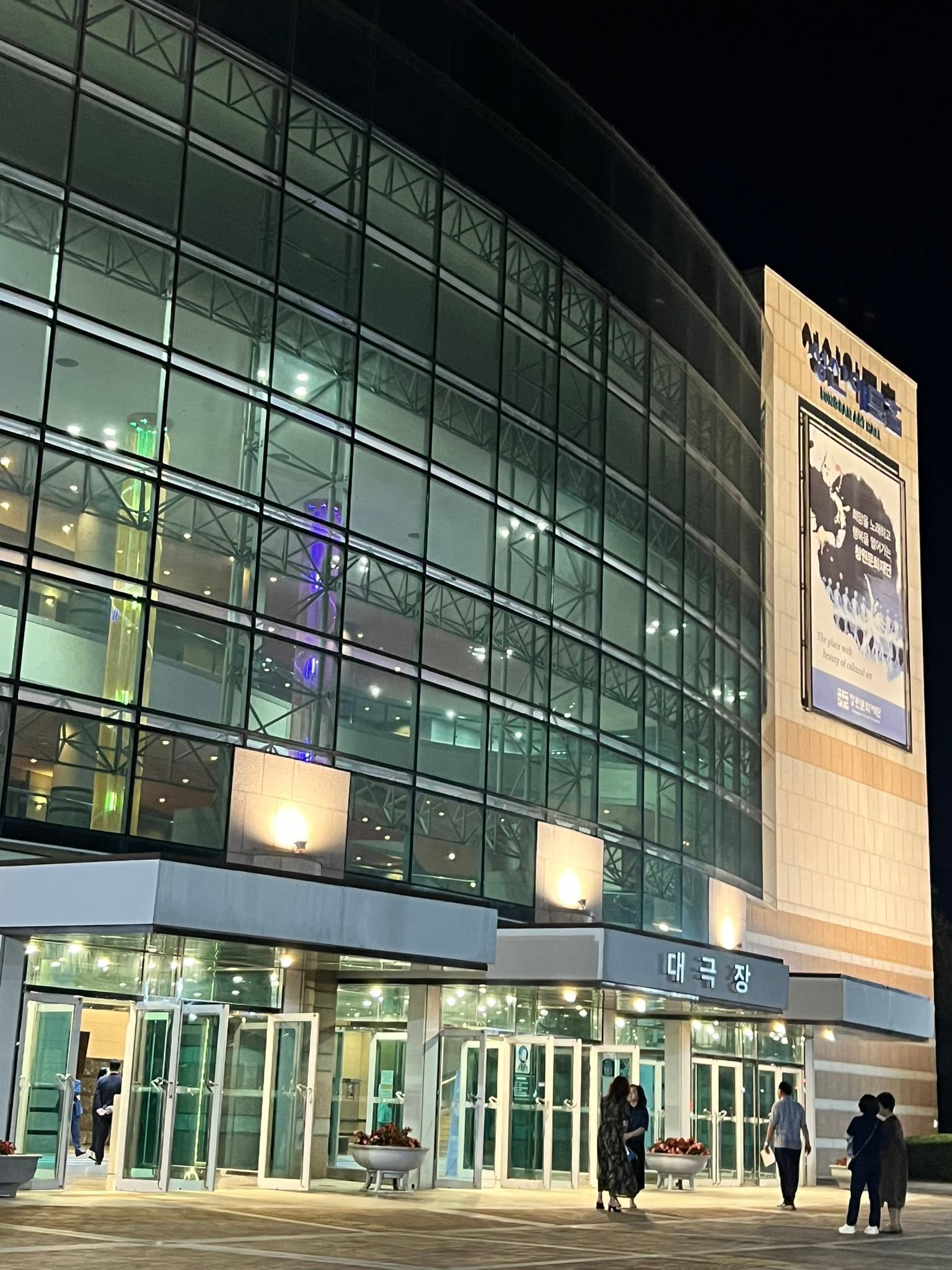
I sit upon a bench before Sungsan Art-hall Grand Theater in Changwon, Korea,
waiting, listening,
already traveling before a single note is sung.
Not by airplane,
not by train,
not by the crowded arteries of cities—
but by music.
From Rocky Hill, Tennessee,
to Seoul,
from the restless rivers of humanity flowing through KTX stations,
to this hall filled with expectation,
I have traveled.
And farther still—
from memory to presence,
from anxiety to surrender,
from death toward life.
O Johannes Brahms!
How mysterious your footsteps remain,
crossing centuries to arrive quietly at my heart.
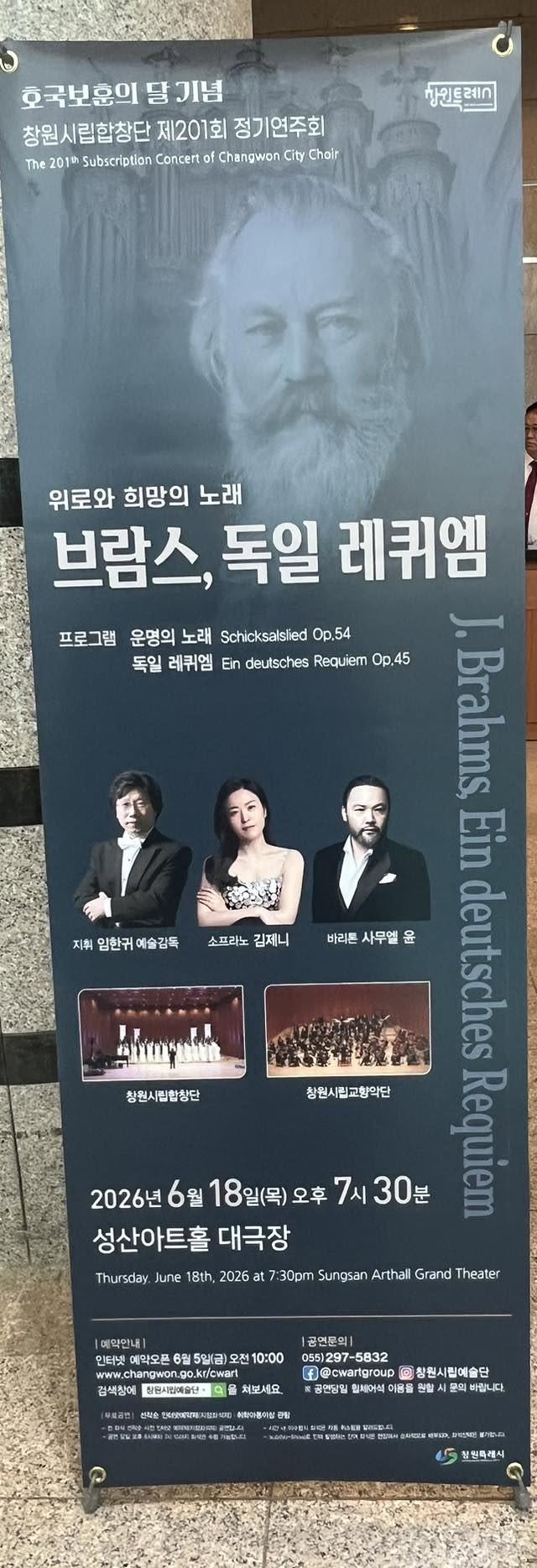
First came Schicksalslied,
The Song of Destiny,
its chorus suspended between human fragility
and transcendent peace.
The orchestra unfolded
like spring sunlight upon a mountain valley,
clear and tender,
and I found myself standing naked before my own fate,
without disguise,
without argument,
without escape.
There,
before the music,
I became simply a mortal man.
Then rose
A German Requiem—
not a prayer for the dead,
but a blessing for the living.
Not darkness,
but consolation.
Not judgment,
but embrace.
Its seven movements flowed
like seven rivers through the soul,
each one washing away another layer of fear,
each one inviting honesty,
the difficult honesty
that only grief and grace can summon.
I heard within it
a sermon grander than words,
a prayer deeper than doctrine,
a hand placed gently upon the shoulder
of those who walk toward their final horizon.
Did not E. Hanslick speak truly?
A masterpiece warmed by the depth of the soul,
illuminated by noble vision,
purified by sublime beauty.
And tonight,
I believed him.
Then came the convincing and rather exquisite voice
of baritone Samuel Youn.
“Lord, make me to know mine end.”
The words entered me
like a bell sounding through a silent valley.
I thought of my years.
I thought of my journey.
I thought of all that remains unfinished,
and all that has already been given.
For a moment
death stood nearby,
not as an enemy,
but as a companion reminding me
to live truthfully.
Then the soprano, Je-ni Kim,
lifted her heavenly voice:
“Ye now therefore have sorrow.”
And sorrow itself seemed transformed.
The wounded were comforted.
The weary were gathered.
The despairing were reminded
that grief is not the final language of existence.
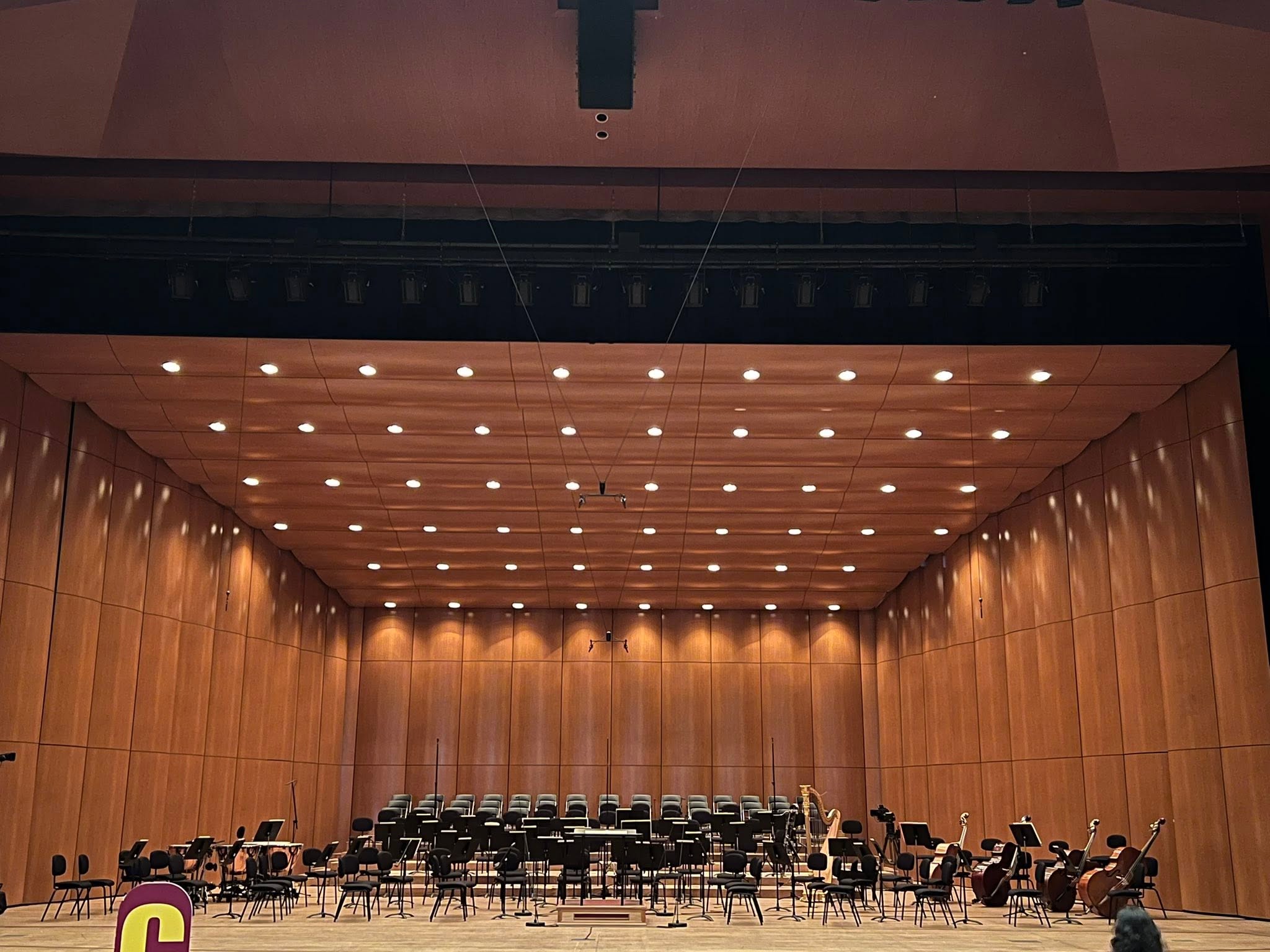
O magnificent hall!
This was more than a commemorative concert
for the Month of Patriots and Veterans.
It became a sanctuary.
A place where consolation and hope
were offered freely
to every listening heart.
Around me,
tears shimmered in the eyes of strangers.
When the final notes dissolved into silence,
the audience rose together—
a long standing ovation,
waves upon waves of gratitude,
rolling through the night of Changwon.
And there,
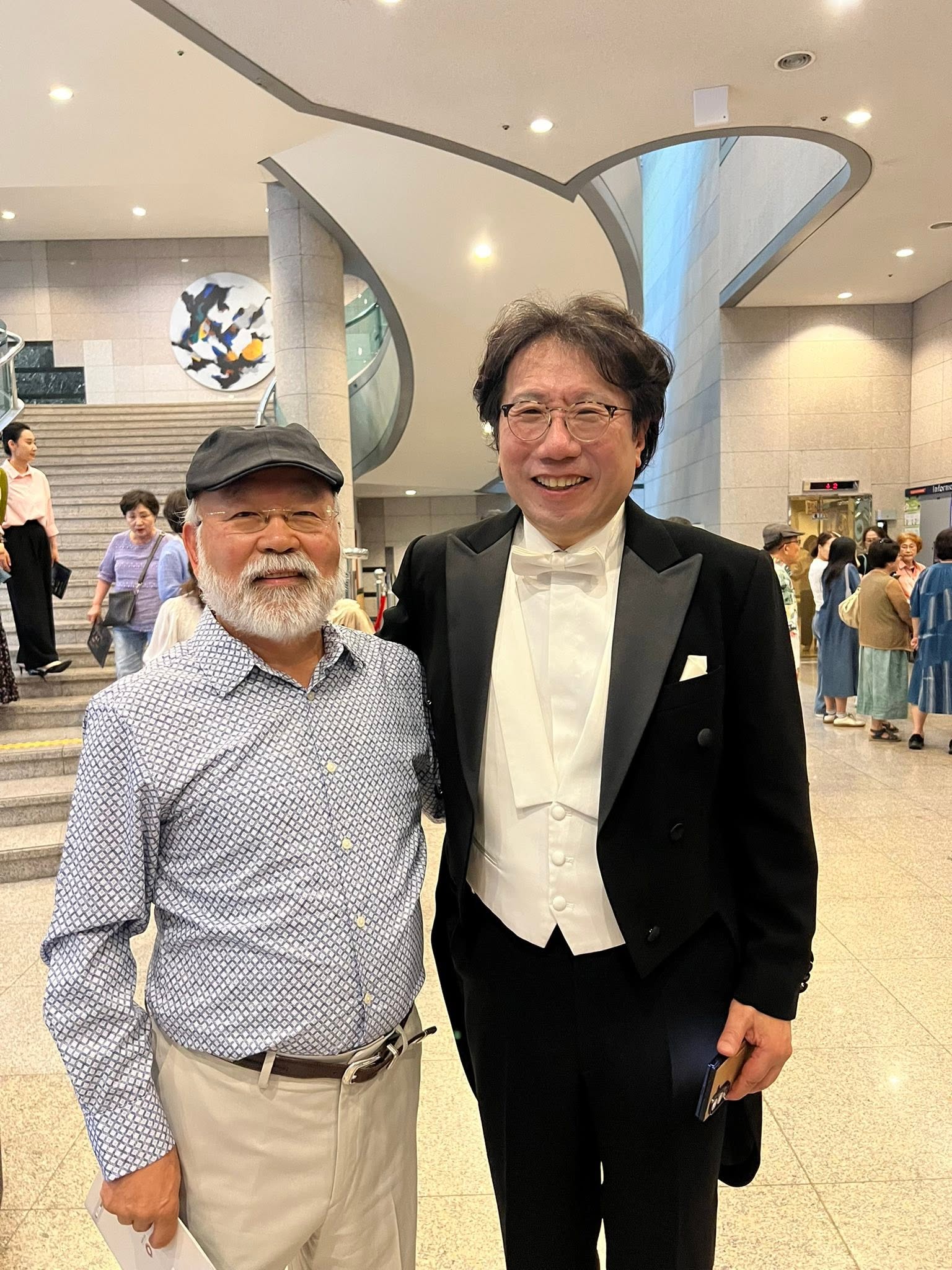
before conductor Lim HanKuy,
I watched prayer become motion.
From the tips of his hands
flowed not merely music,
but mercy.
Not merely sound,
but hope.
And as the chorus, orchestra, and soloists breathed together,
I too was carried along—
traveling,
always traveling—
from fear to trust,
from ending to beginning,
from death
toward life.
— TaeHun Yoon, 6/19/2026


You must be logged in to post a comment.