“I’m Crazy!”

Last fall, my younger sister and her family immigrated from Korea. I spent quite some time wondering where and how to help her begin her new life. People often say that an immigrant’s first steps in America—and even the shape of their future—depend on who meets them at the airport. But just because her older sister is a pastor’s wife doesn’t mean my sister, whose husband was a middle‑school math teacher, could suddenly walk the same path.

After much thought, I introduced her to the owner of a small gift shop I knew. Thankfully, she was offered a job right away.

My sister adjusted well to the unfamiliar language and the challenges of immigrant life. Watching her, I often felt as though I were looking back at myself twenty years earlier—sometimes feeling sorry for her, sometimes grateful for her courage.

One day, as English was slowly becoming more familiar to her ears, she tilted her head and asked, “Unni, why do people here always say something after they pay for their things?” “What do they say?” “…‘I’m crazy!’” “‘I’m crazy’? Why—what are they buying?”

She explained, “These days Pokémon cards are all the rage. Parents come in with their kids and buy handfuls at a time—one or two hundred dollars disappear just like that. We can’t keep them in stock! And it’s not just kids. Adults are obsessed with collecting Beanie Babies. And every time they pay, they say, ‘I’m crazy! I’m crazy!’”

We stared at each other for a moment and then burst into laughter. I remembered the Christmas when I had reluctantly bought my youngest son an expensive game system—hundreds of dollars on my credit card—and stormed out of the store muttering, “I’m crazy!”

Suddenly, as if waking from hypnosis, I saw myself clearly.

America is a land of hypnosis. Anything that hits the media becomes famous; worthless things appear valuable; childish things transform into sophistication. Businesses exploit this trance, numbing people’s minds completely. Parents feel they must provide everything their children desire in order to be considered good parents. Values and conscience struggle to survive before the power of materialism.

Even when the president’s ethics fall to the ground, people defend him, saying, “We didn’t elect a saint.” While heads of households in struggling nations wander the streets under the weight of IMF austerity, America enjoys unprecedented prosperity. Wars erupt across the world for economic gain; refugees in Kosovo and innocent civilians die by the thousands; and while my own child plots to massacre classmates in honor of Hitler’s birthday, hypnotized people remain endlessly busy.

We immigrants came here seeking a better life, yet we too fall under the same spell—working ourselves to death. Material things were meant to serve people, but now people are dragged around by material things. Even after acquiring them, all we can say is, “I’m crazy!”

We have houses but no homes, people but no neighbors, churches but few true believers, souls but bodies that merely survive. In such a time, I long for a genuine meeting between you and me.

Even in my own life, the poverty I feel amid abundance is painfully real. How much more must I possess before I can escape this emptiness and feel satisfied?

Ah—ah—spring has barely passed, and already green splendor bursts forth like fireworks. After the magnolia’s grand display, the rustling of new leaves rises everywhere. The wind brushing past my ears. The sweet chorus of birds. The fragrance of pink roses climbing the parsonage window. Cold spring water flowing beneath layers of rock. Dewdrops dancing in the morning light. Birds winging home at dusk. The moon and stars…

Truly, I am no ordinary rich person. And so once again, with a humbled voice, I whisper to the Lord, “O Lord, hold me fast, that I may not lose clear sight nor sound mind.”

In a world where even living with awareness is difficult, I suddenly feel ashamed of myself—muttering “I’m crazy!” as I stumble through life.

Wanhee Yoon, May 11, 1999

The current image has no alternative text. The file name is: image-151.png
Posted in Essay by WanHee Yoon, faith-column | Tagged , , , , , | Leave a comment

“나와 우리”

한인사회에 걸스카웃 운동을 일으키는 일로 몇 달간 기도하며 애쓰게 되었었다. 우리 아이들이 어렸을 때, 걸스카웃에 보내다보니, 스카웃운동에 대해 가까이하게 되었고, 기독교 신앙을 바탕으로 거의 100여 년 간 발전된, 전인교육과 사회봉사, 자연관리, 인류화합이라는 이념에 매력을 갖게되었다. 그러다 보니, 걸스카웃에서는 누군가가 한인사회에 다리를 놓아 줄 사람이 필요하다하여, 자의 반 타의 반으로 여러 가지 일에 발벗고 나서게 되었다. 그러나, 더 중요한 동기는, 한인사회에 청소년문제들로 가정문제 연구소의 상담건의 보고가 해마다 높아져 가고 있는 이 때에, 너무나도 귀한 프로그램을 특별히 돈 안들이고 접목 만하면 되는 것이기에 나로서는 신명나게 나설 수밖에 없었다.

그러나, 내가 좋다고 하여서 남들도 그렇게 쉽게 동참하기란 용이한 일이 아니었다. 특별히 이민사회라는 한계의 벽에 부딪쳤을 때, 나스스로 실망과 절망을 하지 않을 수 없었다. 걸스카웃의 이념과 유익, 모두에게 얻어질 보람있는 삶으로의 방향 등을 제시할 때, 동감은 하여도 그것을 어떻게 나와 교회와 지도자로서 나설 것이냐는 질문에 와서는 “할 사람이 없다” 또는 “…아직은 때가 아니다”라는 말들로서 끝을 맺는 것이었다.

나는 스스로 “정말, 할 사람이 없을까? 아직은 때가 아닌가? 아이들은 십대임신이다 가출이다 하여 방황하는데도 때가 아닐까?”라는 자문을 수없이 해보면서, 어딘가에, 누군가가 함께 일할 수 있는 자원봉사자들이 있을 것이라는 희미한 소망을 붙들고 이곳 저곳을 두드리게되었다. 나의 애타는 마음으로 약 2,000여명과의 대화가운데, 단 한 분이 자원봉사자에 관심이 있다고 알려왔다. 나는 이분의 “예”라는 대답에 큰 희망을 걸고 각 지역의 분대조직에 여념이 없게되었다. 그런데, 또 다른 어려움 앞에 서게되었다. 분대활동을 할 수 있는 장소를 물색하기 위해 그 지역의 한인교회들에게 장소를 의뢰했을 때, 여러 가지 이유들로 난색을 표하는 것이었다.

나는 전에 미국교회서 남편이 목회 할 때를 생각지 않을 수 없었다. 교회는 주중 내내 커뮤니티에 오픈이 되어, 교인이 아니더라도 마을에 사는 이들의 모든 행사들이 쉴새없이 이루어지고 있었다. 그 중에는 음식을 너무 많이 먹는 이들을 위한 모임이 있었으며, 술중독, 마약으로부터 치료받은 이들을 위해 계속적인 도움을 주는 그룹들이 모였으며, 동네의 시니어시티즌 오케스트라들이 모여 늘 연습을 하였다. 그리고, 그 중에 스카웃활동이 그 교회 안에서 활동하고 있음을 심히 자랑스럽게 여기고 있었던 것이었다. 미국사회의 교회는 동네의 공회당처럼 누구나 건전한 프로그램을 위해 활용되는 공공의 장소였으며 만남과 축제, 예배, 예식의 장소였던 것이다. 그들의 열려진 마음 때문에 한인교회들이 이민초기에 예배당을 빌려 쓸 수 있음을 우리는 모두가 체험한 바이다.

할 수 없이 미국인들의 열려진 마음에 다시 한번 기대 할 수밖에 없어, 미국인 교회의 목사님과 관리위원회에 편지를 써서 장소를 쓸 수 있도록 협조를 부탁했다. 그들은 의외로 너무나 반가운 표현을 쓰면서 “예스!”하며 대환영이었다. 그리고 목사님과 관리위원회는 덧 붙여 말하기를 “한인사회가 이토록 훌륭한 프로그램에 관심을 갖고, 성장하고 있는 것에 대해 축하하며 대단히 기쁘고 자랑스럽게 생각한다!” 나는 저들의 태도에 오히려 어이 벙벙해지며, 비로소 오른 일을 하고 있구나 하는 안도의 숨을 스스로가 내 쉴 수 있었다.

나는 잠시 저들의 눈이 되어 우리이민사회를 되돌이켜 보게되었다. 우리끼리는 신앙심이 대단히 깊고 골목마다 내 성전들은 늘어가고 있지만, 미국사회속에 비쳐지는 한인들은 어떤 존재인가? 우리는 아직도 폐쇄된 민족처럼 성벽과 같은 자체교회를 세운 후, 사회에 문빗장을 굳게 잠가두고 있지나 않는가? 어느 사회나 단체나 종교, 개인의 열려진 마음의 교통이 이뤄져야 만이 서로배우고 건전하게 성장하고 성숙된다.

올해도 많은 십대의 소녀들이 걸스카웃의 금상을 받았다. 그들은 자체 프로젝트를 마련하여 사회봉사를 한 소녀들이었는데, 그들의 프로젝트는 교회에서 말하는 선교와 같은 것이었다. 한 소녀는 헬렌켈러 재단을 위해, 양서를 자신의 음성으로 녹음하여, 시청각장애자들을 위해 수백 개의 테입을 헌납했으며, 어느 소녀는 아프리칸 아메리칸으로서, 이 사회를 위해 헌신 봉사한 흑인 여성들을 찾아내어 책자를 직접 만들어 공급했으며, 어느 소녀는 스페니쉬계로서 영어를 못하는 자기민족을 위해, 스페니쉬 말로 병원 응급실에 간단한 색칠용 책자를 만들어, 그곳에 부모 따라 온 아이들을 안심시키는 일을 하였다. 또한 어느 소녀는 응급구급법을 배워서, 동네사람들에게 가르쳤으며, 어느 소녀는 홀로 사는 노인들에게 명절 때마다 사랑의 선물을 보내는 일에, 각 점포들을 동원하여 솔선한 일들이다. 이 소녀들은 자신의 시간과 물질을 순수하게 사회를 위해 봉사했는데, 이들을 위해 대학 장학금이 기다리는 것은 물론이었다.

성숙한 신앙인과 사회가 되는 것은, 남을 돌볼 줄 알고, 각자의 특성을 인정하고, 함께- 라는 공동체 안에 들어설 때만이 가능하다. 오늘도, “나”만을 염두에 두는 “우리”가 되지 않고, “모두”와 함께 하는 “우리”가 되기를 염원해 보며, 스카웃을 통한 선교가 교회와 사회를 이어주는 다리가 되기를 바라는 마음이다.

– 윤 완희, 9/9/1999

Posted in Essay by WanHee Yoon, faith-column | Leave a comment

“Me and Us”

For several months I prayed and worked hard to help introduce the Girl Scout movement into the Korean‑American community in Long Island, New York. When my own children were young, I sent them to Girl Scouts, and through that experience I became closely acquainted with the scouting movement. I grew deeply drawn to its ideals—holistic education, community service, stewardship of nature, and the pursuit of human harmony—values that have developed for nearly a century on a foundation of Christian faith.

Before long, the Girl Scout Council told me they needed someone who could build a bridge to the Korean community, and half willingly, half reluctantly, I found myself stepping into various responsibilities. But the deeper motivation was this: at a time when reports of youth‑related family crises were rising every year in the Korean community, here was a precious program—one that required no cost to adopt—ready to be integrated. I could not help but feel energized to take part.

Yet just because I believed in it did not mean others would easily join. Especially when I ran into the limitations of immigrant life, I could not help feeling disappointment and discouragement. When I explained the Girl Scout ideals, the benefits, and the meaningful direction it could offer our youth, people agreed in principle—but when it came to the question of who would step forward as a leader or partner, the conversation always ended with, “There’s no one who can do it,” or “It’s not the right time yet.”

I repeatedly asked myself, “Is there truly no one? Is it really not the right time? Even when our children are wandering—facing teen pregnancy, running away from home—is it still not the time?” Holding onto the faint hope that somewhere, someone might be willing to volunteer, I knocked on many doors. Out of nearly two thousand conversations, only one person expressed interest in volunteering. I placed great hope in that single “yes” and began working diligently to organize local troops.

But then another obstacle arose. When I asked Korean churches in the area to provide space for troop meetings, many expressed reluctance for various reasons.

I could not help recalling the American church where my husband once pastored. That church kept its doors open to the community throughout the week. Even non‑members freely used the building for countless activities. There were groups for people struggling with overeating, support groups for those recovering from alcoholism or drug addiction, and local senior‑citizen orchestras that practiced regularly. And among them, the church proudly hosted a Girl Scout troop.

In American society, churches function like town halls—public spaces open to anyone for wholesome programs, gatherings, celebrations, worship, and ceremonies. Because of that openness, many Korean immigrant churches were able to borrow worship space in their early years. We all experienced that generosity.

With no other choice, I once again turned to the openness of American churches. I wrote to the pastor and board of a nearby American church, asking for permission to use their space. To my surprise, they responded with great warmth and an enthusiastic “Yes!” The pastor and board added, “We congratulate the Korean community for taking interest in such a wonderful program. We are delighted and proud to see it growing.” Their attitude left me momentarily speechless, and for the first time I felt a deep sense of relief—I am doing the right thing.

For a moment, I tried to see our immigrant community through their eyes. Among ourselves, we pride ourselves on deep faith, and our churches multiply on every corner. But how do Korean Americans appear within the broader American society? Have we not, like a closed tribe, built our own walled churches and locked the gates to the outside world? Any society, organization, religion, or individual grows only when hearts remain open—learning from one another, maturing together.

This year again, many teenage girls received the Girl Scout Gold Award. Each girl had designed her own project and served the community—projects very similar to what churches call “mission work.” One girl recorded books with her own voice for the Helen Keller Foundation, donating hundreds of tapes for the visually and hearing impaired. Another, an African American girl, researched and created a booklet honoring Black women who had served society. A Latina girl created a simple coloring booklet in Spanish for children waiting in hospital emergency rooms with parents who did not speak English. Another learned emergency first aid and taught it to her neighbors. Yet another organized local shops to prepare holiday gifts for elderly people living alone. These girls gave their time and resources purely for the good of society—and naturally, college scholarships awaited them.

A mature faith and a healthy society grow only when we learn to care for others, recognize each person’s uniqueness, and step into the shared space of community. Today again, I hope that we will not remain a “we” that thinks only of “me,” but become a “we” that embraces everyone. And I pray that the mission of scouting may become a bridge connecting the church and the wider community.

— Wanhee Yoon, September 9, 1999

The current image has no alternative text. The file name is: image-147.png
Posted in Essay by WanHee Yoon, faith-column, Uncategorized | Tagged , , , , , | Leave a comment

“The Sound of April”

Human history is a long crossing
between revolution and resurrection—
an unending struggle for justice
in the name of freedom.
That freedom was the life of our Lord.

Two thousand years ago in the Middle East,
Jesus rose from the grave.
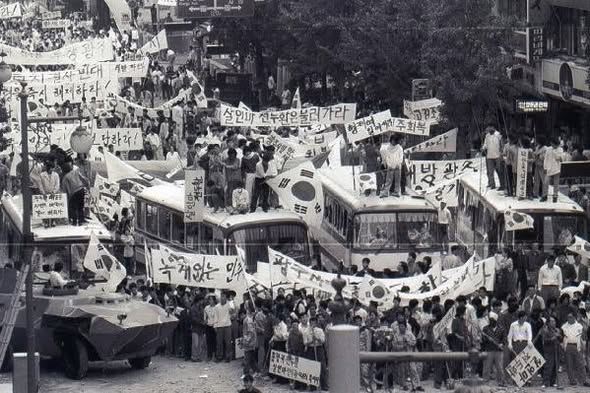
Ten years ago in the Far East, in Korea,
young voices rose in the streets.

It is not merely that both happened in April.
It is that one life—
and many young lives—
were risked for justice.

Revolution and resurrection
are not distant memories;
they are directions—
signposts pointing toward a true future
within the history we now inhabit.

Today, tradition and authority,
doctrine and ritual,
often suffocate the soul.
Structures remain—
ornate, carefully preserved—
yet emptied of life.

Avoiding suffering, refusing sacrifice,
chasing power and expansion,
we build again like Babel—
a time of self-absence.

Before injustice and corruption,
the silence of conscience
and the retreat of courage
reveal a faith misshapen.
We search for the Messiah
and find only a myth
of humanity crowning itself as god.

For too long,
we have sought the Messiah
inside sealed tombs—
filled with fear, darkness,
and the smell of death.

But the tomb was empty.

Resurrection stood
at the center of history.
In an upper room,
one hundred and twenty gathered—
not mourners,
but revolutionaries of the spirit.

They rose against the unchecked self,
against the empire within.
Their struggle was not once for all,
but an unending revolution of being.

Today, in the hearts of the young,
conscience stirs again.
The sound of April returns.

It is the voice of the Messiah—
raising freedom and life
within history itself.

To those already counted among the dead,
he still cries:
“Lazarus, come out.”

At Korea’s decaying tomb,
the stench remains.
Yet the cry of April refuses silence.

Golgotha has been violated—
the cross reduced
to a trinket for sale.

Is this the covenant of suffering
and resurrection?
Is this the testimony of courage?

No.
It is a command.
A way of living.
A path toward life.

This way calls to a nation’s wandering soul.
On this land—
three thousand miles long,
five thousand years deep—
history waits.

There, at the place of encounter,
Korea’s chaos will rise—
shaking heaven and earth,
weeping into freedom,
weeping into peace.

Rise, O sound of April!
Cry of revolution!
Voice of the young soul!

Ah—
the sound of April.

– TaeHun Yoon, April 15, 1972

(Beginning Series – Part 5)

The current image has no alternative text. The file name is: create-a-visually-striking-and-highly-detailed-featured-image-for-4.png
Posted in Poetry | Tagged , , , , , | Leave a comment

“4월의 소리”

인류의 역사는
혁명과 부활 사이를 건너는 이야기이다—
자유를 향한 정의의 끝없는 투쟁.
그 자유는
우리 주님의 삶이었다.

이천 년 전 중동에서
예수는 무덤에서 일어나셨다.
그리고 십 년 전, 극동의 한국에서
젊은 목소리들이 거리에서 일어섰다.

두 사건이 모두 4월에 일어났기 때문만은 아니다.
한 사람의 생명과
수많은 젊은 생명들이
정의를 위해 자신을 내어놓았기 때문이다.

혁명과 부활은
과거의 기억이 아니라,
방향이다—
오늘의 역사 안에서
참된 미래를 가리키는 이정표다.

오늘날
전통과 권위,
교리와 의식은
종종 영혼을 질식시킨다.
구조는 남아 있으되—
화려하게 장식된 채—
그 안의 생명은 비어 있다.

고난을 피하고,
희생을 거부하며,
권력과 확장을 좇는 모습—
바벨처럼
자기를 잃어버린 시대다.

불의와 부패 앞에서
양심의 침묵,
용기의 후퇴는
일그러진 신앙의 형상을 드러낸다.
우리는 메시아를 찾지만
발견하는 것은
사람이 스스로 신이 되려는
우화뿐이다.

우리는 너무 오랫동안
두려움과 어둠,
죽음과 침묵으로 가득 찬
봉인된 무덤 안에서
메시아를 찾아왔다.

그러나
무덤은 비어 있었다.

부활은
역사의 한복판에 서 있었다.
다락방에는
백이십 명이 모였다—
애도하는 이들이 아니라,
영혼의 혁명가들로.

그들은
통제되지 않은 자아에 맞서 일어섰고,
내면의 제국에 맞서 싸웠다.
그들의 투쟁은
단 한 번의 사건이 아니라
존재 전체의 끊임없는 혁명이었다.

오늘,
젊은이들의 심장 속에서
양심이 다시 깨어난다.
4월의 소리가 되살아난다.

그것은
역사 안에서 자유와 생명을
다시 일으키는
메시아의 목소리다.

이미 죽은 자로 여겨진 이들에게
그는 여전히 외친다.
“나사로야, 나오라.”

썩어가는 한국의 무덤 앞에
악취는 남아 있지만,
4월의 외침은
침묵을 거부한다.

골고다는 훼손되었고,
십자가는
값싼 장식품으로 팔린다.

이것이 고난과 부활의 언약인가?
이것이 용기의 증언인가?

아니다.
그것은 명령이다.
사는 방식이며,
생명으로 가는 길이다.

이 길은
방황하는 한 민족의 영혼을 부른다.
삼천리 강산,
오천년의 시간이
이 땅에서 기다리고 있다.

그곳,
만남의 자리에서
한국의 혼돈은 일어나
하늘과 땅을 흔들며
참된 자유로 울고,
참된 평화로 울 것이다.

일어나라, 4월의 소리여!
혁명의 외침이여!
젊은 영혼의 목소리여!

아—
4월의 소리여.

– 윤 태헌, 1972년 4월 15일

[Beginning Series – Part 5]

The current image has no alternative text. The file name is: create-a-highly-detailed-high-resolution-image-inspired-by-the-content-3.png
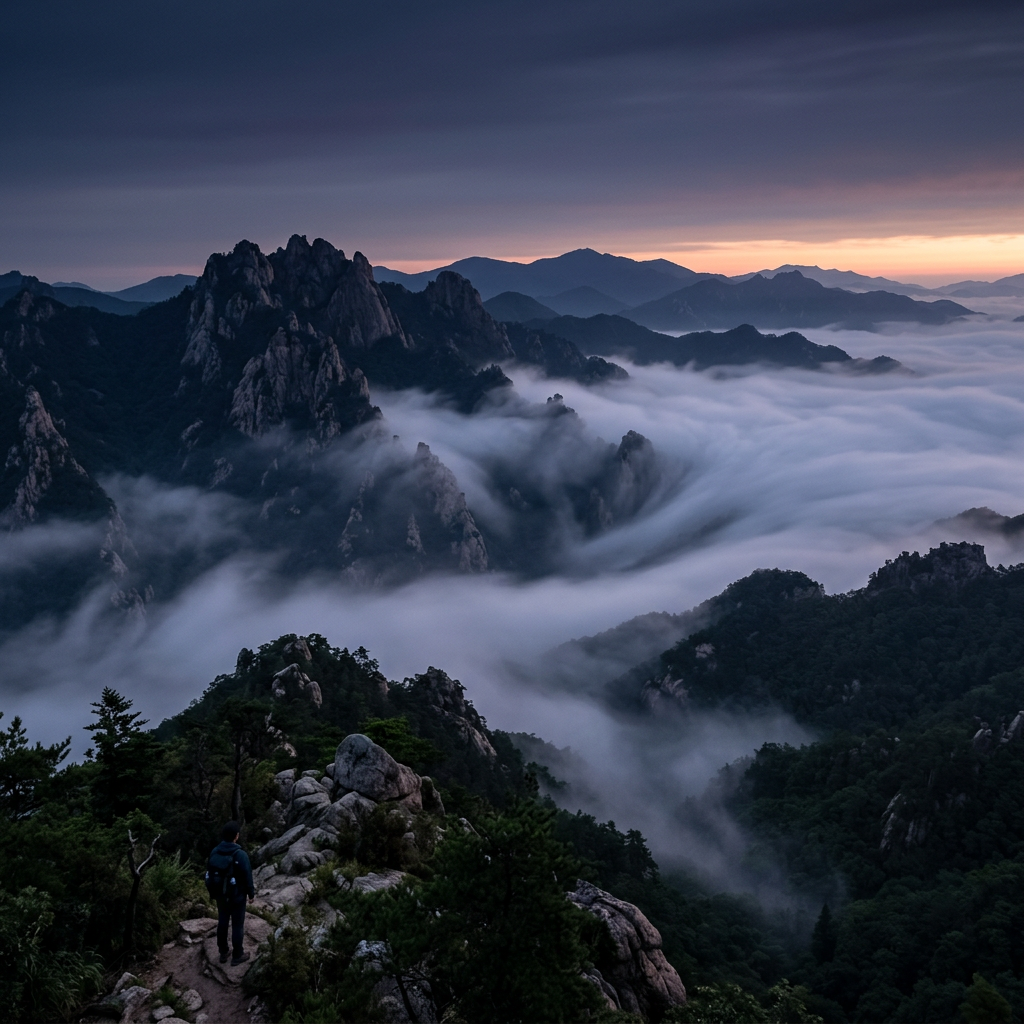
A painting inspired by the poem "The Sound of April" by TaeHun Yoon. The scene shows a cracked tomb beneath blooming spring blossoms, with youthful figures rising from the earth surrounded by wind and fire. The background includes a Korean landscape with mountains and traditional rooftops, and a cross silhouetted against a stormy sky. The atmosphere is both revolutionary and spiritual, evoking resurrection, justice, and the voice of April.
4월의 소리 시를 위한 캘리그래피 이미지
Posted in Poetry | Leave a comment

설교: “셋째 날에” – 겨울 폭풍 아래에서의 씨름

사랑하는 이들이여,

충돌은 충돌을 낳고,
날들은—
나아지지 않습니다.

자신의 옳음을 확신하는 사람들과
국가의 기계장치가 맞섭니다.
권력은 거리 위를
날씨처럼 움직입니다—
비인격적이고, 효율적이며, 멈추기 어렵게.

그러나 이것만은 기억합시다.
모든 사람은
누군가의 사람입니다.

아들과 딸들.
아버지와 어머니들.
삼촌과 조카들.
하나의 가족—
제복에 의해 갈라졌을 뿐,
여전히 가족입니다.

잠은 쉽게 깨어지고,
생각은 자리를 잡지 못합니다.
달력은 줄이 그어지고,
평범한 하루마저
금이 가기 시작합니다.

마치 마지막 전장으로
걸어가는 듯합니다.
골고다를 향해—
역사가 찬송을 배우지 못한 채
되돌아오는 그 언덕으로.

느껴지지 않습니까?
조여 오는 기운.
전체 지배의 차가운 숨결.
묻지 않고 밀어붙이는
권위의 바람.

그리고 그것은—갑자기—
서른일곱 살의 몸 위로 떨어집니다.
알렉스 프레티,
2026년 1월 24일.

그에게만이 아닙니다—
그와 함께한 이들 위로도:
르네 굿,
키스 포터,
헤버 산체스 도밍게스,
빅토르 마누엘 디에즈 파라디 라,
루이스 벨트란 야네스 크루스,
헤랄도 루나스 캄포스.

그들의 이름을 들으십시오.
조용히 불러 보십시오.
그들은 통계가 아니었습니다.
그들 역시
누군가의 사람이었습니다.

미국은 지금 떨고 있습니다.
한때는 자연스럽게 여겼던 것들을
잃을까 두려워하며—
시민성,
연대—
공포와
거짓에 흔들리며.

성경은 여전히 진실을 말합니다.
우리가 침묵할 때,
극단은 대담해집니다.
우리가 외면할 때,
권력은 돌아올 수 있음을 배웁니다.

허락받았다는 감각 아래,
가면이 나타나고,
행진이 형성됩니다—
절반은 퍼레이드, 절반은 경고—
지배의 축제처럼.

그들은 소음을 힘으로 착각하고,
지배를 질서로 오해하며,
권력을
붙잡아 소유할 수 있는 것으로
상상합니다.

그들은 이제 큰 소리로 말합니다.
“이제 허용되었다.”
“이제 나가도 된다.”
“정부가 우리와 함께한다.”

그래서 그들은 행진합니다—
전쟁의 이름이 붙기 전부터.

그들은 더 작아진 국가를 꿈꿉니다.
하나의 색, 하나의 목소리—
그러나 많은 언어, 많은 이야기,
함께 숨 쉬는 다양한 방식들 앞에서
위협을 느낍니다.

그들은 외칩니다.
애국심.
질서.
전통.

그러나 그 말들 아래에 숨깁니다—
배제,
기만,
의무로 연습된 폭력을.

사랑하는 이들이여,
위험한 것은 의견의 차이가 아닙니다.

위험한 것은
생각이 군중으로 굳어지는 것,
신념이 위협으로 변하는 것,
공적 광장이 안전을 잃는 것입니다.

지금이 바로 그때입니다—
잠들지 말고,
어깨를 으쓱하지 말고—
정상화되고 있는 것에
거부할 때입니다.

일상이 된 폭력,
정책이 된 분열,
힘에 의한 통치로 미끄러지는 길,
선택이 조용히 무너지는 길을.

이것을
상식이라며 넘기지 마십시오.
정상은 취약합니다.
정상은 드뭅니다.
정상은 마지막 저수지입니다.

우리는 그것을
잃을 수 없습니다.

그러나 이것도 들으십시오—
다른 소리가 있습니다.

손에 손을 맞잡는 소리.
노래가 올라옵니다—
크지 않고,
완벽하지 않지만,
인간적인 노래가.

결핍에서 충분함으로.
거침에서 공정함으로.
다시 노래하는 법을
배워 가는 사람들.

그리고 이것이 우리의 소망입니다, 사랑하는 이들이여.

셋째 날이 있습니다.

어둠을 깨뜨리는 날.
돌이 굴려지는 날.
끝났다고 선언된 것이
결코 끝나지 않았음을 아는 날.

평범함의 귀환.
정상의 구원.
인간됨의 존엄.

그러므로 우리에 대해 이렇게 말해지기를 바랍니다.

증오로 외치는 일은 더 이상 없고,
슬픔으로 우는 일도 더 이상 없기를.

셋째 날에,
우리는 일어납니다—
주먹이 아니라, 믿음으로,
두려움이 아니라, 사랑으로.

아멘.

— 윤 태헌
2026년 1월 26일

Posted in Ministry, Poetry, Sermon | Leave a comment

“To Venerable Beopjeong Sunim”

Venerable Beopjeong, Have you been well?

How have you been in the mountain temple as the chilly winds of autumn settle in? Around this time of year, you must be busy harvesting the crops from your garden. Or perhaps, as you mentioned in your last letter, the wild animals ruined everything again this season, leaving you with an empty field and nothing to gather for the fall harvest.

These days, you have often come to my mind unexpectedly, and for a time I prayed before God for you and for the Buddhist community. How troubled your heart must be these days. Even I—who am not a Buddhist—felt deep pain and sorrow when I saw the newspaper photos of monks wielding sticks and baseball bats, pushing and striking one another in violent clashes.

I still vividly remember your lament over the Jogyesa incident back in 1994: “A person must be free from all things, both inwardly and outwardly. As long as one is trapped by desire or ego, one cannot sense the mystery of the universe that fills both the inner and outer worlds. Only those who are truthful and honest before themselves can become honorable human beings.”

And yet, even those who turn their backs on worldly things often lose all restraint when faced with vested interests. How can we pretend that such disgrace belongs only to the Buddhist community? How can we dismiss it as something that happens only in Korea? Wherever people gather, fierce battles of “your side versus mine” erupt. Those ruled by emotion rather than reason defile temples and sanctuaries, choosing the path of beasts rather than that of honorable human beings—pursuing things that have nothing to do with the will of God.

Your story about the lotus flowers comes to mind. You once said that several years ago, when lotus season arrived, you went to Hyangwonjeong Pavilion in Gyeongbokgung Palace to breathe in the fragrance you had longed for. But to your shock, there were no lotus blossoms—only the fishy smell of carp swarming in the pond. Surprised, you hurried to the Secret Garden, but there too, the lotus flowers had vanished. You lamented that even during the Joseon Dynasty, when Buddhism was persecuted, the lotus had been tended and preserved—yet under a free democratic system, it had disappeared.

“Ask the flower,” you said. “To which religion does a flower belong?”

I wholeheartedly agreed. How could a flower ever belong to a particular sect? In the ponds of Gyeongbokgung, in the Secret Garden, in the waters of Korea’s historic gardens, lotus flowers should bloom. Those places are the grounds of long history, where the fragrance of a people flows. How foolish and childish it is for humans, with their self‑constructed notions of sacredness, to quarrel even with a flower—plucking it, uprooting it, discarding it. And why, instead, have imported carp taken over those waters? What are we to contemplate, what fragrance are we to breathe in, from waters muddied by those fattened fish?

As you know, whenever the occupant of the Blue House changes, the winds within the religious world grow fierce. As if political power were protecting religion—or religion protecting power—hidden battles for privilege intensify behind the scenes. Such a posture cannot stand honorably before either Jesus or the Buddha. Under any administration, religious freedom must be protected, justice upheld, and mutual respect practiced through autonomy, compassion, and love. To belittle another tradition and act carelessly is already to have departed from the essence of religion. Yet such people often seize influence in the world, and it pains both the ear and the heart.

Venerable Beopjeong, as autumn deepens, I find myself longing for the sound of the temple wind chime. They say that people, too, deepen as they each find their own sound. Even the foolish will someday have a chance to grow wise. As the season turns, I hope you will tend to your chimney, gather dry firewood, and draw water from the stream into your kitchen so that even if you are snowbound in midwinter, you will endure comfortably.

As I picture your mountain hermitage, the sound of the stream of passing years seems to echo even more clearly.

With respect, Wanhee Yoon

October 16, 1999

Posted in Essay by WanHee Yoon, faith-column, Uncategorized | Tagged , , , , , | Leave a comment

“걸 스카우트와 함께 캠핑을!”

윤 완희 (대 뉴욕지구 걸 스카우트 연맹 한인담당), 8/10/1999

지난 주말에는 뉴욕의 롱 아일랜드에 있는 핵쇼(Heckscher State Park)주립공원에 가서 걸 스카우트 단원들과 함께 캠핑할 기회가 있었다. 뉴욕지역이 한창 가뭄 속에 한 여름을 시달리고 있건만, 울창한 공원의 푸른 나무들은 넉넉하게 우리 모두를 맞아주고 있었다. 우리는 미리 예약한 캠핑 장에 부지런히 텐트를 치기 시작하였다. 조금 전 까지 만하여도 휭한 잔디뿐이던 자리엔, 어느새 둥근 텐트들이 여기저기 자리를 잡았고 아이들은 서로의 자리다툼을 하면서, 즐거운 함성과 함께 야외에서의 새로운 경험 속으로 빠져들어 가고 있었다.

걸 스카우트의 이념은 “하나님과 나라를 위하여 나의 힘을 다하겠습니다. 항상 남을 도와주겠습니다. 걸 스카우트의 규율을 잘 지키겠습니다”로서, 자라나는 소녀들에게 민주시민으로서의 책임과 자신의 잠재력을 개발하는 전인교육을 위주로 하는 사회봉사단체이다. 그리고, 이러한 야외캠핑은 자연과의 친화력을 갖게 하며, 남과 동일한 입장에서 함께 화합하며 살아가는 훈련으로서, 어린 소녀들에게는 절호의 기회였다. 그러기에, 이런 자연 속에서 지도자가 해야 될 가장 중요한 일들은 아이들의 협동심을 키우고, 자연에 대한 경외심을 갖게 하며 돌보며 가꾸게 하는 일이었다.

여장을 푼후, 시꺼먼 석탄을 묻혀가며 함께 만든 저녁식사를 끝낸 후, 나는 아이들을 끝없이 펼쳐진 어둠 속의 평온에 초청하였다. 그리고 깨임과 장난 속에 한창 지내다가, 아이들이 눈을 감고 한동안 침묵한 채로 바람소리와 밤벌레들의 음성을 듣게 하는 것이었다. 아이들이 떠들고 있을 때에는 전혀 들리지 않던 소리들이, 갑자기 확성기를 틀어 놓은 것처럼 귓가에 왕왕 들려오는 밤벌레들과 개구리들의 노래는 한데 어울려져 장관이었다. 높고 낮은 소리로 서로를 부르고 응답하며, 숲이 떠나가도록 화음과 장단을 맞춰가며 우짖는 소리- 그 소리들은 바람의 지휘봉에 맞춰지는 정열적인 자연음악이었다. 그 다음엔, 아이들에게 잔디 위에 벌렁 누워 밤하늘을 보게 하는 일이었다. 한여름 구름 한 점 없는 밤하늘에 뿌려진 별무리들은 무언 속에 오색 찬연하게 빛나고 있었다. 아이들은 잠시 말을 잊고는 하늘 저 멀리에서 반짝이는 별빛의 신비 속으로 한동안 빨려 들어갔다. “자! 별들의 이름을 한번 찾아볼까?” “와우! 저별이 북두칠성이네! 오리온이라는 것 아냐?” “…아! 저 별은 무엇이지?” 아이들은 별들의 이름을 찾아 어둠 속에서 그 눈동자들이 초롱초롱하게 빛나고 있었다. 나는 마음속으로 염원하였다. ‘그래! 이 별들을 너희들의 가슴에 심거라! 인간에게 별을 볼 수 있는 마음이란 귀한 것이야. 거기에서 네 삶의 근원을 찾아보고, 우주의 신비와 창조주를 기억해야 한단다. 그 가슴 안에 위로와 치유가 있지!’

아이들은 어둠 속에서 전지 등으로 불을 밝히며, 멋쉬맬론을 불에 구워먹고, 첫 밤을 각자의 텐트 속으로 기어 들어갔지만, 낄낄거리거나 도란거리며 흙의 품에서 밤깊도록 쉽게 잠 못 이루고 있었다. 그러나 잠시 서늘한 한기 속에 눈을 떠보니, 벌써 찾아온 아침이 환하게 모두의 텐트를 두드리고 있었다. 아침이슬로 흠뻑 뒤덮인 텐트들을 헤치고, 해맑은 소녀들의 얼굴이 이곳 저곳에서 종달새처럼 종알거리며 나오고 있었다. 우리들은 맑은 공기를 맞이하며 숲길을 산책하였다. 아침 햇살을 받으며, 스프링이 튀어 오르듯이 이곳 저곳서 나무 위를 타고 오르는 다람쥐들과, 새들의 쩌렁쩌렁한 노랫소리는 생명의 포만감을 한껏 느끼게 하는 새 아침이었다. 우리는 포장되지 않은 길을 지나, 약간은 어둡고 침침한 숲길에 한사람만이 겨우 지나갈 수 있는 가시넝쿨 사이사이를 건너, 인적이 거의 끊어진 외길에 들어섰다. 숲길의 나뭇잎들은 청청했지만, 어느새 여기저기서 가을의 노랑 옷자락들이 살짝살짝 내비쳐지고 있을 때, 세월의 변화를 보고 느낄 수 있었다. 돌아오는 길에 아이들은 나뭇가지들과 작은 돌들을 주워 와, 인디언들이 숲속에서 길 표시로 사용했던 각종 싸인 들을 만들어 보았다. 나뭇가지와 돌만을 가지고도, 서로에게 위험과 안전, 길 표시를 할 수 있었다는 지혜가 컴퓨터에 익숙한 우리모두를 놀라게 하였다.

자연 속의 야외생활은 누구나 할 것 없이 평등한 생활이 시작된다. 각자가 최소한의 입을 것, 먹을 것만으로 문명과 잠시 두절된 불편한 상태이지만, 시간이 지나고 나면, 그 불편함 마져도 잊어버린 채 오히려 자연의 때묻지 않은 맑은 정기 속에 완전히 매혹 당하고 만다. 야외생활은 사람과 자연이 얼마나 끈끈하게 연결되어 있는지를 재삼 경험 할 수 있는 기회이며, 자연의 거울 앞에서 인간의 모습을 비춰 볼 수 있기에, 어린 시절의 자연과의 친화력을 기르는 일은, 어른이 되었을 때 절대적인 영향력을 미치게 된다.

“걸 스카우트는 늘 <준비>합니다. 걸 스카우트는 <하루에 한번 이상 좋은 일을 합니다>”라며 목청껏 외치고 가정으로 되돌아가는 어린소녀들을 바라보면서, 이 소녀들이 맡아나갈 새로운 시대에 한껏 소망을 걸어본다. 비록 저들의 미래의 세계에 닻을 함께 내리지 못할지라도, 내 삶의 온갖 경험을 통해, 좀더 밝고 아름다운 항구에 도착할 수 있도록 영향을 끼칠 수 있다는 만족 속에 피곤함도 잊은 채 캠핑 장을 나서게 되었다.

The current image has no alternative text. The file name is: image-140.png
Posted in Essay by WanHee Yoon, Event, Uncategorized | Leave a comment

“Camping with the Girl Scouts!”

by Wanhee Yoon (Korean Liaison, Greater New York Girl Scout Council), August 10, 1999

Last weekend, I had the opportunity to go camping with the Girl Scouts at Heckscher State Park on Long Island. Although the New York area had been suffering through a harsh summer drought, the lush green trees of the park welcomed us generously. We hurried to set up our tents at the campsite we had reserved. Only moments before, the field had been nothing but empty grass, yet soon round tents sprang up here and there. The girls, arguing playfully over their spots, were already diving into the joy and excitement of a new outdoor adventure.

The Girl Scout Promise—“On my honor, I will try to serve God and my country, to help people at all times, and to live by the Girl Scout Law”—reflects the organization’s mission: to nurture responsible democratic citizens and to help young girls develop their full potential through holistic education and community service. Outdoor camping, in particular, offers a precious opportunity for girls to build harmony with nature, learn to cooperate as equals, and grow through shared experiences. For this reason, the leader’s most important role in such a setting is to cultivate teamwork, instill reverence for nature, and teach the girls to care for and protect the world around them.

After unpacking and finishing the dinner we cooked together—our hands blackened with charcoal—I invited the girls into the peaceful darkness that stretched endlessly around us. After games and laughter, I asked them to close their eyes and sit in silence, listening to the wind and the night insects. Sounds that had been completely drowned out by their chatter suddenly burst into our ears as if amplified—crickets and frogs singing in a grand chorus. Their high and low calls answered one another, weaving harmonies that seemed to shake the forest. It was passionate natural music, conducted by the baton of the wind.

Next, I had the girls lie down on the grass and look up at the night sky. Under the cloudless midsummer heavens, the stars glittered in brilliant colors. The girls fell silent, drawn into the mystery of the distant starlight. “Let’s see if we can find the names of the stars!” “Wow! That’s the Big Dipper! Isn’t that Orion?” “…What’s that star over there?” Their eyes sparkled brightly in the darkness as they searched for constellations.

In my heart I wished, “Yes—plant these stars in your hearts. The ability to look up at the stars is a precious gift. From them, find the source of your life, remember the mystery of the universe and its Creator. In that heart, you will find comfort and healing.”

Later, the girls roasted marshmallows by flashlight and crawled into their tents for the night. They giggled and whispered, unable to fall asleep easily in the warm embrace of the earth. But when I opened my eyes in the cool dawn air, morning had already arrived, tapping brightly on every tent. Pushing aside the dew‑soaked flaps, the girls emerged like larks, chattering cheerfully.

We took a walk through the forest, breathing in the fresh air. Squirrels leapt like springs from tree to tree, and birds sang boldly, filling the morning with the fullness of life. We left the paved path and entered a dimmer trail, brushing past thorny vines where only one person could pass at a time. Though the leaves were still green, hints of autumn yellow peeked out here and there, letting us feel the quiet shift of the seasons.

On the way back, the girls gathered twigs and small stones to create the trail signs once used by Native Americans. With nothing more than sticks and stones, they could signal danger, safety, and direction—wisdom that amazed all of us accustomed to computers.

Life in nature begins on equal footing for everyone. With only the bare essentials to wear and eat, we are briefly cut off from civilization. Yet as time passes, even the discomfort is forgotten, replaced by the pure, untainted spirit of nature that completely captivates us. Outdoor life offers a chance to rediscover how deeply humans and nature are connected, and to see ourselves reflected in nature’s mirror. The affinity for nature developed in childhood becomes a powerful influence in adulthood.

Watching the girls shout proudly, “A Girl Scout is always prepared! A Girl Scout does a good deed every day!” as they returned home, I placed great hope in the new era they will one day lead. Even if I cannot drop anchor with them in their future world, I left the campsite satisfied—knowing that through the experiences of my own life, I may help guide them toward a brighter, more beautiful harbor.

The current image has no alternative text. The file name is: image-141.png
Posted in Essay by WanHee Yoon, Uncategorized | Tagged , , , , , | Leave a comment

“법정 스님께”

법정스님, 그동안 안녕하셨습니까?

요근래 가을바람이 스산한 산사의 생활은 어떠하신지요. 스님께서는 이즈음이면 텃밭에서 농작물을 거두어들이시느라고 분주하시겠지요? 아니면, 지난 번 서신에 말씀하신 대로 산짐승 놈들 때문에 아예 빈 밭으로 한 계절을 그냥 보내셔, 거둘 것도 없는 가을걷이 신지요? 저는 요근래 불현듯 산사에 계신 스님을 생각하며, 한동안 하나님 앞에 스님과 불교계를 위하여 기도를 드렸습니다. 스님의 마음이 요즈음 얼마나 불편하셨겠습니까? 신문에 대문짝 만한 사진에, 몽둥이와 야구방망이를 손에 든 수도자들의 치고 받고 떠밀며, 난투극을 벌이는 모습을 보고, 불자도 아닌 제 마음이 이토록 아프고 괴로웠는데…!

지난 94년에 있었던 조계사 사건을 두고 스님이 개탄하셨던 음성을 저는 지금도 생생하게 기억합니다. “사람은 내적인 것으로나 외적인 것이든 모든 사물로부터 자유로워야 한다. 욕망이나 아집에 사로잡혀있는 한, 자신의 내부와 외부에 가득차 있는 우주의 신비를 감지할 수 없다. 자신 앞에 진실하고 정직한 사람만이 명예로운 인간이 될 수 있다”

그러나, 인간은 세속적인 것을 등지고서도, 기득권 앞에는 물불을 못 가리는 추태를 저지르고 마는 그 모습들을 바라보며, 이 어찌 불교계 만의 모습이라고 우리는 시치미를 떼고 있겠습니까? 또한 그것이 한국에서 만 일어나고 있는 일이라고 어찌 웃어넘길 수 있겠습니까? 인간이 모인 곳에는 언제나, 네편 내편의 싸움이 치열하게 벌어지고, 이성보다는 감정에 사로잡힌 이들이, 불당과 성전을 더럽히며, 명예로운 인간이 되기보다는 금수와 같은 길을 택하는 것이 아니겠습니까? 신의 뜻과는 전혀 가당치도 않는 일들을 가지고 말입니다.

문득 연꽃 이야기가 생각납니다. 스님은 수년 전에 연꽃철이 되어, 경복궁의 향원정을 일부러 찾아갔다고 했습니다. 그리운 신비스런 향내를 들으러(맡으러) 나들이를 갔더니만, 이게 웬걸! 연꽃은 온데간데없고 비릿한 잉어 떼들의 비릿내 만이 풍기고 있었다고 하셨지요. 스님은 놀란 발걸음으로 비원을 찾아가 보니, 거기도 연꽃은 자취도 없었다고 놀라 하셨습니다. 그리곤, 불교 박해가 심하던 조선왕조 때에도 가꾸어온 꽃이, 자유민주체제 아래서 그 자취를 감추었노라며 개탄하셨습니다. “꽃에게 물어보라. 꽃이 어떤 종교에 소속된 예속물인가?”라며 스님은 아파 하셨습니다. 저는 스님의 말씀에 절대 동감했습니다. 꽃이 어디 감히 어느 종파에 속할 수 가 있겠습니까? 경복궁에, 비원에, 물이 고인 대한민국의 연못에는 연꽃이 있어야 합니다. 그 곳은 그네들의 오랜 역사의 자리이자, 민족의 향기가 흘러나오는 곳이기 때문이지요. 괜한 인간들이 스스로 세운 거룩한 생각의 방을 가지고, 그 거룩한 꽃에게까지 시비를 붙여서, 함부로 꺾고 뽑아 내버리며 박대한다는 것은 참으로 우매하고 유치한 일이 아닐 수 없습니다. 아니, 왜 그 자리에 외국서 수입된 잉어 떼들이 자리를 차지하고 있단 말입니까? 그 살진 잉어 떼들이 더렵혀논 물에서 우리는 무엇을 묵상하고, 무슨 향내를 맡는단 말입니까? 스님도 아시겠지만, 청와대 주인이 바뀔 때마다, 종교계의 바람은 무척 억세왔습니다. 마치도 권력이 종교를 비호하듯이, 아니 종교가 권력을 비호하듯이 마님의 치맛자락을 붙들고 저들의 기득권 싸움은 보이지 않게 치열했지요. 이것은 이미 예수님 앞에서나 부처님 앞에서 당당하게 설 수 없는 모양새가 된 것이지요. 그리고, 어느 정권 아래서든지 종교의 자유는 의당히 보장받아야 되며, 정의로워야 되며, 자주성과 자비, 사랑의 실천으로 서로를 존중하여야 한다고 저는 생각합니다. 어떤 종파를 얕잡아보아 함부로 행동한다면, 이미 종교의 본질에선 떠난 것이지요. 그럼에도 세상에는 그런 사람들이 주도권을 잡아나가니, 귀와 마음이 아플 따름입니다.

법정스님, 깊어 가는 가을 속에 풍경소리가 그리워집니다. 사람도 저마다의 소리를 내며 깊어간다고 하지요? 철없는 이들에게도 언젠가 철이 들 기회가 오겠지요. 이 가을에 굴뚝도 손보시고, 마른나무 땔감과, 냇물을 미리 부엌으로 당기시어, 한 겨울 눈 속에 갇히셔도 넉넉히 견뎌 낼 수 있도록 유의하시기 바랍니다. 스님의 거하시는 산사를 그려보노라니, 세월의 개울물 소리가 유독 크게 들려옵니다.

윤 완희 드림

10/16/1999

The current image has no alternative text. The file name is: image-139.png
Posted in Essay by WanHee Yoon, faith-column, Uncategorized | Leave a comment