In suffering, we lift our eyes to the Image of the invisible God, the Firstborn of all creation.
Through Christ, all things came to be— things seen and unseen, earth and heaven breathing the same first word of life. For Christ, all things still stand.
When pain presses close, we remember: Christ is the head of the body, the Church— and we are not abandoned.
It pleased the God that all fullness should dwell in Christ, so even emptiness is not empty of God.
Through the blood of His cross, peace was made— not shallow peace, but one strong enough to hold the broken world together.
By Him, all things are reconciled, what walks the earth and what waits in heaven, gathered back into grace.
In Christ’s mortal flesh, through death, He brings us forward— holy, without blame, without accusation— standing unafraid in His sight.
This is how we rejoice in suffering: we sing not because it is easy, but because it is true.
Tomorrow is Christmas Eve. After that, a week and the year we named will be done.
We count time carefully now— months once borrowed from moons, days adjusted by emperors and popes, winter trimmed, spring shifted, January set at the door to begin again.
Still, the year ends the same way it always has: with people leaning closer.
In New York, they will kiss at midnight, singing Auld Lang Syne, a song old enough to remember us before we remember it.
Here in the South, under the skirt of the Smokies, time closes more quietly.
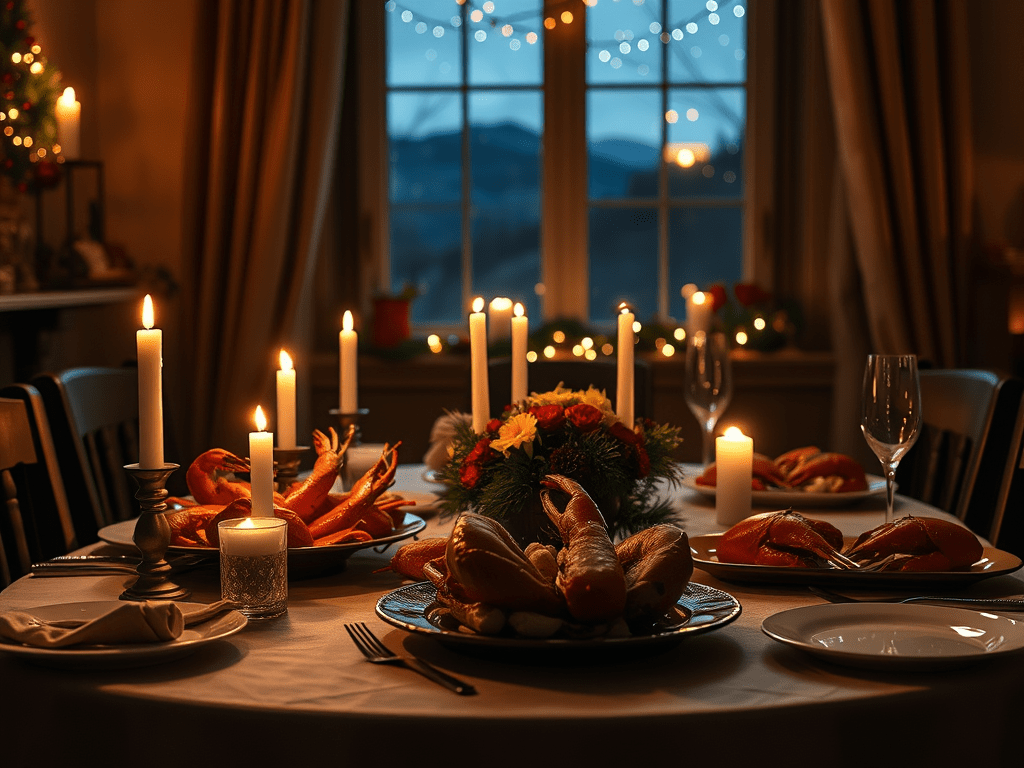
We kept our promises— a birthday celebrated, a table shared. Shrimp, crab, lobster sent from afar. Seventy-two and seventy-six sitting where we always sit, marking forty years of a son’s life a few days before fifty of our own.
Tomorrow she flies north to help new life arrive. The house will learn what silence sounds like.
I will go alone to the Christmas Eve service, for the first time, holding light carefully so it does not go out.
We have already exchanged gifts, already sung our parts— soprano and tenor— already said most of what matters.
What remains is gratitude.
The year closes. Grace has been sufficient. We are ready— not because we are finished, but because we are held.
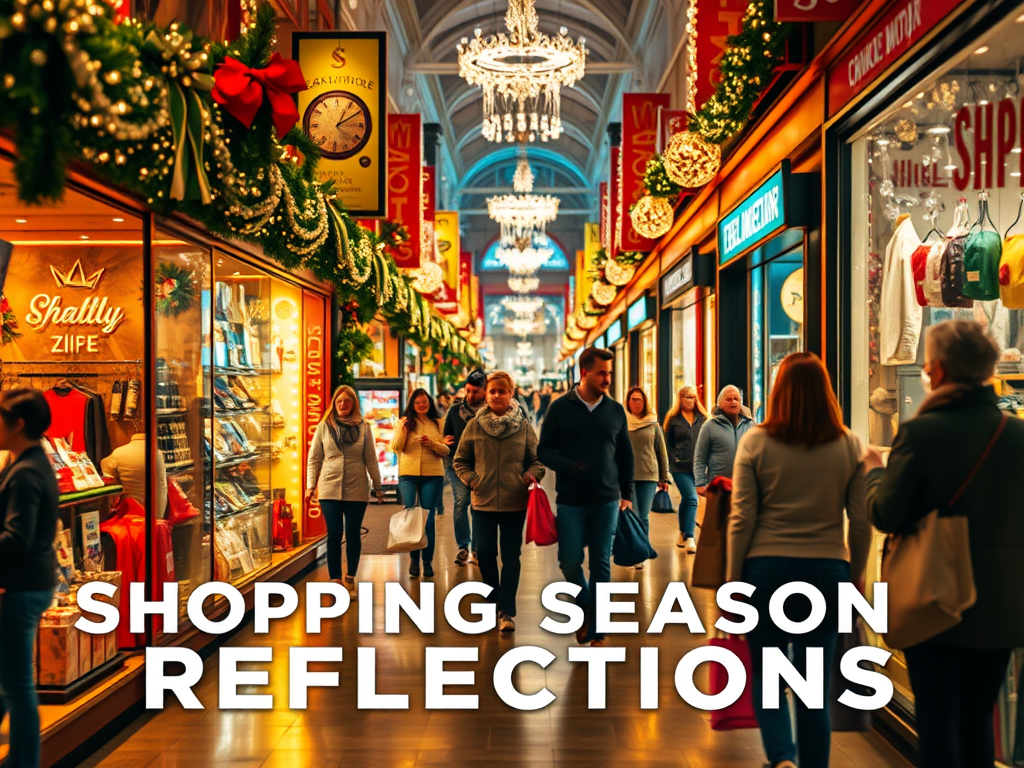
The shopping season has returned. As the year draws to a close, it seems as if newspapers and every form of media have made a firm decision to make people buy something—anything. A full‑scale sales war is underway. And that’s not all. The flood of junk mail delivered to our homes—filled with dazzling colors and attractive models—insists that we must wear this season’s style, or that these new products are more convenient and beautiful, urging us to claim them for ourselves. Even on our computers, advertisements and online catalogs overflow, showing us everything stacked in department stores and shops.
Merchants prepare elaborate strategies for Thanksgiving, Christmas, and New Year’s. Meanwhile, ordinary people often feel strangely empty if they don’t buy something, and so credit‑card debt rises sharply during this season. How do I know this so well? Because for many years, whenever the holiday season arrived, I too felt a compulsive urge to buy something. I wandered through shopping malls until I was exhausted and could walk no more, only then returning home. Of course, for business owners, this is the season when they must make their profit—sometimes the profit of the entire year depends on these weeks.
During this shopping season, I would like us to take time together to consider what we truly must acquire. We have many needs. Yet there are things we desperately need that money cannot buy and material goods cannot replace. Those who are battling illness would not trade their health for all the riches in the world. Even the healthiest among us would refuse any offer that required giving up their health. Without health, no matter how many things we wish to do, we lack the strength and desire to do them.
At times, when speaking with pastors’ wives, I meet those who are deeply concerned about the health of their church members. Seeing members exhausted from overwork, they often say with worry, “What if they collapse one day?” They have seen too many families fall apart because of health problems. But physical health alone is not enough. We also need mental and spiritual health—the health of the soul. Body, mind, and spirit are the most fundamental needs of human life. Through these three, we discover and receive what we truly need.
We are told that we now live in the most consumption‑driven era in human history. Of the six billion people on earth, only twenty percent consume and deplete the planet’s limited resources, while the remaining eighty percent struggle in poverty and hunger. Yet despite this excessive consumption, the quality of our lives continues to decline. Clearly, something has gone wrong somewhere at the very beginning.
As we live our lives, we all know that we need more than money. We need leisure, creativity, beauty, the desire to help others, the ability to weep and laugh together, honest conversation, and open hearts. But the small things we once thought unimportant can suddenly grow into enormous problems—like a dinosaur standing before us—revealing how fragile and unprepared we truly are.
Some of you may know the writer Sarah Ban Breathnach. Her book Simple Abundance was translated into Korean under the title The Discovery of Happiness, arranged by seasons. I first encountered her book years ago in an American bookstore, where it was displayed as a bestseller. I read it with great interest. Later, I found the Korean translation in a bookstore in Korea and bought it again to read it more fully.
Her confession at the beginning of the book was striking: “People tend to live life backward. They try to have more—more money, more possessions—thinking that if they can do what they want, they will be happier. But the result is the opposite. We must first return to our true selves, and then do what is necessary to achieve what we desire.”
She continues: “I desperately wanted money, success, social security, and creative brilliance. But I had no idea what I truly needed. Whenever a wave of emptiness swept over me, I tried to solve it by denying it. I was a workaholic, a caretaker addict, a perfectionist. I cannot even remember the last time I treated myself kindly. I was quick‑tempered, jealous, constantly comparing myself to others, always searching for what seemed missing in my life—yet unable to name it. Money became the only measure of my worth and success. But I lived in constant anger, jealousy, and frustration.It was only while writing this book that I realized why I had been trapped in such despair and rage: I had strayed from the life I was created to live.”
During this shopping season, are you taking time to seek what you truly need?
Too often, instead of investing time in unifying body, mind, and spirit—through reflection, prayer, and walking with the Lord—we live in the disharmony of a fractured life. How many people wound their own bodies and souls, fall into conflict with their families, and carry deep emotional scars because they cannot obtain the material things that flood over them like waves?
As we approach the end of the year, I ask myself: Do I truly know what I need? Am I seeking it? And I resolve once again that in the coming year, I will care for myself more faithfully and pursue genuine happiness.
— Wan‑Hee Yoon, New York Korean Christian Broadcasting, “As I Am,” November 12, 1999
샤핑의 계절이 돌아왔습니다. 년말연시가 되면, 가장 극성스럽게 신문광고와 온갖 미디아를 통해서, 사람들에게 무엇인가를 사게 만들고 말아야겠다는 결단이라도 한 것 처럼, 한창 세일전쟁이 일어나고 있습니다. 그뿐입니까? 우편으로 배달되는 그 많은 정크 메일(?)들은, 화려한 색상과 그럴듯하고 멋진 모델들을 다 동원하여, 이 계절엔 이런 스타일의 옷을 입어야 한다거나, 이런 것들이 더 편리하고 아름답게 나왔으니, 차지해 보라는 듯이 밀려들어오고 있습니다. 책상 앞, 컴퓨터 안에도 우편을 통한 물건들이 범람하고 있으며, 백화점과 상점들에는 어떤 물건들이 쌓여있는지 다 알수가 있습니다. 상인들은 벌써 추수감사절 대목 때, 그리고 성찬과 새해 맞이에는 온갖 전략들을 대비하고, 서민들은 무엇인가를 사지 않으면 또한 곧잘 허탈해져 가기 때문에, 이때에 크레딧 카드의 빚들이 마구 숫자를 올리고 있습니다. 어떻게 그렇게 잘아느냐고요? 저도 한동안 년말연시가 오면, 무엇인가를 사잿겨야 만 되겠다는 강박관념에, 괜히 쇼핑몰을 쏘다니다가 지쳐서 더 이상 걸어 다닐 수 없을 때에야 집으로 들어오던 때가 한두해가 아니었었거든요. 사실 장사하시는 분들은 이 때에 특수대목을 봐야 만 하는 것도 사실이지요. 일년내내 이 때를 통해서 또한 이문을 남겨야 만 될 때지요.
저는 이 샤핑의 계절에, 우리가 꼭 사야 만 될 품목들을 한번 점검해 봤으면 하는 마음에 시간을 여러분들과 함께 보내고자 합니다. 우리에게 필요한 것들이 많이 있습니다. 그러나, 돈으로 살 수 없고, 물질로 대신 할 수 없는 것들이 또한 우리에게는 너무나 절실하게 많이 있습니다. 지금 한창 병으로 투병하고 계시는 분들은, 천하를 준다해도 건강과 바꾸려 하지 않으실 것입니다. 아니, 아무리 건강한 분들도, 건강을 빼앗고 대신 할 것을 준다고 해도, 아마 고개를 내 저을 것입니다. 건강이 없으면, 아무리 하고 싶은 것이 많아도 의욕이 없고, 몸이 따라주질 못해, 아무 것도 할 수 없겠지요. 저는 가끔 사모님들과 대화를 나누다가 교인들의 건강을 무척 염려하시는 사모님들을 만나게 됩니다. 일에 지쳐있는 교인들의 모습 속에 “저러다가 쓰러지면 어떻게 하나!” 하면서 안타까운 심정이라고 토로 할 때가 많습니다. 왜냐면, 머잖은 날에, 건강이 문제가 되어 온 가정이 엉망이 되어가는 예를 너무나 많이 봐 왔기 때문이라는 고백입니다. 그러나 또한 몸의 건강 만이 필요한 것이 아니라, 정신적인 건강- 즉, 영혼의 건강이 우리 모두에겐 꼭 필요합니다. 몸과 영혼과 정신의 건강은 인간에게 있어서 가장 근본적인 필요이며, 이 세가지를 통하여서, 우리는 우리 자신에게 꼭 필요한 것들을 찾을 수 있고 얻을 수 있지요.
지금 우리는 인간의 역사 이래 가장 큰 소비속에 살아가고 있다고 합니다. 60억의 세계인구 중에, 지구의 제한 된 자원을 20%밖에 않되는 인구가 마구 유린하고 있고, 80%의 인구는 가난과 굶주림 속에 허덕이는 삶을 살아가고 있는 현실입니다. 그럼에도 불구하고, 우리들의 진정한 삶의 질은 형편없이 낮아지고 있는 기현상 속에서, 살아가고 있다니, 정말 뭔가, 어디선가, 시작이 잘못되어 있는 것이지요.
사람은 살아가면서, 돈 만이 아니라, 여가와 창조적인 삶과 아름다움을 추구하려는 정신적인 갈등과, 남을 돕고, 함께 울고 웃으며, 가슴을 열어놓는 대화와 진실등의 정신적이고 육적인 일들이 얼마나 필요한지 우리 모두는 알고있지요. 그러나, 그토록 시급하지 않타고 생각했던 작은 일들이, 어느날, 큰 일로 변신되어 공룡처럼 우리 앞에 나타났을 때, 우리는 감당 할 수 없는 너무나 연약한 자신을 발견케 됩니다.
사라본 브론넉이라는 작가를 여러분들 중에는 아시는 분들도 계실 것입니다. 우리나라 말에도 그 분이 쓴 책이 번역이 되었는데 제목은 “행복의 발견”이라 하여 계절별로 나눈 책입니다. 저는 꽤 오래 전에 미국 책방을 갔다가 베스트 셀러로 놓여져 있는 그분의 책을 사서 읽다가, 많은 감명을 받았습니다. 그런데, 어느날 한국 책방에 들렸더니, 그분의 책이 번역이 나와있어서 같은 책을 또 사서, 제대로 된 번역본을 읽게되었습니다.
책머리에 있는 그분의 고백은 참 흥미로웠습니다. “사람들은 대개 거꾸로 살려는 경향이 있다. 그들은 더 많은 것, 더 많은 돈을 소유하려고 노력한다. 그러면 원하는 것을 할 수 있을 것이고, 따라서 더 행복해 질것이라고 생각하기 때문이다. 하지만, 결과는 그와 반대로 나타날 뿐이다. 우리는 우선 자기 본연의 모습으로 돌아가야 한다. 그리고 나서 원하는 것을 위해 꼭해야 할 일을 해야 한다”라고 말하면서 자신의 삶의 여정을 이렇게 나누었습니다. “나는 돈, 성공, 사회적인 안정, 천재적인 창의력을 몹시도 원했다. 하지만 정작 내게 진정으로 필요한 것이 무엇인지를 손톱만큼도 알지 못했다. 격정적인 허전함이 밀려올 때마다 나는 단지 그것들을 부정함으로써 문제를 해결하려 했다. 나는 일중독자요, 남돌보기의 중독자요, 완벽주의자였다. 나는 나자신을 상냥하게 대했던 적이 언제였던가 떠올릴 수 조차도 없었다. … 나는 차라리 화 잘내고 샘 많은 여자로 끊임없이 자신을 다른이들과 비교하고, 결국은 내 인생에 있어서 빠진 듯 보이는 것을 찾아내어 그것이 무엇인지 속시원히 밝히지도 못하는 주제에, 자신의 성만 돋구는 여자였다. 돈은 내 자신의 가치와 성공을 가늠하는 유일한 길이었다. 그러나 나는 늘 분노하고 질투하고, 화가 나서 살 수밖에 없었다…. 그러나, 나는 책을 집필하면서 내가 왜그토록 좌절과 분노속에 사로잡혀있었는지 그 까닭을 알게되었다. 그것은 내가 살아가도록 창조된 진정한 삶에서 벗어나 있었기 때문이다”
쇼핑의 계절, 오늘은 내게 있어서, 진정으로 필요한 것들을 얻기 위한 시간을 갖고 있습니까?
어떻습니까? 우리는 어리석게도 몸과 영혼과 정신 건강의 통일을 위해, 시간을 들이고, 묵상을 하고, 주님과의 동행 속에 삶의 본질 속에 들어가기 보다는, 삶의 부조화와 정신과 몸과 영혼의 불화 속에서 오늘을 살아가고 있지 않나 하는 염려를 하게 됩니다. 얼마나 많은 사람들이, 파도처럼 범람하는 물량들을 손에 얻지 못해 자신의 영혼과 몸을 학대하고, 가족과 불화하고, 마음의 상처를 입고 살아가고 있습니까?
한해를 돌아보아야 하는 때, 나는 진정 내게 필요한 것을 알고, 그것을 찾고 있는가(?) 자신에게 물어봅니다. 그리고 새해는 더 내 자신을 돌보며, 진정 행복질 수 있기를 또 결심해 봅니다.
얼마 전, 나는 「일곱 번째 친구(The Seventh Friend)」라는 짧은 글을 접했습니다. 그 글은 오래도록 내 마음에 남아 있습니다.
어떤 사람이 처음 암 진단을 받으면, 많은 친구들이 찾아온다. 각자 말과 설명, 혹은 조언을 들고서.
첫 번째 친구는 충격에 휩싸여 말합니다. “도저히 믿을 수가 없어. 당신은 늘 그렇게 건강해 보였잖아.” 그는 떠나고, 환자는 자신이 의도하지 않았는데도, 갑자기 스스로 분리된 존재가 된 느낌이들었습니다.
두 번째 친구는 정보로 무장하고 다녀 갔습니다. “무슨 일이 있어도 항암치료는 하지 마. 그건 독이야.” 그는 떠나고, 두려움과 혼란만 남게 되였습니다.
세 번째 친구는 답할 수 없는 질문에 답하려 했습니다. “아마도 당신의 어떤 죄 때문에 하나님이 징계하시는 걸 거야.” 그는 떠나고, 죄책감이 뿌리내리고 말았습니다.
네 번째 친구는 확신에 차 말했습니다. “당신의 믿음이 충분히 크다면, 하나님은 반드시 고쳐주실 거야.” 그는 떠나고, 죄책감은 더 깊어져갔습니다.
다섯 번째 친구는 성경 말씀을 인용했습니다. “모든 것이 합력하여 선을 이루잖아.” 그는 떠나고, 분노가 서서히 일어나고 있음을 알게 되였습니다.
여섯 번째 친구는 아예 오지 않는데,. 외로움이 자리를 잡게 되더군요.
마침내 일곱 번째 친구가 다녀갔습니다. 그는 설명하지 않앗습니다. 조언하지도 않았습니다. 그저 손을 잡고 말했습니다. “나는 너를 아껴. 필요하면 언제나 여기 있어 줄게. 그리고 이 길을 함께 걸어가고 싶어.” 그는 떠나고, 사랑의 온기가 남아 있는 것을 느끼게 되더군요.
지금은 성탄 계절입니다. 아기 예수의 탄생이 우리의 마음을 겸손하게 하듯, 서로의 마음을 어루만질 수 있게 되기를 바랍니다. 해답이 아니라 함께 있음으로, 말이 아니라 사랑으로 다가가도록 우리를 가르치고 계심을 ….
Some time ago, I came across a short piece called “The Seventh Friend.” It stayed with me.
When a person is first diagnosed with cancer, many friends come—each carrying words, explanations, or advice.
The first friend arrives in shock: “I can’t believe this. You were always so healthy.” He leaves, and the patient feels suddenly different, set apart.
The second friend comes armed with information: “Whatever you do, don’t take chemotherapy. It’s poison.” He leaves, and fear and confusion remain.
The third friend tries to answer the unanswerable: “Maybe God is disciplining you for some sin.” He leaves, and guilt takes root.
The fourth friend speaks with confidence: “If your faith is strong enough, God will heal you.” He leaves, and guilt deepens.
The fifth friend quotes Scripture: “All things work together for good.” He leaves, and anger rises.
The sixth friend does not come at all. And loneliness settles in.
Then the seventh friend comes. He does not explain. He does not advise. He holds a hand and says, “I care. I’m here. I want to walk with you through this.” He leaves, and love remains.
It is Christmas. Let us touch one another’s hearts, allowing the birth of the baby Jesus to humble us—teaching us to come not with answers, but with presence; not with words, but with love.
What a remarkable world we live in. The more I think about it, the more it feels like a miracle. I sit at my desk, tap a few keys on my computer, send an email, and within seconds it reaches the entire world. I used to wonder, How could the One who dwells in the highest of heavens possibly know the thoughts of a mere human like me?—and so I stubbornly remained seated in the posture of a foolish creature. Yet modern science, layer by layer like peeling an onion, is stripping away the mysteries of the universe before our eyes. Even scientists admit they cannot predict what the world will look like five years from now.
But a few days ago, I received a letter titled “Current Affairs Commentary,” written by an anonymous student from Columbine High School. As we stand on the threshold of the twenty‑first century, the words in that letter sounded like a bell tolling for our times. I would like to share it with you.
**“Today, if there is a contradiction in our history, it is this:
We have tall buildings but low character. We have wide highways but narrow viewpoints. We consume endlessly, yet possess nothing of substance. We buy more and more, yet do not know how to enjoy anything.**
We live in large houses and small nuclear families, in a world of increasing convenience, yet we are constantly pressed for time.We hold more titles, yet have less understanding.Knowledge overflows, yet judgment weakens.Expectations rise, yet problems multiply.Medicines are endlessly developed, yet the quality of life declines.
We own everything, yet values are disappearing.Words overflow, yet love is scarce, and hatred is frequent.We learn how to live, yet we disregard life.We strive to extend life, yet neglect to live today.We travel to the moon, yet struggle to meet the new neighbor across the street.
We conquer outer space, yet fail to conquer the small universe within.We purify the air, yet our souls are polluted.We know how to split atoms, yet cannot break apart our prejudices.We earn higher incomes, yet our morality sinks lower.We mass‑produce everything, yet quality diminishes.
We say we live in an age of great people, yet character is small.We boast of economic prosperity, yet live in shallow human relationships.We speak of world peace, yet families continue to fall apart.We have more leisure, yet less joy.We have more kinds of food, yet less nutrition.
In this age, two people work, yet divorce increases.Homes grow more luxurious, yet families crumble.The shop windows of our era grow more dazzling, yet the storerooms behind them grow emptier.
In this age of advanced technology—technology that allows this letter to reach you—you must choose one of two things:Will you change the world?Or… will you simply press the delete key?”
When I received this letter, I remained in shock for quite some time. On a peaceful, beautiful morning—still as the surface of a quiet lake—there suddenly erupted the indiscriminate gunfire, screams, death, and the tears of those who lost friends and teachers. Out of that anguish came this single sheet of writing, revealing with painful clarity the true condition of our lives.
People often say that America is a “shopping‑cart society,” and that we are all living in a state of addiction. Indeed, on weekends, crowds fill the shopping malls, wandering all day in an attempt to satisfy their hungry souls. Credit‑card debt grows endlessly, while people themselves grow smaller and more fragile. For all of us Christians who are being drawn into the glittering shop windows created by scientists and merchants, this one page of commentary—written in tears by an anonymous student—is a profound challenge.
– WanHee Yoon, Letter from the Parsonage, November 11, 1999
참 좋은 세상이다. 아무리 생각해도 기적과 같다. 책상머리에 앉아 컴퓨터의 키를 두드려, 전자메일을 발송하면, 몇 초안에 온 세상에 동시에 전해지니 말이다. 사람의 생각을, 어찌 그 높고 높은 곳에 계신 분이 아실까? 하며, 스스로 어리석은 인간의 자리에 눌러 앉아있기를 고집하던 나에게, 과학문명은 양파껍질을 벗겨나가듯이 신비의 세계를 하루가 다르게 벗겨나가고 있다. 과학자들조차도, 5년후의 세상이 어떻게 변하게 될지 알 수 없다고 한다. 그러나, 며칠 전, 내게 도착한 무명의 콜롬바인 하이스쿨의 학생이 쓴 “시사해설” 이라는 편지 한 장은, 21세기를 앞둔 우리 모두에게, 시대의 종소리로 들려오기에 소개하고자 한다.
“오늘날, 우리 역사의 모순이 있다면 높은 빌딩은 갖고 있어도, 저질의 성질을 갖고있으며, 넓은 하이웨이는 열려있지만, 좁은 견해와, 많은 소비 속에, 갖은 것은 없고, 많은 것을 사들여도, 즐길 줄을 모른다.
우리는 큰집을 갖고 핵가족을 이루며, 더욱 더 편리한 세상에 살고 있지만, 우리는 늘 시간에 쫓기며, 더 많은 지위는 있어도, 지각은 약해지고, 더 많은 지식은 범람해도, 판단은 약해지고, 더 많은 기대 속에, 문제들은 더욱 더 일어나고, 약품들은 수없이 개발되어도, 삶의 질은 낮아지고 있다.
우리는 온갖 것을 소유하고 있지만, 가치는 사라져 가고, 언어는 범람해도, 좀처럼 서로 사랑하기가 어렵고, 너무 자주 미워하며 살아가고 있다. 우리는 어떻게 살 것인가의 방법을 배우지만, 생명을 경시하며, 우리는 생명 연장을 위해 애써도, 오늘의 삶을 생각지 않으며, 우리는 달나라까지 오고 가도, 길 건너편의 새로운 이웃과 만나는 일엔 어려움을 겪고 있다.
우리는 외계의 세계를 장악해 나가고 있어도, 내 속의 소우주는 점령치 못하며, 공기를 정화하려 하지만, 우리 영혼엔 공해가 가득하며, 우리는 원자는 분해할 줄 알아도, 편견만은 분해 할 줄 모른다. 우리는 높은 수입은 가졌어도, 도덕성은 낮아져 가고, 대량생산은 하여도, 질은 낮아지고 있다. 지금은 위대한 사람들이 살고 있는 세상이라지 만, 인품은 작고, 경제수익은 높아도, 천박한 인간관계 속에 살아가고 있다. 지금은 세계 평화의 시대라고 말하고 있지만, 가정파탄은 끊임없이 일어나며, 레저는 많아도, 재미는 덜하며, 더 많은 종류의 음식 속에, 영양분은 낮아지고 있다.
이 시대는 두 사람이 벌지만, 이혼은 더해가고, 화려한 집에, 가정은 깨어져 가고 있으며, 시대의 쇼윈도는 점점 화려해 가지만, 정작 창고는 비어 가고 있다. 기술문명이 이 편지를 당신에게 전해줄 수 있는 시대에, 당신은 둘 중에 하나를 선택해야 만 될 시간이 왔다. 하나는 세상을 변화시킬 것인가, 아니면 … 그냥 삭제해 버리는 키를 누르고 말 것인가!“
나는 이 편지를 받아들고 한 동안, 충격 속에 머무를 수밖에 없었다. 호수의 잔잔한 물가와 같이 평화스럽고 아름답던 아침에, 울려 펴졌던 무차별 총소리와, 비명, 죽음, 친구와 교사를 잃은 고통의 눈물 속에서 건져 올린, 이 한 장의 편지는 우리 삶의 현주소가 너무나 적나라하게 드러나 있었다. 흔히 말하기를 미국은 “사 잿기기 세상” 속에 우리 모두가 중독현상 속에 살아가고 있다고 한다. 실지로, 주말이면 넘치는 쇼핑몰의 인파 속에서, 허기진 영혼을 채우려는 이들은 온종일 방황하고 있으며, 크레딧카드의 부채는 늘어 만가고, 사람은 점점 더 외소 해 져 가고 있다. 과학자들과 장사꾼들이 진열해 놓은 쇼윈도 속에, 젖어 들어가고 있는 우리 모든 크리스천들에게, 무명의 학생이 눈물로 쓴 한 장의 시사해설은 참으로 큰 도전이 아닐 수 없다.








 Daily Sauntering
You must be logged in to post a comment.