Submitted to the Board of Ordained Ministry of the New York Annual Conference of the United Methodist Church, January 1984, as part of the requirements for Deacon/Probationary status.
C. Christian Life
5. Are you presently in debt so as to interfere with your work, or have you obligations to others which will make it difficult for you to live on he salary you may receive?
At present, I am receiving financial support through a state-guaranteed student loan (GAPSFAS), as well as the Fulbright Scholarship and the Crusade Scholarship. These resources have been instrumental in covering the costs of my theological education, allowing me to continue my academic journey without significant interruption.
I am grateful that, aside from this student loan, I have no other financial obligations or outstanding debts. This stable financial foundation enables me to fully devote myself to my studies and spiritual formation as I prepare for ministry within the Christian community.
Submitted to the Board of Ordained Ministry of the New York Annual Conference of the United Methodist Church, January 1984, as part of the requirements for Deacon/Probationary status.
C. Christian Life
4. Indicate in some detail how your close personal relationships affect your ministry?
As someone with an INTJ personality type, I naturally tend to be reserved in forming new friendships. Building close personal relationships takes time and intentionality for me. However, once those bonds are formed, I invest deeply and wholeheartedly. I offer my complete trust and loyalty, which creates relationships rooted in authenticity and sincerity.
While I may not make friends quickly, I am able to communicate effectively with others. This comes from my desire to be a good listener—not only in my conversations with people but also in my walk with God. I approach each interaction with a listening heart, seeking to understand others with patience and empathy.
This posture of attentiveness often allows me to see God’s presence even in the smallest moments. I have found myself learning profound lessons through the simple, honest words of children or through casual conversations with congregants. These experiences continually shape my pastoral heart.
During my training in the local pastor licensing school, I was encouraged to learn that others observed in me “a warmth and a depth of concern for another’s welfare.” I believe that this quality flows from my commitment to listen, to understand, and to reflect God’s love through my presence and care for others.
My personal relationships, while few and deep, are a vital part of how I live out my ministry. They help me stay grounded, empathetic, and open to the Spirit’s guidance in every interaction.
Submitted to the Board of Ordained Ministry of the New York Annual Conference of the United Methodist Church, January 1984, as part of the requirements for Deacon/Probationary status.
Edited on April 6, 2025.
C. Christian Life
3. What do you anticipate to be the risks and sacrifices entailed in serving in the United Methodist ministry?
Introduction
Answering the call to serve in the United Methodist Church is not just a career move—it’s a life-altering commitment. It requires more than time, energy, or knowledge. It demands your heart, your presence, and often, your comfort. So, what does it really mean to step into this sacred calling? And what are the real risks and sacrifices involved?
Understanding Ministry in the United Methodist Church
The United Methodist Church (UMC) stands on a rich heritage of connectionalism—a system where churches, districts, conferences, and boards work in harmony. It’s a structure built to support mission, outreach, education, and spiritual leadership across the globe. But with such a broad and intricate system, the dynamics of local church ministry can become complex.
The Divine Call vs. Human Sacrifice
To be called by God isn’t just to serve—it’s to surrender. Ministry isn’t glamorous. It’s deeply spiritual, frequently challenging, and often lonely. In Romans 12:1, we are urged to become “living sacrifices.” This isn’t poetic fluff—it’s practical truth. Ministry requires offering yourself daily.
Risk #1: Weakened Local Church Dynamics
Shift from Local Intimacy to Systemic Strength
While the UMC system supports churches globally, many pastors face the challenge of declining influence at the local level. The stronger the system becomes, the more diluted personal pastoral care can feel.
Impact on Congregational Relationships
In many cases, pastors find themselves so busy with administrative tasks or conference obligations that they struggle to maintain meaningful spiritual relationships within their congregations. It becomes a balancing act—juggling bureaucracy and soul care.
Strength of General Boards and Agencies
On the flip side, the General Boards and Agencies offer valuable support, resources, and theological guidance. They provide strength and order. But pastors may feel like middle managers rather than spiritual shepherds—more functional than personal.
Risk #2: Intellectualization of the Holy Spirit
The Tendency to Reason Rather than Feel
In the quest for doctrinal clarity and theological education, many ministers find their faith shifting from the heart to the head. The Holy Spirit becomes more of a concept to study than a presence to experience.
Theological Education vs. Spiritual Experience
Seminaries often prioritize historical and systematic theology. While essential, this can leave little room for spontaneous, Spirit-filled transformation. Ministers are trained to teach about fire but not necessarily to burn with it.
From Observing to Becoming: The Burning Bush Analogy
Imagine Moses standing before the burning bush. That image should not just be on a PowerPoint slide—it should live within the pastor. Don’t just describe the fire. Be the fire. Burn with the Spirit so that others can feel the warmth and light of God in your life.
The Itinerant System: A Double-Edged Sword
Flexibility and Sacrifice of Pastoral Relocation
The itinerant system—a core part of Methodist identity—allows for dynamic leadership. But it also comes at a high cost. Uprooting families, saying goodbye to beloved congregations, and starting over every few years is emotionally taxing.
Emotional Toll of Relocation
Moving is not just a logistical task—it affects mental health, family dynamics, and personal identity. Pastors often feel like strangers in a new land, repeatedly.
Relational Fragmentation
Deep relationships take time. But with itinerancy, ministers often leave just as true bonds begin to form. This affects both pastors and congregants.
The Invisible Sacrifices of Ministry
Ministry often costs more than people realize. Long hours, limited pay, constant emotional availability, and spiritual vulnerability come with the job. Add to that the weight of carrying others’ grief, doubts, and joys, and it’s clear—ministry is a full-body, full-soul commitment.
Why Ministers Still Say Yes
So why do they stay? Because they’ve seen broken lives healed, faith renewed, and God move in impossible places. Because even when exhausted, there’s nothing quite like standing in the flow of God’s grace and watching it transform a person or a community.
Becoming the Burning Bush
Don’t just talk about revival—be revival. Ministry is not about observing sacred moments from afar. It’s about being the sacred vessel through which the Holy Spirit speaks, moves, and burns.
Conclusion
Serving in the United Methodist ministry isn’t for the faint of heart. It demands risk, courage, humility, and deep faith. But in all the sacrifice, there is divine beauty. To be part of something larger than yourself—to truly become the burning bush—is a holy honor and a powerful calling.
FAQs
Q1: What is connectionalism in the United Methodist Church? A: Connectionalism refers to the interconnected structure of the UMC that links all churches in mission, ministry, and administration for greater impact and support.
Q2: How does the itinerant system work in the UMC? A: Pastors are appointed to churches by bishops and may move every few years, ensuring broader leadership development but often causing personal and relational challenges.
Q3: Why is personal experience with the Holy Spirit so important in ministry? A: While theology provides understanding, personal experience with the Spirit fuels authenticity, passion, and transformative ministry.
Q4: Can intellectual study of theology weaken spiritual life? A: It can if not balanced with prayer, worship, and personal spiritual disciplines. Knowledge without presence leads to dryness.
Q5: What keeps pastors motivated despite the risks and sacrifices? A: The calling, the fruit of changed lives, and the presence of God in the midst of hardship are powerful motivators to continue.
Submitted to the Board of Ordained Ministry of the New York Annual Conference of the United Methodist Church, January 1984, as part of the requirements for Deacon/Probationary status.
C. Christian Life
2. For the sake of the mission of Jesus Christ in the world and the most effective witness to the Christian Gospel, and in consideration of your influence as a minister, are you willing to make a complete dedication of yourself to the highest ideals of the Christian life; and to this end will you agree to exercise responsible self-control by personal habits conducive to bodily health, mental and emotional maturity, social responsibility, and growth in grace and the knowledge and love of God?
Over the years, I have cultivated three foundational commitments that shape my personal and spiritual life as well as my ministry:
Love in Humility – Living the Gospel through silent acts of service, seeking to do before speaking. This practice grounds my life in the example of Christ, who served in love and humility.
Rejoice in Poverty – Living without personal ownership, in solidarity with the poor, trusting wholly in God’s provision. This discipline frees me to embrace simplicity and generosity.
Hope in Ministry – Surrendering everything to God, placing all hope in the redeeming work of Christ. This perspective strengthens my resolve to serve faithfully, whatever the cost.
In the face of modern struggles for spirituality and authentic prayer, pastors are uniquely positioned to offer hope and guidance. We are called to be deeply rooted in contemplative prayer and to serve as spiritual companions amid the complexity of human life. Questions of life and death, suffering and emptiness, must be approached with spiritual wisdom shaped by prayer, study, and compassion.
The work of a pastor is not merely functional; it is profoundly spiritual. The shape and authenticity of ministry depend on a life deeply immersed in the Holy Spirit. Therefore, I seek to live in a rhythm of prayer, reflection, healthy living, and meaningful relationships, that I may embody the grace I proclaim.
By God’s grace, I commit myself to a disciplined, holy life—one that honors the Gospel, witnesses to Christ’s love, and serves others with joy, wisdom, and hope.
Submitted to the Board of Ordained Ministry of the New York Annual Conference of the United Methodist Church, January 1984, as part of the requirements for Deacon/Probationary status.
C. The Christian Life
What is your understanding of the Christian life as set forth in the Articles of Religion, the statement of our theological Task, and the Social Principles in the Discipline of the United Methodist Church?
The Christian life, as articulated in the Articles of Religion, the statement of our Theological Task, and the Social Principles of The United Methodist Church, is rooted in a dynamic and living tradition. Our faith is not self-originated but inherited from generations of faithful witnesses who have reflected deeply on their experiences with God.
Christian belief is not static. It has been continually shaped and refined through the lived experience of the community of faith. The Articles of Religion give us the doctrinal foundation, the Theological Task invites us into reflective engagement with Scripture and the world, and the Social Principles call us into responsible action within society. Together, they form a holistic vision of the Christian life.
Whether we are new disciples seeking clarity, seasoned believers renewing our commitment, or seekers navigating spiritual uncertainty, we are all drawn into the same journey: to know God, to love others, and to participate in the transformation of the world.
Our beliefs emerge from experience—our own and that of the community. We reflect on today through the lens of the Social Principles, we wrestle with yesterday through our Theological Task, and we honor the wisdom of our past through the Articles of Religion. In dialogue with tradition, reason, and Scripture, our faith grows.
The United Methodist Church’s ecumenical spirit is one of its greatest strengths. It allows us to embrace a wide spectrum of experiences and viewpoints while remaining grounded in core convictions. The Christian life, therefore, is a faithful response to God’s grace, lived out in community, shaped by reflection, and expressed through love, justice, and service.
As a United Methodist, I embrace this calling not as an abstract ideal, but as a way of life—an ongoing journey of faithfulness, shaped by grace, grounded in tradition, and lived for the transformation of the world.
Submitted to the Board of Ordained Ministry of the New York Annual Conference of the United Methodist Church, January 1984, as part of the requirements for Deacon/Probationary status.
B. Practice of Ministry
3. Confidentiality in Pastoral Conversations
Yes, I will regard all pastoral conversations of a confessional nature as a sacred trust between the individual and God. Pastoral conversations often carry the weight of deep vulnerability, sin, guilt, and longing for grace. They are not mere dialogues, but sacramental encounters wherein the soul seeks healing, forgiveness, and restoration through divine mercy.
Within the Christian tradition, especially in the context of pastoral care, such confessional moments are penitential in character—spaces where sin is named and grace is received. It is through these sacred encounters that individuals are led toward confession, not merely as an act of speaking, but as a pathway to redemption. These conversations are held not only in the presence of the pastor but before God, the ultimate source of grace.
Theologically, the necessity for such sacred confidentiality stems from the reality of human bondage to sin and the spiritual warfare that often accompanies it. The Scriptures reveal that behind human brokenness lies the presence of unseen powers and principalities. Yet, through the redemptive work of Jesus Christ, even these hidden dominions are overcome. Where forgiveness of sin is proclaimed, the reign of darkness is broken, and the liberating reign of Christ begins.
As such, pastoral care is not simply counseling—it is participation in God’s redemptive mission. It proclaims the hope of Christ, casts out fear and despair, and extends the promise of the Kingdom of God. To violate the confidentiality of such moments would be to disrupt the sacredness of that divine-human encounter and to diminish the trust that invites confession.
Therefore, I solemnly commit to guarding all pastoral conversations of a confessional nature with utmost integrity and confidentiality. In doing so, I act as a steward of God’s grace, a witness to Christ’s mercy, and a companion in the Spirit’s healing work.
Submitted to the Board of Ordained Ministry of the New York Annual Conference of the United Methodist Church, January 1984, as part of the requirements for Deacon/Probationary status.
B. The Practice of Ministry
2. Are you willing to relate yourself to all persons without regard to race, color, national origin, or social status?
I am fully committed to relating to all persons without regard to race, color, national origin, or social status. The foundation of my theological understanding is rooted in the principle of harmony, which cannot exist apart from an embrace of diversity. My faith journey began with an experience of humility, as I reflected on the mystery of the incarnation—God becoming human within the limits of time and space. This humility calls me to see every person as created in the image of God (Imago Dei) and to treat each one with deep respect and dignity.
I believe that others are not only reflections of Jesus Christ but also sacred opportunities through which I can glimpse the Kingdom of God. We are all God’s children, members of one divine family. Racism, which asserts the superiority of one race over another, contradicts both harmony and humility, and thus stands in direct opposition to the Gospel. As stated in the Social Principles of the United Methodist Church (The Book of Discipline, 1980, para. 72; A), “Racism plagues and cripples our growth in Christ, inasmuch as it is antithetical to the Gospel itself.” Therefore, I reject all forms of racism and commit myself to building relationships that reflect God’s inclusive love.
Submitted to the Board of Ordained Ministry of the New York Annual Conference of the United Methodist Church, January 1984, as part of the requirements for Deacon/Probationary status.
B. The Practice of Ministry
1. Personal Gifts for Ministry:
Strengths and Areas for Growth
The pastoral calling, as modeled in the life and ministry of Jesus Christ, involves an integration of being, knowing, and doing. These dimensions reflect not only the core responsibilities of a United Methodist pastor, but also the holistic nature of Christian discipleship. I have come to understand and embody these three aspects through my personal journey of faith and ministry.
Being: The Inner Life of the Spirit
The “being” dimension refers to the inner spiritual life: prayer, contemplation, identity, spiritual discipline, imagination, faith, and worship. These are rooted in the Wesleyan tradition and aligned with The Book of Discipline (1980, §431.1,3,6,7). My spiritual formation has followed three core movements:
Reaching inward: from loneliness to solitude. As a youth navigating family challenges, I learned to encounter God in solitude, discovering my identity as God’s beloved.
Reaching outward: from hostility to hospitality. My awakening to issues of social injustice in Korea transformed my anger into compassionate action, as I began to love my neighbor as myself.
Reaching upward: from illusion to prayer. At Drew Theological School, I encountered the living Word through mystical contemplation, grounding my ministry in communion with God.
Knowing: Theological and Intellectual Development
The “knowing” aspect includes theological inquiry, academic study, reflection, and intellectual growth (§431.8,9). This foundation was laid early in my life through poetry and the arts. In 1970, I held a private exhibition of my poems and paintings at the Methodist Theological Seminary in Seoul. From 1977 to 1980, I taught philosophy at Pusan Union Theological Seminary, where I was deeply engaged in process thought and Eastern-Western philosophical comparisons.
Alongside this academic journey, I continued to write poetry (publishing three anthologies with fellow poets), conducted choirs for worship services, and wrote art criticism. These interdisciplinary pursuits have helped shape my theological imagination. In the future, I hope to deepen my study in two areas: (1) comparative theology between East and West, and (2) a phenomenological interpretation of divine movement and the mystery of the Trinity, particularly in the theology of John Wesley.
Doing: The Practice of Ministry
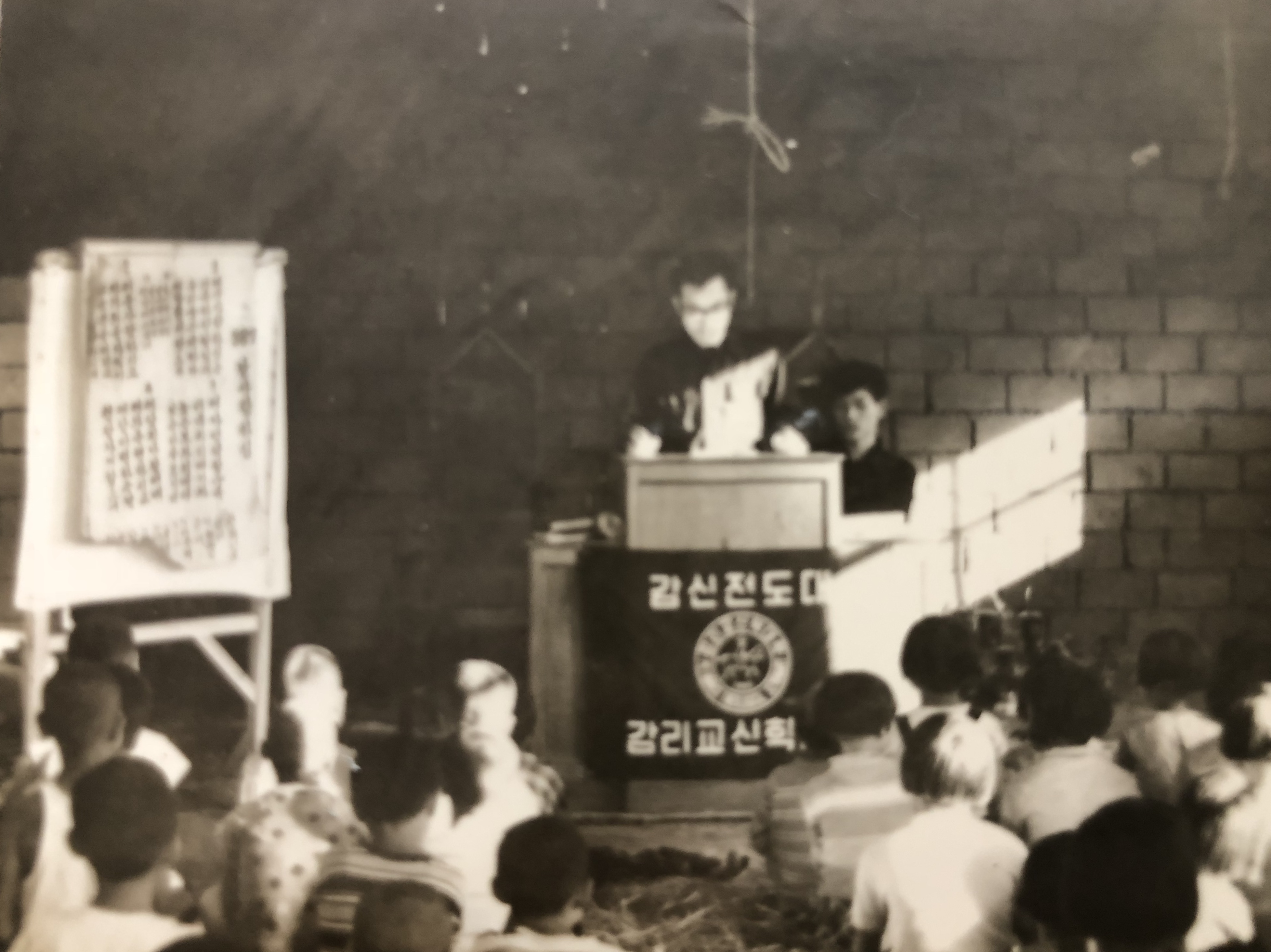
The “doing” dimension encompasses the practical outworking of ministry: leadership, service, mission, preaching, and administration (§431.2-7). I began my pastoral ministry while serving in the Korean army (1970-1973), where I organized and built a worshipping community. After moving to the United States, I continued to serve faithfully and received my license as a local pastor in July 1982 within the United Methodist Church.
My experience in community organizing in Korea, especially in times of civil unrest, strengthened my commitment to justice and compassion in ministry. These skills have translated into pastoral leadership marked by empathy, resilience, and adaptability.
Area for Growth: Church Administration
While I feel called and equipped in many areas of ministry, I recognize that church administration is a key area in which I seek further development. Effective church leadership requires not only spiritual vision, but also practical management skills—strategic planning, budgeting, team building, and organizational oversight. I am committed to growing in this area through continued learning, mentorship, and hands-on experience, so that I may serve the Church with both wisdom and effectiveness.
In summary, I bring to ministry a deep spiritual grounding, a strong theological foundation, and practical experience in mission and pastoral care. I remain a lifelong learner, open to God’s ongoing shaping, and eager to grow in those areas that will strengthen my service to the Body of Christ.
Submitted to the Board of Ordained Ministry of the New York Annual Conference of the United Methodist Church, January 1984, as part of the requirements for Deacon/Probationary status.
A. THEOLOGY AND VOCATION
4. Understanding of the Kingdom of God and the Mission of the Church
The Kingdom of God is a dynamic and foundational concept within Christian theology—best understood not as a static realm, but as the active and redemptive reign of God. In the ministry of Jesus, the Kingdom was both a present reality and a future hope. Jesus proclaimed the Kingdom as breaking into human history through acts of healing, justice, reconciliation, and love, while also pointing toward its ultimate fulfillment at the end of time.
Interpretations of the Kingdom of God vary widely and often reflect one’s understanding of Christ’s person and mission. Some Christians affirm that to be “in Christ” is to already be “in the Kingdom,” for God’s reign is manifest wherever people live in faithful obedience to Him. Others highlight the eschatological nature of the Kingdom, seeing it as God’s final, transformative destiny for creation—a promise that draws us forward in hope.
The Kingdom of God therefore presents a dual vision: the eternal reign of God, and the realization of that reign within our historical reality. It is both a promise of future unity with God and an invitation to embody divine justice, mercy, and love in the present. Prayer serves as the meeting point of these two dimensions—opening ourselves to God’s purposes while working to reflect divine harmony in our world. The Church is called to be the visible sign of this prayer: “Thy Kingdom come.”
Just as harmony in music creates a pattern greater than its individual notes, so God weaves together the diversity of creation into a unified and beautiful whole. In Christ, we perceive the fullness of God’s intention—a radiant manifestation of divine love and justice. Through Christ, the Church is born, and the mission of the Church is grounded in this Kingdom vision.
The Church’s mission today is to embody the qualities of unity, holiness, apostolicity, and catholicity. Apostolicity ties us to the foundational witness of the apostles; unity points us toward our shared identity in Christ; holiness invites us to live faithfully in the present; and catholicity reflects the universal reach of God’s love. This universality is not rooted in cultural uniformity but in God’s own nature, whose grace is endlessly adaptable and whose purpose is the well-being of all creation.
Mission, then, is not an activity added to the life of the Church—it is life itself. Every expression of love, justice, healing, and proclamation of the Word is a participation in God’s mission. To live fully in God’s love is to live missionally. Through our lives and witness, we testify to the Word made flesh. The Kingdom of God is not only our ultimate destiny—it is our present calling, shaping the Church to be a vessel of God’s transformative grace in the world.
Submitted to the Board of Ordained Ministry of the New York Annual Conference of the United Methodist Church, January 1984, as part of the requirements for Deacon/Probationary status.
A. THEOLOGY AND VOCATION
3. Theological Tasks of a United Methodist Minister
The theological task of a United Methodist minister is shaped by the Church’s historical witness and spiritual discernment across time and cultures. Faithful Christians in every age and region have encountered God’s seeking love in diverse and meaningful ways. Their unique experiences have led them to emphasize particular aspects of the Christian faith in alignment with their cultural, historical, and personal contexts.
Within this broad tradition, figures such as John and Charles Wesley in England, and Francis Asbury, William Otterbein, and Jacob Albright in America, helped shape a distinctive Wesleyan expression of the Christian faith. For over two centuries, the United Methodist Church has embodied and passed down this heritage through its congregations and leadership.
The United Methodist theological task is dynamic and rooted in four foundational sources: Scripture, tradition, reason, and experience. Ministers are called to continually engage with these sources in their proclamation of the Gospel, theological reflection, and pastoral ministry.
United Methodist beliefs are not defined by rigid doctrinal uniformity. Instead, the Church embraces a breadth of perspectives within a framework of essential Christian doctrine, reflecting its commitment to unity in diversity. The General Conference holds the responsibility for articulating the official doctrinal statements of the Church.
A United Methodist minister, therefore, is tasked with interpreting the faith in light of contemporary issues and contexts, always guided by Scripture and the Holy Spirit. Ministers are called to nurture the faith of their congregations, foster communal discernment, and embody the Church’s mission of making disciples for the transformation of the world. The vows of confirmation and church membership reflect this inclusive and grace-filled approach, focusing not on exhaustive creeds, but on commitment to Christ and His Church.
In this way, the minister’s theological task is both pastoral and prophetic—rooted in tradition, responsive to the present, and open to the future God is bringing into being.





 Daily Sauntering
You must be logged in to post a comment.