Live broadcast — 1480 AM Radio Korea, KCBN, January 2, 1998 From the series: “From the Forest with an Open Window” — Wanhee Yoon, April 12, 2001
Hello, everyone. Today I would like to spend this time thinking together about how all of us can live brighter, healthier, more forward-moving lives. A life of wholeness — in both soul and body — is what we all long for. God created us for health and blessed us to live that way. And yet as the years go on, family life and society grow ever more complex, and modern people are beset by every kind of ailment — which is why there are now hundreds of health foods, medications, and exercise programs on the market. But today, for the health of both soul and body, I would like to introduce something different: the scissors of forgiveness.
Let me begin with a personal confession.
One morning, I went early to a shoe repair shop to pick up a bag I had left there the day before. The owner had told me I could come by anytime the next day — so I went first thing in the morning, only to find that he hadn’t touched it at all. He clearly hadn’t expected me quite so early.
Just moments before, I had walked in feeling perfectly cheerful, even thinking I should leave him a generous tip. All of that evaporated in an instant. What kind of irresponsible person runs a shop this way? This man has no idea what it means to keep your word. The time I had carved out of my busy morning to make that trip felt utterly wasted. He told me to come back in an hour. I turned and walked out — and by the time I got home, I had a headache.
I was still grumbling when my husband said, quietly: “Living the way you do, you’re going to make yourself sick. People can’t forgive each other because they walk around convinced they never make mistakes themselves.”
And just like that, I felt embarrassed. A bad mood and a headache over a bag at the repair shop.
It brought to mind a story I once heard about two men.
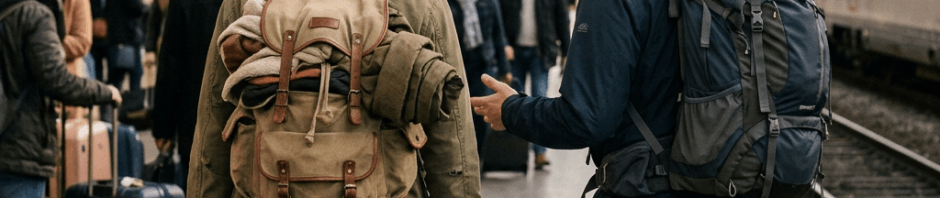
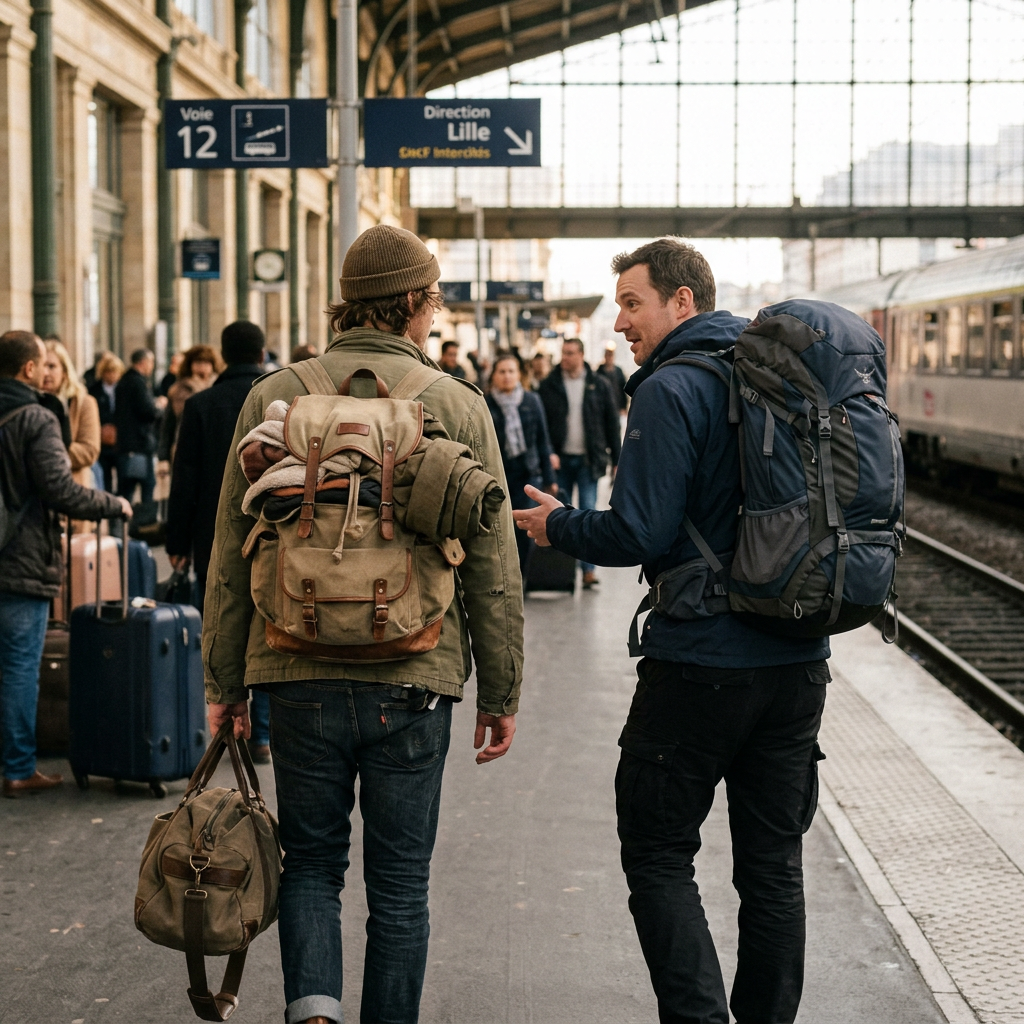
Two close friends set out together on a journey — each carrying on his back the bag of his life. Whenever one of them suffered a wound or experienced pain along the road, he tucked it into a side pocket of his bag. After a while, one man’s pocket had swelled so large with accumulated hurts that he could barely walk. But the other man’s bag remained light and empty, and he strode along with ease. The struggling man finally asked: “How is it possible? Have you never been wounded on this journey?” The other replied: “On the contrary — I was wounded so many times that my bag grew enormous and I couldn’t take another step. So I asked a friend for help.” “A friend? No one can carry another person’s wounds for them.” “True. But my friend told me: if you cut the bottom of your bag with the scissors of forgiveness, everything that has been stuffed inside will simply fall away. So one day I made the decision — and I did it. From that day on, no matter what kind of wound found its way into my bag, it fell straight through. I never had to carry that weight again.”
As we make our way through this world, we receive wounds — some inflicted deliberately, others by accident. They become anger. They become the sting of misunderstanding and criticism. They become the hollow ache of unexpected disappointment. And the feelings of rage and resentment that follow have an enormous destructive power — they sicken both soul and body, and they sever human relationships. To hold onto them for long is like drinking poison.
And yet — remarkably — that is exactly what we do. We stuff those wounds into the pockets of our life, one by one, and carry them as though they were precious gems. A word from a spouse, a word from a mother-in-law, a careless comment from a neighbor — once the wound is made, we cannot seem to let it go. Sometimes we catch ourselves actively trying not to forget it. In Korean we speak of han — a sorrow knotted so deep it becomes part of a person. A life knotted around the past cannot be a healthy life.
We tend to think only of the wounds we receive. But the truth is, the wounds we inflict on others may be just as countless. The wounds we give our children without realizing it. The slip of an impatient or immature word. The hurt that comes when we dismiss another’s perspective and insist on our own. The damage of unmet expectations. If I trace honestly the path of a single day, I find that the wounds I give may well outnumber the wounds I receive. This is why a forgiving spirit is not weakness — it is the mark of a maturity that, having come to know its own failings, can extend grace to the failings of others.
That ordinary morning at the shoe repair shop, I caught an unflattering glimpse of myself — a person who takes offense at small things, holds onto them, and cannot let them pass. I was ashamed. And in the quiet that followed, I offered up a gentle prayer — for all those I have wounded, knowingly or not — asking them, please, to take up the scissors of forgiveness and cut it all away.
“For if you forgive other people when they sin against you, your heavenly Father will also forgive you. But if you do not forgive others their sins, your Father will not forgive your sins.” — Matthew 6:14–15
This is the word of the Lord — and it remains today the surest guarantee of a life lived at its fullest and healthiest. No one can promise that the coming week will be free of wounds given and received. But I hope that you will use these scissors of forgiveness freely and without reservation — and that your load will grow lighter with every step.
Goodbye, and God bless you.

 Daily Sauntering
You must be logged in to post a comment.