Three years had flowed away
before I sought Youngseol,
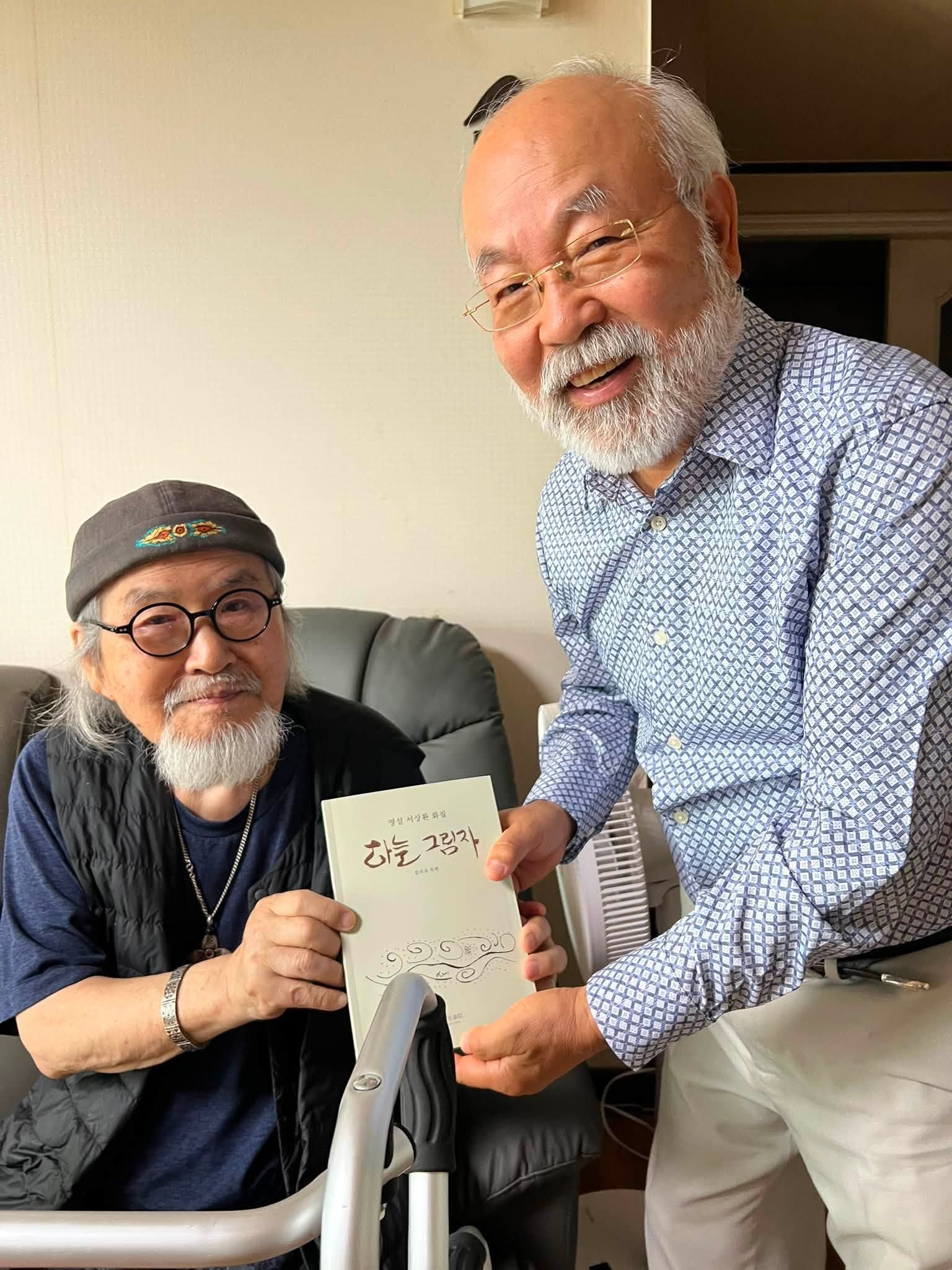
the painter Seo Sang-Hwan in Busan,
my old companion upon the road of beauty.
Before,
I found him in his gallery,
surrounded by canvases breathing,
by books stacked like seasons of prayer,
and there my longing rested.
Today
I walked instead toward his home.
No—
I walked toward time itself.
Ah!
How strange the heart becomes
before departure.
As I prepared to leave Korea,
something within me refused farewell,
pulling me,
on an ordinary weekend,
toward his door—
His gracious wife welcomed us.
Once
there were four of us
sharing laughter around one table.
Long before that,
only two—
the painter
and myself—
young enough to believe
the road stretched forever.
Now he sits
like the shadow heaven casts
upon an aging earth.
He says,
“Art is born in the field of living,
searching for the form of the Heaven.”
Yes—
I remember.
From the Via Dolorosa,
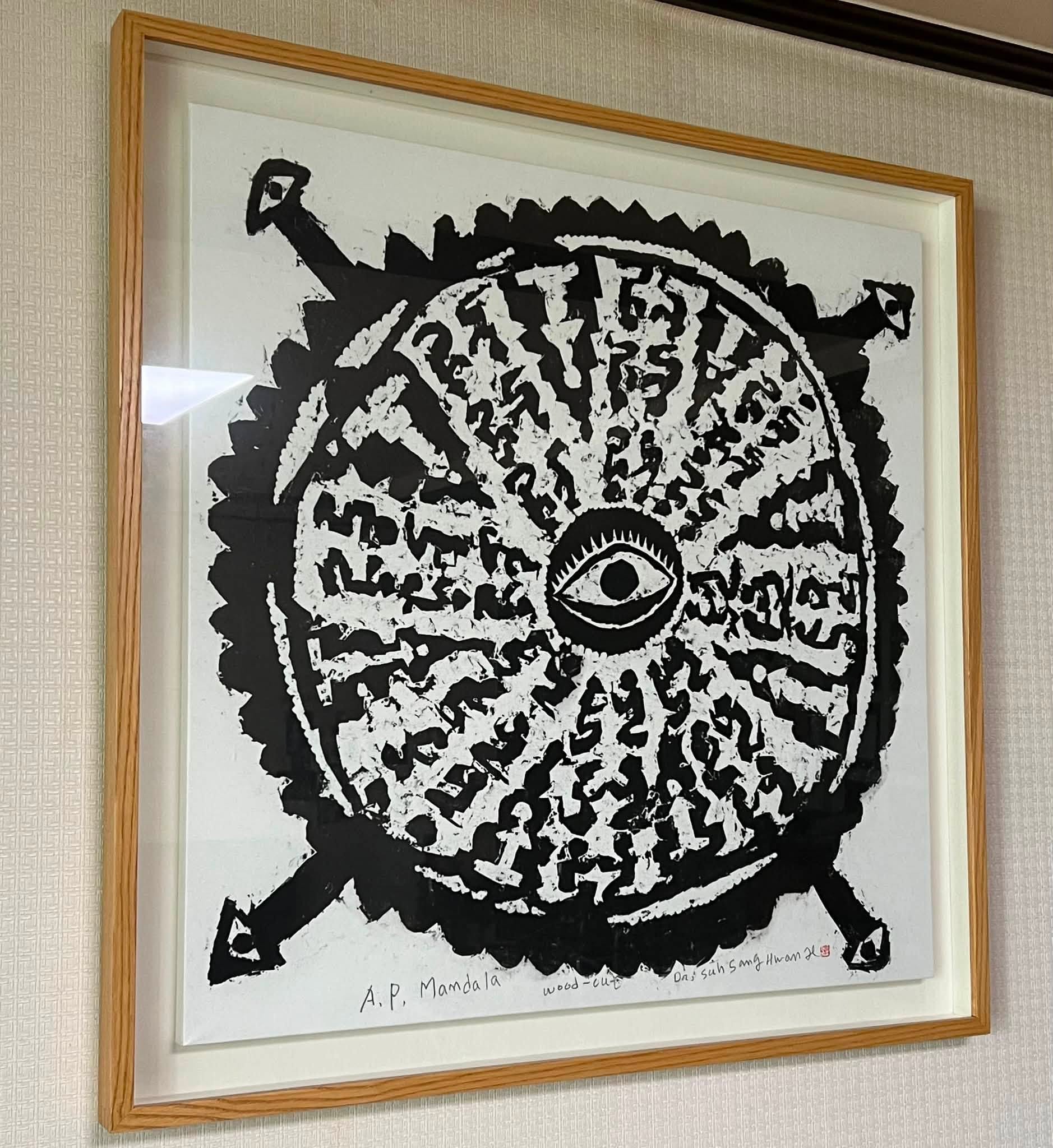
where his woodcuts first learned
the grain of suffering,
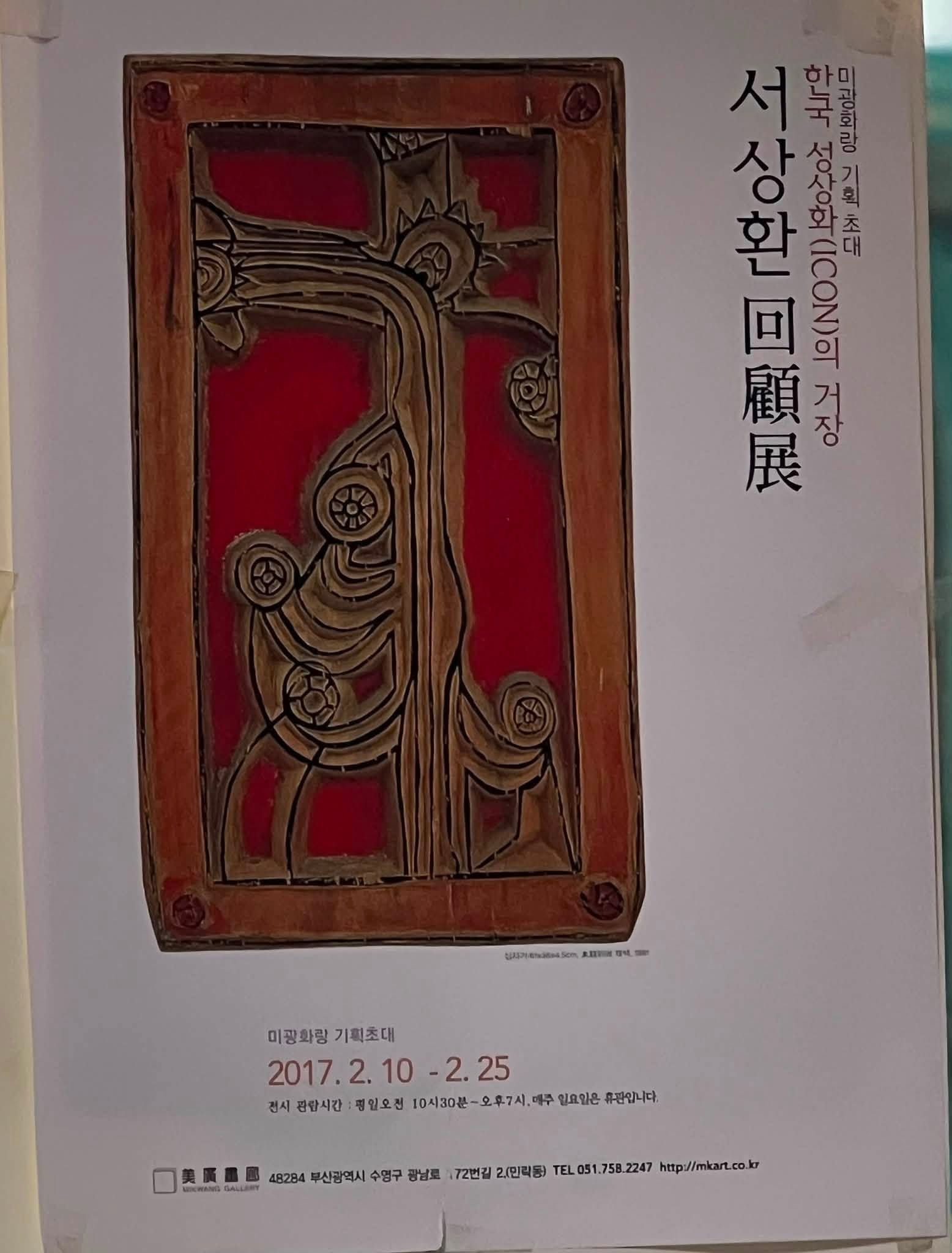
to these luminous holy icons
where light itself
finds its opposite
only to embrace it—
his entire life
has been one endless pilgrimage
toward the Face of God.
Painting.
Painting again.
Painting until breath disappears,
until consciousness falls away,
until only the hand remains,
moving—
as though guided
by another Breath.
O language beyond human language!
O speech belonging to God alone!
O mysterious spring
beneath consciousness itself,
where mountains dissolve into nature
and nature awakens again
inside the searching soul!
There walks the pilgrim,
forever pursuing
the form hidden within creation.
His joy
is never possession.
It is possibility.
He paints,
not God Himself,
but the shadow
God leaves upon the world.
Life itself
is beauty.
Beauty itself
is the stubborn labor
of becoming the self
created in God’s own longing.
How fiercely he has struggled
to resemble only the Holy One!
Truth.
Life.
Beauty.
The self.
Not four separate words—
one body,
one mystery,
revealed across
more than half a century
of faithful paint
upon waiting canvas.
His work has become
transparent devotion,
reverence made visible,
silence clothed with color.
Who among us
can truly follow
such a seeker?
Who can endure
such holy hunger?
Youngseol—暎雪
approaching ninety years
beneath these Korean skies—
one day
the Breath that first awakened him
will call him home.
He will leave us
without noise,
like evening light
slipping beyond the mountain.
Yet he shall not disappear.
His countless sacred images,
his paintings
whose beauty chills the soul
with longing,
their deep contemplative stillness,
their marriage
of painting color
and eternal light—
these will continue breathing.
The Creator’s own breath
will remain within them.
And whenever we stand
before one of his canvases,
we shall discover
that the old pilgrim
has not gone at all.
He has become
another breath
within our own.
— TaeHun Yoon, 6/27/2026
* The overall shape is composed of the bell at the top symbolizing “good news,” the fish on the left and right representing fellowship, and the praying person at the very bottom. When viewed as a whole, it forms the shape of a cross.
This is the explanation given by Youngseol about the necklace he personally made and has worn throughout his life.



You must be logged in to post a comment.