
(1) Swim—
O my soul, swim.
Do not turn backward
into the dim coves of memory,
where yesterday keeps its broken boats
and old voices call us by names
we have already outgrown.
Swim.
Swim as Jubilee.
Swim toward the widening horizon,
toward the place where the sea
forgets the borders drawn upon it,
where no wave asks
which generation first touched the water,
where no wind carries a passport,
where the blue belongs to everyone.
I see them there—
two swimmers
entering the same great sea.
One is old enough
to remember the smell of war
without remembering the war itself,
old enough to have watched Korea
rise from ashes,
from hunger,
from dictatorship,
from the silence of factories,
from the long nights
when democracy was still a dream
spoken carefully behind closed doors.
He is the child
of the 7080 generation.
Let me call him Han.
He carries history
in the bones of his shoulders.
He remembers when a telephone
was not carried in a pocket,
when letters crossed oceans slowly,
when a book could be dangerous,
when young workers entered factories
before the sun
and came home carrying
the dust of somebody else’s prosperity.
He learned to endure.
He learned to wait.
He learned that freedom
sometimes arrives only
after people have paid
a terrible price for it.
He looks across the water
and sees another swimmer.
She is young.
Let me call her Minju.
She belongs to the MZ generation—
born beneath a sky
already crowded with satellites,
growing up with the world
inside a glowing screen,
her fingers moving
faster than the hands
of the generation before her,
speaking to Seoul,
New York,
London,
Tokyo,
without crossing a single border.
She has never known
a world without the internet.
She knows how to search
before she knows how to ask.
She knows how to create
before she has learned
how creation once required
a typewriter,
a darkroom,
a printing press,
a long-distance telephone call.
She has the world
at her fingertips—
and yet,
sometimes,
she cannot find
a place to rest her heart.
Han looks at Minju.
Minju looks at Han.
Between them
is the whole history
of a nation.
And perhaps
the whole future
of humanity.
Han asks,
“Why don’t you endure
as we endured?”
Minju answers,
“Why should I endure
what you endured
if we can build
something better?”
Han becomes silent.
Because beneath her question
he hears the echo
of his own youth.
He remembers
that he too once asked:
Why?
Why must a worker
be treated as less than human?
Why must the poor
remain poor?
Why must power
always belong to the powerful?
Why must fear
be called order?
Why must obedience
be called peace?
And suddenly
the old swimmer remembers—
he was young once.
He too wanted
to cross the boundary.
He too dreamed
of another shore.
He too was MZ
before there was a word
called MZ.
So the generations
are not strangers.
They are younger and older versions
of the same unfinished human story.
One carries memory.
One carries possibility.
One knows
where we have been.
The other asks
where we might go.
And the sea says:
Swim together.
(2) O my soul,
remember Jubilee.
Not merely a year
marked upon a calendar,
not merely a number,
not merely an ancient word
sleeping beneath the dust
of Leviticus.
Jubilee—
the fiftieth year,
the year of release,
the year when debts
must not become chains,
when the dispossessed
may return,
when the land
must breathe,
when the human being
must not be reduced
to what he owns,
what he produces,
what he owes,
or what another person
can take from him.
Jubilee—
begin again.
Return.
Restore.
Release.
Forgive.
Remember.
And now,
after thousands of years,
the word rises again
from the pages of Scripture
and walks into our century.
What is Jubilee
in the age of artificial intelligence?
What is Jubilee
when robots enter the workplace?
What is Jubilee
when a machine can write,
translate,
calculate,
recognize,
predict,
walk,
dance,
serve,
and perhaps one day
make decisions
faster than any human being?
What happens
when intelligence
moves faster than conscience?
What happens
when power
moves faster than wisdom?
What happens
when a machine
can obey an order
without feeling
the weight of a human life?
Ukraine.
Russia.
America.
Korea.
Palestine.
Iran.
Every nation.
Every army.
Every government
must eventually face
the same question:
Who will teach power
to remember mercy?
Who will teach intelligence
to kneel before wisdom?
Who will teach the machine
that a human being
is never merely
a number,
a target,
a worker,
a consumer,
a soldier,
a command?
Perhaps—
the greatest invention
of the coming century
will not be a machine
that thinks faster.
Perhaps it will be
a human being
who loves deeper.
(3) Look—
the world is moving.
Three astronauts
cultivate rice
in the silence of space,
planting seeds
where there is almost no earth,
carrying the ancient gesture
of a farmer
beyond the atmosphere.
A seed.
A hand.
A little green life.
And suddenly
the universe becomes
a field.
Humanity—
wanderer,
gardener,
pilgrim,
dreamer
of impossible fields.
We have always carried
our seeds with us.
From Africa
to Asia,
from Asia
to America,
from village
to city,
from earth
to orbit,
we keep asking:
Can life begin here?
Can hope grow here?
Can tomorrow
take root?
And now robots come.
They walk.
They bow.
They speak
with polite voices.
They carry our coffee.
They clean our rooms.
They serve our meals.
They translate
the language of strangers.
They leap.
They turn.
They fall.
They rise again.
They do not grow tired
the way we do.
They may become
our companions,
our workers,
our guards,
our soldiers.
And perhaps
that is precisely why
we must become more human
than ever before.
For a machine
may learn to imitate kindness,
but humanity
must choose kindness.
A machine
may recognize sorrow,
but humanity
must enter sorrow.
A machine
may calculate the cost
of a life,
but humanity
must remember
that a life
cannot be priced.
Technology
multiplies strength.
Love
teaches strength
what it is for.
(4) And then—
another sound.
A rhythm.
A heartbeat.
A voice rising
from the young people
of Korea,
crossing the Pacific,
crossing Europe,
crossing Africa,
crossing every border
that once seemed permanent.
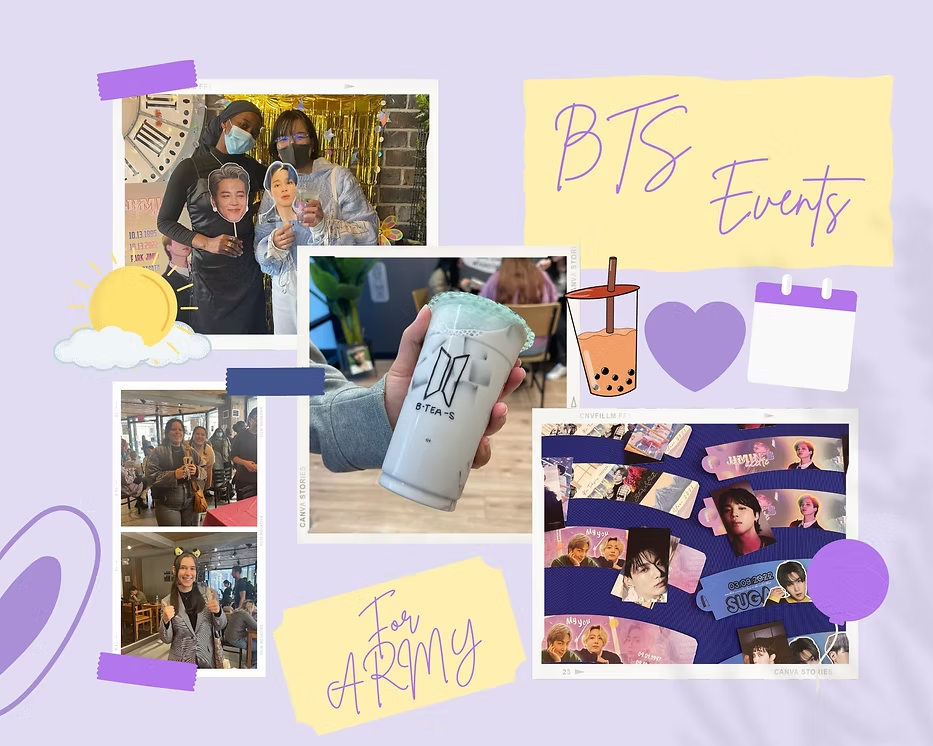
BTS.
A generation
that learned to turn music
into a bridge.
Bangtan Sonyeondan—
the Bulletproof Boy Scouts,
a name that carries
the image of young people
standing against
the bullets of prejudice,
criticism,
pressure,
shame,
expectation,
and the iron voice
of society saying:
Become what we tell you to become.
But youth answered:
We will become
who we are becoming.
And then—
Beyond the Scene.
Beyond.
What a beautiful word.
Beyond the scene.
Beyond the boundary.
Beyond the wall.
Beyond the expectation.
Beyond the fear.
Beyond the name
someone else has written
upon your forehead.
The young swimmer
dives beneath the old boundary.
And Han watches.
He remembers another young man.
A boy—
thin,
tired,
barely twenty-two,
working in the factories
along Cheonggyecheon,
his hands cracked
from sewing clothes
for people
who would never know his name,
his lungs filled
with lint,
his body filled
with hunger,
his heart filled
with a question
too heavy
for one young man
to carry alone:
How many more must die
before the law
remembers that we are human?
His name—
Jeon Tae-il.
He did not stand
upon a great stage.
He had no stadium
filled with thousands.
No giant screen.
No microphone
carrying his voice
across continents.
He had only
a trembling conscience.
And a body.
And courage.
And a fire.
Then—
the fire touched flesh.
The boy became fire.
The fire became testimony.
The testimony became a cry.
The cry became a movement.
And the movement
entered the conscience
of a nation.
I remember—
O I remember—
young Christians
carrying his body,
their hands trembling,
their hymns breaking
through the cold air,
grief becoming a river,
the river entering
the hearts of students,
workers,
writers,
pastors,
dreamers,
young men and women
who began to believe
that history
could be changed.
His name followed me—
through the book alleys
of Busan,
through Bosu-dong,
through small rooms
where young people
read books
that power did not want them to read,
through nights
when justice seemed
impossibly far
and unbearably near.
Jeon Tae-il
did not die
because he wanted
to become a monument.
He died
because the world
had failed to see him
while he was alive.
And somewhere
in the quiet chamber
of my soul,
I still hear
his young voice:
Let us live
like human beings.
A simple sentence.
A holy sentence.
Still burning.
(5) Now I understand.
The boy who became fire
still walks with me.
He walks beside Han.
He walks beside Minju.
He walks beside every young worker
who wonders
whether tomorrow
will have room for her.
He walks beside every old man
who wonders
whether the sacrifices
of his generation
will be remembered.
He walks beside every child
who asks why
some people have everything
while others have almost nothing.
He walks beside the robot
we have not yet invented,
whispering into the future:
Remember the human being.
Remember the human being.
Remember the human being.
(6) O generations,
do not become enemies
because your clocks
tell different hours.
Do not build walls
between memory
and imagination.
Do not say,
“We suffered,
therefore you must suffer.”
Say instead,
“We suffered
so that you might suffer less.”
And do not say,
“You are old,
therefore you cannot understand.”
Say instead,
“Tell me what you remember.”
Then listen.
And let the young say:
“I see something
you could not see.”
Then listen.
This is how a bridge begins.
Not with concrete.
Not with steel.
But with listening.
(7) Han,
you have something
Minju needs.
You remember.
You remember hunger.
You remember war.
You remember dictatorship.
You remember factories.
You remember democracy
when democracy was fragile.
You remember when freedom
was not a slogan
but a dangerous hope.
You know patience.
You know endurance.
You know how to continue
when the road disappears.
You know how to plant
a tree beneath whose shade
you may never sit.
That is wisdom.
But Minju—
Minju has something
Han needs.
She imagines.
She questions.
She experiments.
She crosses borders
without asking permission.
She speaks a global language
that isn’t always English.
She turns music
into diplomacy,
technology
into creativity,
screens
into windows,
and difference
into possibility.
That is imagination.
And the world needs both.
Memory without imagination
becomes nostalgia.
Imagination without memory
becomes recklessness.
Wisdom without youth
can become rigidity.
Youth without wisdom
can become fire without direction.
But together—
they become light.
(8) So let the 7080 generation
not fear the MZ generation.
Let the MZ generation
not forget the 7080.
Let the old
open the door.
Let the young
enter without contempt.
Let wisdom
sit beside imagination.
Let memory
hold hands with possibility.
Let tradition
open its windows
to the wind of tomorrow.
Let technology
serve humanity.
Let intelligence
serve wisdom.
Let freedom
walk beside responsibility.
Let democracy
remember the people
for whom democracy
was purchased
with sacrifice.
Let the economy
remember the worker.
Let the nation
remember the stranger.
Let the church
remember the wounded.
Let the powerful
remember the powerless.
Let every machine
built by human hands
remain accountable
to human dignity.
(9) And when the storm comes—
because the storm will come—
do not ask,
“Whose fault is this?”
Ask,
“Who needs my hand?”
Do not ask,
“Which generation caused this?”
Ask,
“Which generation
will help us cross it?”
Do not ask,
“Who owns the future?”
Ask,
“How shall we share it?”
For no generation
owns the horizon.
No nation
owns the ocean.
No corporation
owns tomorrow.
No machine
owns the human soul.
The future
is a common shore.
(10) Swim.
Swim, Han.
Swim, Minju.
Swim, fathers
who remember yesterday.
Swim, daughters
who are building tomorrow.
Swim, mothers.
Swim, sons.
Swim, workers.
Swim, students.
Swim, immigrants.
Swim, strangers.
Swim, elders.
Swim, children.
Swim, those who have faith.
Swim, those who are still searching.
Swim, those who have lost hope.
Swim, those who are carrying hope
for someone else.
Swim.
Not backward.
Forward.
Not alone.
Together.
Not toward another wall,
but beyond the scene.
Beyond fear.
Beyond prejudice.
Beyond the old arguments.
Beyond the borders
drawn by history.
Beyond the boundaries
drawn by age.
Beyond the categories
drawn by power.
Beyond the machines
we build.
Toward the human being
we are still becoming.
(11) Perhaps Jubilee
is already rising.
Perhaps we have mistaken
the sound of the future
for the sound of a storm.
Perhaps the great wave
coming toward us
does not come to destroy.
Perhaps it comes
to carry us.
A wave of hope.
A wave of resilience.
A wave of unity.
A wave carrying
the old and the young,
the wounded and the healing,
the remembered and the forgotten,
the human and the technological,
the local and the global,
the past
and the future.
One wave.
One ocean.
One humanity.
(12) And someday,
perhaps,
Han will take Minju’s hand.
Minju will take Han’s hand.
They will stand
at the edge
of the same sea.
Han will say:
“I remember.”
Minju will say:
“I imagine.”
And the sea will answer:
“Then swim.”
Han will say:
“I have carried
the past.”
Minju will say:
“I will carry
the future.”
And the sea will answer:
“Then carry it together.”
Han will say:
“What if we fail?”
Minju will say:
“What if we begin again?”
And somewhere beyond
the horizon,
the ancient trumpet
of Jubilee will sound.
Not the trumpet of war.
Not the trumpet of conquest.
Not the trumpet
of one generation
defeating another.
But the trumpet
of release.
The trumpet
of restoration.
The trumpet
of return.
The trumpet
calling humanity
back to itself.
(13) O my soul,
swim.
Swim as Jubilee.
Let every scar
become a map.
Let every memory
become wisdom.
Let every wound
become compassion.
Let every failure
become another beginning.
Let every generation
become a bridge
for the generation after it.
Let the old
give their stories.
Let the young
give their dreams.
Let both
give their hands.
And let us enter
the future together.
For perhaps
the greatest revolution
is not technological.
Perhaps it is human.
Perhaps the greatest intelligence
is compassion.
Perhaps the greatest power
is restraint.
Perhaps the greatest freedom
is responsibility.
Perhaps the greatest wealth
is sharing.
Perhaps the greatest nation
is one that protects
the dignity of every person.
Perhaps the greatest faith
is the courage
to love beyond our boundaries.
And perhaps
the greatest Jubilee
is this:
that after everything
we have endured,
after every war,
every division,
every prejudice,
every wall,
every wound,
every generation
that thought it had to stand alone,
we finally discover—
we were never
separate oceans.
We were always
one sea.
One human sea.
One trembling,
restless,
beautiful sea.
And the horizon
has never belonged
to the old.
It has never belonged
to the young.
It belongs
to those willing
to swim toward it.
So—
swim.
Swim beyond the scene.
Swim beyond fear.
Swim beyond hatred.
Swim beyond yesterday.
Swim beyond tomorrow.
Swim into the now,
where Han and Minju
meet beneath the same sky,
where Jeon Tae-il’s fire
still burns,
where BTS’s music
crosses the oceans,
where astronauts
plant rice among the stars,
where robots
wait for us to teach them
what humanity means,
where children
are still learning
the names of flowers,
where old hands
still know how to plant seeds,
where young hands
still know how to open doors.
Swim.
Until wisdom
meets imagination.
Until memory
meets possibility.
Until technology
meets compassion.
Until freedom
meets responsibility.
Until generations
meet one another
without fear.
Until nations
meet one another
without weapons.
Until the Earth
can breathe again.
Until every human heart
can say—
I am not alone.
You are not alone.
We belong
to one another.
We have crossed
the old boundary.
We are still becoming.
We are still learning.
We are still healing.
We are still together.
And the future—
wide as the ocean,
bright as dawn,
unfinished as a prayer—
belongs to all of us.
Swim as Jubilee.
— TaeHun Yoon, August 2026


You must be logged in to post a comment.