감사는 믿음의 전환점입니다. “일어나 가라! 네 믿음이 너를 구원하였느니라.” 예수님께서는 치료받은 열명의 문둥병 환자 중, 어떤 일인지는 모르나 가던 길을 멈추고 돌아와 감사를 드린, 그 중 한명의 치료받은 문둥이 형제에게 주신 말씀입니다. 사마리아 문둥이는 믿음으로 구원을 받았읍니다.
사마리아인은 크거나 깊은 믿음으로 인생을 시작한 것은 아니였읍니다. 위험을 무릎쓰고 외인지역에 들어가 유대인 문둥이들 무리에 끼어서 치료를 받은 후, 상실 당했던 시민권의 회복을 위해서 유대인 제사장에게 회복된 몸을 보이기로 작정하고 다른 9명의 유대인 문둥이들과 합세를 했읍니다. 그것은 생명을 건 일이였읍니다. 제사장을 만난 후, 시민권이 회복된 그들은 총총 걸음으로, 그들을 기다리고 있는 새로운 삶의 길로 재촉하며 떠나 갔읍니다. 사마리아 문둥이는 그를 고쳐주신 분의 은혜를 잊을 수가 없어서, 감사드리기로 작정하고 되돌아 왔읍니다. 감사가 그의 인생에 큰 전환점을 만들었던 것입니다.
믿음은 감사라는 음식을 먹으면서 양육되고 생존합니다. 감사한 마음과 어느 분께 감사드릴 지를 아는 것이 바로 구원의 첩경인 것입니다. 주님은 일어나 가라(!)고 하십니다. 감사는 기독교 경건생활의 중심일뿐 아니라 세상 속에서 그리스도인이 신앙대로 살아가도록 강력하게 충동을 줍니다. 그러한 감사를 통해서 나에게 지금까지 보여주신 하나님의 은혜를 알 수 있읍니다. 따라서 감사는 바로 천국 자체라고 말할 수 있는 것입니다.
감사는 마음의 태도와 행동의 행태로 이루어집니다. 사도 바울은 잠언에 기록된 랍비들의 말, “자선금을 주라, 주되 즐거운 마음으로 하라”을 인용하고 있읍니다. “즐거운”은 희랍어 “힐라론[ἱλαρὸν]”으로 이것은 단순히 “즐거운”만을 전달하고 있는 것은 아닙니다. “힐라론”은 영어의 “hilarious”(들뜬, 명랑한)의 어원으로서, “하나님은 즐겨 내는 자를 사랑하신다”는 것입니다.
희랍어 “스쿠스로포즈[σκυθρωπός]”(슬프고, 우울하고, 찌프린 얼굴)은 “필요성을 모르거나” “주저하며 주는 자”에게 사용되였고, “즐거움으로 주는 자”에 반대로 쓰여졌읍니다. 따라서 옛 믿음의 선조들은 확신하며 말하기를, “주며 즐거워하는 용모는 기뻐하는 심령을 반영하는 것이다;” 그리고 “주며 즐거워함은 관용의 내적 자유에 속해 있다;”라고 했읍니다. (신약신학사전, III, pp. 298-300)
“하나님은 ‘즐겁게 주는 자’를 사랑하신다”는 말은 보상을 암시하고 있읍니다. 사도바울은 이를 저울의 평형 원리에 의하여, 보내진 현금이 마치도 하나님으로부터 다양한 보상으로 돌아오는 것으로 보았읍니다. 일종의 원형운동으로 이해하며 설명하고 있읍니다. 따라서 사도 바울은 “받은 바 은혜가 충족함; 지극한 은혜, 말할 수 없는 그의 은사 (Self-Sufficiency)” 라는 믿음을, 담대하게 고백 <고후 9:8,14-15> 하기에 이른 것입니다. “하나님이 능히 모든 은혜를 너희에게 넘치게 하시나니, 이는 너희로 모든 일에 항상 모든 것이 넉넉하여, 모든 착한 일을 넘치게 하게 하려하심이라”<고후 9:8>고 사도 바울은 청지기의 믿음을 증거하고 있읍니다.
한마디로 요약하면, 항상 즐거움으로 하나님께 드리는 자는 관용하게 됨의 은혜를 이미 충만히 받았고, 주기를 원하는 의지가운데, 이미 우리에게 필요한 모든 것이, 우리가 모르는 중에라도 하나님께서 차고 넘치게 채워주신다는 것입니다. 기쁘고 복된 감사절이 되시길 주님께 기도합니다. 아멘.
One day, while walking along the shore, I realized that the sea no longer remained simply blue or green. It breathed endlessly, alive with shifting light and color. The blue and green we often speak of are merely fragments of its full spectrum. Yet people still say, “The sea is jade-blue,” or “It’s a green sea.” Even in my own consciousness, it was difficult to accept that the sea could not be confined to a single color.
One morning, I looked out at the dazzling sea cradling the rising red sun and exclaimed, “Oh! How beautiful!” On another morning, I watched the storm-darkened sea surge angrily, as if ready to swallow the sand—and still, I told myself the sea was blue.
For a time, I tried to grow closer to the sea, walking barefoot for miles along the sand each morning. Watching the waves playfully rush in and out, I whispered, “Thank you—for surging for hundreds, even thousands of years, and still keeping yourself so clear and pure.” In that moment, the sea breathed deep within me.
And for the first time, I saw its achromatic hues. The sea had no fixed color of its own. It was vast and deep enough to hold every color in the world. It was too expansive to claim just one light or shade.
We humans also struggle to recognize the light and color God has given us. I remember when my two daughters, still in high school, returned from the salon one day. They hesitated at the door, sensing our reaction. Their hair, once a rich brown, had been dyed bright yellow, carrying a synthetic scent.
They had invested time and care into this transformation. Watching them, I whispered inwardly, “This is part of the journey to find your own light—your own color. You’re searching, struggling to discover what’s already within you. And soon, you’ll return to it. We all wander like this, but one day, you’ll love your light and truly meet it.”
The girls kept checking the mirror, resisting the change they saw. My eldest even seemed depressed for a while, until she went out and bought dye to restore her original color. Once she did, she looked relieved—like she had found herself again.
So what is the light and color we carry?
The purer and clearer we become, the more our light reflects a multitude of hues, reaching into the depths of others. This light, passed down from the source of life, carries truth, recognition, and the wisdom to make the ordinary shine. It cannot emerge from fear, denial, hatred, or resentment.
Nor can it be revealed through pride or arrogance. It is only visible through the eyes of the heart—yours and mine. And because of that, it is often overlooked or dismissed.
One day, as I realized the sea was no longer just blue, the words “You are the light of the world” began to unfold within my soul. Though it may seem like we possess nothing, the abundance and celebration of light—its harmony, restraint, and transparent beauty—lifted me like a silver fish leaping into hope.
어느날, 바닷가를 거닐다가 바다는 더 이상 파란색이거나 초록빛에 만 머물러 있지않음을 발견하였다. 바다는 쉴새없이 숨을 몰아쉬며 새로운 빛과 색체속에 살아간다. 우리가 늘상 말하는 파랑색과 초록색은 그 중에 하나 일 뿐이었다. 그럼에도 사람들은 여전히 바다를 말할 때는 “바다가 옥색처럼 파랗다” 거나 “초록빛 바다”라고 부른다. 내 의식 속에도 바다가 한가지의 색체가 아님을 인정하기란 쉽지 않았다.
어느 아침에 붉게 떠오르는 태양을 품고 있는 눈부신 바다를 바라보면서, “어머나! 참 아름답구나”하며 감탄사를 부르짖기도 하였고, 어느 아침엔 비바람에 세차게 출렁이며 노한 모습으로 모랫사장을 침몰시킬 듯이 덤벼드는 흙빛의 바다를 바라 보면서도, 나는 여전히 바다는 파란 색이라고 내 의식 속에 말하곤 하였다.
나는 한동안 바다와 친근해지기 위해, 이른 아침이면 맨발로 모래사장을 수 마일을 걷곤하였다. 장난꾸 러기 처럼 밀려왔다 밀려나가는 파도를 바라보며, “고마워! 네가 이토록 수백년, 아니 수천년을 출렁였음에도 불구하고, 이렇게 맑고 깨끗하게 몸 을 지켜줘서!”하고 인사 할 때, 바다는 내 폐부 깊숙이 들어와 숨쉬고 있었다.
그리고 처음으로 바다의 무채색깔이 눈에 들어오고 있었다. 바다는 스스로의 색을 아예 갖고있지 않았다. 바다는 한도 끝도없는 세상의 모든 색을 담을 수 있는 바다 자신 뿐이었다. 바다는 한가지의 빛이나 색깔 만을 주장하고 있기엔 너무나 넓고 깊었다.
인간 속에도 하나님이 주신 색체와 빛을 인정치 못해 애 쓸 때가 있다. 언젠가 두 딸들이 고등학교 시절 에 미장원엘 다녀오게 되었다. 그 애들은 수 시간 만에 부모의 눈치를 살피며, 집안 문을 열고 들어섰는데, 머리 색깔이 둘다 노랗게 변하여 돌아왔다. 평소에 짙은 갈색머리결을 가지고 있던 아이들이, 케미칼로 물들인 머리카락은 갑자기 인조냄새가 물씬 나는 듯하였다.
아이들은 새로운 색체의 변화를 위해 시간과 정성을 드렸다. 나는 그 들의 모방된 색깔의 변화를 바라보 면서, 마음 속으로 속삭이고 있었다. ‘이것은 자신의 빛을 찾기 위한 과정이야! 너희들의 빛, 너희들 만의 색체를 찾아내기 위한 몸부림이야! 그러 나, 곧 네 자신들이 이미 갖고 있는 색으로 돌아오고 말거야! 우리는 늘 이렇게 찾아헤매고 다니지만, 언젠가 네 빛과 네 색체를 사랑하게 되고 진정 만나게 되지!’ 아이들은 화장실을 들락달락 하면서 거울 속의 자신 속에서 일어나고 있는 변화에 대한 거부감을 인정하지 않으려 애쓰고 있었다. 큰 아이는 한동안 우울해보이기 까지 하더니만, 곧 상점에 나가 자신의 원래의 색깔을 되사오고 말았다. 자신의 원래의 빛을 수 시간 만에 다시 되찾은 아이는 안심해 보였다.
인간이 갖고 있는 빛과 색체는 과연 어느 것인가?
그가 순수해지고 맑아질수록 그 빛은 더욱 더 많은 색상과 빛을 투영하며, 인간의 심연 속으로 들어가 빛을 전달한다. 그 빛은 생명의 근원으로부터 전해진 빛이기에, 삶에서부터 우러나오는 진실함과 남을 인정해주고 평범한 것을 특별하게 해독해 낼줄아는 지혜를 갖고 있다. 그 빛과 색체는 두려움이나, 부정되 고 미움과 원망속에서는 절대 발하지 못하는 신비가 있다.
더군다나 우쭐대거나 거만한 자세로는 감히 드러낼 수 없다. 다만 너와 나의 마음의 눈으로 만이 볼 수 있고, 만날 수 있기에 사람들은 흔히 지나치기 쉽고 도외시하게 된다.
어느날 문득, 바다가 더 이상 파란 색에 머물러 만 있지 않음을 발견하 곤 “너희는 세상의 빛이라!”는 말씀이 내 영혼속에서 해독되고 있었다. 아무것도 없는 것 같지만, 모든 것을 소유하고 있는 빛의 풍요와 잔치, 그 조화된 절재와 아름다운 투명한 가슴에서 나는 어느듯, 은빛 물고기가 되어 소망으로 튀어오르고 있었다.
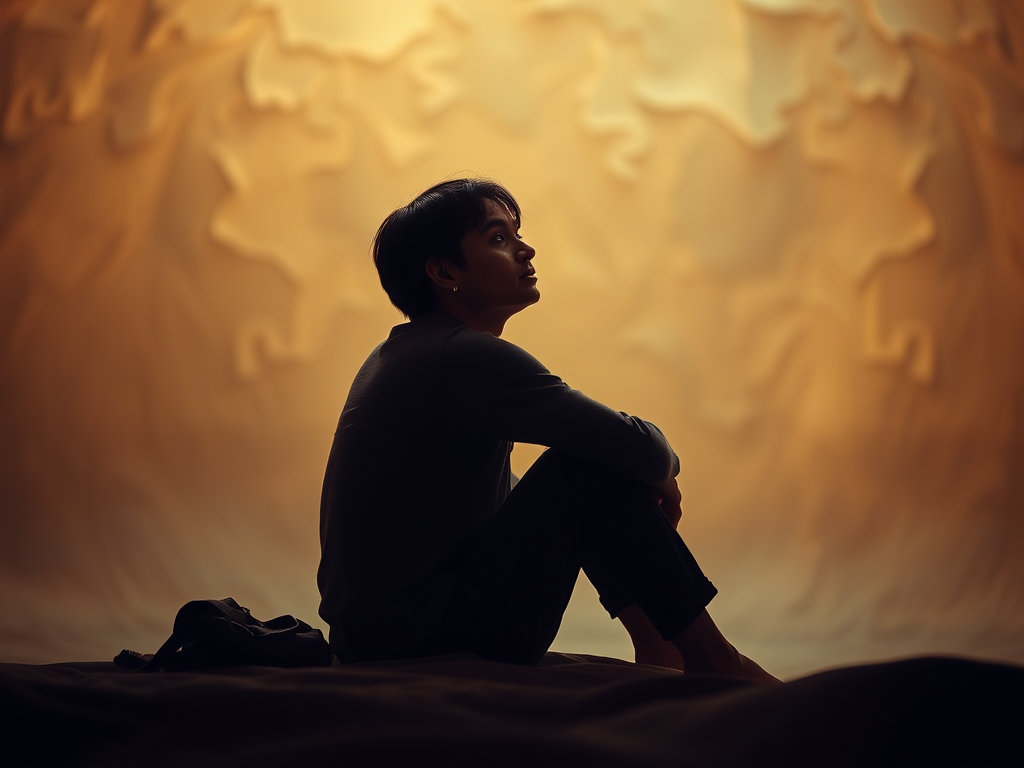
My name— always spoken, always summoned— yet only when I am far away does it rise, like breath, to the surface of the world.
Sitting here, watching you, I see only the name I once had— and the one I will wear tomorrow.
When I was you, I did not know my name. Within the name, the one who calls it has already forgotten.
You and I— we have both forgotten it.
And yet, the name circles me still, calling, as I call it back.
It echoes in the quiet folds of memory, a fragile thread unraveling through the noise of becoming.
I am not the name I answer to. I am the absence it leaves behind. I am the question the name can never contain.
– Note:
This poem was born from the quiet tension between identity and distance—between the name we are given and the self we become. In moments of solitude, I’ve come to realize that a name is not merely a label, but a vessel of memory, longing, and transformation. It is spoken by others, often when we are far away, and it echoes through the folds of time like breath returning to the body.
“My Name” reflects the paradox of selfhood in modern complexity: how we forget ourselves in others, how we are shaped by relationships that dissolve, and how the act of naming can both reveal and obscure who we are. The poem moves through layers of memory and silence, tracing the fragile thread of identity as it unravels and reforms.
In writing this, I sought not to define the self, but to honor its mystery. The name we answer to may not be the name that holds us. And yet, in the act of calling and being called, something eternal stirs—a question that cannot be contained, but must be lived.
여기 앉아 너를 바라보며 나는 내가 한때 가졌던 이름, 그리고 내일 다시 입을 이름만을 본다.
내가 너였을 때, 나는 내 이름을 알지 못했다. 이름 안에서, 그 이름을 부르던 이조차 이미 잊어버렸다.
너와 나는— 그것을 함께 잊었다.
그런데도, 이름은 여전히 나를 맴돌며 나를 부르고, 나 또한 그것을 되부른다.
그 메아리는 기억과 침묵의 가장자리에서 번져가며, 되살아남의 소음 속을 하나의 실처럼 풀려간다.
나는 내가 대답하는 그 이름이 아니다. 나는 그 이름이 남기고 간 부재다. 나는 그 이름이 담지 못하는 질문 그 자체다.
– 후기:
이 시는 이름과 거리 사이의 조용한 긴장에서 태어났습니다. 우리가 부여받은 이름과 우리가 되어가는 존재 사이에는 언제나 틈이 존재합니다. 이름은 단순한 호칭이 아니라, 기억과 그리움, 그리고 변형의 그릇입니다. 멀리 있을 때에야 비로소 불리워지는 이름은, 마치 숨결처럼 세상 위로 떠오릅니다.
「내 이름」은 현대의 복잡한 문화 속에서 자아를 탐색하는 역설을 담고 있습니다. 우리는 타인 속에서 자신을 잊고, 관계 속에서 형성되며, 이름을 부르는 행위 속에서 오히려 그 이름을 잃어버리기도 합니다. 이 시는 기억과 침묵의 쌓인 켜(층위)를 따라가며, 정체성이라는 가느다란 실이 어떻게 풀리고 다시 엮이는지를 조용히 추적합니다.
나는 이 시를 통해 자아를 정의하려는 것이 아니라, 그 신비를 존중하고자 했습니다. 우리가 대답하는 이름이 곧 우리 자신은 아닙니다. 오히려 그 이름이 남긴 빈자리, 그 이름이 담지 못하는 질문 속에 우리가 존재합니다.
Grief and death are inseparable companions in the human journey. The loss of loved ones—through divorce, separation, or unexpected death—inevitably feels like the death of a part of ourselves.
The tearing of the heart that comes with parting must be filtered through the long tunnel of sorrow. Only then can we stand again on the ground where something within us has died.
In the pain of separation, we come to realize that the self—“I”—was never truly alone. Because they existed, I could be who I was yesterday, and who I am today. Some experience grief gradually, over time. But in moments like these, when thousands are swept away in sudden death, the emotional toll is overwhelming. People cry at the sound of the national anthem. Some stand in the streets at night, holding candles, unable to bear their sorrow alone.
Grief can manifest physically—through fatigue, depression, or a loss of vitality—disrupting even the healthiest rhythms of life. Yet grief is also a knot that must be untied by the living. Though we cannot meet those who crossed the river of death before us, they remain with us—transcending time and space, conversing silently within, shaping our lives through memory.
I lost my father when I was twelve. Though I was praised as a devoted daughter while he lived, I spent decades barely thinking of him—perhaps even forgetting him. But one day, thirty years later, I wrote him a long letter. I confessed my sorrow for having forgotten him, recalled the nights I counted stars on his back, the pain of having my tooth pulled without mercy, the sadness when he gave my favorite corduroy pants to an orphan boy, and the confusion and betrayal I felt when he died.
I laid bare the grief I had hidden beneath the carpet of time. I wept like a child and finally said goodbye. Looking back, I regret not letting him go sooner. Because once I did, he returned more freely into my memory—gentler, closer than ever before.
Henri Nouwen once wrote: “Grief is the slow and painful departure of those who were once part of our familiar lives. Only after a year or more can we truly say goodbye, and the pain begins to ease. But when we let them go, they become members of our inner life. As we remember them, they become guides on our spiritual journey.”
Through every war as well as the tragedy of the World Trade Center attacks, we experienced collective death. Those who were lost—and those who watched helplessly—were thrust into deep sorrow and wounded by the limits of human strength. As time passes, this grief will continue to shape our lives in countless ways.
But if we focus only on sorrow and resentment, we risk falling into despair or remaining trapped in grief far too long.
Instead, let this experience awaken new values in life. Let it clarify what truly matters. In doing so, we may find a path toward growth and healing.
Now, the innocent victims have become guides in our lives. They invite us to choose love stronger than death, and to live each day more deeply, more beautifully.
인간에게 슬픔과 죽음은 피 할 수 없는 삶의 한 부분이며 동반자이다. 우리의 마음 한 구석을 차지했던 사랑하는 이들과의 이혼이나, 헤어짐, 예상치 않은 죽음은, 우리 자신의 한 부분의 죽음임에는 틀림없다.
그럼으로 헤어짐에서 오는 마음의 찢겨짐은, 고통의 터널 속에서 슬픔이라는 감정을 통해 긴 세월을 여과시켜야 만이 우리는 그 죽은 한 부분을 딛고 다시 일어 설 수가 있다.
우리는 사랑하는 이들과의 헤어짐 속에, ‘나’라는 존재가 결국 ‘나’혼자가 아니었음을 인정케 되고 만다. 그가 있었음으로 어제의 내가 존재할 수 있었고, 오늘의 내가 설 수 있음이다. 슬픔과 죽음의 경험은 사람에 따라, 시간을 두고 서서히 경험을 하는 이들이 있는가 하면, 요즈음 같이 수천 명이 갑자기 당한 죽음의 경험은 인간의 감정을 마비시킬 정도로 엄청난 슬픔의 소용돌이 속으로 밀어 넣고 말았다. 사람들은 애국가만 들어도 눈물을 흘리는가 하면, 그 슬픔을 혼자 이기질 못해, 밤이면 거리마다 촛불을 켠 채 서서 자신의 슬픔을 표출하기도 한다.
또한 이 슬픔은 육신적으로 알 수 없는 감기 몸살, 우울증, 무기력증에 빠져들게 하여, 건강한 사람들의 삶에 정상적인 리듬을 쉽게 되찾지 못하게 하기도 한다. 그러나 슬픔은 살아있는 자에게 언젠가 떠나 보내야 만 될 매듭이기도 하다. 비록 우리보다 앞서 죽음의 강을 건너간 이들은 육신은 만날 수 없어도, 그들은 시간과 공간을 초월한 채, 내 안에서 대화를 나누기도 하고, ‘나’의 삶에 무언의 영향을 주면서 ‘나’의 기억 속에 함께 살아가기 때문이다.
나는 아버지를 열두살 때 잃었다. 그런데, 아버지가 살아 계셨을 때는 그토록 효녀라고 어른들로부터 칭찬을 받던 내가, 돌아가신 후엔 수 십 년간을 아버지를 아예 생각지 않고 살아왔었다. 차라리 잊고 살아왔다고 할 수 있다. 그런 데, 30년이 지난 어느 날, 나는 아 버지 앞에 긴 편지를 쓰고 말았다. 아버지를 그 동안 잊고 살아왔음에 대한 사죄와 함께, 아버지의 등에 업혀 하늘의 별들을 세던 기억들과, 아버지가 나의 이빨을 몰인정하게 빼내던 날들의 섭섭함과, 내가 가장 좋아하는 코르덴 바지를 어느 고아 소년에게 내어 주시던 날에 내가 얼마나 속상했었는지를, 그리고 아버지가 돌아가셨을 때 가졌던 황당함과 왠지 모를 배신감 마저도 다 고백하였다.
그리고 나는 30여 년동안 세월의 카페트 밑에 숨겨 두었던 슬픔의 감정들을 아버지께 내어놓고, 아이처럼 마음껏 울먹이며, 비로소 아버지께 작별의 인사를 드릴 수 있었다. 지내놓고 생각해 보니, 왜 진작 그 분을 떠나 보내질 못하였던가 라는 후회도 있었다. 왜냐면, 내가 슬픔의 감정으로부터 헤어 나오게 되니, 그 분은 오히려 더 자유스럽게 내 기억 속에 드나 드시며 어느 때보다도 더 가까이 다정하게 다가오시고 계겼다.
헨리 나우엔은 “슬픔은 우리의 친숙한 부분이 되었던 사람들이 천천히 고통스럽게 우리를 떠나는 것을 말합니다. 우리는 그들과 일년 내지 그 이상의 세월이 지난 후에야 온전한 마음의 작별 인사를 할 수 있으며, 비로소 슬픔의 고통도 줄어듭니다. 그러나 우리가 그들을 떠나 보낼 때, 비로소 그들은 우리의 멤버(member)가 되며, 우리가 그들을 기억(remember)할 때 그들은 우의 영적 여행의 안내자가 됩니다”라고 하였다.
우리는 세상의 전쟁과 세계무역센타의 테러를 통해, 집단적 죽음을 체험하였다. 이번 참사로 희생이 된 사람들이나, 속수무책 으로 바라보아야만 했던 이들은 인간의 한계와 슬픔, 죽음의 고통 앞에 어느 때보다도 깊은 절망과 상처를 받아야만 했었다. 시간이 흐를수록 이 슬픔과 죽음의 고통은 각양 각색의 모습으로 우리의 삶에 영향을 끼칠 것이다.
그러나 잊지말아야 할 것은 슬픔과 원망에 만 초점을 둔다면, 우리는 우울증에 빠져 헤여나올 수 없게 되거나, 더욱 오랜 시간 슬픔 속에 갖혀있을 것이다.
오히려 이 경험을 통해, 삶에 새로운 가치를 발견하고 무엇이 먼저 해야 될 중요한 일인지를 현실로 받아들일 때, 우리 모두에게 삶의 성장을 가져올 수 있는 건강한 기회가 되지 않을까.
이제 무고한 희생자들은 우리 삶의 안내자가 되어, 죽음보다 강한 사랑을 선택하며 하루하루를 더욱 더 진하고 아름답게 살라며 초대하고 있다.
I am the bread of my own journey. I am the prayer in the dust of the road. I am the poem through moment writes the day.
The sun keeps crossing the ridge again and again, reminding me that eternity speaks with time. Sorrow may wear the face of death, but within it, something new is always being born.
A thin cloud drifts across my heart—then disappears. The day breathes open. The hearth glows warm. Children laugh in the yard, pretending not to see what they already know.
Inside a woman’s body, eggs shimmer like pearls of dawn— each waiting to become a story, a person, a world.
I came to this quiet town, took another name, and dropped anchor in this small bowl of dough.
I gave wings—then broke them. I built cradles and graves. And in the silence, I shaped your face again.
It was for love. For creation. For the fragile engine of redemption.
Now, I let you go completely. That is how freedom began. That is how I learned to love again.
In stillness, I see God dwelling in the ashes, shaping stories out of longing. Rebirth is not only of the body, but of the heart that dares to walk again, to love again, to live again.
Love is not a promise— it is a practice, renewed each night and morning. And salvation does not come from outside, but from the mercy, joy, and story we live with one another.
So all are notes as remembrance: In every ending, love begins again. From ashes, a new tenderness blooms. In surrender, you and I rise once more.






 Daily Sauntering
You must be logged in to post a comment.