A man once entered heaven and saw many people whose faces were bright with joy. But in one group, some looked gloomy, and others were even crying. Curious, people asked them, “Why are you weeping in such a beautiful place as heaven?” They all answered in unison, “Because we miss our hometown!” “Your hometown? Where is that?” the people asked in disbelief. “Our hometown is Hawaii,” they replied.
When I first arrived in Hawaii, I understood exactly what they meant. The beauty, abundance, and fragrance of the island felt almost heavenly. Flame trees blazing with red, yellow, and white blossoms; plumeria trees used for flower leis; the songs of unfamiliar birds; tall palms, coconuts, bananas, and papayas heavy with fruit; the deep green grass; and the black traces of ancient lava—all of it revealed the charm of a distant paradise.
For more than 40 million years, spores and seeds carried by waves took root on these isolated islands. Birds and other living creatures arrived by wind and sea, creating a natural paradise. Over time, lava‑covered lands developed into diverse shapes, colors, and habitats. Some areas remained barren, covered only with hardened black lava. In others, thorny shrubs pierced through the rock, and tough grasses grew in scattered patches.
Polynesians first reached the Hawaiian Islands 1,600 years ago. After traveling 2,400 miles from their homeland, they settled in the dense forests, cultivating land and fishing to survive. Without a written language, they passed knowledge to their descendants through song. Within their feudal social structure, they developed the kapu system, distinguishing sacred people, places, objects, and times. According to their legends, white‑skinned people would one day come to save the islands. But when the Westerners arrived, they invaded the land, seized it, and destroyed the sacred customs and laws the islanders cherished. Seeing the native people—once the first owners of the land—now living in poverty and low social status stirred deep compassion in me.
To appease Pele, the goddess of fire who was believed to destroy land through volcanic eruptions, the Polynesians once offered human sacrifices. But after the kapu system was abolished in the 1800s, such sacrifices ceased. Interestingly, on August 12, 1997, at 1 a.m.—while we were staying on the island—the ancient “Temple of the Red Mouth,” built 700 years ago, was completely buried by lava.
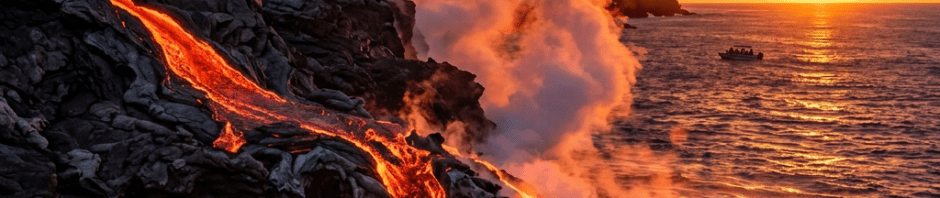
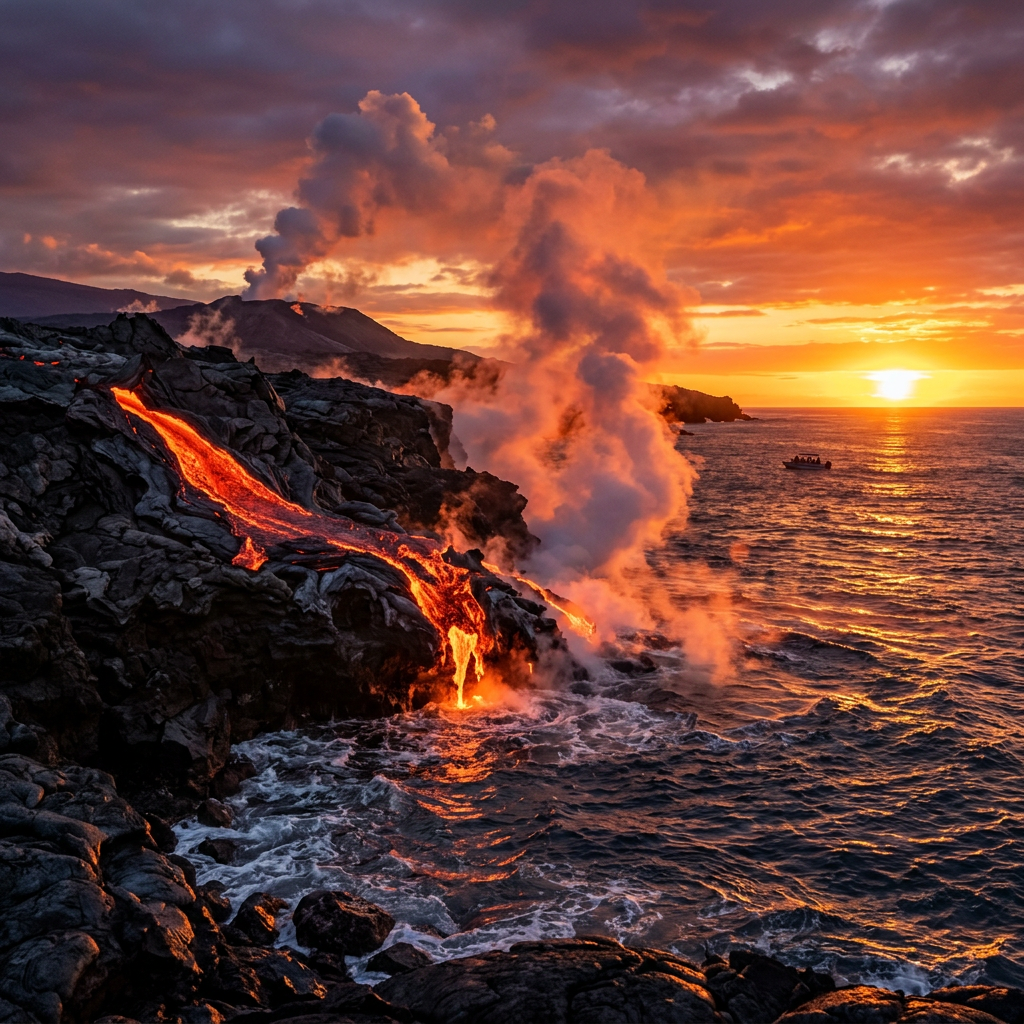
Even today, volcanic activity continues in Hawaii Volcanoes National Park. When I looked briefly into the vast lava lake known as the “Fire Pit,” its power took my breath away. I realized that the fiery lake of hell I had only imagined might look something like this. No warrior could stand before the exploding fountains of molten lava, and no living creature could survive its flow.
Across Hawaii, the land looks as if it has been plowed by giants—rocks overturned, blackened fields lying in silent death. Yet in regions with heavy rain, mosses and ferns begin to grow within a year, slowly healing the land. Seeds carried by the wind take root in cracks of cooled lava. In some places, shrubs grow alone in the hardened rock—trees whose roots, buried deep beneath the lava, spent years searching for a tiny opening to emerge into the light. Like an umbilical cord, those roots carry nutrients through the underground world, sustaining insects and life below. I could not help but feel awe at the persistence of life.
Leaving Hawaii—a place where creation still unfolds and where heaven and hell seem to meet—I remembered a pastor who joked, “This isn’t heaven; at best it’s heaven number 999.” With his playful words echoing in my ears, my steps felt light as I returned home—to a family better than heaven itself.
— Yoon Wan‑Hee, August 23, 1997


You must be logged in to post a comment.