Hello, everyone. From time to time, people around me greet me with this question: “How difficult it must be to serve as a pastor’s wife!” Some of them furrow their brows as they say it, offering me every ounce of their sympathy. And yet, oddly enough, that greeting doesn’t always land the way they intend it to. Yes, of course — being a pastor’s wife is demanding in many ways. But when I weigh those hard moments against the joy and sense of purpose that others rarely get to experience, the difficulty often shrinks to almost nothing. What I find even harder than being a pastor’s wife, if I’m being honest, is being a parent. The longer I do it, the less simple it seems. I imagine every parent listening today knows exactly what I mean. So this hour, I’d like to talk about one particular challenge of parenting — sharing household responsibilities with our children.
There is a saying: “Many parents end up singing life’s chorus alone, rather than learning to sing it together with their children.” When I heard that, I had to admit — yes, I am guilty of this far too often. In a solo performance, you only need to sing your own part well. But in a chorus, no matter how brilliantly one person sings, you cannot taste the true depth of harmony unless everyone joins in. The most beautiful sound in the world is an a cappella choir — every voice woven into one.
Being a parent, I have come to believe, means far more than providing clothes and food. It means continuously training our children — so that when they step out into the world and live alongside others, they can find the finest harmony in life. What children see, hear, and learn at school is, I think, only a small fraction of what they absorb at home. In particular, how much we assign our children to do at home — how much responsibility we place in their hands — directly shapes how independent they become and what kind of contributing members of society they grow into. The home truly is a comprehensive university of life. This is why, in the old days, families evaluating a potential match would carefully examine the other family’s home upbringing. Lately, though, the very phrase “home education” seems to be treated as a relic of a bygone generation.
A U.S. military officer who has spent years training new recruits put it this way: “The young soldiers coming in these days have to be taught everything from scratch. They cannot do a single thing on their own. We have to teach them how to make their beds, how to shine their shoes — we even have to teach them how to blow their own noses.” It was less a complaint than a lament.
A survey investigating exactly why this has happened turned up some telling answers. Among 600 students from first through seventh grade, only 53% of seventh graders shared in household chores at all, and only 52% were expected by their parents to clean their own rooms. Fewer than 33% participated in washing dishes or tending the yard, and fewer than 20% knew how to cook. As children advance in school, their studies demand more of their time — and the window to learn these things at home closes further.
You can see where things stand when a child doesn’t know how to hang up the clothes they’ve just taken off, piling them on a chair instead, or when they are reduced to hopping between objects scattered across their bedroom floor. That is the state of home education today.
I am no exception. Always chasing the clock, I often find myself unable to sit calmly beside my children, teach them step by step, and wait with patience for them to learn. More often than not, because we are all busy, I simply do everything myself and move on — which I know is not the right approach educationally. There have been plenty of evenings when my children sat perfectly content in front of the television while I dashed around the house doing everything alone, growing more irritated by the minute. And yet, in those very moments, I have also discovered something unexpected: more often than not, the children simply don’t know what to do — because we have never assigned it to them in any consistent way.
The work of a household is remarkably varied: changing a baby’s diaper, cooking, laundry, cleaning, mowing the lawn, watering the garden, organizing the mail, collecting recyclables, tidying the closets, taking out the trash, clearing out the refrigerator… None of these tasks seem particularly important on their own. But when they pile up, the entire rhythm of a household breaks down. We tend to assume that children will simply figure all of this out when they are older — but when I read state reports indicating that many who grew up doing nothing at home struggle to hold employment as adults, I know this is not something to shrug off.
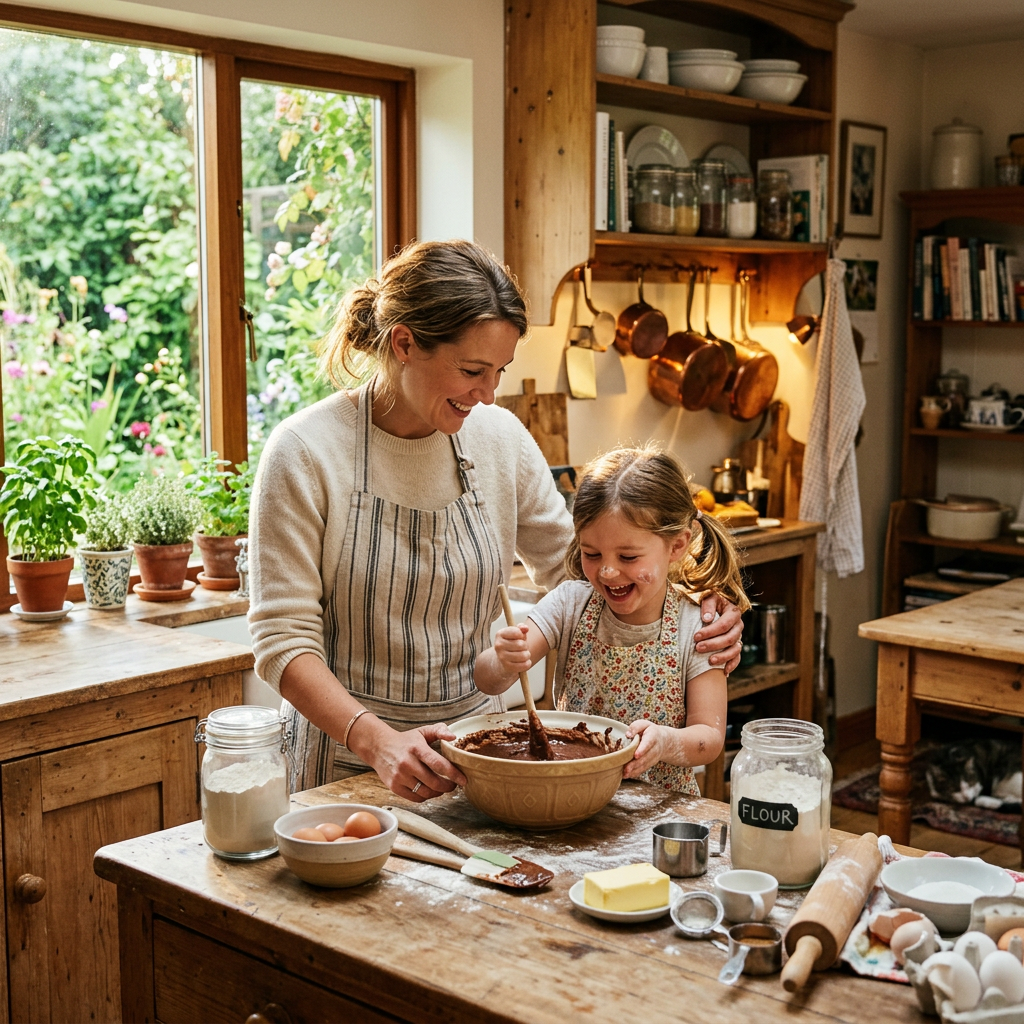
My youngest son is entering seventh grade this fall, and I confess I have treated him like a baby far too long. But this past summer, with his older sisters away at summer school or busy with work, and with me pulled in many directions myself, I had no choice but to teach him how to cook rice. I showed him — somewhat anxiously, treating it as a kind of experiment — how to wash the rice, how to measure the water. While I was away, he made rice all by himself, and made it well.
Beyond that, he has started helping me mow the front and back lawns this year, and it has made my life noticeably easier. I’ll admit that when he first volunteered to use the mower, I hesitated — I worried he might get hurt. But after I sat him down and went through the safety rules carefully, he has handled it without a single problem.
In one family I know, each child has their own laundry basket. When it fills up, they wash their own clothes — a practice that family began when the children were still in kindergarten. Teaching children from an early age to share in the work of the home sends them a message that cannot be learned from any textbook: household chores are not the sole responsibility of mother or father — they belong to the whole family.
We pour so much into our children — time, money, energy — for their education, their sports, their faith, their hobbies. We raise them to become accomplished professionals who are valued and well-compensated in the world. And yet far too often, we find that when they come home, they have no idea how to live in harmony with the people they love most. I say I love my children — but I have to ask myself honestly: how much am I actually teaching them the things that matter most in daily life? How much am I becoming their teacher, and truly helping their world grow into something beautiful and worthy?
How wonderful it would be if parenting came with a formula — like a math equation you could simply solve. I honestly don’t know how long I will keep stumbling and bumbling my way through this role. But I believe that being a parent means something like this: that the finest music of life — a chorus, not a solo — must be allowed to rise from within our children. And because that is no small thing, I find myself leaning ever more deeply on God — the Father who parents us all.
— Wanhee Yoon, August 7, 1997

 Daily Sauntering
You must be logged in to post a comment.