Hello. In midsummer, tropical storms sometimes sweep through and bring sudden, dramatic changes in weather that we never experience in other seasons. Not long ago, a thunderstorm caused loss of life, uprooted massive trees, and broke branches that crashed onto homes. Looking at the fallen branches scattered under the morning sun after the storm, I found myself thinking about the storms of life.
For all who live, storms come without warning. How will we face them, and how will we walk through them? Let us take a walk through an open forest path and reflect together. But first, let us listen to a hymn.
How wonderful it would be if life offered only good weather. Yet just as a sudden raincloud can appear while we are enjoying the beach under a blazing sun, so too do overwhelming troubles sometimes rush into our lives when everything seems to be going well. When that happens, a calm heart that says, “This is not the end,” can not only help us endure the storm but also discover a more beautiful life afterward.
We often pray that storms will never come to our families or our lives. But those who have endured many storms know that life becomes as fresh and radiant as the morning sun that rises after a long night.
A young man named Mark Wellman was climbing the 13,075‑foot Sierra Nevada mountains in California at the age of twenty‑two. With no ropes or tools, he had already conquered forty‑eight peaks with his bare hands. But as darkness approached, he and his friend began descending like mountain goats from rock to rock. Suddenly, the rock he was gripping broke loose. Losing balance, he fell onto the boulders below. As he tumbled between the cliffs like a rag doll, he thought, “Ah… so this is how I die.” Then he lost consciousness.
His friend called for emergency rescue, and Mark was airlifted by helicopter. His life was saved—but when he awoke in the hospital, the doctor delivered a devastating verdict: “Your spine is severely damaged. You will never walk again.”
Unable to accept his paralysis, Mark fell into deep depression. Several times a day he felt the urge to crawl to the window and throw himself out. But he barely had enough strength to change the TV channel, let alone end his life. He had to learn how to live again by watching other patients.
Six years after the accident, Mark began a new adventure. His friend Mike Corbett, who had climbed Yosemite’s 3,600‑foot El Capitan more than fifty times, invited him to climb it together. Mike had designed special equipment for Mark.
In July 1989, under the scorching sun, drenched in sweat, they began their ascent. Mike climbed first, and Mark followed using the device. After seven grueling days, Mark reached the summit—lifting his entire body weight with only his arms. His arms felt as if they would tear off, yet he knew a new life was unfolding below the mountain.
A year later, he continued conquering other famous Yosemite cliffs. In 1993, using a special ski designed for paraplegic athletes, he crossed the Sierra Nevada—over a treacherous 10,000‑foot route.
He still smiles when he remembers the reporters waiting for him after the El Capitan climb. They asked, “Why risk your life on such dangerous adventures?” He answered, “To test a world beyond the limits of today.” (From Boy’s Life, 1996)
Mark’s achievements—things most people would never dare attempt—are a testament to human victory in the midst of storms. His life gives courage to many. We too must train ourselves to survive life’s storms.
There are two families with physically disabled children. In one family, the child’s disability became a source of blame between husband and wife, leading to constant conflict. The father felt pain simply looking at his child and was ashamed to take the child outside. When the family went out, they locked the child in a room. The child lived a dark, unhappy life, deprived even of parental love.
But the other family poured their hearts into giving their disabled child a full and meaningful life. Through the child, they discovered that value does not exist only in ideal lives—there is infinite worth even in what seems weak or imperfect. Their selfishness crumbled, and they realized that every person in this world is worthy of love and deserves to be loved.
Even when something happens that feels like the world is collapsing, later we often find it was not as catastrophic as it seemed. Life flows like water, and our perspectives change with age. And when we remember that wherever we go, whatever we face, we live under God’s grace, we become bold. We also learn to see ourselves more clearly.
In truth, the storms of life sweep away the foam and illusions. Perhaps they are necessary for our maturity.
Psalm 121 says: “I lift up my eyes to the mountains—where does my help come from? My help comes from the Lord, the Maker of heaven and earth. He will not let your foot slip—He who watches over you will not slumber. The Lord watches over you—the Lord is your shade at your right hand. The sun will not harm you by day, nor the moon by night. The Lord will keep you from all harm—He will watch over your life. The Lord will watch over your coming and going both now and forevermore.”
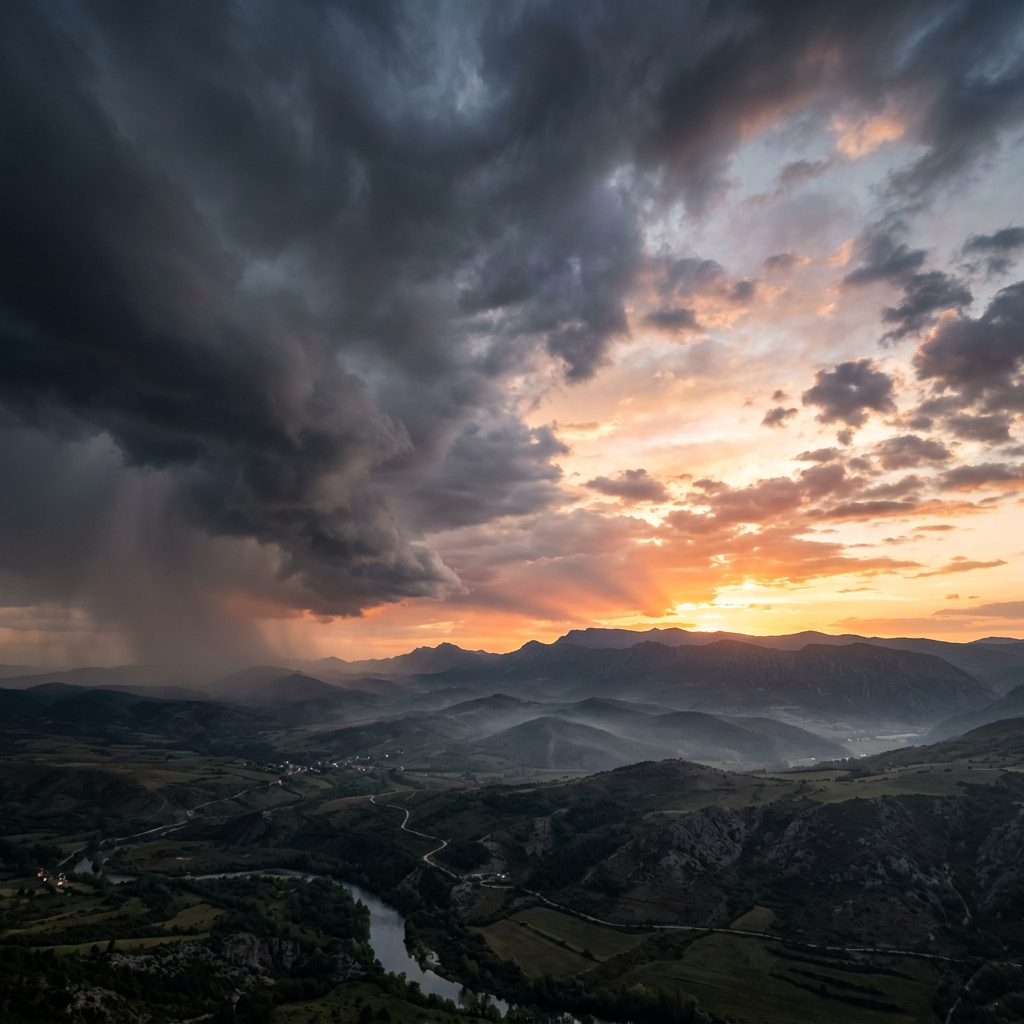
We never know when life’s storms will shake us. Perhaps you feel you are in one now—wandering through a long, dark night. But remember: as long as your heart longs for the radiant sun of a new morning, that dawn of light is already running toward you.
— Yoon Wan‑Hee, August 2, 1997


You must be logged in to post a comment.