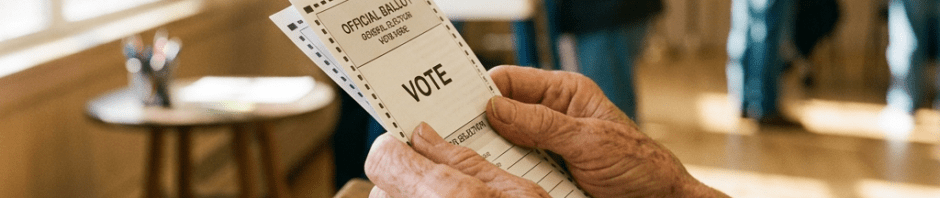
— Korea Today, waiting for the election of June 3, 2026
After the sirens,
after the flags,
after the endless arguments
burning through blue-lit screens,
there remains
a trembling country
standing beside its own reflection.
April remembers.
May remembers.
The streets remember footsteps
running beneath tear gas and helicopters.
The mountains remember
voices buried beneath curfews,
newspapers blackened by censorship,
young names carried silently
inside mothers’ grief.
And still
history walks the avenues again.
Those who wounded
the fragile bones of democracy
appear smiling before cameras,
their suits carefully pressed,
their language polished smooth
by public relations and forgetting.
And the people watch.
In crowded subway cars.
In exhausted office towers.
In quiet kitchens after midnight
where old women still whisper prayers
before sunrise.
The people watch.
Not only with anger,
but with the weary wisdom
of those who have seen power
change masks
without changing its appetite.
Who speaks now for truth?
The broadcasters speak.
The parties speak.
The influencers speak.
The algorithms speak endlessly.
But truth itself
sits quietly beside the Han River,
like an old survivor
holding photographs
nobody wishes to examine too closely.
In the corridors of politics,
language grows thin.
Responsibility becomes theater.
Shame becomes calculation.
Mockery dresses itself
as patriotism.
And the citizens—
still remembering candlelight
flickering through cold plazas—
ask softly into the night:
Who touched the foundations?
Who traded conscience
for applause?
Who mistook democracy
for private ownership?
The wind answers nothing.
Only banners trembling
above crowded intersections.
Only headlines dissolving
before the next scandal arrives.
Only the long ache
of collective uncertainty.
Yet beneath the exhaustion,
something refuses to die.
A grandmother studying her ballot carefully.
A student reading forbidden history again.
A weary worker standing in line to vote
after a twelve-hour shift.
Small acts.
Almost invisible.
Yet these are the hands
holding the republic together.
Not generals.
Not parties.
Not men shouting beneath television lights.
But ordinary people
still believing
that a nation
does not belong to power—
it belongs to memory,
to conscience,
to the unfinished labor
of human dignity.
Korea today—
standing between forgetting
and awakening,
between spectacle
and moral courage,
between wounded history
and the possibility
of another spring.
And somewhere beyond the noise,
beyond accusation and applause,
morning waits quietly
over the river.
— TaeHun Yoon, May 29, 2026


You must be logged in to post a comment.