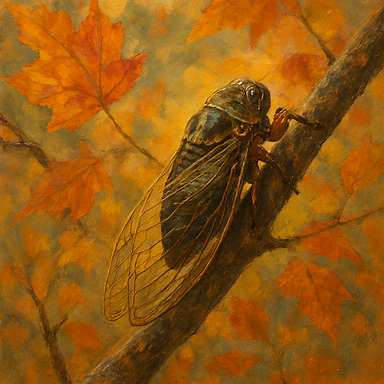
며칠 전 아침 식사를 하면서 창 밖의 우거진 녹음을 바라보고 있었습니다. 그런데 갑자기 밖에서 매미의 합창이 일제히 요란하게 들려 왔습니다.
“아니, 왜 이렇게 시끄럽지? 한 마리도 아니고 수백 마리가 한꺼번에 울고 있잖아?”
나도 모르게 놀란 듯이 불평(?)섞인 소리로 중얼거렸습니다. 옆에서 신문을 읽으며 식사를 하고 계시던 목사님께서 의아해하셨습니다.
“아니, 저 소리가 이제 들려요? 난 벌써 며칠 전부터 듣고 있었는데?”
“그래요? 난 왜 지금 갑자기 들리죠? 조금 전까지만 하여도 전혀 들리지 않았는데… ….”
요술에라도 걸린 듯이, 귀청이 열려지며 매미 소리가 확 쏟아져 들어음이 신기할 뿐이었습니다.
목사님은 읽던 신문을 접으면서 “저 소리는 세월의 파도 소리요. 물론 암컷을 찾는 애절한 소리지만, 다음 해를 준비하는 소리라오. 일 년이라는 세월이 지나면서 우리에게 들려오는 자연의 소리들은 참으로 다양하거든. 겨울엔 바람소리와 함께 눈이 수북하게 쌓이는 소리, 봄이면 새싹들이 터져 올라오며 언 땅이 녹아나는 소리, 여름이면 천둥 번개를 동반한 폭풍우의 격정적인 소리 … …. 저 매미 소리는 가을이 다가오고 있다고 사람들에게 시간을 알리는 소리겠지요.”라고 했습니다.
세월의 파도 소리, “아!정말 그렇군요! 벌써 매미가 이렇게 많이 울고 있는 것을 보면, 가을이 오겠지요?”
목사님은 고개를 끄덕이셨습니다.
“저 소리는 일 년 내내 들리는 소리가 아닌, 바로 요즈음에야 들을 수 있는 소리인데, 하루 살기 급급한 우리에게 하늘을 보며 내면을 들여다 볼 줄도 알고, 하나님의 숨결에 귀기울이는 훈련을 하라는 것이 지요.”
목사님의 말씀에 동의하면서 자연의 소리에 소홀했던 점을 잠시 부끄럽게 생각하였습니다. 매미의 한평생 삶은, 한 계절 목숨을 다하여 “맴-맴 외치다 가건만, 마음의 창 한켠을 열어 들려주는 데도 얼마 나 인색했던지요.
그러고 보니 세상에는 많은 소리들이 있음에도 불구하고 우리는 듣 는 것보다, 못 듣는 것이 너무나 많은 것 같습니다. 사계절을 통해 들려오는 자연의 소리는 때가 되면 어김없이 들려오건만, 우리는 오늘 하루 땅만 내려다보고 사느라 무감각하기가 일쑤였음을 깨닫게 됩니 다.
소리에는 자연의 순리 속에 들려오는 소리가 있듯이, 인간의 역사와 시대를 통해 들려오는 소리도 있습니다. 소리 속에는 즐거운 소리가 있는가 하면, 가슴을 답답하게 하고 울분케 하는 소리도 있습니다. 또한 소리는 소리인데 침묵의 소리도 있습니다. 차라리 말을 하지 말고 소리를 내지 않는 것이 영원한 소리가 되어 심령을 쩌렁쩌렁 울릴 때도 있습니다.
조국 광복 50주년 기념일을 맞이하면서 많은 소리들이 역사의 길목에서 웅웅거렸습니다. 그 소리들은 우리의 가슴을 미어지게 하기도 하고, 놀라게도 하고, 슬프게도 하며, 혼동케 하는 소음 속에서 시련과 고통을 얼마나 처절하게 당해야만 했는지, 우리 모두는 압니다. 우리는 자신도 모르게 복잡한 의식 세계 속에 거하게 되었고, 외국 식자들은 우리 민족의 난해한 의식 세계를 알기가 거의 불가능하다고도 고백할 정도로, 기뻐도 마음놓고 웃지 못하고, 슬플 때 아픔을 내어 놓고 울지도 못하는 등 자신을 있는 그대로 표현하기를 주저합니다.
그리운 조국! 바다 건너 이 땅에까지 들려오는 소리가 있습니다. 신 도시 아파트 주민들의 한숨소리, 벽이 갈라지는 소리, 부정과 부패가 부둥켜안는 소리, 권력과 부가 결탁하는 소리, 삼풍이 무너지는 소리, 기독교인들이 무너지는 소리, 광주의 소리, 반복되는 신당 창당 선언 소리 … ….. 그런데도 어디선가 자꾸만 통일에의 노랫소리가 금방이라 도터질 듯이, 터질 듯이 들려오는 계절 속에 우리의 가슴은 설레며 자꾸만 휘청거립니다.
광복 50년이 되는 올해도 우리의 허리는 분단과 한, 지역 감정과 편협된 인간 관계의 철조망에 휘감긴 채, 통일이라는 엄청난 숙제를 받아쥐고 있습니다. 금방이라도 “아버지! 어머니!” 하고 이름을 불 러보면 웃음지으며 달려올 것 같은, 피맺힌 얼굴들은 아직도 희미한 모습으로 멀찌감치 서서 몸부림칠 뿐입니다. 어느새 축복 속에 태어난 해방둥이들은 한평생 아픔을 등에 업은 채, 석양 속으로 걸어가고 있습니다.
광복의 기쁨을 차마 만끽하지도 못하고 분단 병을 앓고 있는 오늘, 내가 먼저 분단되어 있음을 하나님께 회개합니다. 내 속 깊은 곳엔 남을 향한 불신과 적대감으로 가득 차 있음을 하나님께 회개합니다. 이웃을 먼저 생각지 않고 내것을 먼저 생각했던 것을 하나님 앞에 회개 합니다. 거저 받은 은혜, 값을 받으려 했던 것 하나님께 회개합니다. 민족 해방 50년의 길목에 서서 화해의 물결이 남으로부터가 아닌, 나로부터 시작되기를 진정 하나님께 간구합니다.
올 여름의 뉴욕은 참으로 더웠습니다. 그러나 그 여름의 더위가 고비를 넘긴 요즈음, 목사관 뜰안의 여기저기에 떨어진 매미의 허물 딱지들을 바라보면서, 죽은 시간의 한맺힌 껍질들을 새삼스레 다듬어 봅니다. 그리고 매미가 되어 온 종일 소리내어, 누군가의 창가에서 목이 쉬도록 울고 싶습니다.
The last two days were heavy. A one-day trip to Atlanta—family errands, highways, sandwiches packed in haste. We arrived early, and ate in the Hub, surrounded by towers of glass and steel. We realized: we are no longer New Yorkers. We are country folk now. And I am tired.
Back home, I sink into my chair. I need this quiet. I begin to hum:
“God of the sparrow, God of the whale, God of the swirling stars… How does the creature say Awe? How does the creature say Praise?” —Jaroslav Vajda, 1983
[LECTIO]
I offer the chant:
“Praise to the Lord, the Almighty, who rules all creation.” —Joachim Neander
Then I open the sacred text: Psalm 104:1–35
And the words walk into my heart:
“You are clothed in glory and grandeur.” “You wear light like a robe; you open the skies like a curtain.” “You make the winds your messengers; fire and flame your ministers.” “The earth is full of your creations.” “When you open your hand, they are filled completely full.” “When you take away their breath, they die and return to dust.” “Let the Lord’s glory last forever! Let the Lord rejoice in all he has made.” “Let God enjoy his creation.” “I will sing to the Lord as long as I live.” “Let my whole being bless the Lord.” “Bless Yahweh, my soul.”
[MEDITATIO]
I pause. I cannot breathe for a moment. The Spirit of God is the source of all being and life.
He creates. He sustains. He delights.
Creation is not just beautiful—it is intentional. It is filled with variety, wisdom, and joy. And I am part of it.
[ORATIO]
Lord, I thank you for your creativity. Help me see each person as your unique design— each with gifts, talents, and sacred purpose.
You are sufficient for my life. My breath is yours. You desire good for me. Help me desire your will more than my comfort. Teach me to trust your pruning, your shaping, your timing.
[CONTEMPLATIO]
I rest. No thoughts. No striving. Only silence.
And in that silence, the veil descends. Creation itself becomes the veil— soft, translucent, holy.
Martin Luther once said:
“All creation is God’s veil. All that is created is God’s translucent veil.”
Yes. This was the song for Eden.
[INCARNATIO]
I sing again:
“I come to the garden alone while the dew is still on the roses, and the voice I hear falling on my ear, the Son of God discloses. And He walks with me, and He talks with me, and He tells me I am His own…” —C. Austin Miles, 1913
And the joy we share as we tarry there— none other has ever known.
On August 20, 1995, The New York Times carried a major story from Seoul: Kim Sun-myung, the world’s longest-serving political prisoner, had been released after 42 years and 21 days, granted a special pardon on the 50th anniversary of Korea’s liberation from Japan.
The beginnings of his tragic life lay in the turbulent days after Japan’s defeat. Amidst the chaos, he came to believe that only communism could save a nation staggering in confusion. During the Korean War, he joined the North Korean People’s Army, but on October 15, 1951, he was captured by UN forces. From that moment, he was sealed within the frozen shadow of history, cut off from the modern world, and forced to live a life estranged from civilization.
His years in prison were filled with torment. His father and younger sister were executed by South Korean troops. Before his eyes, fellow communists who refused to renounce their ideology were tortured to death. Time and again, Kim was offered freedom if he abandoned communism. Time and again, he refused. Instead, he endured more than four decades behind bars, clinging stubbornly to his belief that someday, when a communist society was established, the people would live happily and equally together.
Cut off even from his family, he was denied visits and remained in isolation. At nearly 70 years of age, he still had a mother in her nineties who was alive. Yet on the day of his release, he hesitated to see her. He feared the shock she might feel if a son, legally declared dead more than 20 years earlier, suddenly stood before her. Just the thought of his parents, his sister, his family made his heart pound and his throat tighten with grief.
Stepping outside the prison gates, everything was alien, overwhelming. Plastic bottles, telephones, televisions, flushing toilets, forests of buildings, highways, streams of cars—all stretched before him under the wide blue sky, a world beyond belief. Yet within himself, he repeated again and again: None of this moves me! Behind this wealth, there are still people groaning in misery. Holding fast to the ideology that had defined his life, he began placing hesitant steps into a capitalist society, convinced that his communist faith would remain unshaken.
One scene was almost ironic. Among those who welcomed him was Mr. Kim Seok-hyun, 82 years old, who had shared prison walls with him for 32 years as a fellow political inmate, and who had been released earlier in 1990. To reporters, he said confidently: “I will teach Kim Sun-myung that capitalism is not entirely evil.”
The sight of Kim Sun-myung—his back bent from malnutrition and lack of exercise, his eyesight nearly lost to untreated disease, his body frail and fragile—was heartbreaking. Communists had once cried, “Religion is the opium of the people.” Yet it was they themselves who idolized a single figure, enslaved millions, and stole countless innocent lives. I cannot help but wonder what it would look like, the day Kim Sun-myung might finally realize that his devotion to ideology had betrayed him, that it had consumed his one precious life and forced him to endure decades of torment without ever truly living as a man.
Yes, Kim Sun-myung was a slave to an idea. But in truth, among us there are many who are no different: slaves to ideology, to drugs, to alcohol, to gambling, to possessions, to wealth, to the past itself. When a person becomes bound to something, their life ceases to grow; it begins to freeze. Even if one does not wear a prisoner’s number on his chest, even if one is not behind bars, the chains of such prisons keep us from genuine relationships and from walking rightly with God.
I recall the story of a woman who once loved her husband so completely that she cared for nothing else. When she first came to Christ, she felt guilty and afraid even to attend church, lest she betray her devotion to her husband. Yet when she came to know the Lord, she realized that the man she loved was, in the end, only flesh, and not the master of her life. Her eyes were opened to see that neither she nor her husband, but God alone, was the sovereign of their lives. And so she came to love her husband even more deeply—this time with a love that sought his soul’s eternal life.
There is no greater blessing in life’s journey than to meet the Lord who is the way, the truth, and the life. However lofty a philosophy or ideology may appear, in the end, it exploits and enslaves. Only truth frees.
“If you hold to my teaching, you are truly my disciples. Then you will know the truth, and the truth will set you free.” (John 8:31–32)
These words remain the Lord’s message to all of us who are bound, imprisoned, or enslaved by something.
As I read the story of Prisoner No. 3597—this man who bore the inglorious title of the world’s longest-serving political prisoner—I thought of John Ruskin’s words: “The greatest thing a human soul ever does in this world is to see something and tell what it saw in a plain way. To see clearly is poetry, prophecy, and religion all in one.” For Kim Sun-myung, the question lingers: what was the true purpose of his life?
I could not help but wonder: had he met the Lord earlier, what a precious, beautiful, and regretless life he might have lived. And I recall another story, ancient yet ever fresh: when Cain killed his brother Abel and fled, God placed a mark upon him so that no one would harm him. In that same mysterious love, I wonder—what mark, what sign of mercy, might God yet place upon the remaining days of Kim Sun-myung’s life?
세계 최장수 정치 복역수인 김 선명 씨가 43년 10개월 만에, 광복 50 주년 특사로 출옥했다는 서울발 뉴스가 1995년 8월 20일자 뉴욕타임 지에 대서 특필되었습니다. 그의 기구한 삶의 발단은 일본이 망한 후, 어지러워진 나라의 운명 속에 공산당만이 혼란에 빠져 있는 민족을 구하리라는 생각 때문이었습니다. 그는 한국전쟁 중엔 인민군에 가담하여 싸우다가, 1951년 10월 15일에 유엔군에 의하여 포로가 되었습 니다. 그리고 오늘에 이르기까지 그 역사의 빙점 속에 갇히어 문명과 등진 채 살아온 것입니다.
그가 감옥 속에 있는 세월은 쉽지 않았습니다. 그의 아버지와 여동생이 국군에 의해 처형되었고, 그의 눈앞에서 공산주의 사상을 지닌 동료들이 남한으로 전향치 않는다는 이유로 갖가지 고문으로 죽어갔습니다. 김선명 씨는 여러 번의 혹독한 고문, 회유 속에서 공산주의 사상을 버리면 자유인으로 살아갈 수 있는 기회가 몇 번이고 주어졌음에도 거절하고, 44년이라는 부동의 세월 속에 고집스레 살았던 것입니다. 그는 철저한 공산주의자로서 이 땅에 공산주의 사회가 이루어 지면 인민이 함께 행복하고 동등한 삶을 살 날이 올 것을 굳게 믿고 있었습니다. 그가 감옥에 있는 동안, 가족들과도 격리되어 면회조차 거절당하였습니다. 어언 70세가 된 김선명 씨는 90세가 된 노모가 아직도 살아있으나 출감하던 날, 그는 선뜻 그리운 어머니를 만나러 갈 수 없었습니다. 이미 20여 년 전에 법적으로 사망이 된 아들이 살아서 나타났을 때 받을 충격을 염려하고 있었습니다. 그는 어머니와 아버지, 여동생과 가족들을 생각만 해도 가슴이 뛰고 목이 메임을 어쩔 수 없었습니다.
열려진 감옥 문을 나서는 김선명 씨에게는 모든 것이 생소하고 충격적이었습니다. 처음 보는 플라스틱 병, 전화, 텔레비전, 수세식 화장실, 빌딩숲, 하이웨이, 차량의 물결 등 도저히 믿어지지 않는 세계가 푸른 하늘 아래 펼쳐져 있었습니다. 그러나 그는 마음속으로 계속 다짐하였습니다. ‘이런 것들은 아무것도 날 감동시키지 못하지! 저 부요 함 속에 지금도 신음하고 있는 인민들이 있을 거야! 그는 지금도 신봉하고 있는 공산주의 사상을 가슴에 다지며, 자본주의 사회 속으로 자유의 발길을 한 발자국씩 옮기기 시작하였습니다. 재미있는 것은 그의 출감을 맞이하러 나오신 김석현 할아버지의 말씀이었습니다. 김 선명 씨와 함께 32년 동안을 사상범으로 감옥에 있다가 1990년도에 먼저 출감한, 올해 82세 된 김석현 할아버지는 기자들에게 말하기를 “나는 김선명 씨에게 자본주의가 결코 다 나쁜 것만은 아님을 알려줄 것입니다.”라고 자신있게 말한 사실이었습니다.
영양실조와 운동 부족으로 허리가 구부러지고 눈병조차 치료받지못하여, 시력은 악화될 대로 악화된 연약하고 순전해 보이는 한 사람의 비극적인 삶을 바라보면서 가슴이 아팠습니다. 종교는 인민의 아편이라 하여 철저하게 비신앙을 외치던 공산주의자들, 그들이 한 사람을 신격화시켜 수백, 수천만의 선량한 사람을 노예화하고 무고한 생명들을 빼앗아간 사실의 실체를 김선명 씨가 깨닫는 날, 그의 허물어지는 모습을 상상케 됩니다. 그는 사상에 속아 자신의 귀중한 삶을 산화해버리고, 사람 노릇 한 번 제대로 하지 못하고, 지옥과 같은 환경 속에서 고난의 세월을 보냈던 것입니다.
김선명 씨는 공산주의 사상의 노예가 되어 살아왔지만, 우리의 가족과 이웃 속에도 그와 같은 사상의 노예, 마약의 노예, 술의 노예, 도박의 노예, 세상의 노예, 집의 노예, 돈의 노예, 과거의 노예가 되어 그 아까운 세월을 탕진하고 있는 사람들이 너무나 많습니다. 사람이 무엇인가에 매이기 시작할 때부터, 그의 삶은 성장하지 못하고 얼어붙기 시작합니다. 비록 감옥에 갇혀 죄수 번호를 가슴에 달고 있지는 않아도, 감옥과 같은 부자유함과 얽매임 속에서 온전한 인간 관계와 하나님과의 바른 영적 삶을 영위할 수 없게 됩니다.
어느 분이 남편을 너무 사랑한 나머지, 남편 외에는 아무 곳에도 눈을 돌리거나 신경조차도 쓰지 않다가 주님을 영접하게 되었습니다. 처음에는 교회에 가는 것조차도 남편에게 미안하고 두려워했으나, 주님을 알고 보니 과거에 자신이 사랑한 남편은 육신적인 것 외에는 아무것도 아니었음을 깨달았다고 합니다. 주님을 알고 보니 나와 남편의 생의 주관자는 나도 아니며, 남편도 아닌 하나님임을 볼 수 있는 눈이 열리면서, 남편과 그의 영혼이 영생에 이르도록 이전보다도 더욱 사랑하게 되었다고 합니다.
인생의 길에 진리와 생명이신 주님을 만나는 것보다 더 큰 축복은 없습니다. 이 땅에 아무리 고상한 진리가 있고 사상이 있어도 그 사상과 진리는 결국 사람을 이용하게 되고 속박하여 노예화의 길로 인도할 뿐입니다.
‘너희가 내 말에 거하면 참 내 제자가 되고 진리를 알지니 진리가 너희를 자유케 하리라(요 8 : 31~32).
이 말씀은 오늘도 무엇인가에 매여 속박되어 있는 우리 모두에게 주님이 주시는 말씀입니다.
수인 번호 3597, 세계 최장수 정치 복역수라는 영광스럽지 못한 영광을 누리게 된 김 선명 씨의 기사를 읽으며, “한 사람의 역사에 있어서 가장 중요한 것은 그 사람이 무엇을 목적으로 하고 살았는가 하는 것이다.”라고 말한 존 러스키의 말이 떠올랐습니다. 그가 일찍이 주님을 만났더라면 그의 인생은 얼마나 귀하고 아름답고 후회없는 삶을 살았을까를 생각하며 안타까운 마음이 들었습니다. 그리고 그 옛 날 옛적에 동생 아벨을 살해하고 도망가며 “내가 내 동생을 지키는 자 인가요? 하면서 반항하는 가인에게, 이마에 표적을 주시어 아무도 그를 상치 못하도록 보호하신 하나님의 사랑이, 김 선명 씨의 남은 여생에 어떤 표적을 주실 것인가를 기대하며 가만히 주님께 귀기울여 봅니다.
목사관 앞 마당에는 덕우드(DogWood)라는 나무가 있습니다. 처음 목사관에 입주했을 땐, 그 나무에 대해 전혀 관심을 갖지 않고 있었습니다. 그러나 어느 봄에 메마른 가지에서 분홍빛 꽃망울들이 터져 오를 때의 그 단아한 아름다움에 그만 매료되고 말았습니다. 또한 가을이 되면 가장 먼저 울긋불긋한 단풍으로 함빡 치장을 하고 미련없이 바람결에 떠나가는 낙엽들의 모습 속에, 삶의 영광과 얽매임 없는 자유로움을 발견하곤 했습니다.
저는 이 나무를 은연 중에 사랑하게 되었습니다. 그런데 지난 여름 부터 현관문을 열 때마다 걸리적거리는 것이 있었습니다. 무심코 보니, 덕우드 나뭇가지가 뻗칠 대로 뻗치어 현관 안으로까지 들어올 기세였습니다. 나무를 유심히 돌아보니, 나무의 전체 모양이 형편없어 졌습니다. 마땅히 때에 따라서 잔가지들을 쳐주었어야만이 꼿꼿한 모습으로 높게 자랄 수 있었을 터인데, 그동안 제멋대로 자라난 굵어질 대로 굵어진 나뭇가지들이 보기에 흉할 정도였습니다.
‘진작 잔가지들을 쳐주었어야 했는데 … …. 후회를 하면서, 문득 사람도 나무처럼 잔가지를 제 때에 쳐주지 않으면, 조그만 습관들과 버릇들이 자라나 오히려 삶에 큰 아픔이 되어 다가올 때가 있으리라는 생각을 갖게 되었습니다. 그리고 며칠 전 마음 상하였던 일이 떠올랐습니다. 맞았어! 내게는 비난과 오해도 때로는 필요한 것이었어! 라는 깨달음 속에 어두웠던 심령에 아침 해가 떠오르듯이 치유의 광선이 힘차게 치솟았습니다.
목사관의 삶에 기쁨과 보람도 있지만, 때때로 생각지도 못한 오해나 비난을 당하는 일이 있습니다. 그럴 때 마음의 상처와 아픔으로 기도조차도 드릴 수 없을 때가 있습니다. 그 아픔이 심할 땐, 하나님 앞에 무릎 꿇고 앉아 상처난 짐승처럼 신음소리만 내다가 눈물을 닦고 일어서게 됩니다. 그리곤 곧잘 사람들이 알아주지 않음에 원망을 하게 됩니다. 난, 당신이 피곤한 몸을 눕히고 한참 자고 있을 때, 나 역시 피곤한 육신을 추스리고 깨어 일어나 당신을 위해 하나님 앞에 기도의 불을 밝혔고, 당신이 아파 고통할 때 성령님의 치유의 은총을 위해 눈물을 흘렸다오. 당신이 넘어야만 될, 흑암의 산중에서 헤매이기에, 난 작은 반딧불이 되고자 굶주리는 영혼과 육신으로 당신의 무사함을 위해 주님께 간구했다오. 그런데 당신은 꺼떡하면 불평과 원망이군요… …. 수없이 마음을 털어 놓고 보여주고 싶은 유혹에 빠지기도 하였습니다.
그러나 하나님께서는 때때로 다가오는 비난과 오해 등 그 모든 것을 사용하시어 나를 다듬으시는 것을 알게 됩니다. 하나님의 위로하심과 그늘 아래 쉬임을 원하기보다는, 사람들의 칭찬을 좋아하고 과대평가에 은근히 만족해하는 죄의 근성들을 늘 일깨우십니다.
성 프랜시스는 말하기를 “존경을 받게 되면 모욕을 받게 될 때와 다름없이 그것을 즐겁게 수용하고, 모욕을 받게 되면 존경을 받게 될 때 와 다름없이 그것을 즐겁게 수용하라. 내가 진정 다른 사람을 위했던 일로 존경을 받아 기뻐할 수 있으면, 마찬가지로 설사 모욕을 당하게 되어도 기뻐할 수 있지 않겠는가? 존경은 그것이 하나님께로 돌려져서 좋고, 비난은 나를 세워주기 때문에 역시 좋다는 것을 알도록 하 라.” 라고 했습니다.
평소에 황송할 정도로 많은 사랑을 받고 살아가는 저에게 충고나 비난, 모욕 등은 어쩌면 잘 받아들이기 힘든 부분인지도 모릅니다. 그러나, 내 영혼을 바로잡아 주고 서게 하며 더 높은 곳을 향하여 성장할 수 있도록 하는 가지치기가 없다면, 흉물스런 교만의 가지가 얼마나 휘청하게 늘어져 있을까 생각해 봅니다.
밤새 비바람과 폭풍우에 몹시 시달렸던 나무는, 아무 일도 없었다는 듯이 휑한 마른 머리채를 들고 오늘도 반갑게 맞이해 줍니다. 저는 나무에게 가만히 속삭였습니다. 나무야! 우린 같이 성장하고 같이 높은 곳을 바라보는 것이지. 그렇지? 우린 같이 아픔을 참으며 가지를 쳐내자꾸나. 새봄엔 우리 둘이 더 아름답고 다듬어진 모습으로 피어 나게 될 거야! 나무는 알았다는 듯이 바람결에 가지들을 흔들고 있었습니다.
We met— when a burst of pale light fell clean from the sky.
You, after stilling the night’s stars, were simply today— and in your steady silence, I found myself again.
So tomorrow too, you will remain the path, the ground I tread again and again, though my steps falter.
The crimson sun crawled low, close enough to touch the soil, close enough to catch my breath as I lay down on the raw earth— the morning after training, my body sore, my heart heavier still, yet carried, always, by you.
In front of the parsonage stands a dogwood tree. When I first moved into the parsonage, I paid little attention to it. But one spring, when tender buds burst into pink blossoms from the dry branches, I was utterly captivated by its quiet elegance. And in autumn, when it was the first to clothe itself in crimson and gold, then release its leaves without regret into the wind, I discovered in that scene both the glory of life and the freedom of letting go.
Without realizing it, I had grown to love this tree. Yet since last summer, something began to trouble me each time I opened the front door. The branches of the dogwood had stretched so far that they seemed ready to intrude into the entryway. As I looked more closely, I saw the shape of the whole tree had become awkward. If I had trimmed the small branches in due season, it would have grown upright and strong. But left untended, its branches had thickened and sprawled, becoming unsightly.
I regretted not pruning earlier. And suddenly, it struck me: people are much like trees. If small habits and unchecked tendencies are not trimmed away in time, they can grow wild and become a greater pain in life. I recalled something that had hurt me deeply just a few days before, and then I realized—yes, even criticism and misunderstanding can sometimes be necessary for me. In that moment, it felt as if a healing light rose within my soul, like the morning sun breaking through the dark.
Life in the parsonage has its joys and fulfillment, but it also brings unexpected criticism and misunderstanding. At times, the wounds run so deep that I cannot even pray. Then, like a wounded creature, I kneel before God, groaning in silence, until at last I wipe away my tears and rise again. Yet often I find myself resenting the lack of recognition from others. I want to say: While you rested your weary body, I too was weary, yet I kept watch in prayer for you before God. While you suffered in pain, I shed tears, begging the Holy Spirit to grant you healing. When you wandered in the dark mountains of trial, I became a small firefly, praying with my hungry soul for your safety. Yet how easily you grumble and complain… Many times, I have felt the temptation to pour out my heart and reveal everything.
But I have come to realize that God uses even criticism and misunderstanding as His way of pruning me. He exposes my hidden sin—the desire for human praise, my secret delight in overestimation, my longing for comfort more than for God’s refining hand.
St. Francis once said: “If you are honored, accept it as gladly as if you were dishonored. If you are dishonored, accept it as gladly as if you were honored. If you rejoice in being honored for the sake of others, then likewise, even in dishonor, you should rejoice. Honor is good because it is returned to God, and dishonor is also good because it builds you up.”
I live surrounded by abundant love, more than I deserve, and perhaps this is why criticism, reproach, or insult has been harder for me to accept. Yet without the pruning that keeps my soul upright, how twisted and heavy would the branches of pride grow within me?
This morning, the tree that had been beaten all night by wind and storm greeted me once more, lifting its bare head as if nothing had happened. Quietly, I whispered to it: “Tree, we are growing together, looking upward to higher places, aren’t we? We will endure the pain of pruning together. And when spring comes, both of us will bloom again, more beautiful and refined.”
The tree seemed to understand, for its branches swayed gently in the breeze.





 Daily Sauntering
You must be logged in to post a comment.