When you board a plane bound for Hawaii, you receive a declaration form that every passenger must complete and sign. It asks whether you are carrying any animals or plants in your luggage. This is to protect Hawaii’s fragile ecosystem and prevent the spread of foreign species and diseases. During my stay, I came to admire even more the Hawaiian people’s deep commitment to protecting and loving their islands.
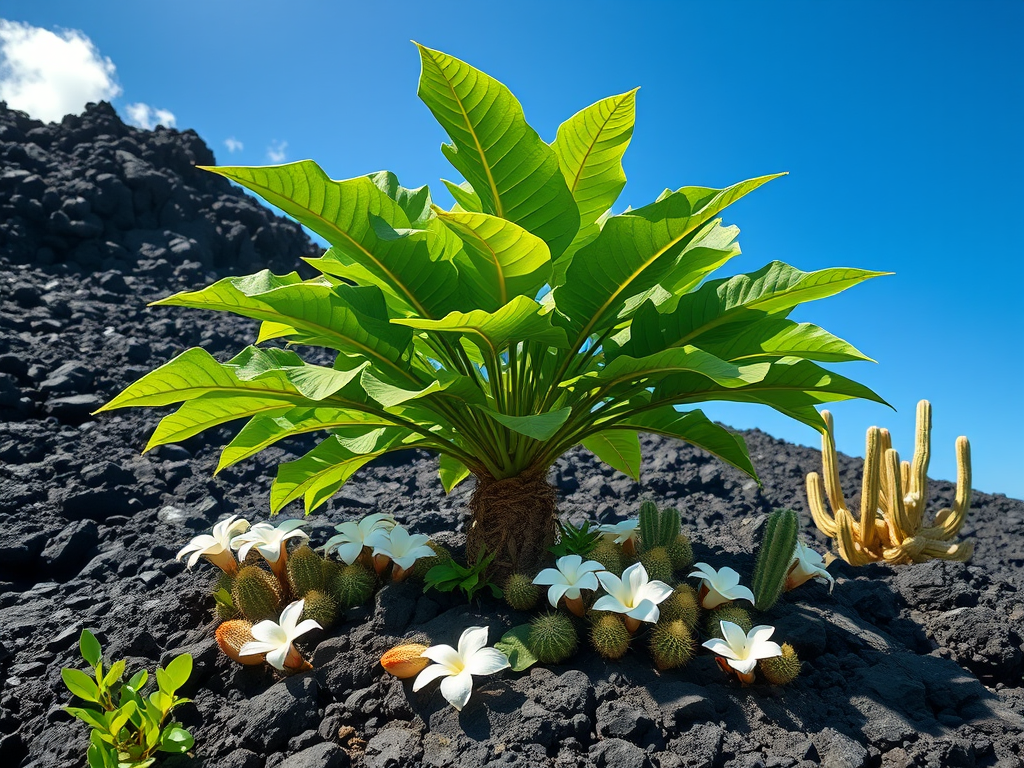
As I traveled through Hawaii, I saw many places where lava had flowed and hardened into black, barren land. In many areas, nothing green had yet managed to break through the solid rock. Some places looked desolate, useless, even harsh.
Yet in many other places, grasses and flowering trees had pierced through the black lava. The fragrance carried by the wind was astonishing. The tall papaya trees with their broad leaves, the pure and delicate blossoms of the plumeria, the abundant fruit of the avocado trees, the many varieties of cacti, and the countless flowers of trees I could not name—these were sights I had never seen on the mainland. Life pushing through hardened lava felt luxurious, fragrant, and precious. The birds that enjoyed these flowers and fruits—singing, fluttering, unafraid of people—made the place feel like paradise under a cloudless blue sky.
The well‑kept lawns were unbelievably green. Most had a layer of soil added on top of the lava, and sprinklers watered them regularly so they would not burn under the intense sun. The passion of Hawaiians for tending the roadside flowers and lawns was remarkable.
They understood that every part of God’s creation is priceless—something money cannot buy. A single broken branch takes a full year to grow back, and they cared for nature with that awareness.
If there is a heaven on earth created by God and humanity together, I would say it is Hawaii.
But above all, what moved me most deeply in Hawaii was the land itself.
— Yoon Wan‑Hee, 8/12/1997


You must be logged in to post a comment.