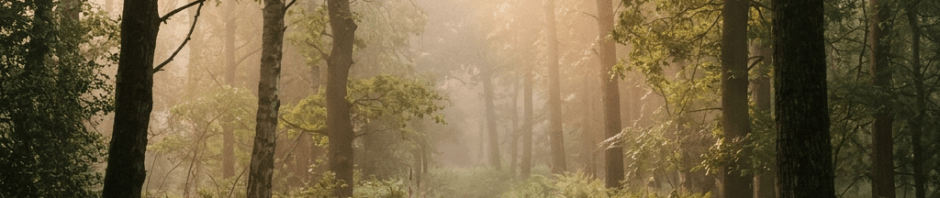
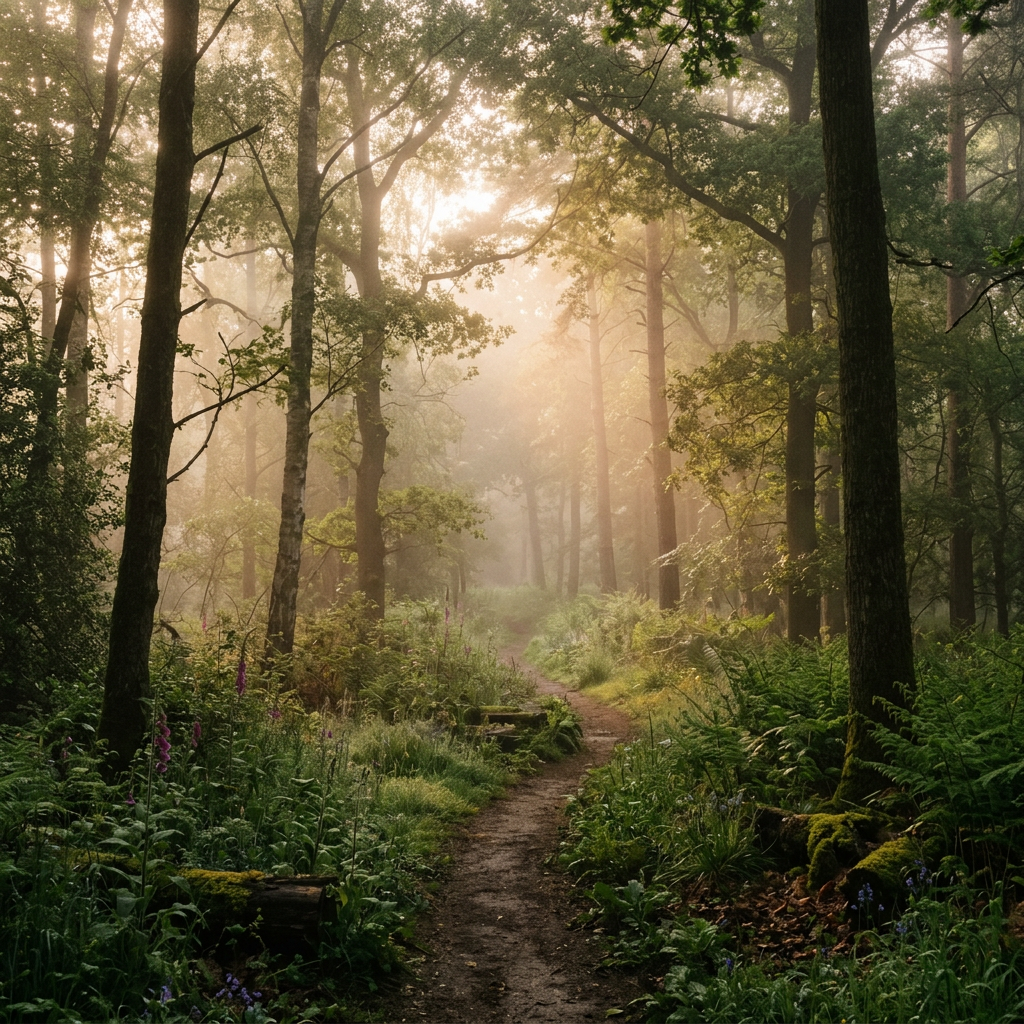
Walking through the morning dew hanging on the tips of grass, brushing them aside with my toes as I go to greet the breaking dawn—this path always stirs my heart. When the mountain exhales its pale morning mist, the waking birds beat their wings with a sharp flutter, rising swiftly into the high sky.
The energy of the summer mountain overflows through its waterfalls. In the ancient trees weathered by centuries of wind and rain, in the newborn blades of grass, in the tiny nameless insects, even in a single stone rolling on the ground—life pulses with the same brilliance as yesterday and today.
As a child, burdened by vague fears and loneliness, I wandered endlessly through the quiet woods of Jangchun Park in Seoul. I was a timid ten‑year‑old girl, shy before others, but in the summer forest I discovered a generous heart. Within that heart were safety, freedom, and a beauty filled with mystery. Wild grasses growing as they pleased, fragrant flowers and leaves, the strange smell of decaying foliage, the ringing whistles of birds carried on the wind—these always welcomed my young soul with joy.
After climbing up and down the narrow forest paths until I was breathless, I would rest my tired legs and sit on a high rock, gazing out over the woods. I would dream vague dreams of what I might become. Should I be a pine tree? A cedar? Or a bird? What about this rock standing tall? Or the wind wandering from mountain to mountain? No—perhaps I’ll be the stream racing coolly through the valley! … No, I like myself just as I am!
And then, afraid the mountain might hold me there forever, I would dash down the path like a startled squirrel. When I reached the valley thick with trees, I would wash my hands, feet, and face in the icy water, then float acacia leaves and acorn leaves downstream.
Entering the village, carrying the scent of the forest on my whole body and holding purple evening primroses and wildflowers in my hands, I felt as though I had brought the mountain home with me. Though the world has many tall trees and beautiful flowers, my love for the nameless wildflowers blooming shyly in the lowest crevices of the forest has never changed.
Even now, the summer forest remains a companion to my soul. When I stand face‑to‑face with the forest, I always feel like crying—like a lost child running into the open arms of a waiting mother.
How many days have I wandered in the forests of life where I should not have gone? How often have I longed for things I should neither gain nor possess, losing sleep and avoiding the true place of my life? Now, as I carry the rings of nearly fifty years, I see how bent and weathered I have become.
Yet here I stand again, in the forest of this vast American continent—still called the land of dreams—and my heart stirs once more. But the summer forest tells me it is time to gather and quiet the scattered prayers I have carried. My soul whispers softly:
“O Lord, this is my plea: Let me become a small spring of water in this land. Even in the deepest valley where no one passes, let my soul be a little well that moistens the mountains and becomes a resting place for thirsty creatures.”
The summer forest is the heart of God and the birthplace of what makes us human. There, the breath of creation remains untainted. There is mystery that embraces ruined hearts and fills impoverished souls. When wounded, it offers sacred healing; when joyful, it offers the fragrance of wildflowers. In low places and high places alike, the symphony of life overflows.
The summer forest is a sanctuary we must all one day return to.
— Yoon Wan‑Hee, July 9, 1997


You must be logged in to post a comment.