I will stay away for the summer, just one month— that much is settled: a borrowed place, not one I claim.
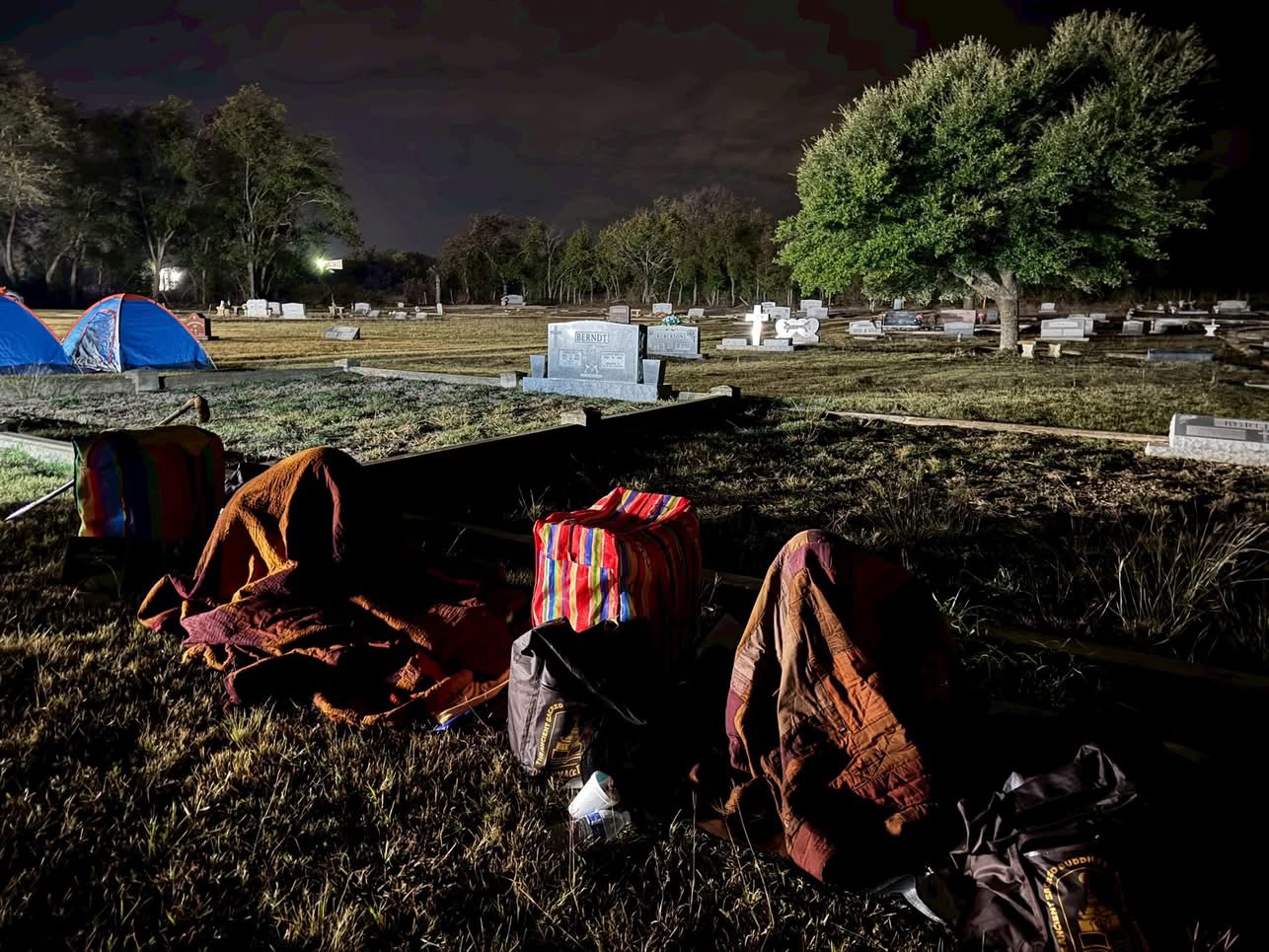
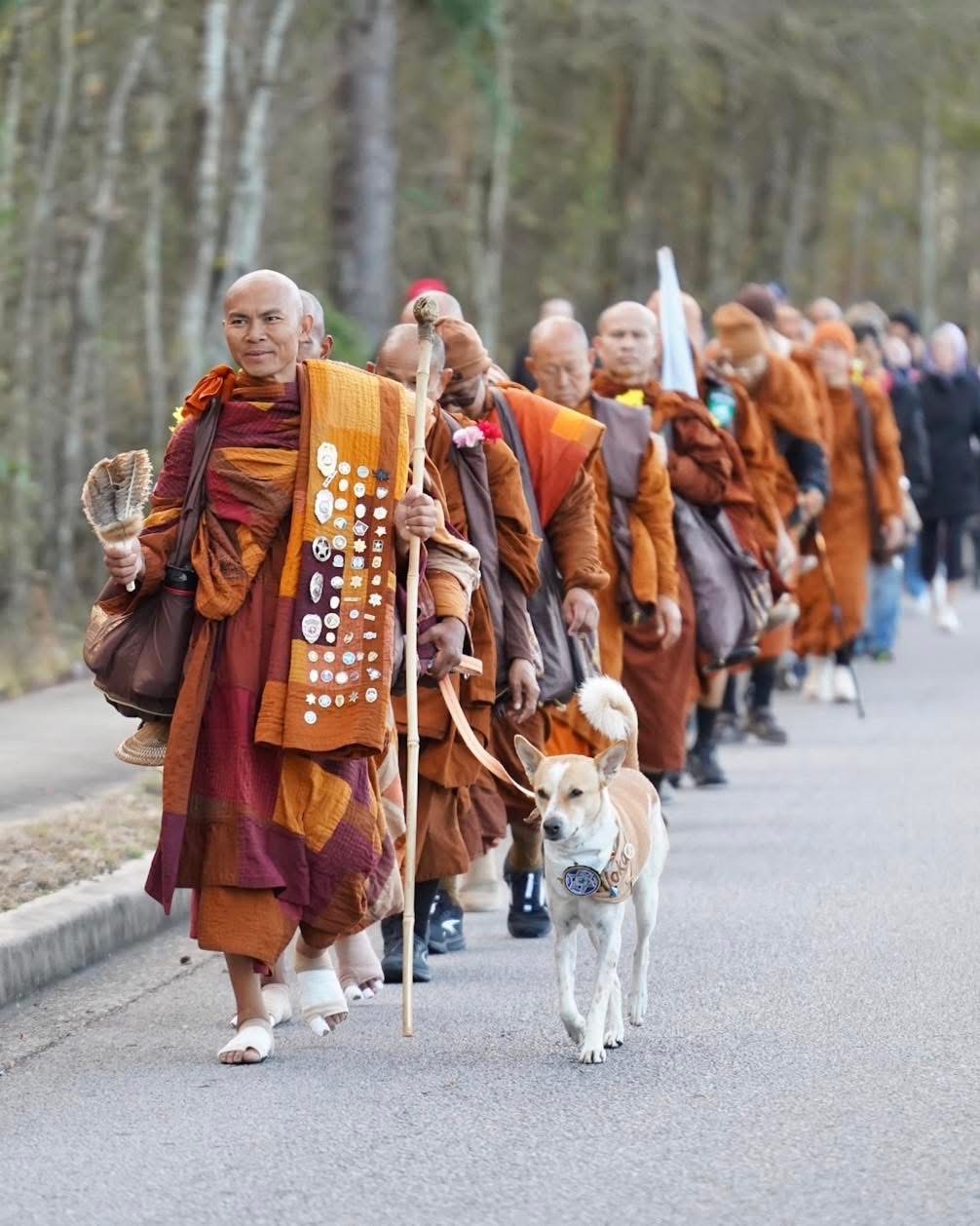
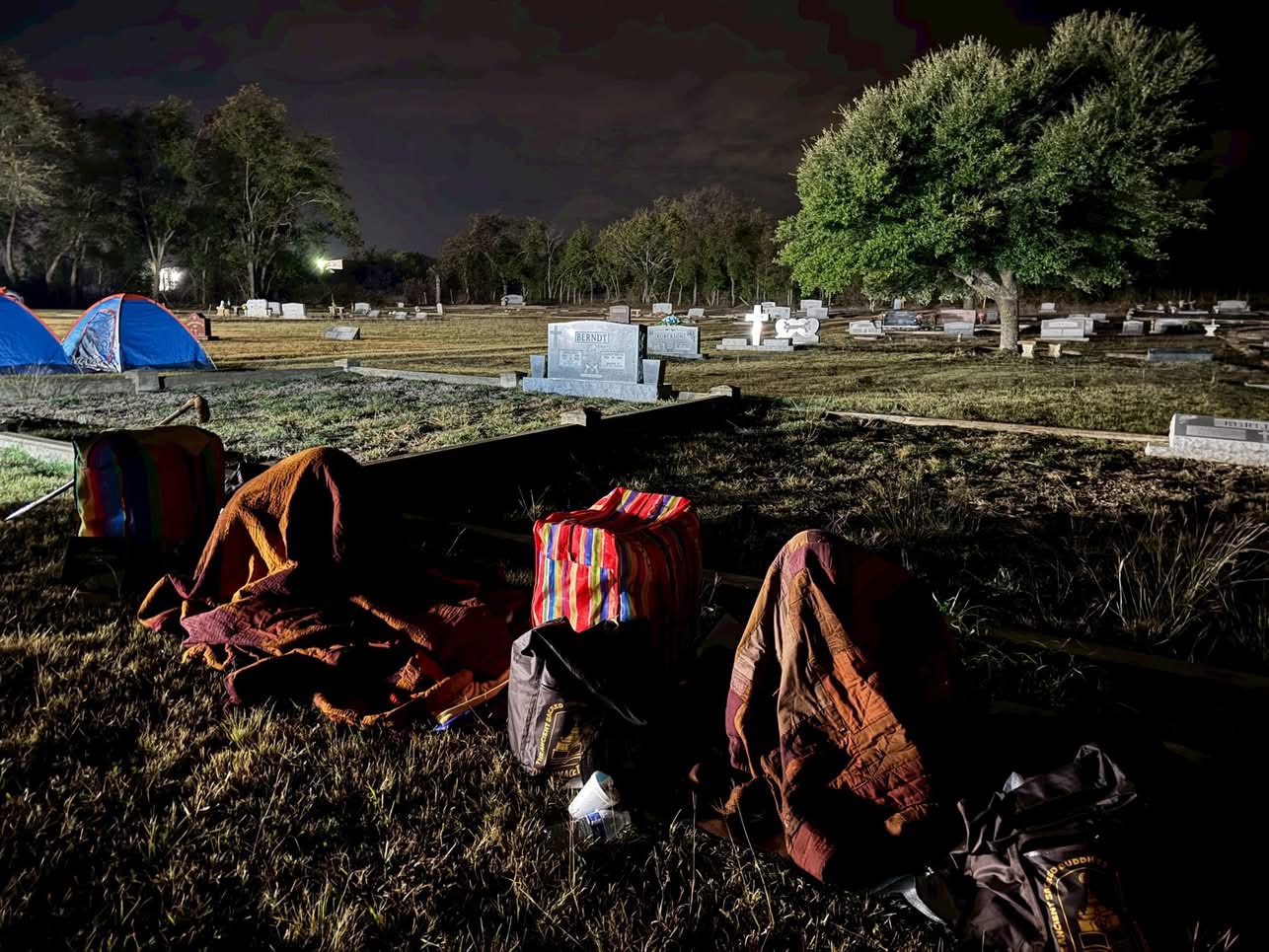
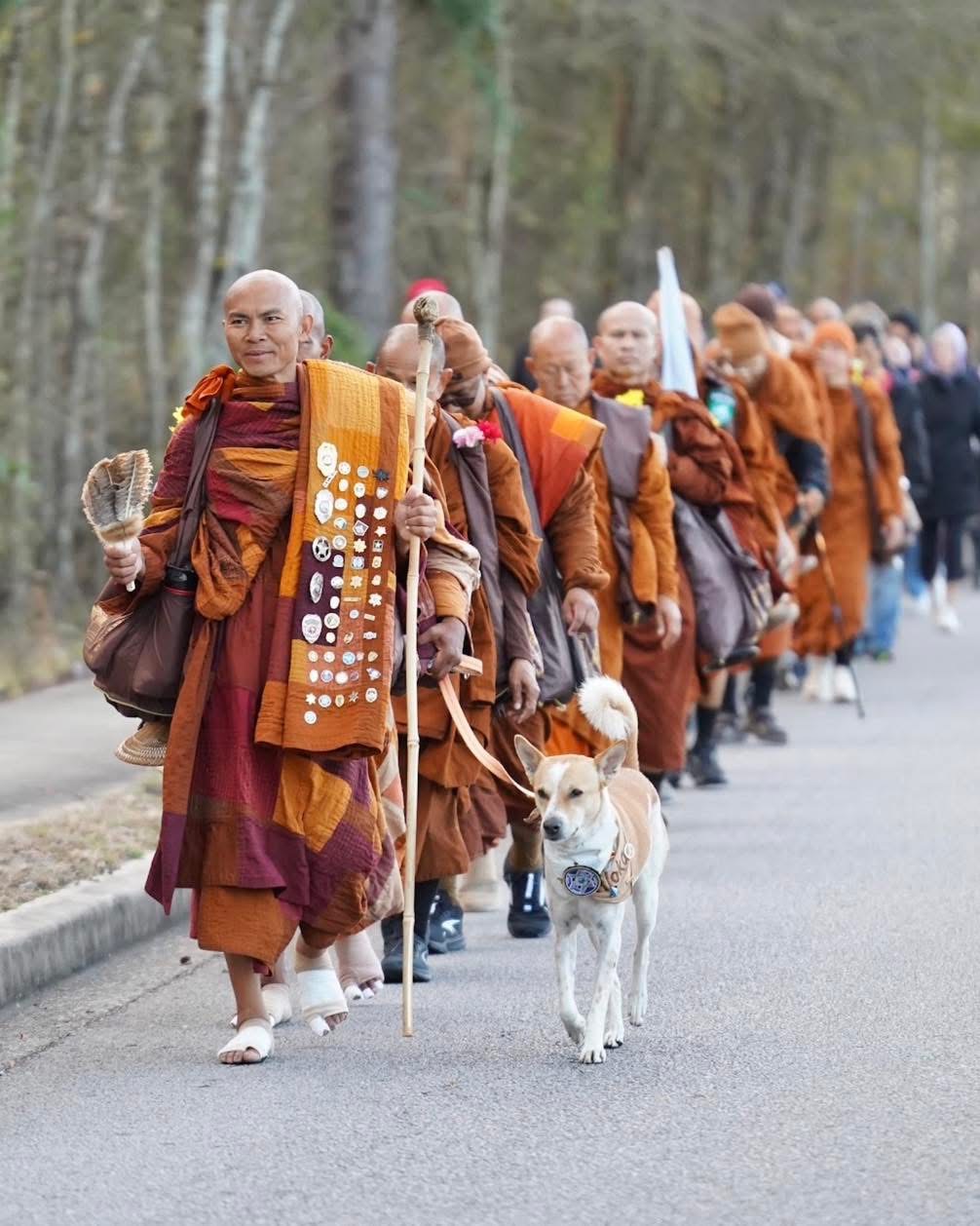
I think of the Thai monks walking north from Texas toward Washington, D.C., mile by mile— more than two thousand— through a winter that does not soften. They walk for months, sleep in tents, with one dog, Aloka, keeping pace.
Each night they stop where the day runs out. That place becomes home for as long as rest requires.
They receive peace while they sleep, gain kindness while they walk, and practice compassion as they rest— things the world easily loses.
Others join them, drawn by what is precious: Buddhists, seekers, and those who recognize the value of these things.
Around them gather those who watch and those who help— police, medics, strangers— and that temporary dwelling, too, becomes a refuge.
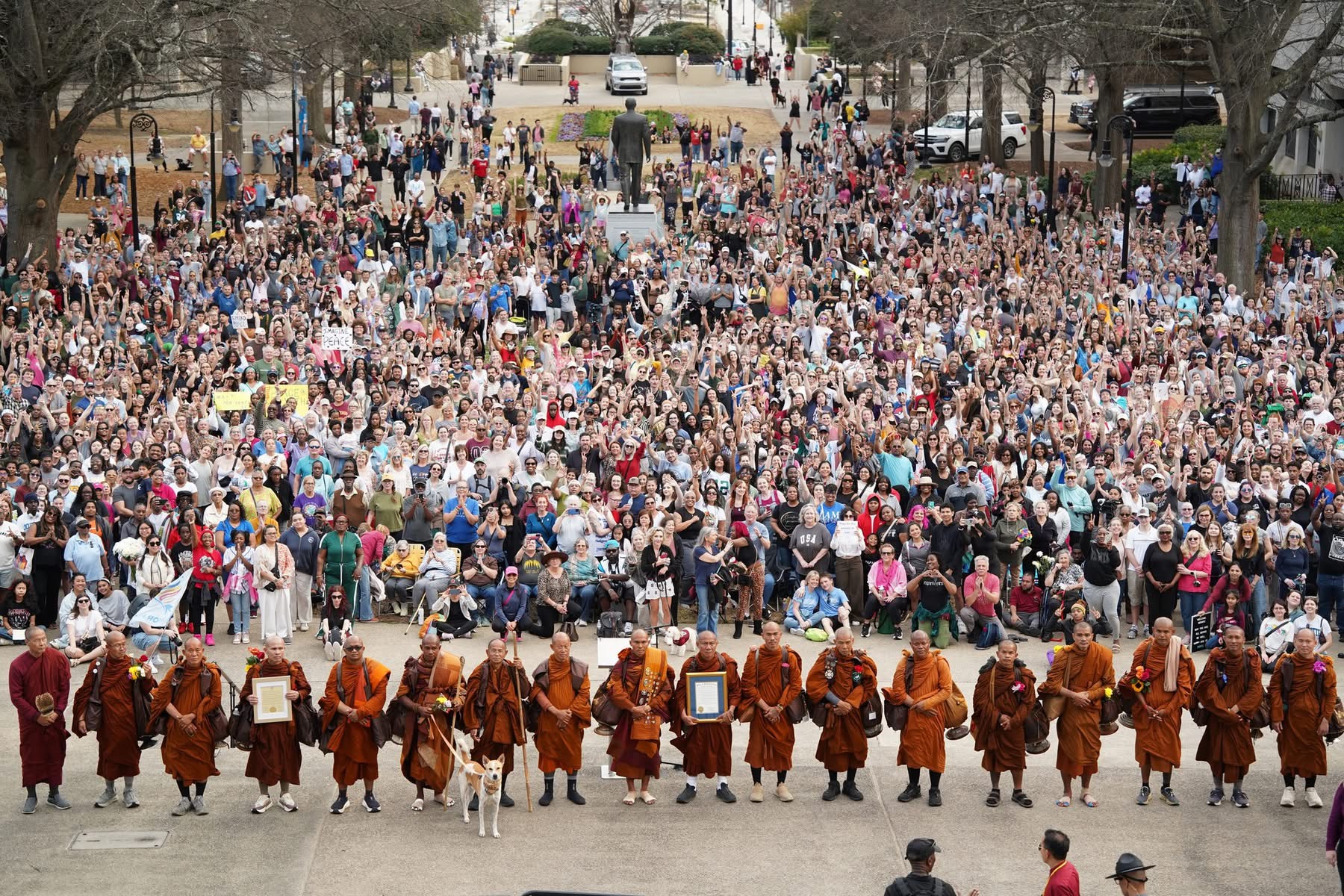
Somewhere along the road, their quiet steps meet the larger crowds of the cities, nameless people walking together for a while. For a moment, the two movements share the same ground, and another dwelling of the heart appears— brief, necessary, gone by evening.
So do not stay. Do not cling. Let yourself flow.
A temporary dwelling is not an empty place. It is a lake of love and justice where all may wade, a small and humble lake into which these things seep quietly— only for a while.
A still refuge.
A temporary place forms as water does— where it is needed, resting in low ground, then moving on again.
Breath passes. Footprints fade. What was shelter becomes sound, becomes wind, becomes lifting mist.
It gathers into a crowd, swells into a roar, and at last opens into a rainbow.
And what remains finally overflows— finding balance where it was scattered— a quiet peace in every household.
Into the lake of humility peace falls without a sound, soft as tears.
From Texas to Washington, D.C., and from here to far away.
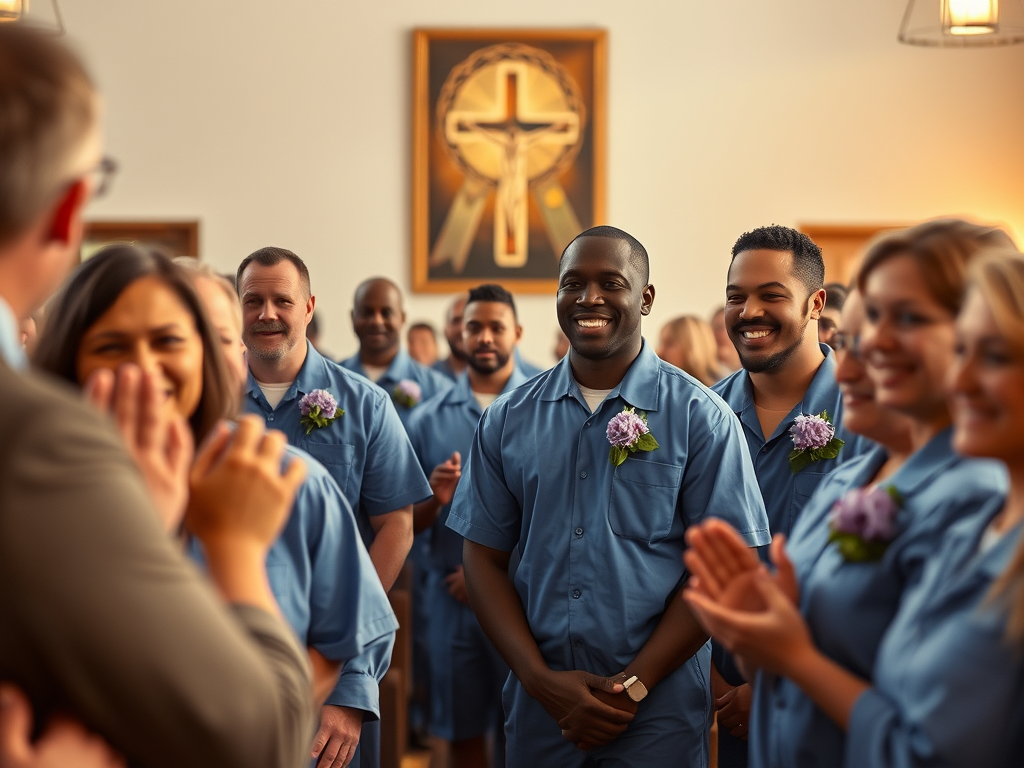
The church decided to invite the inmates who had worked hard on the renovation project and offer them a dinner of appreciation and encouragement. Wearing their neatly pressed blue uniforms and freshly shaved, the inmates entered the fellowship hall prepared by the congregation, looking a bit shy and awkward. As they stepped through the doorway, we rose to our feet and greeted them with applause. Then we pinned on their chests small lilac boutonnieres—buds just beginning to bloom.
After the carefully prepared dinner and dessert, everyone joined in the Holy Communion to which the pastor invited them.
“This bread is the body of Christ, given for you… This cup is the blood of Christ, shed for you… We now go out into the world as the small body of Christ.”
All of us were gently soaked in the warm love of Christ.
After Communion, Harvey Durham, representing the congregation, stood and offered generous words of appreciation and comfort. The inmates responded before the church with sincere gratitude, as though new courage and resolve were rising within them.
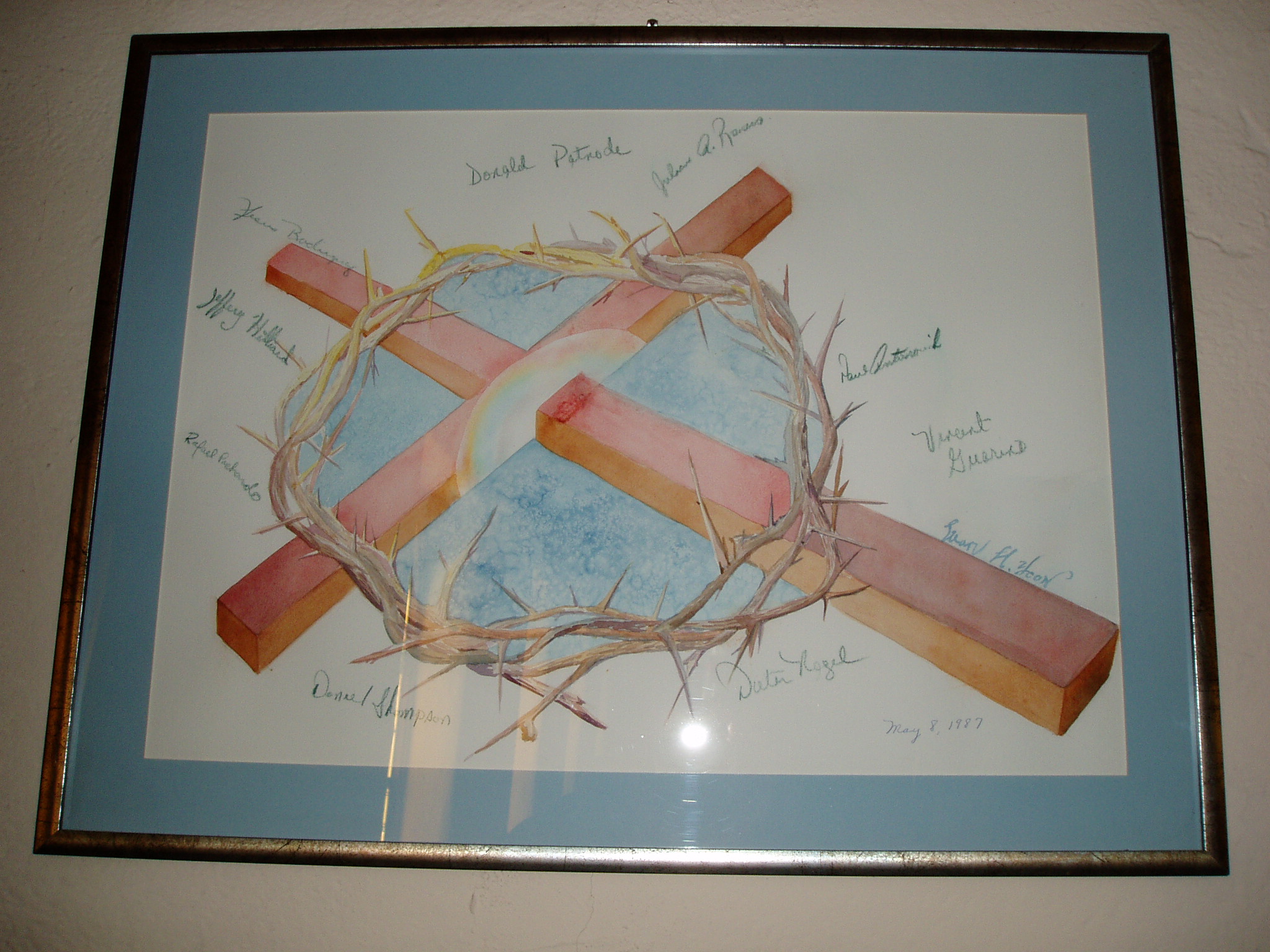
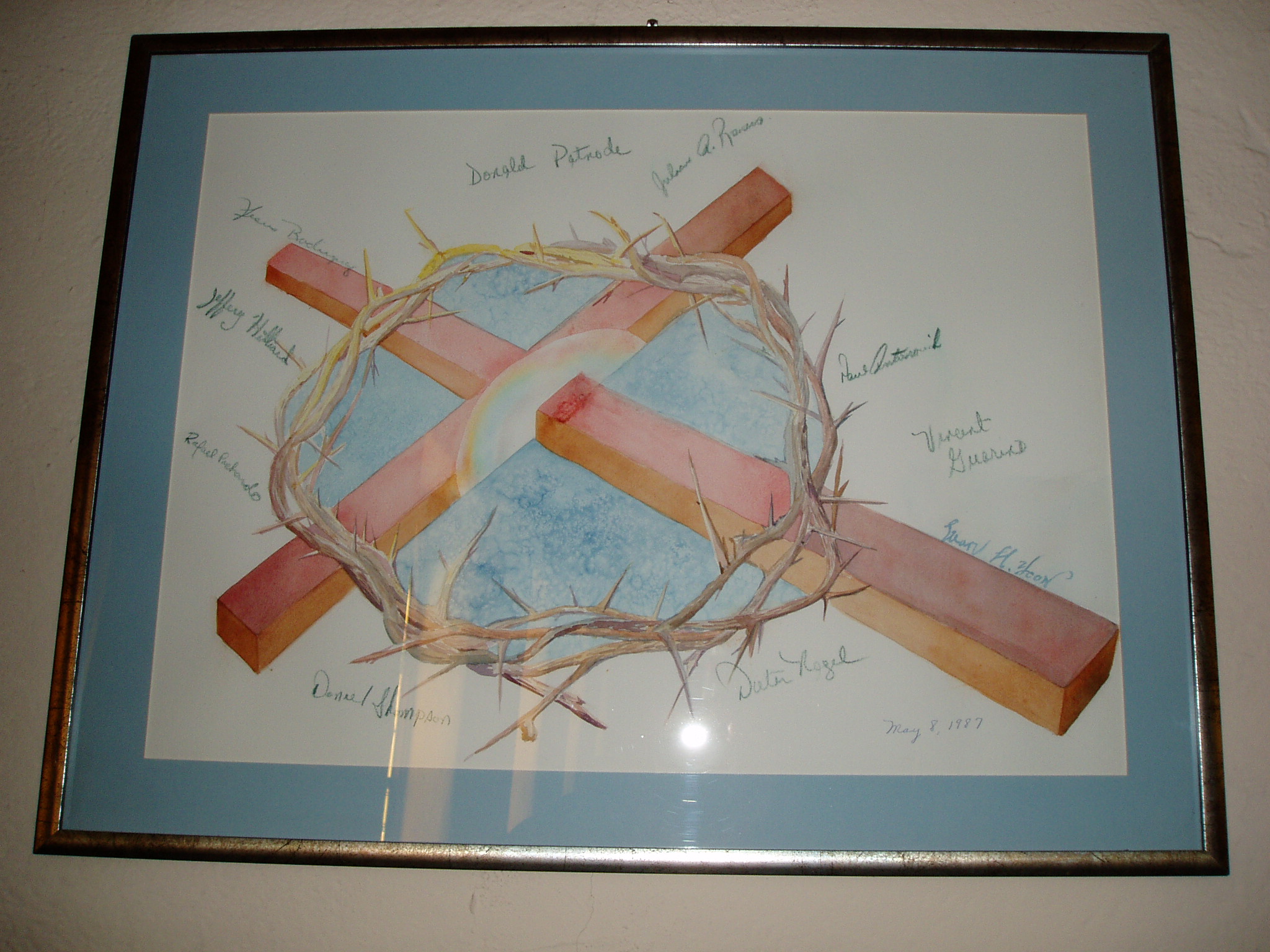
Finally, I stood and unwrapped a painting I had brought. “This picture is my humble attempt to paint the cross I saw in a dream early on Good Friday morning. Please sign your names here. We thank you for your labor, and we pray that wherever you go, God’s guidance will be with you.”
My heart longed for them to be invited into a new world in God. One by one, with solemn expressions, they came forward and signed their names on the painting of the cross—encircled by a crown of thorns and bearing the covenant of the rainbow. Ten inmates, one guard, and my own signature made twelve in all. Though it was only a brief moment, I hoped that moment would become a sign—like a permanent tattoo—of their desire to receive Christ.
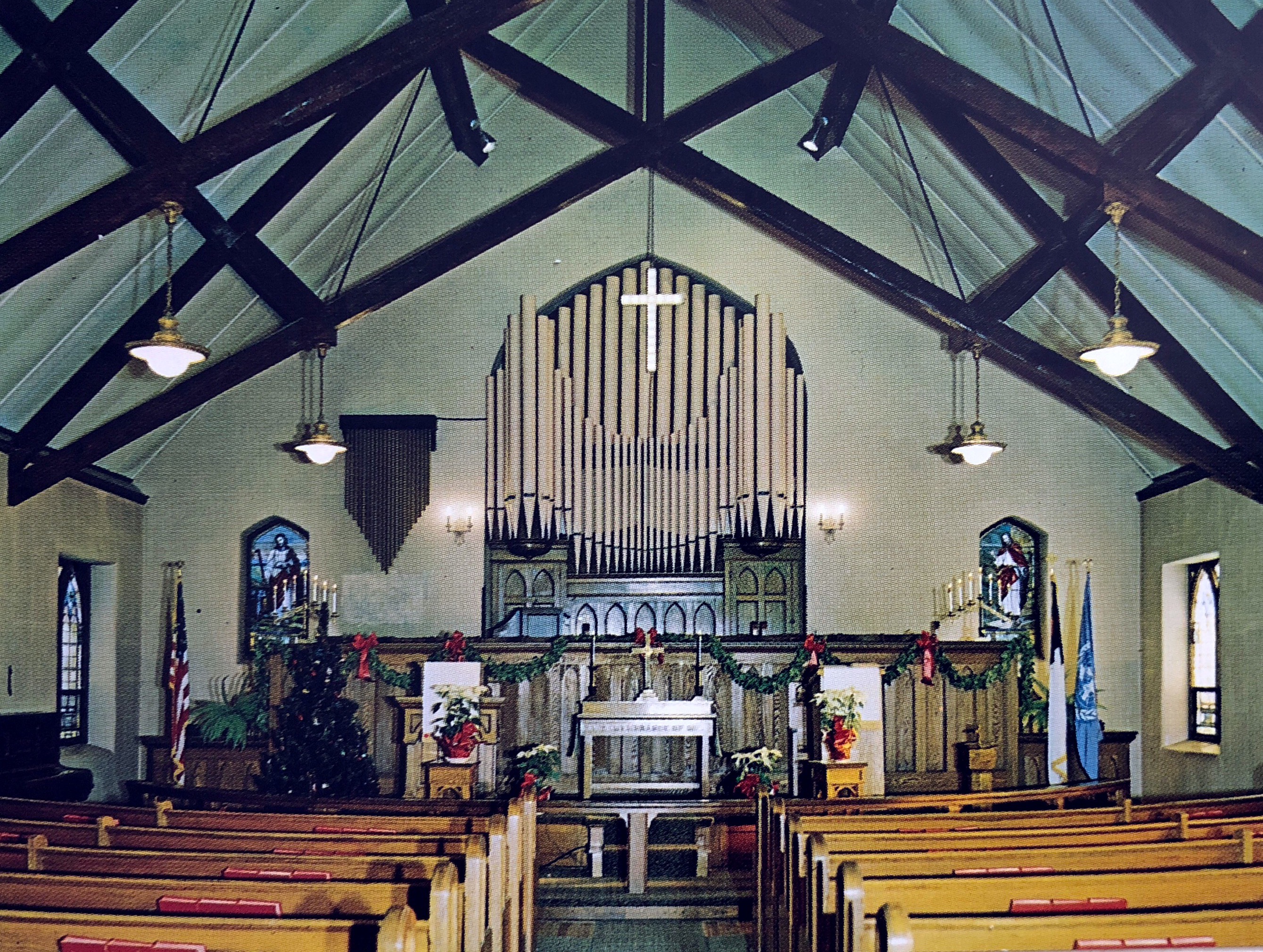
I donated the painting to the church, and the church council decided to hang it on the inner wall of the sanctuary entrance. Even now, the painting hangs on the wall of the First United Methodist Church in Coxsackie, New York.
Though we may not have violated human laws enough to wear blue uniforms, before God’s eyes there is surely little difference between fifty steps and a hundred. “There is none righteous, not even one…” Countless times a day I break God’s law, and each time I must turn back with tears of repentance. Am I not, in truth, wearing a spiritual blue uniform?
As I read the letter again, I could faintly hear the hammering, the buzz of the saws, and the whistling of those days. How are those inmates in blue uniforms—those who signed the wooden cross that evening—living now? Do the others remember that they once wrote their names on that cross? O Lord! Even if they have forgotten, help them realize that their names hang upon Your holy altar!
— Yoon Wan‑Hee, June 1993
Note: About ten years later, in a letter Mr. Harvey Durham sent us, he wrote that one of the ten men had returned with his fiancée to the church and showed her his own signature on the cross painting hanging at the entrance.
교회에서는 보수 공사에 수고한 수인들을 초청하여, 치하와 위로의 만찬을 베풀기로 하였다. 청색의 유니폼을 단정히 입고, 말끔하게 면도를 한 수인들은 조금은 쑥스럽고 수줍을 표정을 지으며, 교인들이 마련한 만찬장에 들어섰다. 우리는 만찬장 입구에 들어서는 그들을 향하여 기립박수를 보내었다. 그리고, 그들의 가슴에 이제 막 꽃망울이 피어오르는 라일락 부캐를 만들어 가슴에 달아주었다. 정성껏 마련한 저녁식사와 디저트가 끝나자, 목사님이 초청하는 성만찬에 모두 참여하였다.
“이 빵은 당신을 위한 그리스도의 몸입니다. … 이 잔은 당신을 위하여 흘리신 그리스도의 피입니다. …우리는 이제부터 그리스도의 작은 몸으로 세상에 나갑니다.“ 우리 모두는 훈훈한 그리스도의 사랑에 촉촉히 젖어 들어갔다.
성만찬 후에, 교인대표되는 하비두람이 일어나, 아낌없는 치하와 위로를 하자, 그들은 새로운 용기와 결단이 솟는 듯이, 교회 앞에 진정한 감사의 화답을 하였다. 나는 마지막으로 일어나 잘 포장된 나의 그림을 뜯으며 말하였다. “여기 이 그림은 지난 성금요일 새벽녁에 꿈속에서 본 십자가를 부족하지만 그린 것입니다. 여기에 여러분들의 이름을 싸인해 주시기 바랍니다. 여러분들의 노고에 감사하며, 여러분들이 어딜가든지 하나님의 인도하심이 함께 하기를 저희들은 기도하겠습니다.” 나는 그들이 하나님 안에서 새로운 세계에 초청되기를 간절히 기도하는 마음이였다. 그들은 엄숙한 모습으로 한 사람씩 나와, 가시관으로 둘러쳐있고 무지개의 언약이 있는 그 십자가 그림 위에 싸인을 하기 시작하였다. 모두 열명의 수인들과 한명의 간수, 그리고 내 싸인까지 합쳐 열두명이 서명하였다. 비록 잠시 잠깐의 순간이지만, 그 순간이 그들의 삶에 그리스도를 영접하겠다는 싸인이 되어, 영원히 문신처럼 남아주기를 바랬다. 그리고, 나는 교회에 그 그림을 헌납하였고, 교회 임원회에서는 성전안쪽 입구의 벽에 걸도록 결정하였다. 지금도 그림은 Coxackie, N.Y에 있는 제일감리교회 벽에 걸려있다.
우리는 비록 인간의 법과 질서를 크게 위반하지 않아 비록 청색 유니폼을 입지 않았어도, 하나님의 눈에는 오십보 백보의 차이도 않될 것임에는 틀림없다. “세상에 의인은 없나니…” 하루에도 수없이 하나님의 법을 거역하고, 돌아서면 또 회개의 눈물을 지어야 만 하는 내 모습 속에, 영적인 청색 유니폼을 난 입고 있진 않는가?
편지를 읽는동안, 그 시절의 망치소리와 기계톱소리, 그들의 회파람 소리가 아련히 들려 오고 있었다. 그 저녁 나무 십자가 위에 서명한 청색 유니폼의 수인들이, 어떻게 살아가고 있을까? 나머지 사람들은 그 때, 그 십자가 위에 자신들의 이름을 싸인했음을 행여 기억하고 있을까? 오! 주님! 지금껏, 행여 기억치 못할지라도, 그들의 이름석자가 주님의 거룩한 제단에 걸려있음을 깨닫게 도와주시옵소서!
– 윤 완희, <1993년 6월>
Note: 약 10년 뒤에 Mr. Harvey Durham이 우리에게 보내준 편지속에는 10명 중 한명이 자신의 약혼녀와 함께 돌아와 교회당 입구에 걸린 십자가 그림속의 자신의 사인을 확인시켜 준었던 일이 있었다고 합니다.
미국인들의 삶 속에 깊이 뿌리박고 있는 것 중에 늘 부러운 것이 있다면 자원봉사입니다. 병원과 학교, 교회등의 단체 뿐만이 아닌, 국제적인 대회나 국내의 각종 대회, 선거에서도 이 자원봉사자들의 결속된 힘은 엄청난 조직력을 갖게되고 이나라를 움직이는 힘이되고 있습니다.
자원봉사자들 가운데는 물질로 자원하는 사람들이 있는가 하면, 자신의 전문직 배경을 살리거나 바쁜 시간을 쪼개어 도움이 필요한 곳에 도움을 주고, 헌신하는 모습들을 보게됩니다. 또한, 어떤이는 자신에게 아무런 탈렌트나 전문적인 지식이 없을지라도, 솔선수범하여 곳곳에서 봉사하기를 즐겨하고 있습니다.
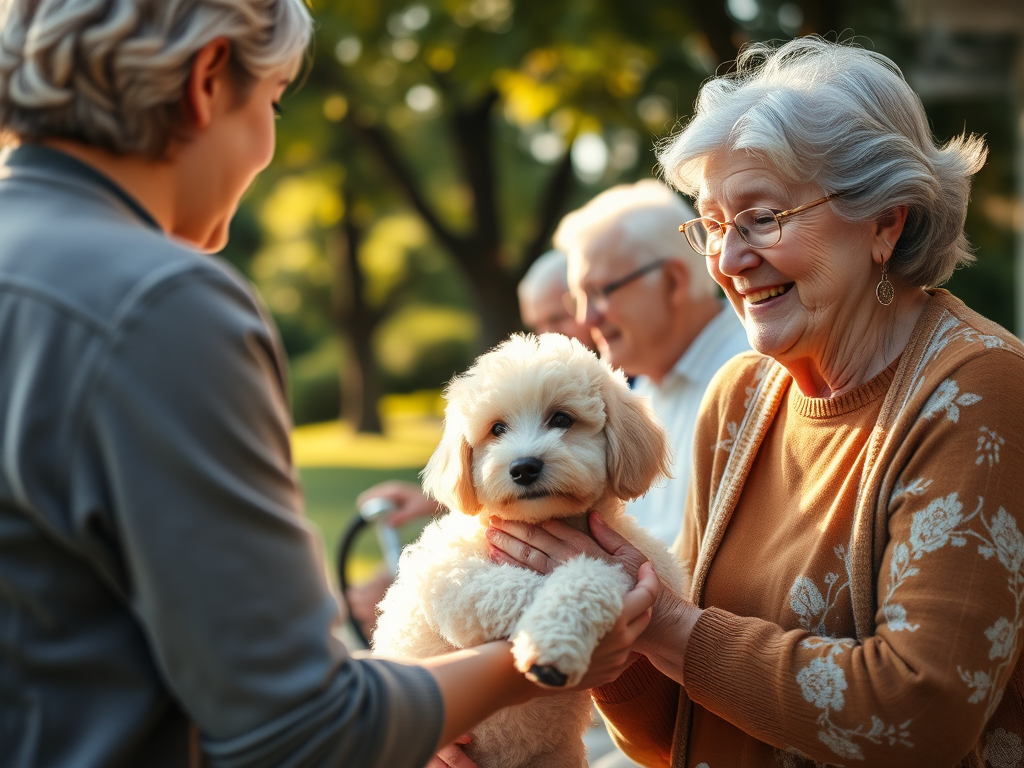
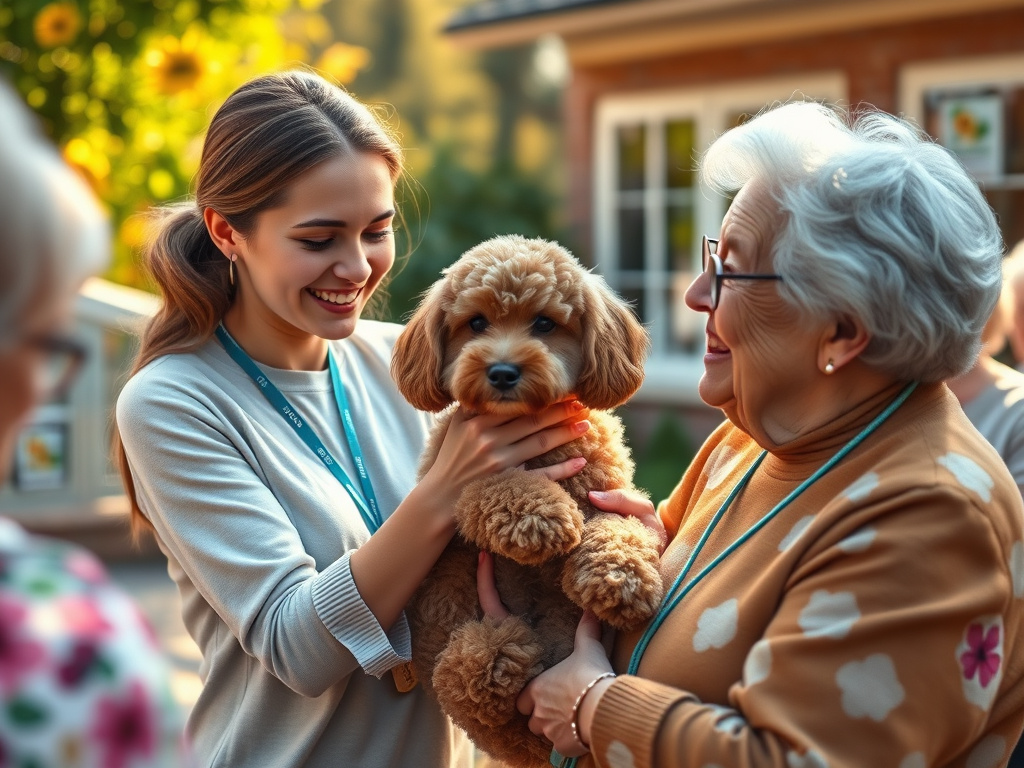
어느 양로원에 토요일마다 가서 봉사하시는 젊은 여성분이 계십니다. 그녀는 토요일마다 집에서 키우는 귀여운 푸들 강아지를 바구니에 담아 양로원을 방문하여, 밖에서 신선한 공기 속에 햇볕을 쬐이고 있는 노인들에게 한차례씩 안겨 드리는 일을 수년째 하고 있습니다. 노인들은 그녀가 나타나기만 기다리고 있다가, 만나면 서로의 안부를 물으며 바구니 속에서 ‘낑낑’거리는 푸들 강아지를 서로 먼저 안아보려고 합니다. 어떤 노인분들은 정신이 혼미한 가운데 계시다가도 얼굴과 손을 마구핥아대며 가슴에 따뜻하게 와닿는 생명의 퍼뜩임 속에 부시시 눈을 뜨시며 기뻐하는 모습을 발견케 됩니다. 그녀는 노인들이 푸들 강아지를 쓰다듬기도 하고, 안아보기도 하고, 장난도 치고, 이야기하는 것을 뿌듯한 모습으로 바라보다가 집으로 돌아가곤 합니다.
뉴욕의 집없는 이들을(Partnership of Homeness )위해 일하고 있는 부랜다 헤밀톤(Ms. Branda Hemilton)이라는 여성은 홈레스들의 복지를 위해 사무실에서 일을 하면서도 자청하여, 홈레스들을 위하여 일주일에 몇차례씩 교회당 지하에서 그들과 함께 자면서, 그들을 섬기는 삶을 살고 있습니다. 그녀는 어떤 날에는 30여명의 남자 홈레스들을 혼자돌보며 밤을 새우기도 하는데, 조금도 무섭거나 두렵지 않다는 것입니다. 오히려 그들이 이 젊고 아름다운 부랜다를 서로 보호해주려고 애쓴다는 것입니다. 그녀는 자원봉사에서 오는 기쁨과 보람을 더많은 사람들이 체험하기를 바라고 있습니다.
동네마다 있는 축구팀들과 야구팀등의 각종 운동팀들을 이끌어 나가는 코치들과, 흩어져 있는 음악인들을 모아 오케스트라를 이끌어 나가는 음악인들, 위급환자들을 위한 자원 엠블란스 팀, 동네의 안전과 범죄예방을 위해 소방소와 경찰서를 돕고 있는 자원봉사자들, 외국인 중환자들을 위해 그들의 보호자가 되어 병실을 찾아주거나 통역을 담당하고, 회복을 위해 집을 내어주고 운전을 맡아하는 자원봉사자들… 그들이 시간과 물질을 자진하여 헌신하면서 얻어지는 기쁨이 얼마나 큰 것인지는 경험치 않고는 상상 할 수 없습니다.
우리 주변에도 이러한 일들을 알게 모르게 실천하며 사시는 분들이 계십니다. 어느 성도님은 양로원에 계신 할머니를 자신의 어머니와 같이 정성과 사랑을 기울여 정기적으로 찾아뵙고, 한국음식도 때때로 갖다가 드리어 잘잡수시는 것을 보람으로 여기며 기뻐하는 것을 보게 됩니다. 두 분들은 만나기만 하면 서로의 손을 꼭잡으며 체온과 체온을 확인하시며 서로 눈시울을 말없이 적십니다. 양로원에 계신 할머니는 딸 같은 분이 정기적으로 찾아와 주는 것이 너무 고마워 마음을 표현하고 싶지만 줄 것은 없으니 안타까워하다가, 자신이 썼던 일회용 종이 접시를 모아 뒷면에 서툰 꽃 그림들을 정성껏 볼펜으로 그리어 두었다가 주시는 것을 보게됩니다.
몇달전 교회에 노총각이 결혼을 하게 되었는데, 그의 결혼을 특히 축복하고 기뻐하는 한그룹이 있었습니다. 그 그룹은 교회의 연세가 많으신 노인들이셨는데, 그 노총각은 차가 없는 노인 분들을 주일마다 교회에 모셔오고 가는 자원봉사를 7년을 하였습니다. 젊은이가 주일날 데이트 할 시간도 없이, 아침부터 저녁까지, 눈이 오나 비가 오나 종일 노인들을 모셔왔다가 예배가 끝나면 모셔다 드리는 일은 쉬운 일은 아니었을 것입니다. 그럼에도 그는 아무런 불평이나 공치사없이 결혼하기 2주전까지 교회 밴을 몰았습니다. 교회는 그에게 신혼에 충실하라고 일년동안의 자원봉사 자격을 박탈(?) 하였고, 그는 하나님의 축복 속에 아름답고 신앙이 좋은 신부와 함께 신혼의 복된 즐거움 속에 살아가고 있습니다.
또한, 코마로 반년 이상 누워있는 성도를 위해 밤 낮으로 기도해주고 정기적으로 찾아가는 성도들의 발걸음. 동네에 차가 없는 노인들을 위해 병원과 시장, 교회에 운전해주는 성도들, 우리의 이세들을 위해 한글학교 교사로, 주일학교 교사로, 자원봉사하는 이들의 수고와 헌신은 이 땅에 어둠을 물리치는 빛으로 남게됩니다.
우리의 무거운 죄의 억눌림을 보다 못해 최초의 자원봉사자로 오셔 값없이 생명을 주신 예수그리스도를 생각합니다. 그는 십자가를 자원하여 지시며 죽기까지 자신을 비우셨습니다. 주님의 자원된 고난과 사랑이 이 땅에 있기에 이 빛 속에 우리의 미래와 생명은 영원한 보존 속에 살게되었습니다. 자원봉사는 인간이 하나님의 거룩한 사역에 가장 가까이 참여할 수 있는 지름길 중에 하나인 것 같습니다.
Among the many things deeply rooted in American life, one that I have always admired is volunteerism. Not only in hospitals, schools, and churches, but also in international events, national competitions, and even elections, the unified strength of volunteers forms an extraordinary organizational force—one that helps move this nation.
Some volunteers give financially; others offer their professional skills or carve out precious time from busy schedules to help where help is needed. Still others, even without any particular talent or expertise, joyfully take the initiative to serve wherever they can.
There is a young woman who volunteers at a nursing home every Saturday. For years, she has placed her adorable poodle in a basket and visited the residents, handing the little dog to each elderly person sitting outside in the fresh air and sunlight. The residents wait eagerly for her arrival. When she appears, they greet her warmly and try to be the first to hold the poodle whining softly in the basket. Some residents, who seem lost in confusion, suddenly brighten—opening their eyes as the dog licks their hands and faces, feeling the warm spark of life against their chest. The young woman watches with satisfaction as they pet, hold, play with, and talk to the little dog, and then she quietly returns home.
Another woman, Ms. Branda Hamilton, works for the Partnership of Homelessness in New York. Though she works in the office for the welfare of the homeless, she also volunteers several nights a week to sleep in the church basement with them, serving them with her life. Some nights she stays awake caring for more than thirty homeless men by herself, yet she says she is never afraid. In fact, the men try to protect this young and beautiful Branda. She hopes more people will experience the joy and fulfillment that come from volunteer service.
There are coaches who lead neighborhood soccer and baseball teams, musicians who gather scattered performers to form orchestras, volunteer ambulance teams for emergency patients, volunteers who assist fire stations and police departments for community safety, and volunteers who become guardians for foreign patients—visiting hospital rooms, interpreting, offering their homes for recovery, and driving them where they need to go. The joy that comes from giving one’s time and resources freely is something unimaginable unless experienced firsthand.
Around us, too, there are people quietly living out this spirit. One church member regularly visits an elderly woman in a nursing home, caring for her as if she were her own mother—bringing Korean food she enjoys and finding joy in seeing her eat well. Whenever the two meet, they hold each other’s hands tightly, sharing warmth and silently wiping their eyes. The elderly woman, grateful for these visits yet having nothing to give, collects the disposable paper plates she has used and draws simple flower pictures on the back with a ballpoint pen—offering them as gifts.
A few months ago, a longtime bachelor in our church finally married. A particular group rejoiced more than anyone—the elderly members of the church. For seven years, this young man had volunteered every Sunday to drive elderly members without cars to and from church. Rain or snow, morning to evening, he served without complaint or recognition, even up to two weeks before his wedding. The church “suspended” his volunteer duties for a year so he could devote himself to newlywed life. Now, under God’s blessing, he enjoys a joyful marriage with a beautiful, faithful bride.
There are also those who pray day and night and visit regularly a church member who has been in a coma for more than six months; those who drive elderly neighbors to hospitals, markets, and church; those who volunteer as teachers in Korean school and Sunday school for the sake of our children. Their labor and devotion remain as light that pushes back the darkness of this world.
I think of Jesus Christ, the first volunteer, who could not bear to see us crushed under the weight of our sin and freely gave His life. He willingly carried the cross and emptied Himself unto death. Because His voluntary suffering and love remain in this world, our future and our lives are preserved eternally in His light. Volunteer service, I believe, is one of the shortest paths by which human beings may participate in the holy work of God.
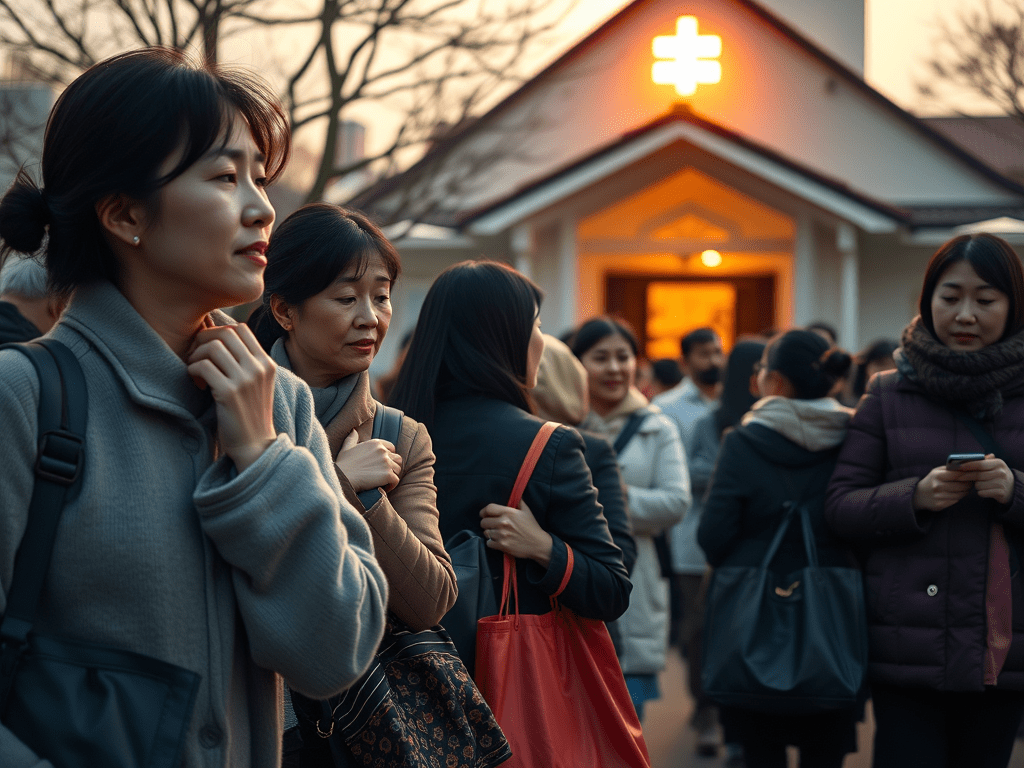
The early‑morning prayer service is a special spiritual meeting time that God has given to our Korean people. When Koreans first began settling in the Flushing area of New York, the local police were puzzled for quite some time. Around five o’clock every morning, groups of Asian women carrying handbags would hurry off somewhere and then return a little later. Curious, the patrolling officers followed them—only to discover that they were all entering buildings with church signs. And this was not during a special revival week, but every day of the year, rain or snow, in every season. The officers were astonished at the depth of Korean faith.
The pastor’s home is also busiest at dawn. At five o’clock, the loud alarm rings, the shower ends, clothes are put on, and we head out to church. After Scripture reading, hymns, and prayer at six o’clock, we immediately visit patients in the hospital, and by the time we return home it is already ten in the morning. Breakfast at that hour always awakens a hearty appetite. These days, with the children on vacation, we can linger in the sanctuary without rushing—reading the Word, meditating, and praying—and it brings a fresh joy. Just as the earth breathes, the breath of prayer between God and me enriches the day and, in deep peace, guides the direction of my life through God’s gentle voice.
In prayer, we meet countless people. We travel to many places and share their dreams and visions. Sometimes, in physical exhaustion, we doze while kneeling; sometimes our prayers wander without focus. Yet through all those days, the Lord always meets us and remains with us. In the early morning, when I come before Him with many requests, the Lord sometimes answers through silence, sometimes through Scripture, and sometimes through a deep peace that settles in my heart.
There are times when the Lord demands something strongly from me—He asks for patience. Like water in a pot that boils quickly and cools just as fast, my emotional impulsiveness needs correction. Through long periods of silence, the Lord helps my prayers stand firmly on the rock. Through my clumsy prayers, God has poured countless answers and miracles into my life. Through prayer, God gives me the ability to touch the hidden pains buried deep in another person’s soul.
Once, at a prayer meeting, I held hands with someone I had never met before and prayed. In that brief kneeling moment, I could feel the tangled, weary sorrows embedded deep within that person’s heart. Their torn and bruised pain was so intense that my throat tightened, and I could not help but weep and pray earnestly for them. After the prayer, we embraced, both sensing God’s healing and restoration.
Prayer travels faster than any superhighway. Today’s world speaks of the “information superhighway,” and nations wage invisible wars over information. Once information becomes known, it can generate wealth; thus, information is called the bread and rice of modern times. Yet the speed of prayer surpasses even the superhighway. The moment we close our eyes, prayer reaches any place in the world—and even the throne of the Lord.
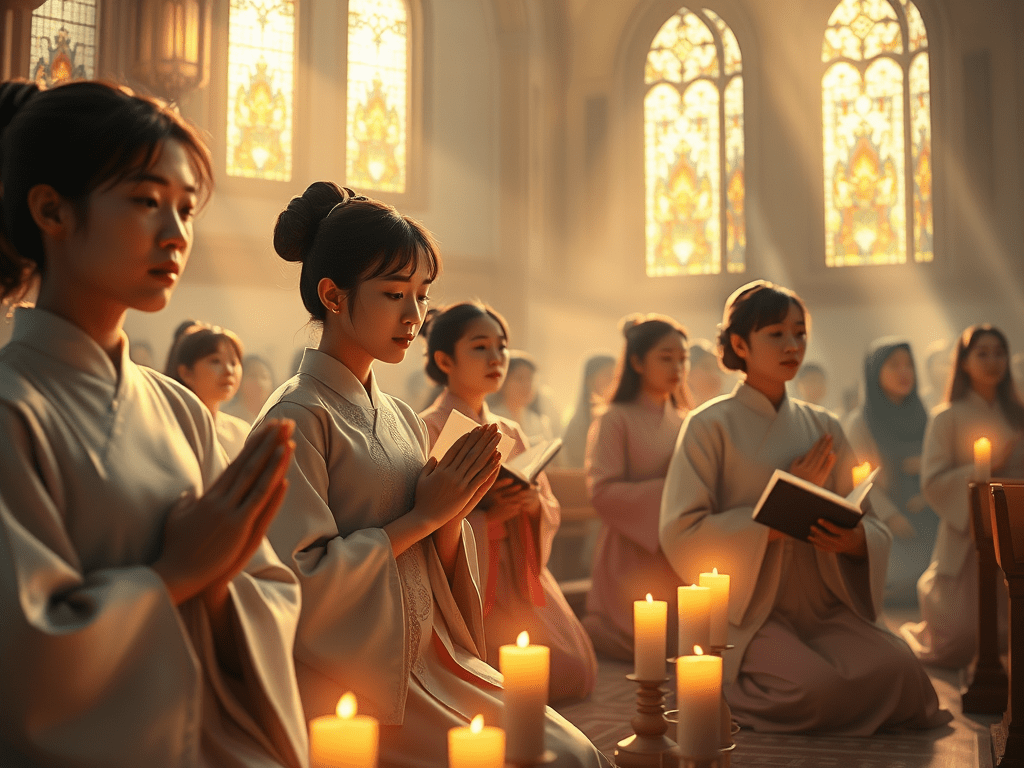
Before the day begins, the fragrance of the saints’ prayers rising into the New York sky at dawn fills me with joy.
새벽기도회는 하나님이 우리 한민족에게 주신 특별하신 영적인 만남의 시간입니다. 뉴욕의 후러싱지역에 한국인들이 정착하기 시작하면서부터, 한동안 각 지역 경찰들이 소동이 난일이 있다고 합니다. 이상하게도 새벽 5시 무렵이면, 가방을 든 동양여인들이 어딘지 모르게 바쁘게 몰려 갔다가 돌아 가는 모습이었습니다. 순찰을 돌던 경찰들은 이상한 예감에 이 여인들을 따라가 보니, 한결같이 교회간판이 있는 곳으로 들어 가는 것이었습니다. 그것도 특별한 부흥회 기간 만이 아닌, 사시사철, 눈이 오나 비가 오나 그 행렬은 골목마다 이어지고 있었기에 한국인들의 신앙심에 새삼 놀랐다는 이야기입니다.
새벽 시간의 목사관도 하루 중, 가장 바쁜 시간임에 틀림없습니다. 새벽을 깨우는 요란한 시계소리와 함께 5시면 샤워가 끝나고 옷을입고, 교회를 향하여 집을 나서는 시간입니다. 그리고, 6시에 있는 성경읽기와 찬송, 기도를 마치고 바로 병원에 있는 환자를 찾아가 병문안하고 집에 돌아오면 오전 10시가 됩니다. 그 시간에 돌아와 대하는 아침식사는 늘 우리에게 왕성한 식욕을 불러 일으킵니다. 요즈음엔 아이들이 방학이라서 아침시간에 서두름없이 느긋하게 성전에서 말씀읽고 묵상하며, 기도할 수 있어 새로운 기쁨을 만끽하게 된답니다. 땅이 숨을쉬듯이 나와 하나님과의 기도를 통한 호흡은 하루의 삶을 윤택하게 할 뿐 아니라, 깊은 평화 속에 하나님의 미세한 음성 속에 하루의 삶의 방향을 움직일 수 있게됩니다.
우리는 기도 속에 수많은 사람들과 만납니다. 그리고, 여러 곳을 여행하며 그들의 꿈과 비젼을 함께 나눕니다. 때로는 육신의 피곤함 속에 엎드려 졸기도 하고, 기도 줄이 잡히지 않아 중언부언 하기도 합니다. 그러나, 그 많은 날들에는 늘 주님이 만나주시고 함께하심을 늘 체험합니다. 새벽시간이면 늘 많은 것을 요구하며 졸라대는 저에게 주님은 때로는 침묵으로 말씀을 대언하시기도 하고, 때로는 성경말씀으로, 때로는 마음에 깊은 평안으로 저의 모든 기도에 응답하십니다.
그러나, 주님이 저에게 강력히 요구하실 때도 있습니다. 그것은 저에게 인내를 요구하실 때입니다. 냄비에 올려놓은 물처럼, 금방 끓었다가 금방 식어버리는 저의 감정적인 습성을 고치기 위하여, 주님은 오랜 침묵을 통하여 저의 기도가 반석에 설수있도록 도우시기도 합니다. 아직도 저의 서툰기도를 통해 하나님은 얼마나 많은 응답과 기적을 내 삶에 베푸셨는지 모릅니다. 기도를 통해, 하나님은 이웃의 심령 깊은 곳에 숨어있는 아픔을 하나하나 만져 볼 수 있는 힘을 주십니다. 어느 기도회의 모임에서 전혀 모르는 이와 함께 두 손을 마주잡고 기도해 본적이 있습니다. 잠시의 무릎꿇음 속에 저는 그의 심령 깊은 곳에
내재해 있는 삶의 뭉치고 시달린 아픔들을 만져 볼 수 있었습니다. 상대방의 갈갈이 찢기고 멍든 아픔들이 얼마나 고통스러웠는지 저는 목이 매인채 눈물을 흘리며 그를 위해 간절히 기도하지 않을 수 없었습니다. 기도 후에 우리는 하나님 안에서 치료되고 온전케 됨을 똑같이 느끼며, 얼싸 안은적이 있습니다.
기도는 슈퍼 하이웨이보다도 빠른 스피드가 있습니다. 현대를 정보 슈퍼 하이웨이의 시대라 하여, 국가와 국가 간의 보이지 않는 정보전쟁이 대단합니다. 어떤 정보든지 세상에 알려지기만 하면 그것이 돈을 만들어냅니다. 그래서, 정보는 현대의 빵이며 쌀이라고 불려지기도 합니다. 하지만, 슈퍼 하이웨이보다도 더 빠른 기도의 스피드는, 눈만 감으면 세계 어느 곳은 물론이요, 주님의 보좌 앞으로 나아갑니다.
하루 일과가 시작되기전, 새벽에 엎드려 기도하는 성도들의 기도의 향기가 왠지 뉴욕하늘 곳곳으로 퍼져 올라감을 생각하니, 절로 기쁨이 솟구칩니다.






You must be logged in to post a comment.