I call the names of those who rose—
from furrows, from hunger, from the dust of the earth—
the people who learned that a human being is heaven
and stood upright with that sky in their chests.
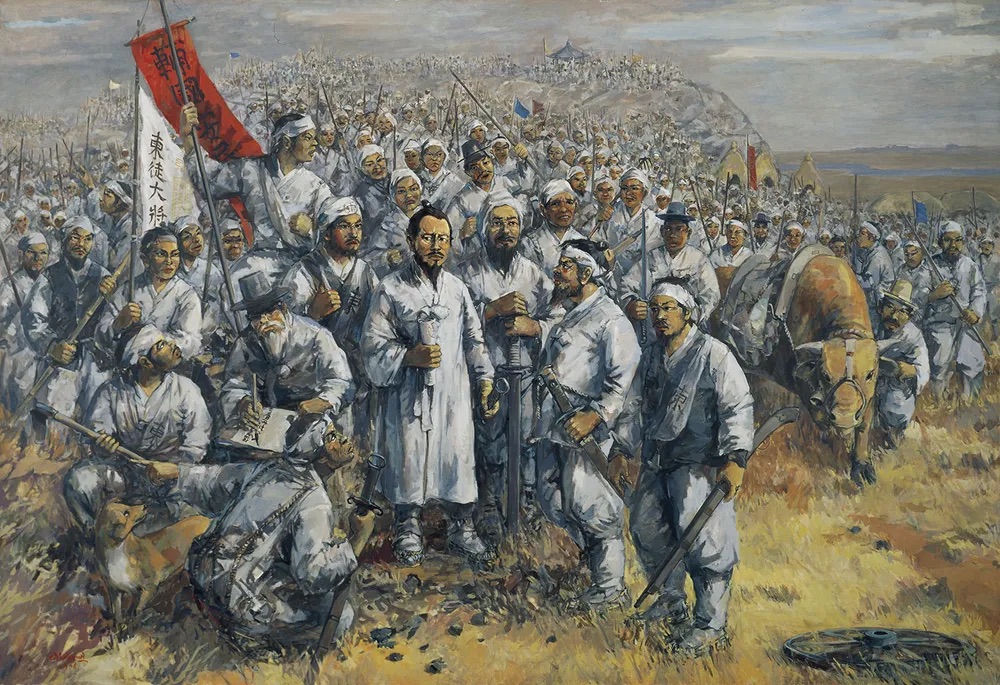
I call Suun,
who split the world with one sentence
and made the lowly tall.
I call the farmers of 1894,
burning the chains,
lifting bamboo spears like lightning,
walking into the iron storm
with nothing but equality for armor.
I call Ugeumchi—
the great falling,
the red field,
the thunder of thirty thousand souls
whose breath rose again
in 3·1,
in 4·19,
in 5·18,
in the candles that lit the night,
in every cry that says
the people are the root of the nation.
I call the forgotten ones,
the mislabeled ones,
the descendants who carried shame
that was never theirs.
I call the reckoning—
the day the nation will say:
We remember you.
We honor you.
We rise because you rose.
동학 is not past.
동학 is the fire under our Constitution,
the sky inside our breath,
the thunder still walking the land.
I widen the self— a river growing through silence, even as the world tries to erase silence with noise, machines, endless invitations to become something else.
Still, I seek the quiet: the breath before dawn, the small interior room where the soul remembers how to listen.
Rituals once shaped us— a cup passed, a gesture repeated, a meal shared, a song held for remembrance. They taught us to pause, to gather, to bless, to belong.
Now they fade. Habit becomes optimization. Identity becomes a project. Relationship becomes an upgrade. The heart becomes something to manage.
So I deepen the individual— not as a fortress, but as a field wide enough for others to walk through.
I am memory and possibility, silence and song, faith and doubt— a river carrying many waters.
We call productivity’s frantic rhythm, freedom.. We call exhaustion achievement. We turn the self into a brand and the heart into a task.
But I resist. I want to breathe without producing, sit without performing, listen without calculating, love without measuring.
My old creature still lives in me— survival, pleasure, power, desire. I teach desire toward compassion, power toward responsibility, survival toward care. Even the animal of Imperial Christianity*in me longs for a ritual to bow, to bless, to belong.
I heard beyond Golgotha Hill, “The good heart is deeper than religion.” Kindness becomes ritual. The human face becomes temple. Shared breath becomes scripture.
I do not abandon faith. I deepen it— from possession to participation, from certainty to wonder, from doctrine to compassion, from belonging to one group toward belonging to humanity.
I am not a single note, but a chord— animal and spirit, solitary and communal, wounded and hopeful, remembering and becoming.
And you— walking this trembling earth— you contain multitudes. You are a river. You carry forgotten songs beneath the noise.
Perhaps your silence is waiting to become prayer. Perhaps your kindness is waiting to become ritual. Perhaps your wound is waiting to become a doorway.
O world, rest. O capitalism, yield. O rituals, return as living gestures. O heart, refuse to become a machine.
Let us remember how to gather, how to listen, how to bless, how to belong.
I deepen. I widen. I become.
And in becoming myself, I discover— I am never only myself.
* Imperial Christianity (How Constantine Created the Christian Right) by Wayne Lavender, Market Square Books
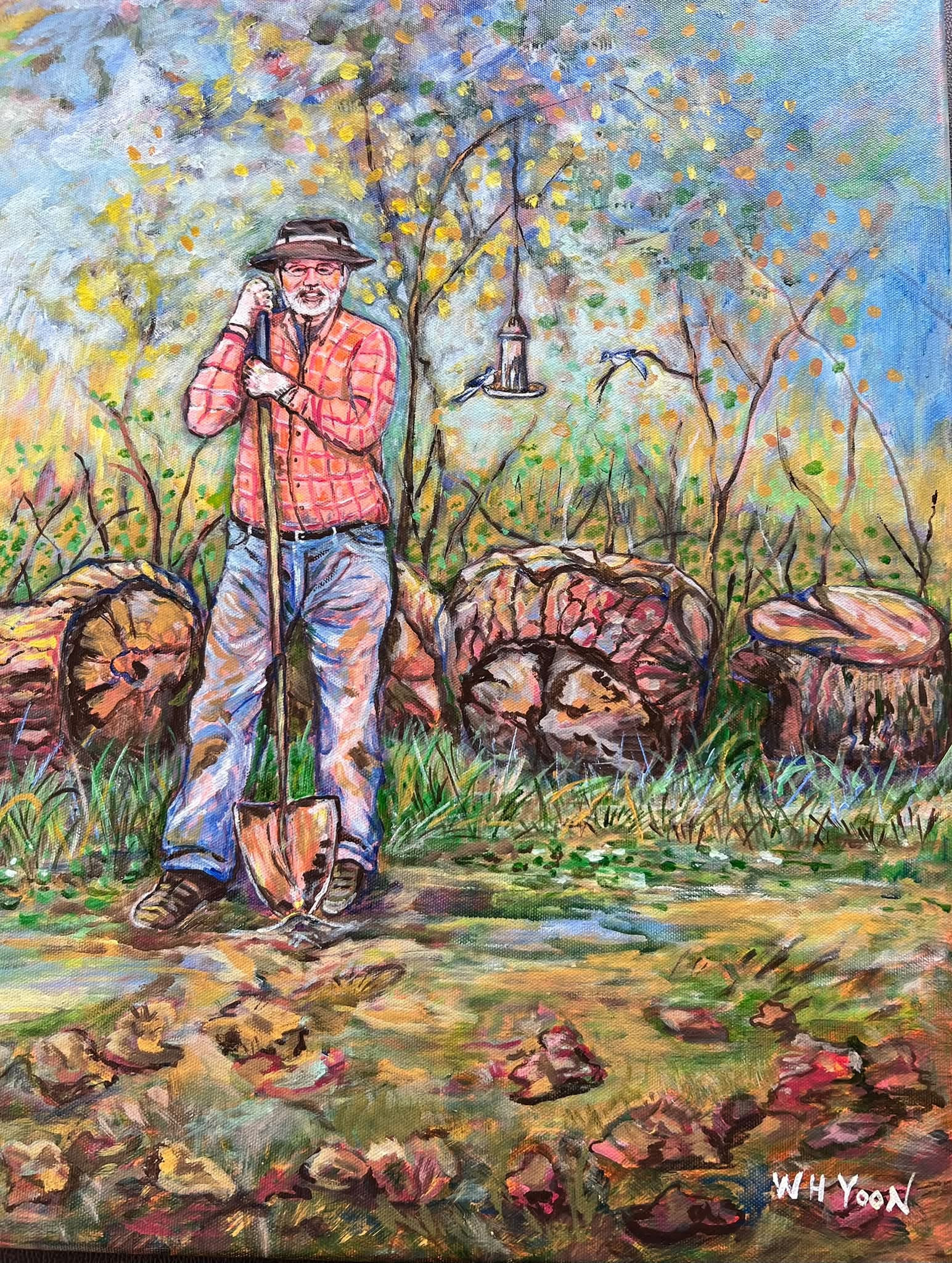
– TaeHun Yoon, 8/20/2026
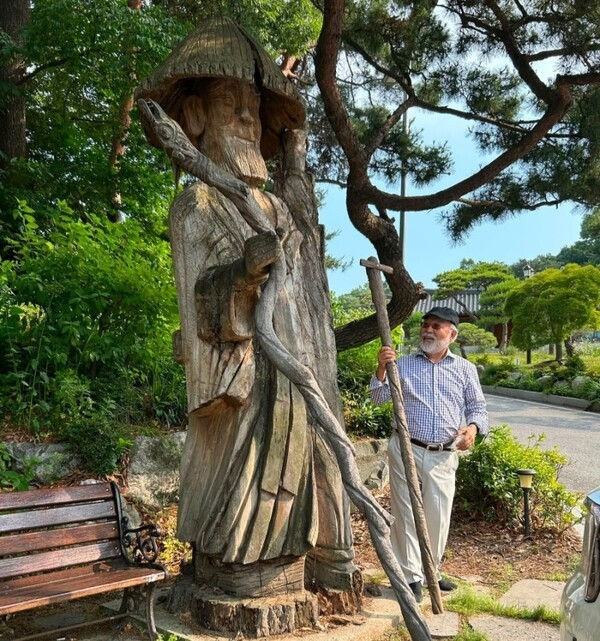
I took this picture on my iPhone on August 20, 2026, at 9:47 p.m.
I do not write to follow rules or to walk the tidy paths someone else laid down.
I write because something inside me has begun to speak— a small trembling voice that feels less like my own and more like a visitor sent by God.
For years I kept my inner life hidden. Grief folded quietly into the corners of the heart. Joy guarded like a fragile flame. Regret carried behind a practiced smile. I learned to appear whole even when something inside me was quietly breaking.
But a heart cannot hold everything forever. One day the silence cracks, and truth rises— slowly, then suddenly— like a long‑sleeping mountain finding its fire again.
So I write.
Not because I am wise, but because poetry lets me say what I could never say aloud: I was hurt. I was grateful. I feared. I hoped. I failed. I loved. I am learning.
Sometimes my poems feel like small apologies— to those I misunderstood, to those I wounded, and to the younger self who waited so long to be spoken for.
Writing gives regret a place to breathe. It gives gratitude a voice. It gives sorrow a shape. It gives joy a room to dance.
And I write because I am an introvert walking quietly through a loud world. Conversation hesitates. Words tangle. But a poem— a poem travels freely, crossing the distance between two hearts without knocking.
Somewhere, a stranger may read my lines and whisper, “I have felt this.” And suddenly we are no longer strangers. Two quiet souls meet inside a single moment.
This is tenelach— the soul‑friendship that happens without introduction, without biography, without explanation. A meeting of hearts in the quiet space where God often speaks.
I write also to touch the unseen consciousness moving through the world— someone in Korea, someone in America, someone I will never meet. Yet for one breath our souls lean together over the same flame.
And perhaps there is a deeper reason still.
I want to enter a timeless place— a place where clocks cannot reach me, where my aging body does not have the final word, where imagination is free, where beauty does not die.
Perhaps I want to live beyond myself— not in monuments, not in stone, not even in memory, but in the breath of a poem. A line may travel farther than the life that made it. A heart may stop, but a poem may continue breathing.
And then— I am still there. Not as a body, but as a presence. Not as a name, but as a feeling. Not bound by time, but released into it.
So I write.
I write when I am joyful. I write when I am grieving. I write when regret knocks. I write when silence grows heavy. I write when beauty surprises me. I write when memory rises like smoke. I write when a new thought opens like a flower in the dark.
I write because my heart has finally learned that it does not need to remain silent.
Let the poem come as it wishes— like rain, like fire, like a wandering bird crossing the evening sky. Let it tremble. Let it wander. Let it breathe.
Because poetry is not something I force. It is something that happens when my inner life meets the presence of God and begins to speak.
This is the song of my soul. This is my way of being with God— as a tenelach, a quiet companion walking beside the Eternal with trembling hands and an open heart.
And when my hands grow still, when my voice becomes quiet, perhaps somewhere a stranger will open a poem and find me there— still breathing, still wondering, still loving, still becoming.
This is why I write poems.
Not to obey rules, but to free the heart. Not to escape life, but to enter it more deeply. Not to live forever in the body, but to remain alive in imagination and in the hearts of those I may never know.
The phrase sounds simple, but it carries a powerful invitation: do not remain trapped in the waters of yesterday. Swim toward a horizon neither generation owns.
Imagine two people standing beside the same Korean sea.
One is Generation X, represented here by an older Korean who has lived through war memories, dictatorship, industrialization, democratization, immigration, and the long discipline of survival. He has learned to value endurance. He remembers when a telephone was a luxury, when information traveled slowly, and when young workers could disappear into factories without the world noticing.
The other is an MZ young person, born into a digital Korea, connected instantly to people across continents. She carries a smartphone instead of a paper map. She speaks through images, music, video, and networks. She has grown up in a world of artificial intelligence, robotics, global entertainment, and rapidly changing ideas about work and identity.
At first, they may appear to belong to different worlds.
Yet they are not two oceans.
They are two swimmers in the same ocean.
That is the heart of “Swim as Jubilee.”
Jubilee, in its biblical meaning, points toward release, restoration, return, and a new beginning. In Leviticus 25, the Jubilee year was associated with liberty, restoration of property, and limits on exploitation.
That ancient vision speaks surprisingly well to our technological age.
Perhaps the Jubilee we need today isn’t simply a date on a calendar. Perhaps it is a new relationship between generations.
Perhaps it is the courage to say:
Your future doesn’t threaten my past.
And:
Your past doesn’t have to imprison my future.
1. Generation X: The Swimmer Who Learned to Survive
Generation X, in this poem, is more than an age group.
He is a character.
Let us call him Han.
Han was raised in a Korea where history was not something found only in textbooks. History lived in the streets, in family stories, in poverty, in political fear, in factories, in student movements, and in the determination to build something better.
He learned early that survival required endurance.
His generation saw Korea transform from a country struggling with poverty into a global technological and cultural power. They watched highways expand, factories rise, cities change, universities grow, and democracy become a hard-won reality.
They learned to work.
They learned to sacrifice.
They learned to wait.
They learned that nothing valuable comes easily.
And because they learned those lessons through experience, they sometimes worry about the younger generation.
Han looks at the MZ generation and wonders:
Why don’t they endure hardship the way we did?
Why do they change jobs so quickly?
Why do they question authority?
Why do they insist on work-life balance?
Why do they speak so openly about mental health, identity, fairness, and personal freedom?
From Han’s perspective, the young can sometimes seem impatient.
But Han must also remember something important:
The world the MZ generation inherited is not the world he inherited.
The rules have changed.
Technology has changed.
Work has changed.
Communication has changed.
Even the meaning of success has changed.
Han’s generation often asked:
“How can I survive?”
The MZ generation increasingly asks:
“Why should I live this way?”
That isn’t necessarily rebellion.
Sometimes it is the beginning of wisdom.
2. The MZ Generation: The Swimmer Who Refuses the Old Shore
Now meet the second character.
Let us call her Minju.
Minju belongs to the MZ generation, broadly understood in Korea as Millennials and Generation Z.
She has never known a world without the internet.
She can speak with someone in London while sitting in Seoul.
She can watch a Korean musician perform before millions of people around the world.
She can ask artificial intelligence to translate a language, analyze information, create an image, or help write a program.
She doesn’t see national borders in quite the same way Han does.
Her imagination is global.
She sees possibility everywhere.
But Minju has her own burdens.
She lives in a world of intense competition, economic uncertainty, digital pressure, social comparison, climate anxiety, and rapid technological change.
She may have more information than any previous generation, yet information doesn’t always give her wisdom.
She may have thousands of online connections, yet loneliness can still be real.
She may have unprecedented freedom of expression, yet she can also feel trapped by algorithms, expectations, and constant comparison.
Minju therefore needs something Han possesses:
historical memory.
But Han needs something Minju possesses:
imagination.
This is where the two swimmers begin to understand one another.
3. Generation X and MZ: Two Characters, Two Strengths
The comparison becomes clearer when we place the two characters side by side.
Generation X / 7080 Character
MZ Character
Remembers scarcity
Expects possibility
Values endurance
Values authenticity
Trusts experience
Questions assumptions
Learned through sacrifice
Learns through networks
Thinks historically
Thinks globally
Respects institutions
Examines institutions
Protects tradition
Experiments with tradition
Builds patiently
Moves rapidly
Remembers physical struggle
Faces digital pressure
Carries memory
Carries imagination
Asks, “What have we survived?”
Asks, “What can we become?”
Neither character is complete by herself.
Han has memory without Minju’s speed.
Minju has speed without all of Han’s memory.
Han knows where some roads lead because he has already walked them.
Minju sees roads that Han could never have imagined.
Therefore, the answer isn’t for one generation to defeat the other.
The answer is collaboration.
Wisdom must meet imagination.
Memory must meet possibility.
Experience must meet experimentation.
Tradition must open its windows toward the future.
That is the deeper meaning of swimming together.
4. Jubilee: An Ancient Word for a New Generation
The biblical idea of Jubilee offers an extraordinary framework for this conversation.
Leviticus 25 describes a fiftieth year marked by release and restoration. The text connects Jubilee with liberty, return, land, community, and restraint against exploitation.
The number 50 therefore becomes more than mathematics.
It becomes a symbol.
Fifty says:
Begin again.
Return what has been lost.
Release what has become a burden.
Repair what has been broken.
Stop treating one another merely as economic instruments.
Remember that land, life, and community are not simply commodities.
That ancient principle can challenge our modern world.
What would Jubilee mean in an age of artificial intelligence?
Perhaps it would mean that technology must serve people rather than reduce people to data.
What would Jubilee mean for workers?
Perhaps it would mean that productivity cannot become the only measure of human worth.
What would Jubilee mean between generations?
Perhaps it would mean releasing one another from old stereotypes.
The older generation must be released from the accusation that it is simply “old.”
The younger generation must be released from the accusation that it is simply “selfish.”
Both judgments are too small.
Human beings are always larger than labels.
5. The World Is Swimming Faster
The ocean has become turbulent.
Three astronauts cultivating rice in space may sound like science fiction, but the image captures a profound truth: humanity is becoming a species capable of carrying agriculture, biology, and imagination beyond Earth.
At the same time, robots are entering ordinary life.
They can walk.
They can speak.
They can carry objects.
They can assist people.
They can translate.
They can perform physical tasks.
They can learn patterns.
They can become companions and workers.
And artificial intelligence is accelerating the transformation.
The question is no longer simply:
What can machines do?
The deeper question is:
What should machines do?
Technology can multiply human strength.
But technology cannot automatically tell us what strength is for.
A machine can optimize.
A machine can calculate.
A machine can follow instructions.
But humanity must still decide what deserves to be protected.
That is why the future cannot be left to engineers alone.
Nor can it be left to politicians alone.
Nor corporations alone.
Nor military planners alone.
The future requires poets, teachers, scientists, workers, parents, young people, elders, theologians, artists, and citizens.
Above all, it requires conscience.
6. AI, Robots, and the Moral Question
Artificial intelligence introduces a question that previous generations could hardly imagine.
What happens when intelligence moves faster than conscience?
A machine may be able to make a decision in milliseconds.
But human beings must ask whether the decision is just.
A robot may be able to identify a target.
But who determines whether the target should ever have been attacked?
An algorithm may be able to predict behavior.
But who protects the dignity of the person being predicted?
A computer may be able to sort millions of people into categories.
But who prevents those categories from becoming instruments of discrimination?
This is where Han and Minju must meet.
Han carries the memory of what happens when institutions become more powerful than people.
Minju carries the imagination needed to navigate a technological future.
Together, they can ask better questions.
The goal isn’t to stop technology.
That would be impossible.
The goal is to humanize technology.
Technology needs ethics.
Intelligence needs wisdom.
Power needs restraint.
Innovation needs responsibility.
And perhaps most importantly:
Efficiency needs compassion.
7. Jeon Tae-il: When a Young Man Became Fire
To understand why memory matters, we must remember Jeon Tae-il.
He was a young garment worker in Seoul who became a symbol of labor rights and human dignity.
His story belongs to Korea’s past, but his question remains alive.
He saw workers suffering under harsh conditions and asked whether laborers could be treated as human beings.
His protest became an act of extraordinary sacrifice.
The young worker became fire.
The fire became testimony.
The testimony became a movement.
His story reminds us that social change often begins not with powerful institutions but with one person who refuses to accept the unacceptable.
This is why Han cannot simply tell Minju:
“You young people don’t understand.”
Han must instead say:
“Let me tell you what we saw.”
And Minju must answer:
“Then let me show you what we might build.”
That is the beginning of intergenerational dialogue.
Jeon Tae-il’s legacy can therefore become a bridge.
His generation fought to establish the dignity of workers.
The MZ generation now faces questions about dignity in an automated economy.
The struggle has changed.
The human question has not.
What does it mean to live like a human being?
That question still burns.
8. BTS and the New Language of Youth
Then another sound rises from Korea.
Music.
BTS.
Bangtan Sonyeondan—often translated as “Bulletproof Boy Scouts”—became a global cultural force whose name itself evokes protection against pressures directed toward young people.
Their significance isn’t merely musical.
Their journey illustrates how Korean youth culture crossed national borders.
The older generation remembers Korea as a country receiving culture from abroad.
The younger generation has watched Korean culture travel outward.
That reversal matters.
Korean youth aren’t merely consumers of global culture.
They are creators of it.
BTS also developed the phrase “Beyond the Scene,” a name that beautifully fits the central movement of this poem.
Beyond.
The word suggests movement.
Beyond the old boundary.
Beyond fear.
Beyond prejudice.
Beyond the expectations imposed by society.
Beyond the scene others have prepared for us.
That is precisely what Minju wants.
She doesn’t want merely to inherit the world.
She wants to reinterpret it.
9. From “Bulletproof” to “Beyond”
There is an interesting movement here.
A generation begins by needing protection from the bullets of criticism, prejudice, competition, and social pressure.
Then it discovers that protection alone isn’t enough.
Eventually, it must move beyond defense.
This is the movement from bulletproof to beyond.
It is also the movement from survival to creativity.
Han’s generation learned survival.
Minju’s generation wants transformation.
But survival and transformation aren’t enemies.
Survival creates the ground on which transformation becomes possible.
The older generation protected something precious.
The younger generation can take that inheritance somewhere new.
That is why the two generations should not stand opposite one another.
They should stand together.
10. The Bridge Between 7080 and MZ
The bridge between generations cannot be built by nostalgia alone.
Nostalgia says:
“Things were better when we were young.”
That may feel comforting, but it isn’t enough.
Neither can the bridge be built by technological excitement alone.
Technology says:
“Everything new must be better.”
That isn’t true either.
The bridge requires humility.
Han must admit:
“I don’t understand everything about your world.”
Minju must admit:
“I don’t understand everything about the world you inherited.”
Those two sentences can change a family.
They can change a church.
They can change a workplace.
They can change a nation.
When generations stop trying to win the argument, they can begin listening.
And when they listen, they discover something surprising:
Both generations are afraid of losing something.
Han fears that the sacrifices of his generation will be forgotten.
Minju fears that her future will be determined by people who don’t understand it.
Han wants remembrance.
Minju wants freedom.
Jubilee can hold both.
11. Memory Is Not a Prison
Memory has two possibilities.
It can become a prison.
Or it can become a foundation.
When Han says, “We suffered,” he must not mean, “Therefore you must suffer.”
Instead, he can say:
“We suffered so you might have to suffer less.”
That is the noblest form of generational memory.
The purpose of remembering Jeon Tae-il isn’t to romanticize suffering.
It is to prevent unnecessary suffering.
The purpose of remembering authoritarianism isn’t to remain permanently angry.
It is to protect democracy.
The purpose of remembering poverty isn’t to shame those who struggle.
It is to build a society where fewer people must experience it.
Memory becomes beautiful when it becomes wisdom.
12. Imagination Is Not Rebellion
Likewise, Minju’s imagination should not automatically be dismissed as rebellion.
When young people question old institutions, they may sometimes be wrong.
Of course they can be impatient.
Of course they can make mistakes.
But questioning can also be an expression of moral seriousness.
Every generation must ask:
Why are we doing this?
Who benefits?
Who is excluded?
Who pays the price?
Can we do better?
A healthy society needs those questions.
The young should not inherit every tradition simply because it is old.
The old should not reject every new idea simply because it is unfamiliar.
Jubilee creates space for both.
13. A New Social Contract for the Technological Age
The future will require a new social contract.
It must address work.
Education.
Privacy.
Artificial intelligence.
Robotics.
War.
Climate.
Migration.
Aging.
Youth employment.
Economic inequality.
Digital citizenship.
The central principle should be simple:
Human beings must never become secondary to the systems they create.
A society can become highly efficient and still become deeply unjust.
A nation can become technologically advanced and still lose its soul.
A company can become enormously profitable and still fail its workers.
A person can become digitally connected and still become spiritually isolated.
Therefore, progress must be measured by more than speed.
We should ask:
Does technology increase human dignity?
Does innovation widen opportunity?
Does economic growth reduce unnecessary suffering?
Does artificial intelligence strengthen human responsibility?
Does democracy become more participatory?
Do younger and older people have meaningful places at the table?
Does the planet remain habitable?
These questions are part of Jubilee thinking.
14. What the 7080 Generation Can Give the MZ Generation
Han has gifts.
He can offer:
Historical memory
He remembers what happens when freedom is taken for granted.
Patience
He knows that meaningful change often takes decades.
Resilience
He has learned how to continue after disappointment.
Community
He remembers when neighbors depended on one another.
Responsibility
He understands that freedom carries obligations.
Perspective
He knows that today’s crisis may look different from tomorrow’s distance.
These are not small gifts.
But they become gifts only when offered humbly.
Wisdom becomes burdensome when it demands obedience.
Wisdom becomes beautiful when it becomes generosity.
15. What the MZ Generation Can Give the 7080 Generation
Minju also has gifts.
Imagination
She sees possibilities beyond inherited structures.
Digital fluency
She understands the language of the emerging technological world.
Global awareness
She naturally crosses borders of language and culture.
Creativity
She turns music, design, video, technology, and storytelling into new forms of expression.
Courage to question
She is often willing to ask uncomfortable questions.
Adaptability
She has grown up in a world where change is normal.
These gifts are essential for the future.
The older generation doesn’t need to become young again.
It needs to remain teachable.
16. Swim Beyond the Scene
The phrase “Beyond the Scene” becomes a powerful metaphor for Jubilee.
The scene is whatever boundary we have inherited.
Race.
Age.
Nationality.
Ideology.
Class.
Institution.
Technology.
Tradition.
Fear.
We are always tempted to believe that the scene is the whole world.
It isn’t.
There is always an ocean beyond it.
So the command is:
Swim.
Not backward.
Forward.
Swim beyond the scene.
Swim beyond the arguments that keep generations apart.
Swim beyond the assumption that one generation owns truth.
Swim beyond the fear that another generation will destroy everything.
The horizon is wider than either generation knows.
17. From Competition to Cooperation
Modern society often teaches competition.
Who is faster?
Who is richer?
Who is more influential?
Who is more educated?
Who has more followers?
Who has more power?
But Jubilee suggests another question:
What can we share?
The future cannot be built by one generation alone.
The elderly need the young.
The young need the elderly.
Workers need technology.
Technology needs ethics.
Nations need cooperation.
Freedom needs responsibility.
Science needs conscience.
Economic growth needs justice.
And humanity needs the Earth.
This is why the final image is not two swimmers racing.
It is two swimmers moving together.
18. A Jubilee of Hope, Resilience, and Unity
Hope isn’t naïve optimism.
Hope knows the water is rough.
Hope knows storms come.
Hope knows people fail.
Hope knows history can move backward.
Yet hope swims anyway.
Resilience doesn’t mean never becoming tired.
It means discovering another breath.
Unity doesn’t mean becoming identical.
It means learning how different people can move toward the same horizon.
The MZ generation doesn’t have to become the 7080 generation.
The 7080 generation doesn’t have to become the MZ generation.
They only need to recognize their shared humanity.
That is enough.
19. The Future Belongs to Everyone
The future cannot belong only to the young.
Nor can it belong only to those who built the past.
The future belongs to everyone who is willing to care for it.
The elderly carry memory.
The young carry possibility.
Children carry questions we haven’t yet learned to ask.
Scientists carry knowledge.
Artists carry imagination.
Workers carry practical wisdom.
Faith communities carry moral traditions.
Citizens carry responsibility.
Together, these voices can create something greater than any single generation.
Perhaps this is the true Jubilee:
not simply returning to what was,
but creating a future in which everyone has a place.
20. Frequently Asked Questions About “Swim as Jubilee”
What does “Swim as Jubilee” mean?
“Swim as Jubilee” is a metaphor for moving toward freedom, renewal, reconciliation, and shared hope. It asks people not to remain trapped by the past but to move together toward a more humane future.
Why compare the 7080 and MZ generations?
The comparison highlights different experiences and strengths. The 7080 generation often carries historical memory, endurance, and responsibility, while the MZ generation brings technological fluency, creativity, global awareness, and a willingness to question inherited systems.
What is the meaning of Jubilee in the poem?
Jubilee comes from the biblical tradition of release and restoration. Leviticus 25 describes a fiftieth year associated with liberty, return, and limits on exploitation.
Why is Jeon Tae-il important to the poem?
Jeon Tae-il represents the moral courage of a young person who demanded human dignity for workers. His story connects Korea’s historical struggles with the continuing question of what it means to treat every person as fully human.
Why is BTS included?
BTS represents the creative power of Korean youth culture and the movement of Korean voices onto the global stage. Their association with the idea of going “Beyond the Scene” fits the poem’s theme of crossing inherited boundaries.
What does AI have to do with Jubilee?
AI and robotics create enormous possibilities, but they also raise moral questions about work, war, privacy, inequality, and human dignity. Jubilee provides a moral lens through which technological progress can be evaluated.
Does the poem criticize the older generation?
No. The poem argues that the older generation possesses valuable wisdom and historical memory. At the same time, it suggests that wisdom becomes most useful when it listens to younger people’s experiences and hopes.
Does the poem idealize the MZ generation?
No. The MZ generation also faces serious challenges, including digital pressure, uncertainty, competition, loneliness, and rapid social change. Its creativity needs to be balanced by wisdom and responsibility.
What is the central message of the poem?
The central message is that generations should not compete for ownership of the future. They should share the work of creating it. Memory and imagination, wisdom and innovation, freedom and responsibility must swim together.
Why is swimming such an important metaphor?
Swimming requires movement, effort, balance, and courage. A swimmer cannot remain completely still. The metaphor therefore represents the human responsibility to keep moving toward hope even when the waters are difficult.
What does “Beyond the Scene” symbolize?
It symbolizes crossing boundaries created by fear, prejudice, tradition, age, nationality, and social expectations. It is an invitation to imagine a world larger than the one we have inherited.
Can Jubilee apply to modern society?
Yes, as a moral metaphor. The ancient Jubilee vision raises enduring questions about freedom, restoration, economic justice, community, and responsible relationships. Those questions remain relevant in an age of technology and globalization.
21. Conclusion: Swim Together
O my soul,
swim.
Do not turn back simply because the water is dark.
Do not stop because the waves are high.
Do not fear the swimmer beside you because she learned a different stroke.
The 7080 generation carries stories.
The MZ generation carries dreams.
One remembers the road behind.
The other sees roads that haven’t yet been built.
Let them meet.
Let wisdom embrace imagination.
Let memory meet possibility.
Let tradition open its windows.
Let technology kneel before humanity.
Let intelligence learn wisdom.
Let power learn restraint.
Let freedom walk beside responsibility.
Let the old release their fear of the young.
Let the young release their impatience with the old.
And let both generations discover that they are not two separate seas.
They are one ocean.
The world is changing.
AI is coming.
Robots are coming.
New medicines are coming.
New forms of work are coming.
New wars are possible.
New forms of peace are possible.
The future is arriving whether we are ready or not.
So we must become ready—not merely with better machines, but with better hearts.
Perhaps the greatest invention of the coming century will not be a machine that thinks faster than humanity.
Perhaps it will be a human community that loves more deeply than it has ever loved before.
That is the Jubilee we need.
Not the absence of struggle,
but the courage to begin again.
Not forgetting yesterday,
but transforming its wounds into wisdom.
Not rejecting tomorrow,
but entering it with courage.
Not one generation defeating another,
but generations discovering that they belong to one another.
Do not turn backward into the dim coves of memory, where yesterday keeps its broken boats and old voices call us by names we have already outgrown.
Swim.
Swim as Jubilee.
Swim toward the widening horizon, toward the place where the sea forgets the borders drawn upon it, where no wave asks which generation first touched the water, where no wind carries a passport, where the blue belongs to everyone.
I see them there—
two swimmers entering the same great sea.
One is old enough to remember the smell of war without remembering the war itself, old enough to have watched Korea rise from ashes, from hunger, from dictatorship, from the silence of factories, from the long nights when democracy was still a dream spoken carefully behind closed doors.
He is the child of the 7080 generation.
Let me call him Han.
He carries history in the bones of his shoulders.
He remembers when a telephone was not carried in a pocket, when letters crossed oceans slowly, when a book could be dangerous, when young workers entered factories before the sun and came home carrying the dust of somebody else’s prosperity.
He learned to endure.
He learned to wait.
He learned that freedom sometimes arrives only after people have paid a terrible price for it.
He looks across the water and sees another swimmer.
She is young.
Let me call her Minju.
She belongs to the MZ generation—
born beneath a sky already crowded with satellites, growing up with the world inside a glowing screen,
her fingers moving faster than the hands of the generation before her,
speaking to Seoul, New York, London, Tokyo,
without crossing a single border.
She has never known a world without the internet.
She knows how to search before she knows how to ask.
She knows how to create before she has learned how creation once required a typewriter, a darkroom, a printing press, a long-distance telephone call.
She has the world at her fingertips—
and yet,
sometimes,
she cannot find a place to rest her heart.
Han looks at Minju.
Minju looks at Han.
Between them is the whole history of a nation.
And perhaps the whole future of humanity.
Han asks,
“Why don’t you endure as we endured?”
Minju answers,
“Why should I endure what you endured if we can build something better?”
Han becomes silent.
Because beneath her question he hears the echo of his own youth.
He remembers that he too once asked:
Why?
Why must a worker be treated as less than human?
Why must the poor remain poor?
Why must power always belong to the powerful?
Why must fear be called order?
Why must obedience be called peace?
And suddenly the old swimmer remembers—
he was young once.
He too wanted to cross the boundary.
He too dreamed of another shore.
He too was MZ before there was a word called MZ.
So the generations are not strangers.
They are younger and older versions of the same unfinished human story.
One carries memory.
One carries possibility.
One knows where we have been.
The other asks where we might go.
And the sea says:
Swim together.
(2) O my soul,
remember Jubilee.
Not merely a year marked upon a calendar,
not merely a number,
not merely an ancient word sleeping beneath the dust of Leviticus.
Jubilee—
the fiftieth year,
the year of release,
the year when debts must not become chains,
when the dispossessed may return,
when the land must breathe,
when the human being must not be reduced to what he owns,
what he produces,
what he owes,
or what another person can take from him.
Jubilee—
begin again.
Return.
Restore.
Release.
Forgive.
Remember.
And now,
after thousands of years,
the word rises again from the pages of Scripture and walks into our century.
What is Jubilee in the age of artificial intelligence?
What is Jubilee when robots enter the workplace?
What is Jubilee when a machine can write,
translate,
calculate,
recognize,
predict,
walk,
dance,
serve,
and perhaps one day make decisions faster than any human being?
What happens
when intelligence moves faster than conscience?
What happens
when power moves faster than wisdom?
What happens
when a machine can obey an order without feeling the weight of a human life?
Ukraine.
Russia.
America.
Korea.
Palestine.
Iran.
Every nation.
Every army.
Every government must eventually face the same question:
Who will teach power to remember mercy?
Who will teach intelligence to kneel before wisdom?
Who will teach the machine that a human being is never merely
a number,
a target,
a worker,
a consumer,
a soldier,
a command?
Perhaps—
the greatest invention of the coming century will not be a machine that thinks faster.
Perhaps it will be a human being who loves deeper.
(3) Look—
the world is moving.
Three astronauts cultivate rice in the silence of space,
planting seeds where there is almost no earth,
carrying the ancient gesture of a farmer beyond the atmosphere.
A seed.
A hand.
A little green life.
And suddenly the universe becomes a field.
Humanity—
wanderer,
gardener,
pilgrim,
dreamer of impossible fields.
We have always carried our seeds with us.
From Africa to Asia,
from Asia to America,
from village to city,
from earth to orbit,
we keep asking:
Can life begin here?
Can hope grow here?
Can tomorrow take root?
And now robots come.
They walk.
They bow.
They speak with polite voices.
They carry our coffee.
They clean our rooms.
They serve our meals.
They translate the language of strangers.
They leap.
They turn.
They fall.
They rise again.
They do not grow tired the way we do.
They may become our companions,
our workers,
our guards,
our soldiers.
And perhaps that is precisely why we must become more human than ever before.
For a machine may learn to imitate kindness,
but humanity must choose kindness.
A machine may recognize sorrow,
but humanity must enter sorrow.
A machine may calculate the cost of a life,
but humanity must remember that a life cannot be priced.
Technology multiplies strength.
Love teaches strength what it is for.
(4) And then—
another sound.
A rhythm.
A heartbeat.
A voice rising from the young people of Korea,
crossing the Pacific,
crossing Europe,
crossing Africa,
crossing every border that once seemed permanent.
BTS.
A generation that learned to turn music into a bridge.
Bangtan Sonyeondan—
the Bulletproof Boy Scouts,
a name that carries the image of young people standing against the bullets of prejudice,
criticism,
pressure,
shame,
expectation,
and the iron voice of society saying:
Become what we tell you to become.
But youth answered:
We will become who we are becoming.
And then—
Beyond the Scene.
Beyond.
What a beautiful word.
Beyond the scene.
Beyond the boundary.
Beyond the wall.
Beyond the expectation.
Beyond the fear.
Beyond the name someone else has written upon your forehead.
The young swimmer dives beneath the old boundary.
And Han watches.
He remembers another young man.
A boy—
thin,
tired,
barely twenty-two,
working in the factories along Cheonggyecheon,
his hands cracked from sewing clothes for people who would never know his name,
his lungs filled with lint,
his body filled with hunger,
his heart filled with a question too heavy for one young man to carry alone:
How many more must die before the law remembers that we are human?
His name—
Jeon Tae-il.
He did not stand upon a great stage.
He had no stadium filled with thousands.
No giant screen.
No microphone carrying his voice across continents.
He had only a trembling conscience.
And a body.
And courage.
And a fire.
Then—
the fire touched flesh.
The boy became fire.
The fire became testimony.
The testimony became a cry.
The cry became a movement.
And the movement entered the conscience of a nation.
I remember—
O I remember—
young Christians carrying his body,
their hands trembling,
their hymns breaking through the cold air,
grief becoming a river,
the river entering the hearts of students,
workers,
writers,
pastors,
dreamers,
young men and women who began to believe that history could be changed.
His name followed me—
through the book alleys of Busan,
through Bosu-dong,
through small rooms where young people read books that power did not want them to read,
through nights when justice seemed impossibly far
and unbearably near.
Jeon Tae-il did not die because he wanted to become a monument.
He died because the world had failed to see him while he was alive.
And somewhere in the quiet chamber of my soul,
I still hear his young voice:
Let us live like human beings.
A simple sentence.
A holy sentence.
Still burning.
(5) Now I understand.
The boy who became fire still walks with me.
He walks beside Han.
He walks beside Minju.
He walks beside every young worker who wonders whether tomorrow will have room for her.
He walks beside every old man who wonders whether the sacrifices of his generation will be remembered.
He walks beside every child who asks why some people have everything while others have almost nothing.
He walks beside the robot we have not yet invented,
whispering into the future:
Remember the human being.
Remember the human being.
Remember the human being.
(6) O generations,
do not become enemies because your clocks tell different hours.
Do not build walls between memory and imagination.
Do not say,
“We suffered, therefore you must suffer.”
Say instead,
“We suffered so that you might suffer less.”
And do not say,
“You are old, therefore you cannot understand.”
Say instead,
“Tell me what you remember.”
Then listen.
And let the young say:
“I see something you could not see.”
Then listen.
This is how a bridge begins.
Not with concrete.
Not with steel.
But with listening.
(7) Han,
you have something Minju needs.
You remember.
You remember hunger.
You remember war.
You remember dictatorship.
You remember factories.
You remember democracy when democracy was fragile.
You remember when freedom was not a slogan but a dangerous hope.
You know patience.
You know endurance.
You know how to continue when the road disappears.
You know how to plant a tree beneath whose shade you may never sit.
That is wisdom.
But Minju—
Minju has something Han needs.
She imagines.
She questions.
She experiments.
She crosses borders without asking permission.
She speaks a global language that isn’t always English.
She turns music into diplomacy,
technology into creativity,
screens into windows,
and difference into possibility.
That is imagination.
And the world needs both.
Memory without imagination becomes nostalgia.
Imagination without memory becomes recklessness.
Wisdom without youth can become rigidity.
Youth without wisdom can become fire without direction.
But together—
they become light.
(8) So let the 7080 generation not fear the MZ generation.
Let the MZ generation not forget the 7080.
Let the old open the door.
Let the young enter without contempt.
Let wisdom sit beside imagination.
Let memory hold hands with possibility.
Let tradition open its windows to the wind of tomorrow.
Let technology serve humanity.
Let intelligence serve wisdom.
Let freedom walk beside responsibility.
Let democracy remember the people for whom democracy was purchased with sacrifice.
Let the economy remember the worker.
Let the nation remember the stranger.
Let the church remember the wounded.
Let the powerful remember the powerless.
Let every machine built by human hands remain accountable to human dignity.
(9) And when the storm comes—
because the storm will come—
do not ask,
“Whose fault is this?”
Ask,
“Who needs my hand?”
Do not ask,
“Which generation caused this?”
Ask,
“Which generation will help us cross it?”
Do not ask,
“Who owns the future?”
Ask,
“How shall we share it?”
For no generation owns the horizon.
No nation owns the ocean.
No corporation owns tomorrow.
No machine owns the human soul.
The future is a common shore.
(10) Swim.
Swim, Han.
Swim, Minju.
Swim, fathers who remember yesterday.
Swim, daughters who are building tomorrow.
Swim, mothers.
Swim, sons.
Swim, workers.
Swim, students.
Swim, immigrants.
Swim, strangers.
Swim, elders.
Swim, children.
Swim, those who have faith.
Swim, those who are still searching.
Swim, those who have lost hope.
Swim, those who are carrying hope for someone else.
Swim.
Not backward.
Forward.
Not alone.
Together.
Not toward another wall,
but beyond the scene.
Beyond fear.
Beyond prejudice.
Beyond the old arguments.
Beyond the borders drawn by history.
Beyond the boundaries drawn by age.
Beyond the categories drawn by power.
Beyond the machines we build.
Toward the human being we are still becoming.
(11) Perhaps Jubilee is already rising.
Perhaps we have mistaken the sound of the future for the sound of a storm.
Perhaps the great wave coming toward us does not come to destroy.
Perhaps it comes to carry us.
A wave of hope.
A wave of resilience.
A wave of unity.
A wave carrying the old and the young,
the wounded and the healing,
the remembered and the forgotten,
the human and the technological,
the local and the global,
the past and the future.
One wave.
One ocean.
One humanity.
(12) And someday,
perhaps,
Han will take Minju’s hand.
Minju will take Han’s hand.
They will stand at the edge of the same sea.
Han will say:
“I remember.”
Minju will say:
“I imagine.”
And the sea will answer:
“Then swim.”
Han will say:
“I have carried the past.”
Minju will say:
“I will carry the future.”
And the sea will answer:
“Then carry it together.”
Han will say:
“What if we fail?”
Minju will say:
“What if we begin again?”
And somewhere beyond the horizon,
the ancient trumpet of Jubilee will sound.
Not the trumpet of war.
Not the trumpet of conquest.
Not the trumpet of one generation defeating another.
But the trumpet of release.
The trumpet of restoration.
The trumpet of return.
The trumpet calling humanity back to itself.
(13) O my soul,
swim.
Swim as Jubilee.
Let every scar become a map.
Let every memory become wisdom.
Let every wound become compassion.
Let every failure become another beginning.
Let every generation become a bridge for the generation after it.
Let the old give their stories.
Let the young give their dreams.
Let both give their hands.
And let us enter the future together.
For perhaps the greatest revolution is not technological.
Perhaps it is human.
Perhaps the greatest intelligence is compassion.
Perhaps the greatest power is restraint.
Perhaps the greatest freedom is responsibility.
Perhaps the greatest wealth is sharing.
Perhaps the greatest nation is one that protects the dignity of every person.
Perhaps the greatest faith is the courage to love beyond our boundaries.
And perhaps the greatest Jubilee is this:
that after everything we have endured,
after every war,
every division,
every prejudice,
every wall,
every wound,
every generation that thought it had to stand alone,
we finally discover—
we were never separate oceans.
We were always one sea.
One human sea.
One trembling,
restless,
beautiful sea.
And the horizon has never belonged to the old.
It has never belonged to the young.
It belongs to those willing to swim toward it.
So—
swim.
Swim beyond the scene.
Swim beyond fear.
Swim beyond hatred.
Swim beyond yesterday.
Swim beyond tomorrow.
Swim into the now,
where Han and Minju meet beneath the same sky,
where Jeon Tae-il’s fire still burns,
where BTS’s music crosses the oceans,
where astronauts plant rice among the stars,
where robots wait for us to teach them what humanity means,
where children are still learning the names of flowers,
한 달(2026년 6월), 하늘의 책장을 한 장 넘기는 시간보다 길지 않은 시간이었지만, 내 영혼이 자신의 첫 번째 언어를 다시 기억하기에는 충분한 시간이었습니다. 내일이면 넓은 날개를 펼친 비행기가 다시 나를 태평양 너머로 실어 나를 것입니다.
푸른 언덕이 펼쳐진 테네시로, 또 하나의 집이 조용히 나를 기다리는 곳으로. 그 집의 문은 이미 열려 있고, 나무들은 아직도 내 이름을 기억하고 있습니다. 이 두 집 사이에서 나는 마흔여섯 해를 살아왔습니다. 한 나라는 추억이 되고, 또 다른 나라는 날마다 먹는 양식이 되기에 충분한 시간이었습니다.
그리고 깨달았습니다. 소속됨이란 둘로 나뉘는 것이 아니라, 사랑처럼 더해져 가는 것임을. 처음 한국을 떠날 때, 나는 조국을 떠난다고 생각했습니다.
그러나 이제는 압니다. 나는 조국을 떠난 것이 아니라, 씨앗처럼 가슴 깊이 품고 살아왔음을. 계절마다, 기도마다, 그리고 내가 써 온 모든 시 속에 그 조국이 살아 있었음을. 이번에는 서두르지 않았습니다. 나라가 내 곁을 함께 걸어가도록 내버려두었습니다.
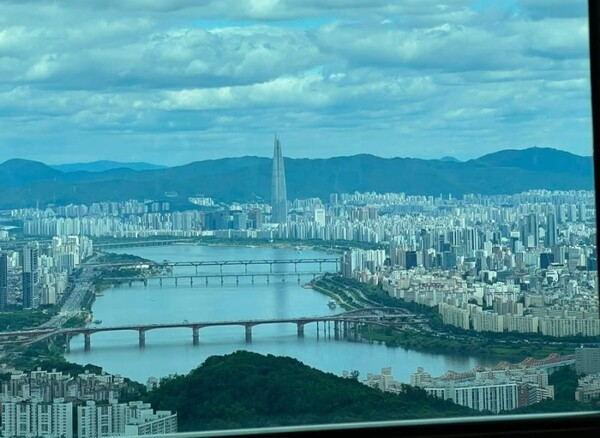
은빛 몸으로 산을 빛의 화살처럼 가르며 달리는 KTX. 서울과 대구, 부산의 땅 밑을 보이지 않는 강처럼 흘러가는 지하철. 그리고 조용한 언덕길을 천천히 오르는 마을버스. 그곳에서는 할머니들이 지나가는 낯선 이에게도 아직 손을 흔들어 주십니다.
모든 여행은 내 발걸음과 처음 나를 품어 준 이 땅 사이의 대화가 되었습니다. 이 나라는 늙은 무릎에게 참으로 친절해졌습니다. 에스컬레이터는 지친 순례자를 들어 올려 주고, 엘리베이터는 서두르지 않는 노년의 품위를 조용히 존중해 줍니다. 한때는 상상할 수 없던 배려가, 이제는 말없이 일상이 되었습니다.
그러나 모든 축복에는 그늘도 함께 있습니다. 아이들은 함께 걸으면서도, 작은 화면의 푸른빛 속에서 저마다 상상의 작은 마을에 머물러 있습니다. 얼굴은 빛으로 환하지만, 마음은 서로를 갈망합니다. 거리는 붐비는데, 마음은 조용합니다.
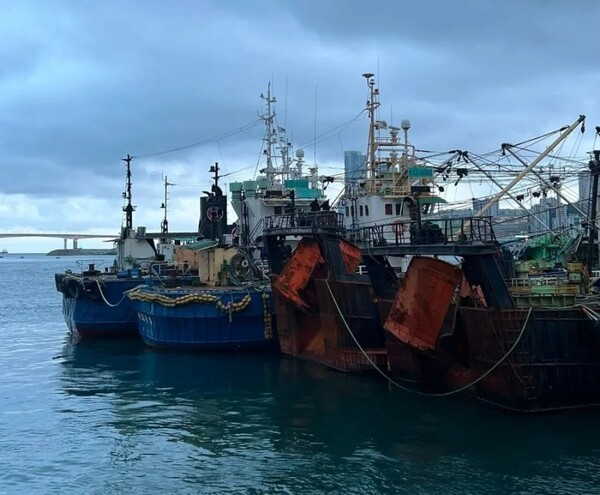
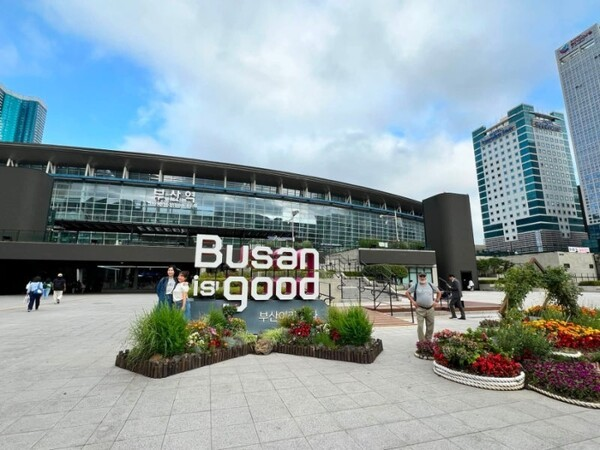
부산역에서는 열차를 알리는 안내 방송이 마치 불확실한 바다를 향해 그물을 던지는 어부들의 외침처럼 들렸습니다. 번영도 쉬지 않고 일해야 합니다. 풍요도 내일의 무게를 압니다.
나는 신촌으로 돌아갔습니다. 내가 태어난 노고산으로. 그러나 그 골목들은 더 이상 내 발걸음을 기억하지 못했습니다. 아무것도 사라진 것은 없었지만, 모든 것이 달라져 있었습니다. 아마도 기억은 사랑을 지키기 위해 시간이 보존할 수 있는 것보다 더 아름답게 장소를 남겨 두는 것인지도 모릅니다.
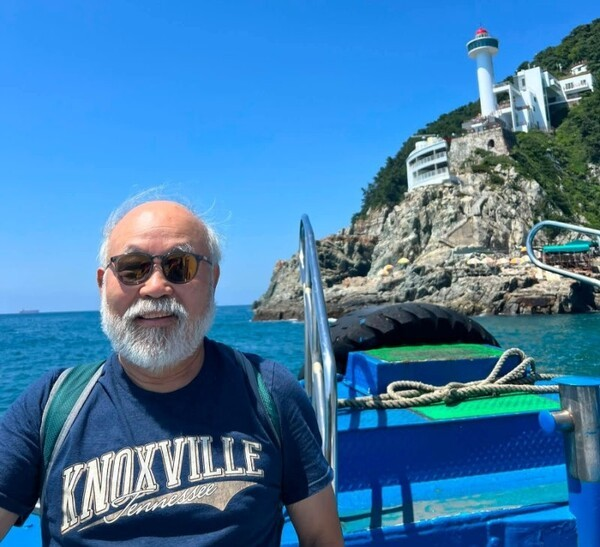
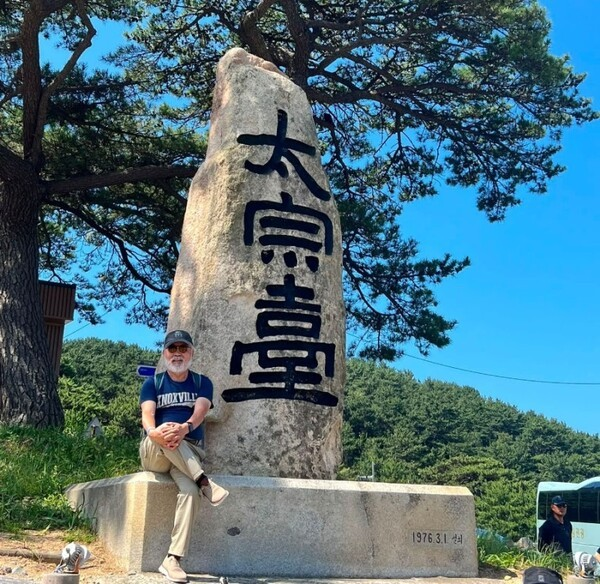
태종대에서는 절벽이 쉼 없이 밀려오는 파도 앞에서도 묵묵히 서 있었고, 설악산에서는 소나무들이 말 없는 시편으로 여전히 기도하고 있었습니다. 속초의 바다는 내가 태어나기 전부터 들려주던 그 오래된 언어를 지금도 말하고 있었습니다.
창조세계는 하나님께서 처음 불러 주신 이름을 잊지 않습니다. 어디를 가든 나는 세계를 만났습니다. 철새처럼 거리를 가로지르는 수많은 언어들. 이제는 한국을 자신의 조국이라 부르는 새로운 이웃들.
그리고 나는, 바로 이 하늘 아래서 태어났지만, 손에는 거소증(영주권) 카드 하나를 들고 돌아온 사람. 역사의 잔잔한 유머를 미소로 받아들였습니다. 고향도 감사하며 찾아오는 한 나라가 될 수 있습니다.
정치인들은 여전히 논쟁하고, 국경은 오래된 상처를 기억하며, 역사는 아직도 절뚝거립니다.
그러나 그 모든 소란 아래에서 하나님은 부활의 일을 조용하고도 끈기 있게 계속하고 계십니다. 재는 추수가 되고, 전쟁은 찬송이 되며, 상처 입은 사람들은 살아 있는 산돌이 됩니다.
내일이면 나는 여행 가방을 닫을 것입니다. 몇 권의 책, 몇 가지 선물, 한국의 여름비 향기를 머금은 여름 옷. 김치, 밥, 국. 어머니 부엌의 그 맛은 아직도 기억 속에서 따뜻하고, 고향을 결코 완전히 떠난 적 없는 아들을 오늘도 먹여 살립니다. 무거운 것은 아무것도 없습니다.
감사뿐입니다.
다시 나는 길을 떠나는 사람입니다. 한 집은 내 뒤에 있고, 또 한 집은 내 앞에 있습니다. 길 자체가 내 주소가 되고, 하늘은 가장 오래된 동행이 되며, 하나님의 은혜는 나의 여권이 됩니다. 안녕히, 사랑하는 조국이여.
나를 떠난 사람들 가운데만 기억하지 마십시오. 다시 돌아온 사람, 그리고 또다시 돌아올 사람으로 기억해 주십시오. 사랑은 언제나 집으로 돌아가는 길을 배우기 때문입니다.
또 다른 계절이 이 산들 위에 무르익고, 또 다른 바람이 태평양을 건너오면, 우리는 아무 설명도 없이 다시 만나게 될 것입니다. 모든 작별은 사랑이 조금 더 먼 길을 돌아 집으로 돌아오는 일이기 때문입니다.
*윤태헌(서울을 떠나며/2026년 6월 30일)
[TaehunYoon, Knoxville Tennessee USA]
[편십자 주:상기 글은 윤태헌 목사의 시 문체를 그대로, 수필문으로 정리하며 제목도 편집했습니다.
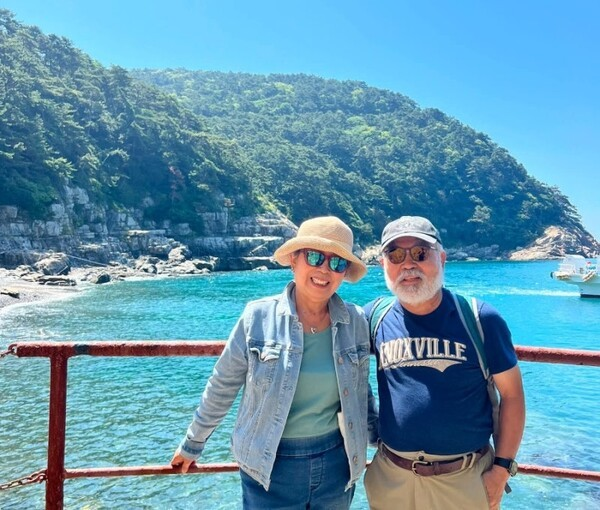
윤태헌 목사 부부는 6월 한 달 동안 한국 방문을 마치고(2026. 6. 1~30.), 인천공항을 출발하여 애틀랜타를 거쳐 테네시 녹스빌에도착했습니다.(7.1.)./노종해]


















You must be logged in to post a comment.