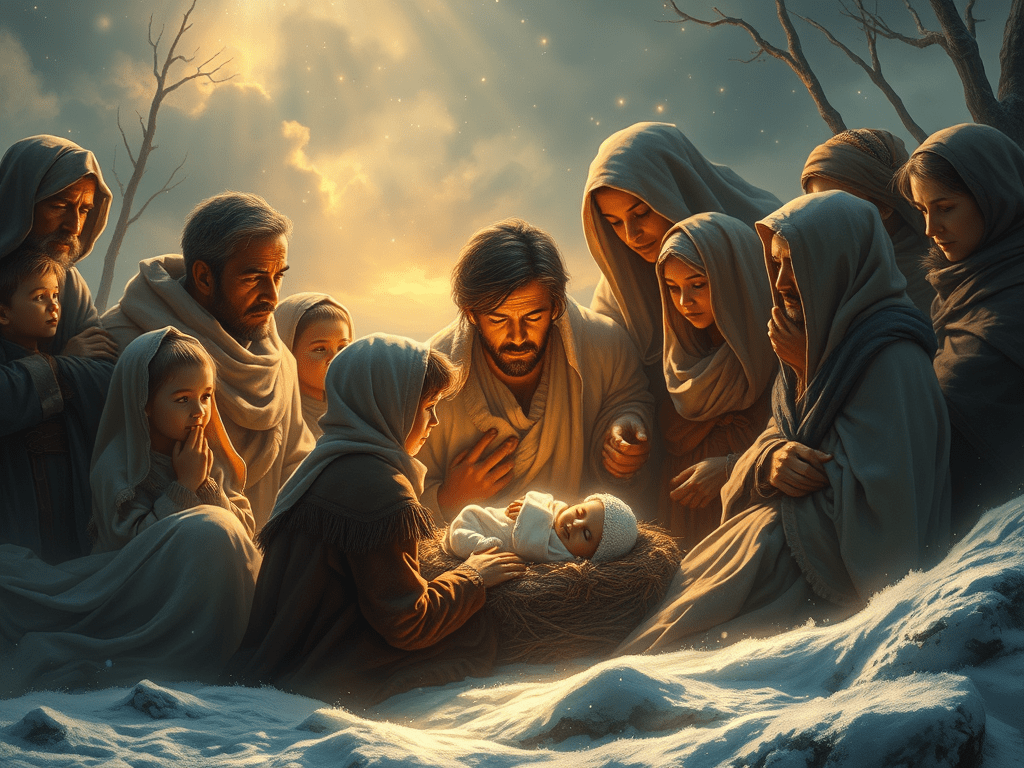
At the news of Your footsteps drawing near, all heaven and earth burst into songs of joy. Across this harsh, frozen land—this empty field— You come again this year, barefoot, over our thorn bushes and wilderness.
To those who have never loved, to those who have never been loved, to those who have never spoken the language of love, to those who have never dreamed of the face of love, even to those who have never known who You are— come, O Baby Jesus.
You who come from afar to restore Your image within us, come in the song of new shoots rising boldly from the land of death. Carry hope to the souls crying out in despair, “Now it is impossible.” You who burn Your own body upon dying lamps and come as light!
May the blazing grace of Your love open a bright highway for us who wander lost. With Your touch, let the truth of heaven— covered by greed and sin— shine clear as crystal. Raise up our tombs of living death into life.
Upon our brothers and sisters in North Korea, starving as even roots and bark are frozen; upon political leaders in the South, who consume alone what belongs to the people and are bound by cords of their own making; upon the mothers and fathers of Gwangju, heavy with unresolved grief; upon the so-called peace accords of Bosnia, peace without reconciliation; upon our youth cast aside in immigrant life, imprisoned behind bars; upon Korean daughters in AIDS camps, who fed bodies to survive— fall upon them all, white upon white, like heavy winter snow.
To be the true Shepherd in this shepherdless land, to become the true Parent to the orphaned souls of humanity, to pour a new spirit and a new heart upon hardened hearts, to come with the trumpet of dawn over a sleeping humanity— You who come!
Your heart, freely given, that dazzling grace— awakens souls, souls… to a new morning.
Our King Jesus! With clumsy lips, limping feet, blind stammering steps, wounded and unclean, we fall before You. Cover the depths of our souls with the white grace of Your mercy.
O glorious gift of heaven, Immanuel! Our Baby Jesus!
당신의 성큼 다가오시는 발자국 소식 기쁨의 함성되어 온 천지가 노래합니다. 이 거칠고 얼어붙은 땅 빈들에 올해도 우리의 가시덤불과 광야 위로 맨발로 오시는 이여!
한 번도 사랑해 본 적 없는 이들에게, 사랑받아 본 일이 없는 이들에게, 사랑의 언어를 말해본 적 없는 이들에게, 사랑의 얼굴을 꿈꾸어 보지 못한 이들에게, 한번도 당신이 누구인 줄 모르는 이들에게도 아기 예수님, 오시옵소서.
당신의 형상 되찾기 위해 먼 길을 오시는 이여! 죽음의 땅에서 힘차게 솟구치는 새싹들의 노래로 그렇게 오시옵소서. 절망 가운데 “이제는 할 수 없다”라고 외치는 심령에게 소망을 안기시며, 꺼져가는 등불 위에 당신의 몸을 사르시어 빛으로 오시는 이여!
타오르는 사랑의 은총이 길을 잃고 방황하는 우리에게 환한 대로 열어 주옵소서. 욕심과 죄로 덮여진 하늘의 진리, 당신의 손길로 수정같이 빛나게 하옵소서 살아 있으나 죽어사는 우리의 무덤, 생명으로 일으켜 세우소서.
초근목피도 얼어붙어 굶주리리고 있는 북한의 동포들과, 백성의 것, 혼자 먹고 먹다 포승줄에 얽매인 남한의 정치 지도자들과 한 맺힌 광주의 어머니들 아버지들과, 보스니아의 화해없는 평화협정 위에, 이민의 삶에 내팽개쳐져 감옥에 갇히어 있는우리의 청소년들과, 육신을 먹여 살리다 에이즈 수용소에 있는 한국의 딸들에게 한겨울의 함박눈으로 하얗게, 하얗게 내려 주옵소서.
목자 없는 이 땅에 참목자가 되시며, 부모 없는 인류의 영혼에 참부모가 되시기 위해, 굳어진 심령 위에 새 영과 새 마음을 부어 주시기 위해 잠들어 있는 인류 위에 새벽의 나팔 소리로 오시는 이여!
값없이 던지신 당신의 심장, 그 눈부신 은총을 안고 새 아침에 깨어나는 심령, 심령들….
우리의 임금 예수님! 어눌한 입술로, 절뚝거리는 발로, 앞 못보는 더듬거림으로, 상하고 더러운 모습으로 엎디었아오니 심령의 깊은 속으로 당신의 은총 하얗게 덮어 주소서.
Is it truly finished? Or does the real journey begin only now— a long unfolding toward holy openness, toward exodus and release, toward flowing freely within the mystery of God?
This is the way of Han 한(恨) — not bitterness alone, but suffering remembered before God, wounds neither denied nor avenged, pain gathered into prayer, history carried without hatred. Han is sorrow that refuses despair, lament that waits for redemption.
This is the silence of Gong공(空) — not emptiness as loss, but kenosis, holy self-emptying, the space where idols fall quiet, where even words loosen their grip, where the soul stands unarmed before God. Gong is the womb of grace, the stillness where God alone is enough.
This is the surrender of Ryu 류(流)— not passivity, but trustful movement, a life yielded to the Spirit’s current, flowing without possession or fear, carried where love leads. Ryu is obedience without control, mission without anxiety, faith in motion.
The Joy of Vision— the joy once promised between us, whatever God would allow, held within His own delight. A new life hidden with Christ in God.
The Joy of Venture— the joy Christ gives: to love without guarantee, to share pain without escape, to walk together through suffering without turning away.
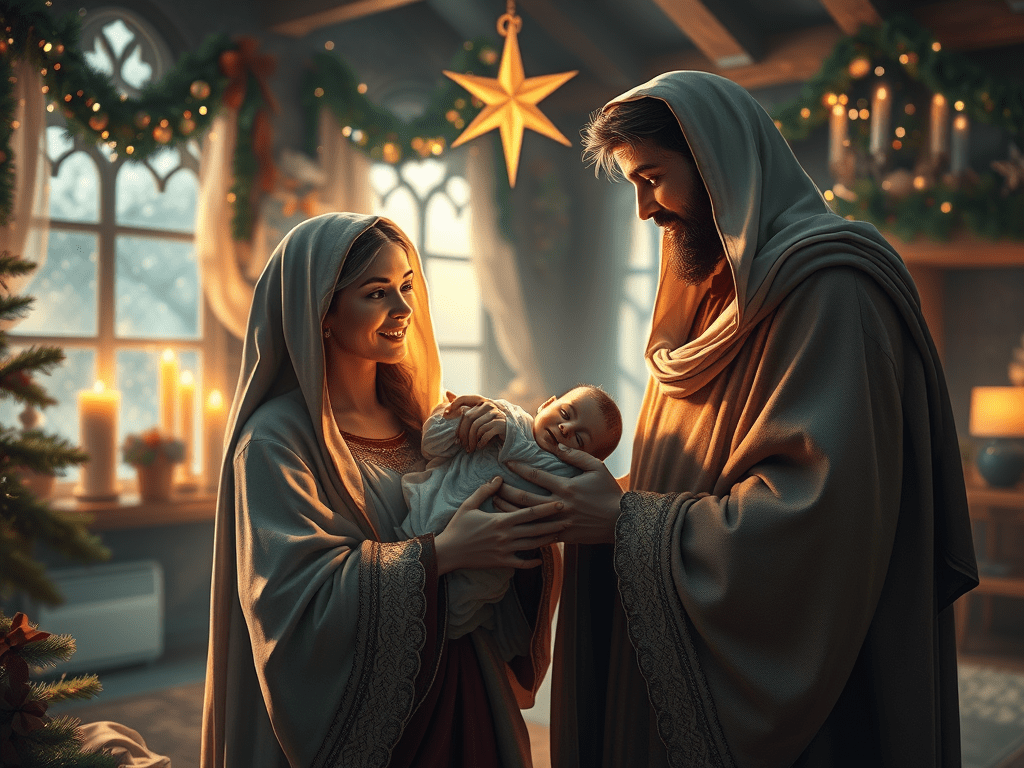
To live in God’s joy is Mary’s joy— bearing Christ at the risk of her own life, saying yes before understanding. It is Joseph’s joy— receiving as his own a child he could not yet explain, trusting righteousness beyond reason.
Here, words receive their mandate— not to dominate, but to serve truth and mercy.
The Joy of Vitality— the joy of the Magi, who crossed a dark, pathless desert guided by a fragile star, believing light is enough.
The power to pray is born here.
And yet the way remains simple— wide open toward God’s future, releasing every attachment, embracing the paradox of inclusion: losing life to find it.
For God’s joy often arrives wearing sorrow, or surprise, or pain. Still, the covenant of joy does not change.
They lost their words on the silent road of awe— open to what was coming, tenderly reattached only after releasing every threat and every false love.
Leaving all, entering nothingness, embracing emptiness— the place of real silence, where resurrection begins.
So let it pass through you. Surrender everything. Receive the gracious energy of God.
No matter how deep today’s sorrow, I give thanks that it rests within His joy.
We had just gathered around the breakfast table and were about to begin our meal when our eldest daughter started rustling around under the table, drawing everyone’s attention. Suddenly she burst out, “Happy Wedding Anniversary!” and handed us a small gift with great excitement. The children’s sudden cheers, applause, and their impromptu anniversary song warmed the parsonage as if melting the frost on the windowpanes.
As soon as the children finished singing, my husband jumped up and said, “Well then! We must light the candles!” He struck a match and lit the crystal candlesticks. The winter morning sunlight streaming through the window bars and the bright pink flames dancing atop the candles made our table glow with beauty for a long moment.
Ah—how many years has it been now? Twenty‑three? Already? As I repeated the question to myself again and again, I felt overwhelmed with gratitude for God’s abundant grace. Like many others, we entered marriage without truly understanding what marriage was. We were like a puppy that has wandered onto a busy highway, bewildered and terrified by the rush of cars. Yet God gently placed the treasure of Christ’s love into the small, limited love we had for each other—turning discord into harmony, incompleteness into wholeness, and lack into fullness. Without that forgiveness and love, could this day ever have become a day of celebration for us?
Suddenly, I remember our unforgettable battle with the coal briquettes twenty‑three years ago. At that time, all cooking and heating were done with coal. But in the bitter subzero winter, the briquette fire went out constantly. We often woke in the middle of the night because of the cold seeping up from the floor, and we made endless trips to buy fire‑starter briquettes to revive the fire.
Yet those briquettes—famous for their strong heat—broke so easily! As you know, when about one‑third of a briquette remains, you must remove the old one and place a new one on top, a task requiring real skill. But every time I tried to lift a briquette with the tongs, it would break apart with a “pop!” I would let out a cry of despair, and my husband would roll up his sleeves, lie down with his face nearly touching the blazing furnace, and scoop out the broken ashes—ending up covered head to toe in soot.
When he finished cleaning the furnace, he would stand in our tiny kitchen and give me yet another lesson on How to Lift a Briquette Without Breaking It. “Now, don’t grip too hard. Lower the tongs gently… slowly lift… gently…” His lessons were always earnest, patient, and accompanied by impressive theory.
Years passed, and I finally became skilled with the briquette tongs, no longer worried about the fire going out. But soon I found myself breathless again—this time because we had been given the privilege of bringing life into the world and raising it. That life came with a love so powerful that we could never leave it unattended, not even for a moment. Feeding, caring, bathing, changing, laughing and crying together—sometimes with pain rising from the depths of the heart—and experiencing the thrill of giving everything without regret.
And through it all, God allowed us to understand, even if only a millionth part, what it meant for Him to give His own Son—His very heart—for the sake of humanity.
How many more years will our children gather to celebrate our anniversary, and my husband light the candle of joy? I do not know. But a wedding anniversary is a day that cannot be taken lightly. Through the meeting of two imperfect people, marriage humbles us and matures us. And it reminds us of how deep the Father’s forgiveness, patience, and loving struggle must be as He prepares us to become the Bride of Christ.
But truly—how easy is it to “lift gently and slowly”?
Late last year, my husband’s clergy colleague lost his wife in a tragic car accident right in front of the church he had just begun serving. It happened barely ten minutes after they had stepped out from worship. She, a gifted and capable leader in the women’s ministry and a devoted pastor’s wife, was someone from whom we expected much for God’s work. Her death left all our hearts aching.
He sent his congregation a Christmas letter that year—written through deep sorrow. In it, he wrote:
“…Years ago, when my wife and I became engaged, my joy was beyond words. We promised to share everything—whatever God allowed—within the joy He gives: to love, to share pain, and to walk through suffering together.To be in God’s joy is like Mary’s joy—bearing Jesus Christ at the risk of her own life without the support of her family.It is like Joseph’s joy—accepting as his own a child he did not understand.It is like the Magi’s joy—setting out on a perilous journey across a dark, pathless desert, guided only by a single star.God’s joy sometimes comes to us with the face of sorrow, surprise, or pain, yet the covenant of joy never changes.No matter how deep today’s sorrow may be, I give thanks that it is held within God’s joy.”
— WanHee Yoon, Letter from the Parsonage, December 1998
Note: This year, 2025, marks our 50th wedding anniversary—our golden jubilee.
아침 식탁에 모여 막 식사를 시작하려는데 큰 딸 아이가 식탁 밑에서 무엇인가 부스럭거리더니, 가족들의 시선을 모으게 하였다. 그리고는 “결혼 기념일을 축하합니다!”며 호들갑을 떨면서 작은 선물하나를 내밀었다. 식탁에 둘러 앉아있던 아이들의 급작스런 환호성과 박수, 결혼기념 축하 노래가 성애 낀 유리창을 녹이기라도 하듯이 목사관을 훈훈하게 채워나갔다. 남편은 아이들의 노래가 끝나자마자 벌떡 일어나, “자 ! 그럼 촛불을 밝혀야지!” 하면서 크리스털 촛대에 불을 부쳤다. 창살을 통해 들어오는 겨울 아침의 태양 빛과, 활활 타오르는 분홍촛불은 우리들의 식탁을 한동안 아름답고도 눈부시게 하였다.
아! 올해가 몇주년째지? 23년이라고? 벌써? 라는 자문을 수없이 되뇌며 뒤돌아보니, 하나님의 은혜가 참으로 막중하였음을 감사케 된다. 많은 이들이 그렇듯이, 결혼이 무엇인지도 모른 채 시작된 결혼생활은, 마치도 하이웨이에 길을 잘못 들어선 강아지가, 숨가쁘게 오고가는 차량을 보고 어쩔 줄을 몰라 허둥대는 모습과 같았다. 그러나, 하나님은 우리 부부간의 제한 된 사랑 안에, 그리스도의 사랑이라는 보물을 살짝 밀어 넣어, 불협화음을 화음으로, 불완전함을 온전함으로, 모자람을 충만함으로 늘 채워주고 다듬어 주셨다. 그 용서와 사랑이 없었다면, 이 날이 과연 우리에게 축하의 날이 될 수 있었을까 하는 감동을 갖게 한다.
문득, 23년전의 연탄불과의 잊을 수 없는 싸움이 되살아난다. 당시에 모든 음식이나 난방을 구공탄으로 감당하던 때였다. 그런데, 그 추운 영하의 겨울날씨에 연탄불이 허구헌날 꺼져버렸다. 그로 인해 우리는 자주 방구들에서 올라오는 냉기로 인해 한 밤중에 잠을 깨어야 만 했고, 불을 살리기 위해 번갯탄을 뻔질나게 사러 다녀야 만 했었다. 그런데, 그 19공탄의 화력을 자랑하던 연탄은 왜 그리도 힘없이 잘 깨어지던지! 알다시피 연탄불의 삼분의 일이 남아있을 때, 밑에 있는 헌 연탄을 들어내고, 새 연탄을 올려놓는 일은 상당한 기술을 필요로 하였다. 그런데 나는 연탄을 집게로 집어 올릴 때마다, 중간에 ‘퍽’ 하는 소리와 함께 산산조각이 나기가 일수였다. 그럴 때면, 나는 절망적인 비명을 질러야만 되었고, 남편은 용감하게 팔을 걷어붙이고 그 뜨거운 연탄 아궁이에 코가 닿도록 엎드려, 깨어진 연탄재를 퍼내느라 온통 잿더미를 뒤집어쓰고 전전긍긍해야 만 했었다. 남편의 아궁이 청소가 끝나면, 그는 <어떻게 연탄을 깨뜨리지 않고 집어 올리는가?>라는 강의를 그 비좁은 부엌에 서서 수도 없이 반복하며 실습을 시켰다. “자, 이렇게 손에 절대 힘을 주지 말고, 집게를 가만히 내려서 살짝 천천히 들어올려요! …살짝” 그의 강의는 언제나 진지하고 친절하였으며, 굉장한 이론을 동반하였다.
세월이 흘러 연탄집게와 친해지고, 연탄불을 더 이상 꺼뜨릴 염려가 없어진 무렵, 나는 또 헐레벌떡 허덕이게 되었다. 우리부부는 생명을 낳고 생명을 기르는 특권을 얻은 것이었다. 그 생명은 잠시도 그냥 놔두거나 무관심 할 수 없는 엄청난 사랑의 힘을 동반하였다. 먹여주고 돌봐주고, 씻겨주고, 갈아내고, 함께 울고 웃고, 때로는 가슴 밑바닥에서부터 올라오는 고통을 동반하였고, 모든 것을 희생하여도 아깝지 않은 스릴을 맛보게 하였다. 그리고… 인간을 위해 당신의 심장인 아들을 내어주고도 아까워하지 않은 하나님의 사랑이 어떤 것이라는 것을 천만 분의 일이라도 알게 하셨다.
얼마나 많은 햇수를 우리 곁에서 아이들은 결혼 기념일을 축하하며, 남편은 기쁨의 촛불을 밝힐는지 알 수 없다. 그러나, 결혼기념일이란, 인생에 있어 그냥 지나칠 수 없는 참으로 의미 있는 날이다. 불완전한 사람들의 만남을 통해 결혼은 우리를 얼마나 겸손케 하며 성숙케 하는가! 하물며, 우리를 완전하신 그리스도의 신부로 들림 받기를 원하시는 하늘 아버지의 용서와 참으심, 사랑의 투쟁이 얼마나 깊은 것인가를 새삼 깨닫게 한다.
그런데 말이 쉽지, ‘살짝 천천히’가 그리 쉬운가!지난 해 말에, 남편의 친구되시는 목사님이, 새로 부임한 교회 앞에서 사모님을 교통사고로 잃게 되는 사건이 있었다. 금방 예배보고 나선지, 10여 분 만에 당한 일이었다. 여선교회의 지도자로, 사모님으로서 참으로 많은 하나님의 일을 기대하고 남을 만큼 유능하던 그 사모님의 죽음은 우리 모두의 가슴을 아리게 하였다. 그 목사님은 지난 성탄절에 슬픔가운데 교인들에게 보내야 만 했었던 성탄 축하편지를 이메일로 보냈왔었다.
“… 수년전, 제 아내와 약혼을 했을 때 나의 기쁨은 형용할 수 없었습니다. 우리는 하나님이 주시는 기쁨 안에서 어떤 일이 일어날지라도 함께 나누며, 사랑하며, 아픔과 고통을 함께 나눌 것을 약속했었습니다. …하나님의 기쁨 안에 있다는 것은 마리아가 가족들의 협조없이 목숨을 담보로 예수 그리스도를 낳아야 하는 기쁨이었습니다. 요셉이 고통 가운데 자신도 모르는 아이를 아들로 받아들여야 만 하는 기쁨이었습니다. 동방박사들이 길도없는 흑암의 거친 사막의 길을 별 하나 바라보며, 모험을 떠나야 만 하는 기약없는 기쁨이었습니다. …하나님의 기쁨은 때로는 슬픔과 놀라움, 고통의 얼굴로 다가올지라도 기쁨의 언약은 변함없는 것입니다. 오늘 내게있는 이 슬픔이 아무리 깊을지라도 그것은 하나님의 기쁨 안에 있음을 감사합니다.”
After years and years of coming back from far away, I see it has always been here.
Not as a place, exactly, but as a presence— the kind you walk into without noticing the door.
We ran our share of hard races, argued the good arguments, kept faith the best we knew how, always thinking we were headed forward, only to find ourselves returning.
Ruth said it simply: Where you go, I will go. That was enough to make a life of it.
Paul, near the end, called it a good fight— said the course was run, the faith kept, and left the rest to grace.
Abraham walked on without a map, trusting the voice that called him out.
So the years circle back, and we wait again for the child to appear— not knowing when, or where, only that God keeps time better than we do.
Old quarrels fade. Pride loosens its grip. We lift our eyes— help comes from the Lord, steady as shade at the right hand.
Home, it turns out, is not behind us.
The Savior is with us— then, now, and still to come— in our hands, our houses, our held-together hearts.
So we sing, smile, and hold hands, past the noise and the distance.
Tonight, this is enough— with Sarah’s bright laugh.
Jesus is home— with Mary and Joseph, and with us, here, in 2025.
Finally, the Christmas season has arrived. The world is decorated with grandeur and elegance, and festivals are in full swing. The sounds of carols and lively music fill the air, as if the whole world is rejoicing in the birth of Jesus Christ.
As I waited for the train at Long Island Station, I saw an advertisement that caught my eye. It was a picture of Santa Claus on a new motorcycle, delivering gifts to every house, but seemingly unable to find the right address, checking his cell phone. The ad was promoting cell phones, with the message that even Santa Claus can’t deliver without one!
The commercial made me reflect on how busy people are during the Christmas season, trying to fill Santa’s bag with gifts. The cost of filling that bag is increasing every year, making me wonder if we should just get rid of it altogether. But I hope that we can at least go back to the old days when Santa brought joy to those in need, like the poor match girl or the boy who took care of his family.
As we celebrate Christmas, I pray that you will find the true meaning of the season and experience the joy of Christ in your heart.
When I was a child, Christmas was a magical time. Our small church would be filled with children, and we would all take off our shoes and sit on the floor. We would sing hymns with all our might, and I remember one song that always stands out: “The Christmas bell rings out, far and wide…” The joy of Christmas, the candlelight service, the Christmas play, and the children’s choir were truly heaven on earth.
– Wan-Hee Yoon, Letter from the Parsonage, 12/25/1999
드디어 성탄절 주간에 도착하였습니다. 세상은 더 이상 아름다울 수가 없도록, 화려하고, 우아하게 장식을 하고, 이곳저곳의 축제는 한창 열기를 더하고 있습니다. 곳곳에서 흘러나오는 캐롤과 경쾌한 음악들- 온 땅의 만백성들이 아기예수님을 맞이하는 대로에 서서 흥겨운 춤이 터져 나오듯이 세상은 소란 속에 있습니다.
방송국을 오느라고 롱 아일랜드 스테이션에 서서 기차를 기다리노라니, 눈에 들어오는 광고 하나가 있었습니다. 그것은 신형의 오토바이를 탄 산타크로스 할아버지가, 선물을 한보따리 싣고 집집마다 배달하는 듯 보였는데, 집을 못찾는지, 셀로라 폰으로 무엇인가를 확인하는 사진이였습니다. 그 광고는 산타크로스 할아버지도 셀로라폰 없이는 배달이 불가능하다는 멧세지로서, 셀로라 폰을 판촉하는 것이였습니다.
산타크로스와 성탄절- , 성탄절의 본래의 뜻과는 상관도 없는 산타크로스 할아버지의 빈자루를 채우려고, 한달내내 사람들은 얼마나 분주한 시간들을 보냈는지 되돌아 보게됩니다. 요즈음 각 가정에 산타크로스의 자루를 채우는데는 드는 액수는 세월이 갈수록 늘어 만가서, 아무래도 산타크로스의 자루를 없애버리는 운동이라도 벌여야 될 것 같습니다. 아니, 아예 없앨수는 없겠지만, 최소한 과거의 동화 속에 나타나던, 착하고 순하던 아이들을 찾아주거나, 성냥팔이 소녀라든가, 소년가장을 찾아와 기쁨을 선물하는 자리에 서있기를 바라는 마음 간절할 뿐입니다.
오늘은 성탄절 주간을 맞이하여, 여러분들의 심령 속에 자리잡은 성탄의 기쁨을 찾아내고, 성탄의 진정한 의미를 만끽하는 시간을 갖기를 원합니다.
제 어린시절에 성탄절만 오면, 의자도 없는 작은 예배당이 터지듯이 아이들이 몰려오던 때가 있었습니다. 작은교회당에, 모두가 신발을 벗고 들어가야 하는 마루바닥이기 때문에, 저마다 신발주머니들을 가지고 교회에 다니거나, 신발에 특별한 표시를 하여서 남들과 바꿔지지 신발장에 넣으며 신경을 쓰던 때였습니다. 좁은 예배당에 어디 딛고 들어설 자리가 없을 정도로 빽빽이 앉아, 땀냄새가 나는지, 발냄새가 나는지도 모르고 사회자 선생님의 인도에 일사분란하게 움직이며, 목이 터져라도 찬송가를 부르곤 했습니다. 그 중에 기억나는 곡은 “탄일종이 땡땡땡 멀리 멀리 퍼진다. 저 오막살이에도 깊고 깊은 산속에도 탄일종이 울린다” 라는 곡이었습니다. 어린 가슴을 쿵쿵 울려대던 성탄절의 기쁨과 흰눈이 하얗게 내려지던 추위 속에 드려지던 촛불예배, 성극, 천사와 같은 어린이 합창단은 단연, 어른들의 천국, 성탄에 지극한 기쁨이였습니다.
We walk toward Bethlehem carrying what we believe— near and far, deep and shallow, faith mixed with fear.
Along the way, our wounds are exposed, tender and unguarded, pain speaking its own truth as we come to the tomb.
There, foreign bodies are removed: bitter roots that refuse forgiveness, rolled away like a stone by the angel of God.
We learn to let go.
The wounds are cleansed through confession, desires washed by the blood of the Son, as we enter the tomb of honest self-examination.
Into the wound is placed the true medicine— the Cross, the living Word of God.
“Do not be afraid,” the message comes. “He was crucified, and He has risen.”
In prayer, the wounds are closed. “He is not here. See the place where they laid Him.” We become witnesses.
Healing follows— by the Spirit of God, who comforts, who binds, even as we tremble, even as we stand bewildered, like those who first faced resurrection.
We touch the scars, taste their memory, and learn their holy lesson as the story continues in us.
Here, the divine is born in wounds. Here, grace flowers with fragrance.
This is what we believe: eternal joy with the Wonderful Counselor, the Prince of love, peace, and justice.








You must be logged in to post a comment.