We often describe life as a journey across the sea. When we imagine a ship gliding quietly over calm waters, the scene feels peaceful and beautiful. Living near the coasts of New York and New Jersey, we often see such serene views. But the opposite can also be true: a storm may strike in the dark of night, or a hidden rock or iceberg may suddenly tear into the ship. The result is devastating.
Many of you have seen the movie Titanic, one of the biggest films of the year. I also had the chance to watch it, and it reminded me again of the clear limits of human power. Today, I want to reflect on the story of the Titanic and what it teaches us about our own life journey.
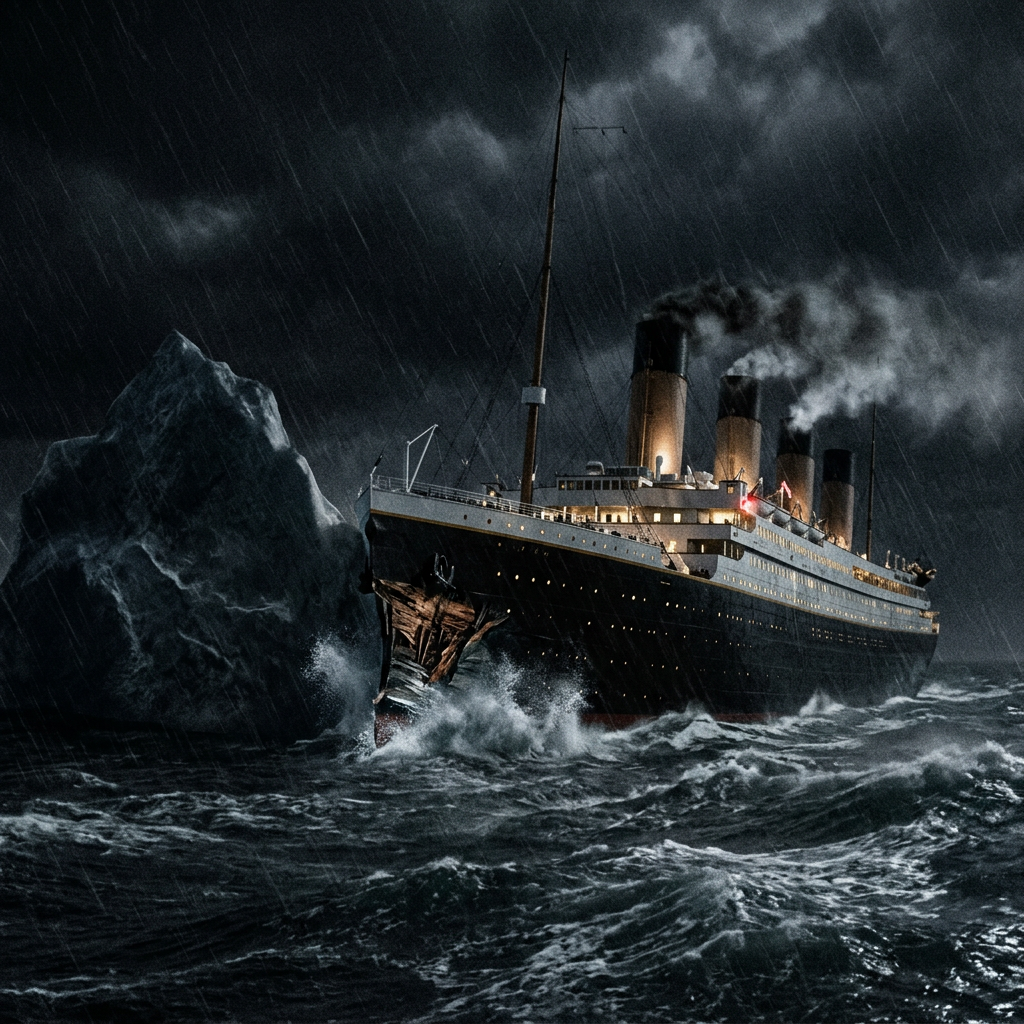
When the Titanic—the largest luxury liner of its time—set out across the Atlantic with 2,227 passengers, no one imagined it would be its first and last voyage. But on April 14, 1912, in the vast North Atlantic, it struck an iceberg, and more than 1,500 people lost their lives.
Interestingly, the idea for the Titanic was inspired by an 1898 novel by Morgan Robertson titled The Wreck of the Titan. In the story, a massive “unsinkable” ship carrying wealthy English passengers hits an iceberg in the North Atlantic and sinks because there are not enough lifeboats. Ten years later, shipbuilder Pirrie and White Star Line president J. Bruce Ismay created a real ship modeled after that fictional Titan—the Titanic.
The Titanic was enormous: 882 feet long (the length of four city blocks), as tall as an 11‑story building, and equipped with anchors weighing 31 tons. More than 100,000 people gathered to admire its grandeur. Newspapers called it “the millionaire’s special,” “the ship that cannot sink,” and “the world’s greatest luxury liner.” Its captain, Edward J. Smith, was the most respected and experienced captain of his time, planning to retire after this final voyage.
On April 10, 1912, the Titanic set sail for New York. Among the passengers were missionaries returning from India, poor immigrants seeking a new life, and wealthy travelers eager to enjoy the ship’s luxuries—swimming pools, tennis courts, exercise rooms, electric camel rides, and lavish dining halls. Everyone was satisfied.
But three days later, just 400 miles from America, the Titanic struck an iceberg. Like the fictional Titan, it lacked enough lifeboats, and many died. They had copied the novel’s grandeur but ignored its warning.
Isn’t this like our own lives? Perhaps your journey feels calm right now—smooth waters, a bright horizon, and a ship stocked with everything you need. You may feel close to reaching your dream destination. Yet warnings come—like the seven iceberg alerts the Titanic received before sinking. But the crew ignored them, believing disaster could never happen to their ship.
We too often ignore warnings about life, death, and eternity.
In Mark 4, even the boat Jesus was in faced a violent storm. Jesus slept in the stern while waves crashed over the boat. Terrified, the disciples cried out, “Teacher, don’t you care that we are perishing?” Jesus rose, rebuked the wind, and said to the sea, “Peace, be still.” And the storm became completely calm.
Even the boat carrying Jesus faced storms. How much more will our lives face them? God never promised that believers would be spared from storms. He only promised that Jesus would be with us in the boat—the One who calms not only the storms of history but the storms in our own hearts and futures.
John Wesley, founder of Methodism, experienced this truth. After failures in ministry and heartbreak in America, he boarded a ship back to England. A fierce storm struck, and he trembled in fear. But he heard singing—German Moravians worshiping peacefully in the midst of the storm. When he asked if they were afraid, they replied, “No. If the Lord needs us, we will go to heaven now. If not, He will keep us alive.” Their calm faith shook Wesley more deeply than the storm itself.
Dear listeners, Do you feel alone in your storm? Do you think no one sees your pain? When people are trapped under collapsed buildings, rescue teams call out, “We are here! We are working to save you!” Even if rescue takes days, the trapped survive because they know someone is coming. But those who believe they are abandoned often die quickly from fear alone.
Humans cannot survive without connection. How much more dangerous is it to feel cut off from God?
The Titanic, modeled after a novel about a doomed ship, met the same fate. But God tells us through Scripture: “Believe in the One who calms the storms.” In Him is the way of life.
May you discover Jesus in your storm this week—the One who stands and says, “Peace. Be still.”
— Yoon Wan‑Hee, 10/7/1998


You must be logged in to post a comment.