‘신생’ 이란 그리스도가 그의 삶을 주관하여 새로운 영안이 열리는 축복을 말합니다. 하나님을 경외하는 이들에게 의로운 해가 떠올라서 치료하는 광선이 발하여 상처난 영혼과 육신을 치유하는 사랑의 은총 (말 4 : 2)을 말합니다. 실낙원에서 복낙원으로 다시 들어감을 말합니다. 삶의 고상함과 경건을 사모하게 되고, 하늘의 비밀을 간직하며 그리스도의 형상이 ‘사랑과 희락과 화평과 오래 참음과 자비와 양선과 충성과 온유와 절제’로 우러나옵니다.
사도 바울은 영안이 열려져, 원래의 하나님의 형상으로 돌아가는 사람들을 향해 “누구든지 그리스도 안에 있으면 새로운 피조물이라 이전 것은 지났으니 보라 새것이 되었도다”(고후 5 : 17)라는 생의 새 출발을 선언하였습니다.
요한 웨슬레 목사님은 “태아는 눈이 있으나 볼 수 없고, 귀는 있으나 들을 수 없으며, 바깥 세상에 대한 형편과 지식과 이해를 갖지 못한다. 그러나 신생아는 빛과 소리, 감각적인 경험들을 새롭게 받아들인다. 사람의 영적인 눈이 하나님의 임재와 사랑을 깨닫도록 열려지는데, 그것을 ‘신생 이라 부른다. 신생이란 내적인 것, 내적으로 사악함에서 선함으로 바뀌는 것이며, 피조물 사랑에서 창조주 사랑으로 바뀌며, 세속적이고 감각적인 것에서 벗어나 영과 거룩을 좋아한다. ” 라고 말하며 그리스도 안에서의 신생을 촉구하였습니다.
지난 5월 초(5/1-4/96)에 재클린 케네디 오나시스 여사의 생전에 사용하던 개인 소품들의 경매가 뉴욕의 맨해튼 소더비에서 있었습니 다. 저 자신도 그녀의 삶속에서 묻어나온 유품들이 무엇인지 궁금하 던 차에, 신문마다 대서 특필한 경매에 관한 소식들을 관심있게 읽게 되었습니다.
뉴스 보도에 의하면 약 6,000여 개(5,914)의 유품들이 경매에 부쳐 졌는데, 몰려온 사람들로 인산인해를 이루어 불티나게 팔렸다는 것입니다. 파는 사람이나 사는 사람들조차도 놀랄 정도로, 그 가격이 하늘 높은 줄 모르고 치솟았으며, 예상의 10배 이상의 수익을 올렸다고 합 니다. 케네디 대통령 골프채, 책상, 의자, 문갑, 라이터 등이 수십만 달러에 팔렸으며, 얼룩진 실크 쿠션조차도 수만 달러에 팔렸고, 녹슨 양철통까지도 수천 달러에 팔렸습니다. 그중에 시중에서 1, 2백 달러면 살 수 있는 모조 진주 목걸이조차 $211,500 달러에 팔렸음을 볼 때, 다시 한 번 미국인들의 케네디 가에 대한 향수와 재클린이라는 한 파란만장한 여인의 삶에 대한 사랑과 애정을 실감하게 되었습니다. 그녀의 체취가 묻은 것이라면 진짜이든 가짜이든 관계없이 경악을 금치 못할 가격이 붙었습니다.
저는 경매에 관한 뉴스를 읽은 후에, 사람들이 왜 그토록 열광하고 황홀해 하는지 생각해 보았습니다. 케네디 대통령 부인으로서의 아름 다음과 명성, 비극 속에서도 다시 일어나 세계 갑부였던 오나시스의 부인으로서 제2의 삶과 온갖 부귀영화, 비운의 삶 속에 자신의 운명과 부단히 싸워오며 강인한 모습을 잃지 않고 살았던 재클린의 가려졌던 사생활 등은, 그녀는 비록 이 땅을 떠났어도 그녀의 삶 속에 함께하였 던 물건들에 투자의 가치를 갖게 했던 것입니다.
재클린이 사용했던 물건들이 비로 백화점에 진열된 물건들과는 견줄 수 없이 낡고 헐었으며, 모조품이었지만 그 가치를 견줄 수 없듯이, 아무것도 아닌 우리의 삶 속에 하나님께서는 그 아들 예수 그리스도 를 보내시어 새로운 존재로 태어나게 하셨습니다.
재클린의 삶의 체취가 묻은 낡은 유품 하나에 거액을 투자하고도 기뻐하며 자랑스럽고 감격해 하는데, 값없이 받은 영생의 선물을 저는 얼마나 기뻐하고 감격해 하는지 부끄러울 뿐입니다. 우리를 변화 시키고 환난 가운데 안식을 주시고, 병든 영혼과 육신을 온전케 치유 하시는 분에게, 터질 것 같은 열정과 환희의 진정한 투자가 제 심령과 여러분의 심령 속에서 움돋기를 원합니다.
세계를 떠들썩하게 만들었던 재클린의 유품 경매 소식은, 하나님께서 왜 그 외아들을 보내시어 보혈의 투자를 아낌없이 하셨으며, 인생의 진정한 투자의 길이 무엇인가를 가르쳐 주었습니다.
“Rebirth” means that Christ governs one’s life, opening a new spiritual vision — a blessing of awakening. It is the rising of the righteous sun upon those who fear God, sending healing rays that touch and mend wounded souls and bodies — the gracious love (Malachi 4:2). It is the return from the lost paradise to the paradise regained.
One begins to long for a life of nobility and devotion, to guard the mysteries of heaven, and to bear the image of Christ shining through in love, joy, peace, patience, kindness, goodness, faithfulness, gentleness, and self-control.
The Apostle Paul, whose spiritual eyes were opened, proclaimed a new beginning to those returning to the original image of God: “Therefore, if anyone is in Christ, he is a new creation; the old has passed away, behold, the new has come.” (2 Corinthians 5:17)
John Wesley wrote: “The fetus has eyes but cannot see, ears but cannot hear; it lacks perception, understanding, and knowledge of the outer world. But the newborn begins to receive light, sound, and sensory experiences anew. When the spiritual eyes of a person are opened to perceive the presence and love of God — that is what we call rebirth. Rebirth is inward; it is the transformation from inner evil to goodness, from love of the created to love of the Creator, from the worldly and sensual to the delight in spirit and holiness.” Thus, he urged all to be reborn in Christ.
In early May of 1996, at Sotheby’s in Manhattan, New York, the personal belongings once used by Jacqueline Kennedy Onassis were auctioned. Out of curiosity about what relics might remain from her life, I read the newspapers that reported the auction with fascination.
According to the news, nearly 6,000 items were sold, and the crowds surged like waves — every item sold with astonishing speed. The prices soared sky-high, exceeding all expectations tenfold. President Kennedy’s golf clubs, desk, chair, dresser, even his lighter sold for hundreds of thousands of dollars. A stained silk cushion went for tens of thousands, and even a rusty tin box fetched thousands. A simple imitation pearl necklace, worth only a few hundred dollars in the market, was sold for $211,500 — revealing once again the deep nostalgia Americans still hold for the Kennedys, and their affection for the dramatic, luminous life of Jacqueline. Whether genuine or fake, if it bore even a trace of her presence, it was treasured beyond measure.
After reading the reports, I asked myself: Why were people so enthralled and ecstatic? Her beauty and fame as First Lady, her courage through tragedy, her rebirth as the wife of Aristotle Onassis — one of the world’s wealthiest men — her grace amidst splendor and sorrow, and the mystery of her private struggles, all made the relics of her life seem like investments in meaning itself.
The things she touched, though worn and ordinary, gained value through her story — just as, into our unworthy lives, God sent His Son, Jesus Christ, to make us new creations of immeasurable worth.
If people rejoice to pay vast sums for a faded relic of Jacqueline’s life, how much more should I rejoice — how much more should I tremble with gratitude — for the priceless gift of eternal life freely given?
May our hearts become living altars of that true investment — burning with passion, joy, and awe before the One who transforms us, gives us rest in affliction, and heals the sick soul and body.
The news of Jacqueline’s auction that once stirred the world quietly teaches us why God spared not His only Son, but invested His blood — to show humanity the true path of divine investment.
From the far side— a red gourd drifts, slowly, slowly drawing near.
His face— pale with fear— rises toward that trembling light.
Above, the steps of air move closer, each footfall a sound from somewhere between meaning and silence.
Letters— souls screaming, choked in the black bars of a prison.
Yet between the letters, between the lines, in the white margins of the page— breath. Freedom breathes.
Since childhood, he had suffered hunger. Now the old fisherman lifts his body, and with a spoon stirs the soup— slowly, as if stirring the sea, or a memory set free.
어느 날 새벽기도 갈 시간을 놓치고 그만 늦잠을 잔 적이 있었습니다. 이미 예배시간은 절반이나 지나서 허겁지겁 달려가 보니, 성도님들은 우리가 교통사고가 나지 않았는가 하며 무척 걱정들을 하고 계셨습니다. 하나님과 성도들께 죄송한 마음으로 예배를 드리고 나니, 어느 노인 권사님이 곁에 와서 가만히 말씀하셨습니다. “사모님! 시계를 믿으면 까딱하면 실수해요. 저는 새벽에 일어날 때는 시계를 믿지 않고, 새소리를 듣고 일어난답니다. 새들은 틀림없어요!” “어머나! 그래요? 그러면 그 새들을 목사관으로 좀 보내주세요!” 하고는 한바탕 웃었습니다.
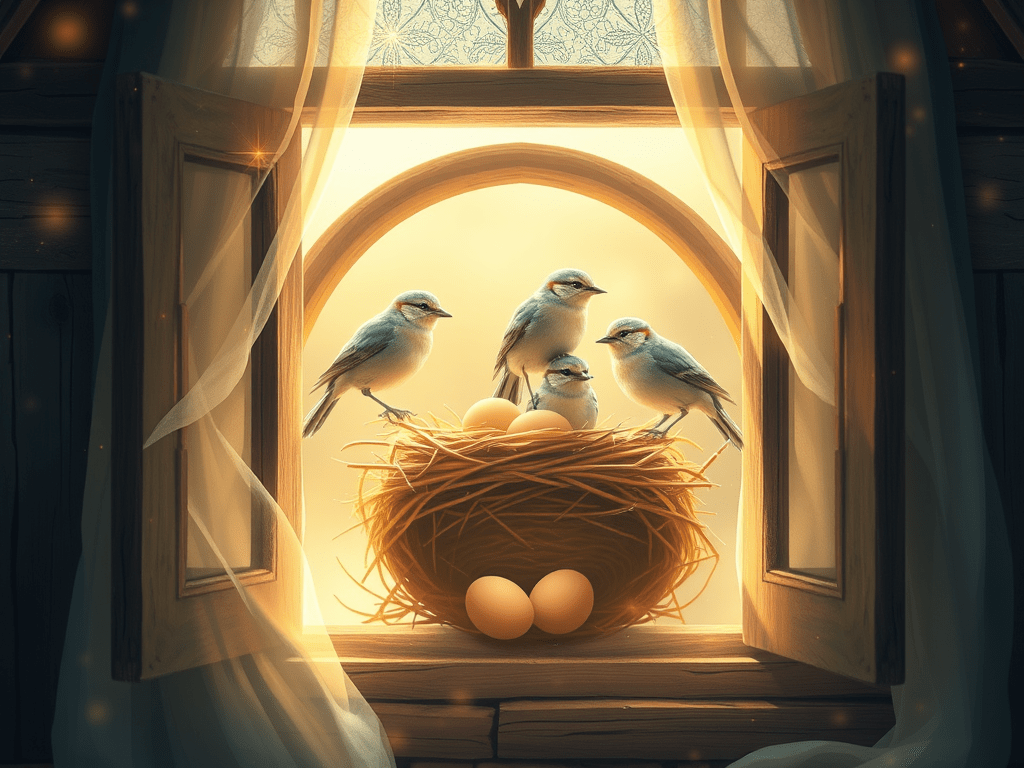
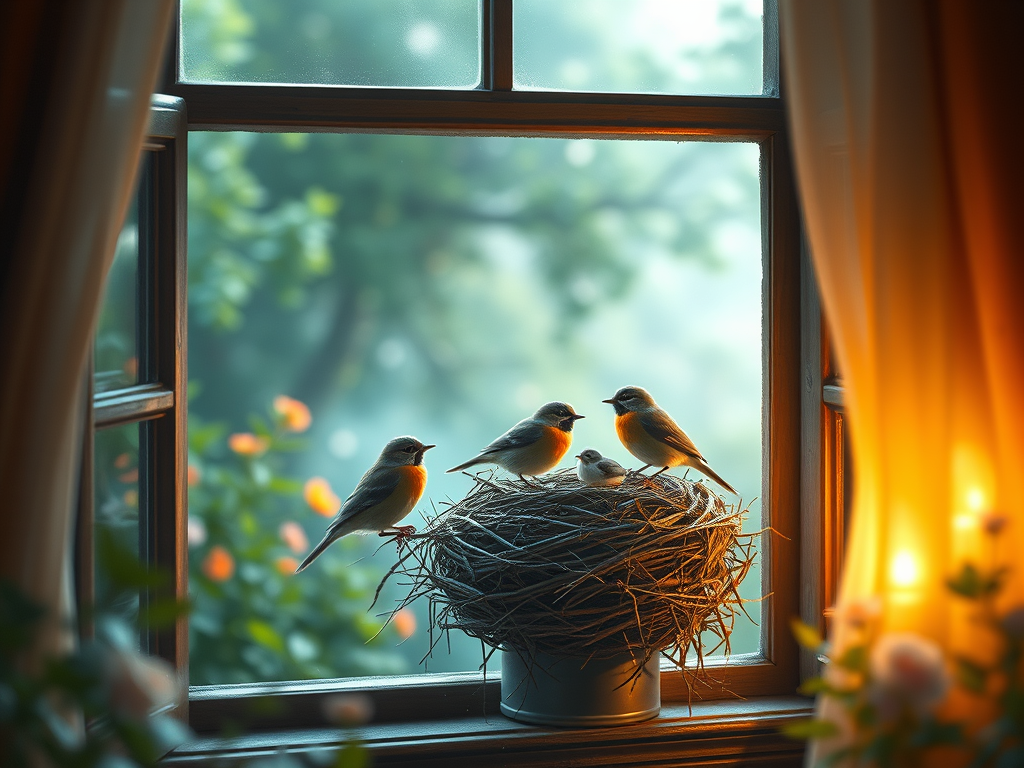
그 후 어느 날, 목사관 이층 아이들 방안에 작은 나뭇가지들이 떨어져 있어서 무심코 치웠는데, 조금 후에도 같은 장소에 또 떨어져 있는 것이었습니다. 이상하다 싶어 주변을 살펴보니, 창틀에 올려놓은 에어컨디셔녀 밑의 공간에 수북한 나뭇잎들과 가지들이 쌓여있었습니다. 알고보니 새들이 보금자리를 꾸미기 위하여 부지런히 나뭇가지들을 주위 모으는 중이었습니다. 우연하게 새들의 보금자라를 꾸미는 모습을 보고는 참으로 기뻤었습니다. 아마도 그 노 권사님이 새를 목사관에 보내달라고 하나님께 부탁하신 것이 틀림없을 것이라고 생각하며, 아이들과 남편에게 이 굉장한 소식을 알리고는 괜스레 홍분되었습니다. 옆에만 가도 날개를 펄럭이며 민첩하게 비상해 버리는 새와 한집에서 산다는 일은 여간 기분 좋은 일이 아닐 수 없었습니다. 새와 저는 특별한 계약관계는 없을지라도 그 청아하고 명랑한 음성으로 새벽을 일으킬 것이며, 밤을 재울 것이 틀림없었기 때문입니다.
저는 맑은 스카치 테이프를 창틀 사이에 칸막이로 붙여 놓고는 새 들의 등지 짓는 모습을 몰래몰래 들여다보기 시작하였습니다. 참으로 부지런하고 알뜰하게도 새들은 어여쁜 둥지를 순식간에 만들었습니다. 그리곤, 언제 낳았는지 고동색 점박이가 찍혀진 네 개의 알을 낳아 놓은 것을 보았습니다.
그리고 며칠 후 부시럭거리는 소리에 들여다보니, 네 마리의 새끼들이 눈도 못 뜬 채 입을 벌리고 어미새로부터 먹이를 받아 먹으려고 난리를 치고 있었습니다. 어미새가 아기새들에게 먹이를 물리고 있으면, 아빠 새는 주변을 멀찌감치 돌면서 망을 봅니다. 그러고는 어미새가 먹이 주는 일이 끝나면 자리를 바꿔 아빠 새가 한 차례 새끼들을 둘러보고는 또 다시 먹이를 찾아나섭니다.
그런데 어느 날, 그중에 한 마리 새끼가 죽어 있는 것을 발견하였습니다. 왜 죽었는지는 모르지만 새가 죽었을 때, 성지를 들여다보았던 죄책감을 느껴야만 했습니다. 생명이 있는 곳에는 어디든지 생과 사의 아픔이 있음에 안타까워하면서 참지 못하고 새끼들이 얼마나 컸는지 들여다보아야만 되었습니다.
겨울 동안 새들의 집은 고요 속에 비워져 있었습니다. 새들이 떠나 간 빈 둥우리를 바라보면서 이제는 남쪽의 광활한 나무 숲을 향해 비상하고 있을 새들을 생각하며, 저 자신도 새가 되어 그들과 함께 멀리 멀리 날아가 보기도 했습니다.
그러나 아무리 멀리 갔던 새들도 이듬해 봄이 되면 또 찾아와 주었습니다. 새들이 찾아오니, 목사관 뒷마당의 나뭇잎들도 앞다투어 피어나고 아이들의 공놀이도 시작되었습니다. 이제는 어미만큼 자란 새들이 보금자리에, 수시로 드나들면서 장난질을 하고 부산하게 하여 시끄러울 때도 있지만, 함께 사는 기쁨은 대단한 것이었습니다. 전 에는 그들의 노랫소리가 한 가지인 줄 알았으나, 이제는 그들의 몇 가지 언어를 터득했습니다. 평소에 부르는 소리, 다람쥐가 나타났을 때 방어하는 소리, 먹이를 찾으러 가자고 조르는 소리 등 다양한 음색의 높낮이로 서로를 부르고 찾는 소리가 목사관에 종일 울려퍼졌습니 다.
새와 인간, 참으로 아름다운 관계입니다. 공존하며 서로를 필요로 하는 존재들입니다. 6월의 장미가 담장을 넘으며 그 달콤한 꽃 향기를 토함이 더 아름다운 것은, 그 꽃들을 노래하는 새들이 있기 때문입니 다. 닫혀진 마음과 고요한 자연의 창문을 경쾌하게 열어주며, 절망한 인간의 날갯죽지에 희망을 안겨주고, 침체된 영혼의 호수에 파문을 그리게 합니다. 덧없이 잦아드는 영혼에 하늘을 향한 비상을 서두르게 합니다. 너무 작아 노래하지 않으면, 있는지조차도 알 수 없는 새들에게 노래가 있기에 더욱 사랑을 받는 것 같습니다. 새를 통해 주님은 말씀하십니다. “새같이 자유하고, 새 같이 노래하고, 새같이 민첩하며, 새같이 청아한 마음으로 내 곁으로 다가오라” 하고 부르십니다.
오늘도 어디선가에서 새의 음성을 듣고 새벽이면 깨어나신다는 권 사님의 모습을 그려보며, “새들은 틀림없어요” 하시던 음성이 귀에 쟁쟁하게 울려옵니다.
One day, I overslept and missed the time for early morning prayer. By the time I arrived, half of the service was already over. The congregation, worried that we might have been in a car accident, greeted me with concern. After the service, feeling sorry toward both God and the congregation, I sat quietly. Then, an elderly deaconess came to me and said softly, “Ma’am, if you trust only your clock, you might make a mistake. I never rely on the clock when I rise for dawn prayer— I wake up when the birds start singing. Birds never make mistakes!” “Oh really?” I laughed. “Then please send those birds to the parsonage!”
A few days later, I found some small twigs scattered in my children’s upstairs room. I swept them away without thinking, but soon more appeared in the same spot. Puzzled, I looked around and found a pile of leaves and twigs beneath the air conditioner on the window frame. It turned out that birds were busily building their nest there.
Watching them at work filled me with joy. I thought to myself that the old deaconess must have prayed to God to send these birds to our home. I ran to tell my husband and children the wonderful news. How delightful it was to share a house with such quick and beautiful creatures— birds that fluttered their wings and took flight at the slightest movement! We had no formal agreement between us, yet I knew they would awaken the dawn and lull the night to sleep with their clear and cheerful voices.
I taped a strip of clear Scotch tape between the window frame to make a little partition, and from there, I secretly watched them build their nest. So diligent and meticulous they were— in no time, a neat, lovely nest appeared. Before long, I saw four tiny brown-speckled eggs lying within.
A few days later, I heard rustling and peeked inside. Four hatchlings, eyes still closed, stretched open their mouths, begging for food from their mother. When the mother fed them, the father circled from afar, standing guard. After she finished, they switched roles— the father returned to inspect the nest, then flew away again in search of more food.
One day, I discovered that one of the chicks had died. I didn’t know why, but I felt a strange sense of guilt— as though I had sinned by looking too closely into their sacred world. I couldn’t help but feel the pain of life and death intertwined in that tiny nest. Still, I found myself watching again, wondering how much the little ones had grown.
Through the winter, the nest remained empty and silent. Looking at it, I imagined the birds soaring southward over wide forests, and in my heart, I too became a bird, flying far, far away with them.
Yet when spring returned, so did they. Their return brought new life to the parsonage garden— the trees burst into leaves, the children resumed their ball games, and the air filled once again with joyful noise. Now the grown birds often revisited the nest, fluttering and chirping so busily that it sometimes grew noisy, but living together brought indescribable happiness.
I once thought birds had only one kind of song, but I have learned to recognize their different tones— the song of peace, the cry of alarm when a squirrel appears, the coaxing call to go find food together. Their voices filled the parsonage from morning till dusk.
How beautiful is the bond between birds and humans— two beings meant to coexist, each needing the other. The roses of June climb over the wall and release their fragrance more sweetly because there are birds to sing among them. They open the windows of our closed hearts, lift the wings of our despairing spirits, and draw ripples across the still lake of the soul. Through their fragile songs, they urge weary hearts to rise toward heaven once again.
Too small to be noticed unless they sing, birds are loved precisely because they sing. And through them, the Lord speaks: “Be free like the birds, sing like the birds, move swiftly like the birds, and come to Me with a heart as pure as theirs.”
Even now, I can still hear that deaconess’s gentle voice saying, “Birds never make mistakes.” And I imagine her waking at dawn, listening once more to the sound of their song.
The cloud divides—silently— above the roofs that forgot how to shine. Its voyage ends in a breath of frost as the sun folds itself into the dim seam of day.
Is anyone there? Come in— no, stay— no, go. The room has no space for returning.
To forget you, I kneel to the earth, press my face into the hush of indifferent sand. I give myself away— to dust, to echo, to whatever still listens.
Thunder returns, measured and slow, as if the sky itself remembers our names and drops them, one by one, into the rain.
In the courtyard where the stars once washed their feet, you wept— a fragile sound, like torn silk, like memory loosening from cold hands.
And so— we end. Not with rage, but in the soft unmaking of a cloud separated from its own reflection.
One day, I had a brief experience of how fragile I truly am. That day, my mind was blank — no inspiration, no motivation, and nothing seemed interesting. Even sitting still felt difficult, so I simply rested my head on the desk, listening only to my own breath. Then, as I tried to move my arm, a thought struck me — “Why does my body feel so heavy?” and then another, “Yes, I am nothing but dust.” That sad realization overwhelmed me.
I asked myself, “If I am this powerless now, what strength have I been living on all this time?” Suddenly, my past days seemed miraculous — all those times I ran, laughed, and cried from morning till night. “What have I been doing all along?” No matter how I thought about it, I could not deny that it wasn’t by my own strength that I lived. I had to admit that my thoughts and ways had been so narrow, bound tightly by my own small understanding and pride. Yet even so, it is a truly amazing miracle that the Holy Spirit dwells within me — lifting me up as a temple of God.
A few years ago, my family and I drove about 3,000 miles from New York to Walt Disney World in Florida. In the blazing summer heat, we experienced the world’s most magnificent human-made wonder — filled with colors, creativity, and fantasy. We spent a week seeing, feeling, touching, and enjoying it all. Yet after all the expense and hardship, strangely, nothing lasting remained in my heart. The memories of what I saw and did faded like a distant picture.
But during the journey, we stayed one night at a beautiful campground in Smoky Mountains surrounded by nature. The sounds of the stream and wind, the echoing songs of birds, the sweetness of the water, the chill of the creek we waded through, and the stars glittering like jewels in the night sky — all of it left a deep, holy affection in my soul. In that moment, I felt the breath of God hidden in nature. The peace and joy born there have remained alive in me, shaping who I am today. The joy found in Disneyland was momentary, but the inspiration and peace from God’s creation continue to live within me.
One early morning, another wave of spiritual weariness came upon me. Even the privilege of being in the sanctuary at dawn had become routine — my prayers were passionless. Then, deep within, I heard a sighing voice: “Gain strength! Spread your wings like an eagle soaring into the heavens!” I cried out, “I want to be strong! I want to fly! But my wings will not open anymore!”
Then the message from Psalm 124 was proclaimed from the pulpit:
“If it had not been the Lord who was on our side—when men rose up against us, then they would have swallowed us alive; the waters would have overwhelmed us, the torrent would have gone over our soul. Blessed be the Lord, who has not given us as prey to their teeth! Our soul has escaped as a bird from the snare of the fowlers; the snare is broken, and we have escaped. Our help is in the name of the Lord, who made heaven and earth.”
It was strange and wonderful. The wings of my soul, once too weak to move, began to rise again. In the Word, I was being recreated. I knew that Immanuel — God with us — was with me, and my salvation was near.
Then came the divine question: “Are you holy? Does the God of Immanuel dwell within your soul?”
Through the echoing Word, my weary wings began to flap toward the mountain ridge, and I saw the dawn breaking brightly over the sky that once seemed so dark. Tightening my belt and preparing to soar again, I realized with awe that truly amazing things were happening within me — strength, hope, and a living awareness of God’s presence.
Indeed, the most amazing thing is that God lives in me — and continues to renew me day by day.
(Letter from the Parsonage, O Souls That Leap Like Deer, Story Sixteen)







You must be logged in to post a comment.