I own many hats. Whether they suit me or not, I must change them according to the circumstances.
Once, I lived the life of a fashion designer; I learned—both in theory and in practice—which hats fit well and which did not suit at all.
But after becoming a pastor’s wife, the many hats I was compelled to wear without choice often felt unbearably burdensome.
At times, it was like seeing a lady in a silk dress wearing a helmet, only to exchange it moments later for a janitor’s cap, then a telephone operator’s headset, and suddenly finding herself in a chef’s hat. At first, it was pain—humiliation—and a deep wound to my pride. All my life I had thought of myself as stylish, believing only a certain type of hat was right for me. Then, one day, the hat I loved most, the one I most enjoyed wearing, was suddenly taken away.
One day, Jesus—the Designer of my life—decided to transform me from the inside out. With great scissors He trimmed and cut, reshaping my life and stitching it anew. He placed many hats upon my head—hats given only to pastors’ wives in this world. Yet I resisted with all my might, shouting in my heart, “I don’t need them!” The Lord, who has an eye for beauty, wanted me to live beautifully, but He patiently waited until my human pride surrendered. When I finally yielded, I began to see the beauty of life in a new way.
In immigrant churches, the role of a pastor’s wife is endlessly varied: driver, babysitter, cleaner, counselor, hostess, editor, telephone operator, cook, Bible teacher, comforter. God has granted the pastor’s wife countless opportunities to serve and to train. There is no room for laziness—no crack for idleness to slip through. Whenever there is time, she must pick up the phone to comfort someone in need, write letters, and wrestle for the sake of her own spiritual life. There are moments of exhaustion, loneliness, and discouragement, when invisible results tempt her to throw everything aside and collapse in bed with a groan.
Yet how can I not be moved to gratitude when I experience that the God who chose someone as weak as me has also given me the strength to fulfill all these tasks through complete trust in Him?
In the past, I did not know how to confess my flawed humanity before God. I tried to change hats only through my own effort and labor. It was draining, exhausting, and the hats never seemed to fit quite right. Often, after finishing the work, all that came back to me were voices of complaint and dissatisfaction. But somewhere along the way, even when results were lacking or less than satisfying, I began to respond with gratitude—and life’s colors grew much brighter.
That day was the day the Lord Himself came to me and clothed me with His own garment. Upon His head was the crown of thorns, stained with blood. He embraced my tears, my weariness, my complaints, my loneliness, and my inadequacies. With the hands marked by nails, He kept gently patting my back with a tender smile. Softly, with a choked voice, I called His name:
“Jesus, the only Son of God! Save me! Have mercy on me!”
Since then, whatever hat is placed upon my head, I look to the crown of thorns He wore. Blushing in shame, I thank Him that in the One who gives me strength, nothing is impossible. And so today, as I press down yet another of the many “pastor’s wife hats” displayed in my life’s closet, I no longer grumble. Instead, I send a loving wink to the God who has led me to live with such richness of experience and grace.
저는 많은 모자를 가지고 있습니다. 그것은 나에게 어울리든 어울리지 않든 환경에 따라 바꿔 써야만 될 모자들입니다. 한때 의상 디자이너의 삶을 살았었기에, 어느 것이 잘 어울리고 어느 것이 전혀 맞지 않는다는 것을 이론으로, 실제로 배워왔었습니다. 그러나 사모가 된 후, 선택의 여지없이 눌러써야만 되는 그 많은 모자들은 곤욕스럽기 한이 없었습니다.
생각해 보면 실크 드레스를 입은 여인이 투구를 쓰고 다니는가 싶더니, 금방 청소부의 모자를 쓰고, 어느새 전화 교환원의 모자를 쓰기도 하다가, 어느 순간에 요리사의 모자를 눌러쓰고 있음을 … …. 그것은 처음에는 고통이며 수모이며 자존심의 깊은 상처였습니다. 나는 적어도 이런 스타일의 모자만이 적격이라고 하여 평생을 쓰고 다니며 스스로 멋쟁이라고 생각해 왔는데, 어느날 갑자기 가장 좋아하며 즐겨하던 모자를 빼앗긴 것이었습니다.
어느 날, 내 삶의 디자이너이신 예수님께서 나의 안과 밖을 바꿔주시기로 작정하셨습니다. 그분은 큰 가위로 나의 삶을 다듬으시며 재단하시고 새롭게 박음질을 하셨습니다. 그리고 많은 모자를 내 삶에 씌워 주셨습니다. 그것은 이 땅에서 사모들에게만 주신 특권이었음에도 불구하고 “내겐 필요치 않아요!” 라고 외마디 비명을 지르듯 철저하게 거부하였습니다. 멋쟁이이신 주님은 내가 멋지게 살기를 원하실에 나의 인간적인 항복이 끝날 때까지 오래 참으시며 기다리셨습니다. 그리고 끝내 항복을 하고 나니 비로소 세상 사는 멋이 새롭게 보였습니다.
이민 교회에서 사모의 역할은 참으로 다양합니다. 운전수, 베이비 시터, 청소부, 상담자, 접대자, 편집자, 전화 교환수, 요리사, 성경교사, 위로자 등 하나님께서는 너무나 많은 기회를 사모에게 허락하셨고 훈련할 수 있는 기회를 주셨습니다. 그곳에는 나태가 있을 수 없고 게으름이 둥지를 틀고 비집고 들어올 틈이 없습니다. 시간만 나면 전화기를 돌려서 위로가 필요한 이를 찾아주어야 하고, 편지를 써야 하고, 자신의 영성을 위해 씨름을 해야 합니다. 때로는 힘에 겨웁고 외롭고 피곤하고 당장 눈에 드러나지 않는 결과들로 인해 낙망 속에 모든 것을 다 팽개쳐 버리고픈 심정에 끙끙 앓아눕기도 합니다.
그러나 팔삭둥이 같은 나를 택하사 이 모든 일들을 부여해 주신 하나님께서 그분을 향한 전폭적인 신뢰 속에 감당할 수 있는 힘을 주심을 체험함에 어찌 감사 감격지 않을 수 있겠습니까?
과거엔 하나님께 내 자신의 못난 인간됨을 고백할 줄 몰랐었습니다. 다만 스스로의 노력과 수고로 그 많은 모자들을 바꿔 쓰려 하니, 영 힘이 들고 피곤하고 뭔가 잘 맞아 주지 않았습니다. 일을 해놓고 보면 돌아오는 것은 짜증과 원망의 소리뿐일 때가 많았습니다. 그러나 언제부터인지 나타난 결과가 좀 부족하고 맘에 흡족하지 않아도 감사 함으로 임하자, 삶의 색채가 훨씬 더 밝아졌습니다.
그 날은 주님이 손수 내게 찾아오시어 자신의 옷을 입히신 날 이었습니다. 머리엔 핏방울진 가시관을 쓰신 채, 눈물과 피곤함과 투정과 외로움과 부족함을 모두 안으시고, 인자한 미소로 그 못자국이 난 두 손으로 나의 등을 자꾸 쓸어 주셨습니다. 저는 조용히 목멘음성 으로 그분의 이름을 불렀습니다.
“하나님의 외아들 예수여! 나를 구하소서! 나를 불쌍히 여기소서!” 그 후 내게 어떤 모자가 씌워지든 주님이 쓰신 가시관을 바라보며 부끄러워 얼굴 붉히며, 내게 능력 주시는 자 안에서 능치 못함이 없음을 감사드리게 되었습니다. 오늘도 삶의 옷장에 진열되어 있는 수많은 ‘사모의 모자’ 를 눌러 쓰며, 이토록 많은 경험과 체험을 안고 살도록 인도하신 하나님께 투정이 아닌, 사랑의 윙크를 보내게 됩니다.
My name— always on someone’s lips, always in the air between us.
It seems I only call it when I am far away.
Now, sitting here, looking at you, I feel it— the name I once carried long ago, the name waiting for me tomorrow.
When I was you, I did not know my own name.
And in that name, the one who spoke it has faded from memory.
You and I— we have both let it go.
Yet still, that name circles near, calling me, and I, once more, calling back.
Note: While serving on the front lines in the Korean Army (1973-1975), I carried the weight of duty and discipline. That same year, 1975, after receiving my honorable discharge, I embraced a new chapter of life—I married WanHee before the year’s end.
The day began with the deep, rolling sound of three powerful thunderstorms. I felt a touch of laziness, yet I worked steadily— uploading WanHee’s essay to Facebook and archiving it on WordPress from her 2001 publication. Later, I typed my old poems into WordPress, determined to preserve them before paper fades and ink disappears. Two poems from my youth were especially dark and heavy, and the work left me physically and emotionally drained.
Reading – Hearing the Word
That evening at Wednesday choir practice, a song captured my heart— For Everyone Born by Shirley Erena Murray (1998). Its refrain renewed my strength:
And God will delight when we are creators of justice and joy, compassion and peace; Yes, God will delight when we are creators of justice, justice and joy!
One verse echoed deeply within me:
For just and unjust, a place at the table… A mindset of mercy… a new way to live.
When I returned home, I sat quietly in my chair, my heart at peace.
Meditation – Letting the Word Speak
I prayed the Prayer for Direction from The Book of Common Prayer:
Direct me, O Lord, in all my doings with Your most gracious favor; further me with Your continual help, that in all my works, begun, continued, and ended in You, I may glorify Your holy name, and finally, by Your mercy, obtain everlasting life; through Jesus Christ our Lord. Amen.
My spirit then lifted with the hymn God of the Ages:
From war’s alarms, from deadly pestilence, be Thy strong arm our ever sure defense; Thy true religion in our hearts increase; Thy bounteous goodness nourish us in peace.
I turned to Psalm 101, reading it in several translations. The words came alive:
I will sing of Your love and justice. I will study the way of integrity. I will walk with a heart of integrity. I will silence anyone who secretly spreads lies. I cannot endure the proud or arrogant. The one who walks with integrity will serve me.
This “Royal Psalm” was written after David’s victory over the Philistines, when he attempted to bring the Ark of the Covenant to Jerusalem. Uzzah’s sudden death halted the procession, and David placed the Ark in the house of Obed-Edom. He realized that the Ark could only rest among the holy. From then on, David knew his kingdom must be built on loyalty to God and moral purity.
Contemplation – Resting in the Presence
I envision the upright ruler descending from heaven— the Messiah establishing His reign. David’s vision speaks to me:
I look to the faithful of the land to be my companions— those with a perfect heart and way.
I recall that within each person dwell two natures— good and evil—like Dr. Jekyll and Mr. Hyde. Only the blending of mercy and justice can truly restore the heart.
I whisper: “I will set nothing worthless before my eyes.” This is my prayer— to walk a blameless path, relying both on my own effort and on God’s grace to live with integrity.
Response – Living the Word
My Personal Creed
I believe in the Loving God— the God of morning, noon, and evening— who calls me to share His love and bids me serve Him by serving others.
I believe in Jesus Christ, the Great Healer of body and soul. I confess that I have sinned against Him in my attitudes and my actions. I have been hesitant when I should have been bold.
I believe in the Holy Spirit, the Creative Power of all life, ever present to guide and strengthen me. Yet I confess I have not always become the person the Spirit has called me to be.
I believe in the one holy Church, in the communion of saints, and in God’s work of transforming a land of death into an eternal land of freedom, justice, and peace.(July 14, 1982)
Softly, I sing:
Turn your eyes upon Jesus, look full in His wonderful face, and the things of earth will grow strangely dim in the light of His glory and grace.
And I sense His invitation— to enter joyfully into the presence of God, to live in His justice, to walk in His mercy, and to rejoice in His joy.
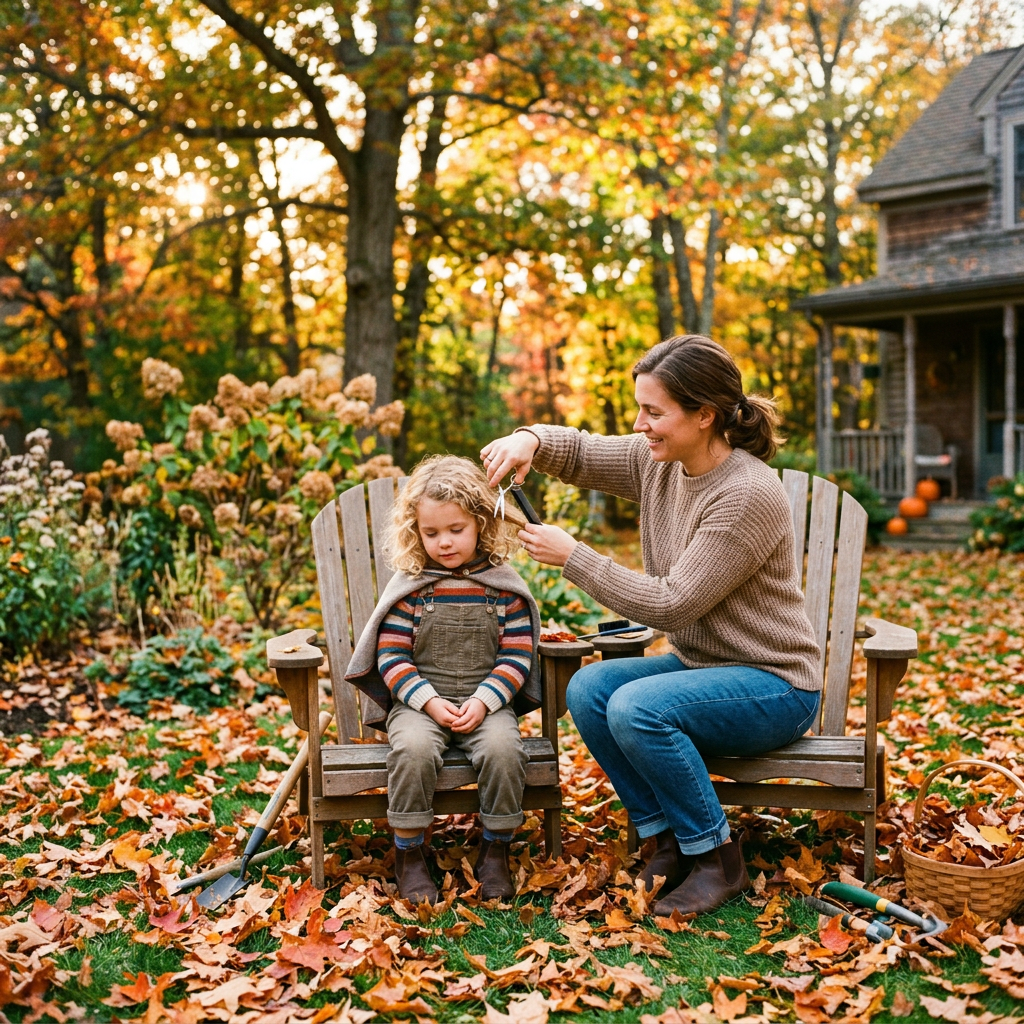
Last Saturday morning was my youngest son’s haircut day. Usually, he goes to the barbershop, but sometimes, when he refuses to go, we set up a temporary barbershop in the bathroom. Armed with scissors, a comb, and various haircutting tools, I wrestle with him in the cramped space.
He didn’t care much about how his hair would look. He seemed happier playing with his toys while sitting in front of me, letting me work. He wrapped a large nylon cape around his neck like Superman, and every time the scissors moved, he would pretend they were cutting his ears off, making a big fuss. Still, he sweetly said he liked my haircuts better than the barber’s.
He wanted a mushroom-shaped haircut. But I firmly refused.
“Hey! That won’t do! It looks like you’ve got a bowl stuck on your head—it’s not stylish! I’ll make it look cool for you instead!”
I carefully moved the clippers, but the hairstyle became a mess, like a road full of potholes after a rainy season. Sweat ran down my face. He scratched at his itchy neck and fidgeted in the chair. Our voices grew louder in the tiny bathroom. Hair flew everywhere—on our clothes, on the floor, in the sink. The result was far worse than I had imagined, completely uneven. Despite all my “years of practice,” I still couldn’t graduate from being an amateur.
“For heaven’s sake, please let’s go to the barbershop next time!”
Unhappy with the result, I made a clumsy excuse, watching his reaction. But he only glanced at the mirror, smiled in satisfaction, and brushed off the hair sticking to his body without hesitation.
As I swept the hair from the floor—dry like fallen pine needles—suddenly a memory of an autumn day in the countryside came to me. I remembered how, sometimes, a passing barber would call out, “Haircuts! Haircuts!” My father, busy threshing beans in the yard, would wave him over with a warm smile.
In no time, our eaves would turn into a barbershop. My father would sit with a white cloth draped over his shoulders, balanced on a washboard laid over a bucket. The barber, with thin, sharp scissors, would snip away, and my father’s hair would scatter into the autumn wind, mingling with tumbling leaves. Then came the long razor blade, freshly sharpened on leather, flashing across my father’s foam-covered face. I would hold my breath, worried he might get cut. But my father and the barber would talk and laugh nonstop.
Soon, the haircut would be done, and my father would check the front and back with a hand mirror. In it, the high, clear autumn sky would be perfectly reflected. He would turn to me with a big smile, then shyly call for my mother. She would come from the kitchen, wiping her hands on her apron, and on seeing my father so neatly groomed, give a bright smile before slipping quickly back inside.
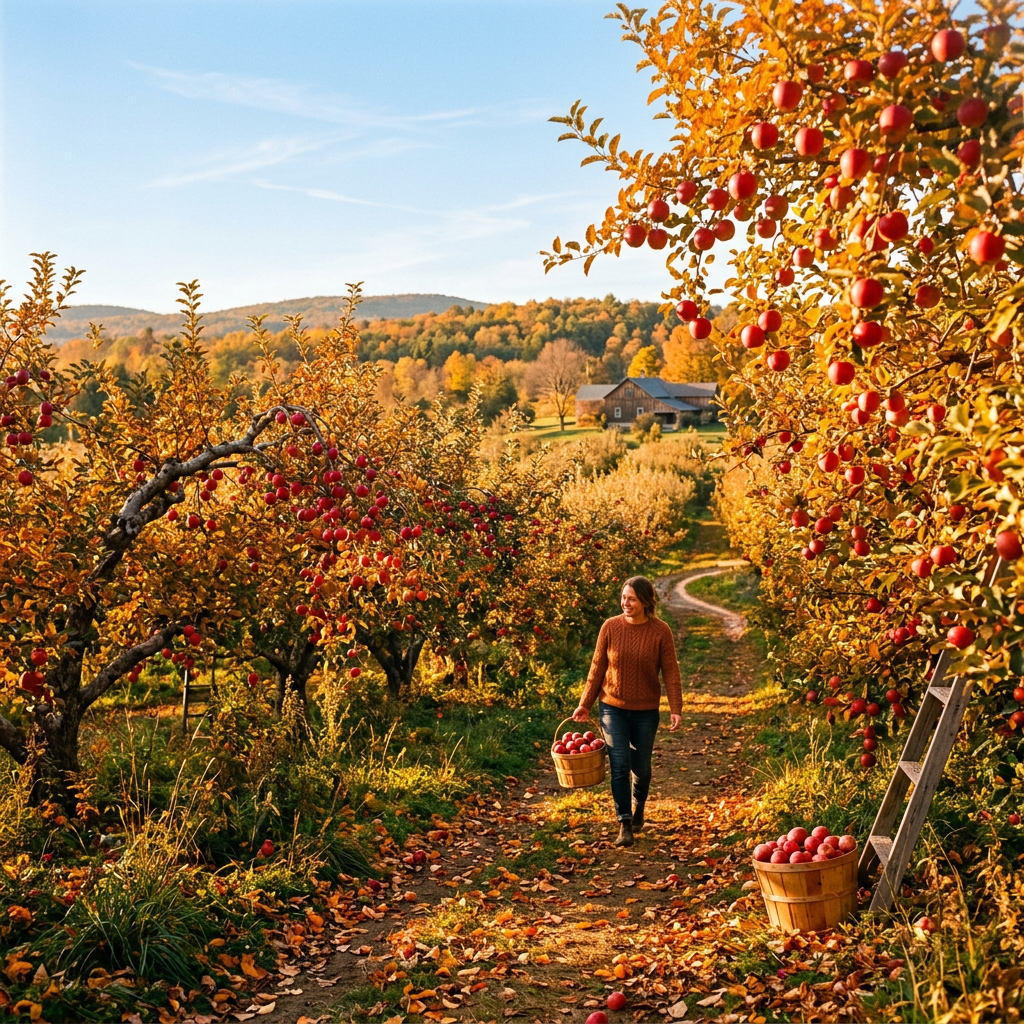
In my father’s hand was a freshly picked red apple from the front yard. It would soon end up in the barber’s hand. The barber, packing up his tools in an instant, would walk away through the swaying, yellow cornfields, forgetting to call out “Haircuts!” again. He would take a big bite of the sweet apple, savoring the taste of autumn, while a small flock of dragonflies followed, their wings glinting above his pomaded hair.
Autumn—the season when memories ripen like the colorful leaves and fruits in an orchard. On my youngest son’s haircut day, a moment buried in the forgetfulness of forty years suddenly came alive again. Perhaps that’s the quiet magic of autumn.
지난 토요일 오전에는 막내아들의 이발하는 날이었습니다. 평소에 이발소에 가서 머리를 깎지만, 때로는 이발소에 가기를 싫어하는 아이 때문에 가끔은 화장실에 임시 이발소를 차리고 가위와 빗 등의 각 종 이발 도구를 갖춘 채, 좁은 공간에서 아이와 씨름을 해야만 했습니다.
아이는 제 머리 모양이야 어찌되든, 장난감을 갖고 놀면서 엄마 앞에 머리를 맡기는 것이 좋은 듯했습니다. 아이는 목에 큰 나일론 보자기를 슈퍼맨처럼 두르고, 가위가 움직일 때마다 제 귀가 잘린다고 엄살을 부리는 시늉을 하면서도, 엄마가 자른 머리 모양이 이발소에 가서 자르는 것보다 좋다고 아양을 떱니다.
아이는 버섯모양의 머리를 원합니다. 그러나 저는 일언지하에 거절 합니다.
“얘! 그것은 못 쓰겠더라! 머리꼭지에 바가지 엎어놓은 것 같아, 모양이 틀렸어! 엄마가 멋있는 모양으로 만들어 줄게!”
조심스럽게 이발 기계를 움직이지만, 여기저기 장마 후에 페어진 도로와 같이 겉잡을 수 없이 머리 모양이 복잡해집니다. 진땀이 흐릅니다. 아이는 목이 따갑다고 벅벅 긁으며 의자 위에서 안절부절못합니다. 우리들의 목소리는 좁은 공간에서 점점 커집니다. 머리카락이 온몸과 화장실 바닥, 세면대 위로 풀풀 날립니다. 처음 생각했던 것보다도 머리 모양이 형편없이 제멋대로였습니다. 그토록 오랜 세월을 연마(?)했건만, 아직도 아마추어를 면할 수 없습니다.
“애! 제발 이 다음엔 이발소에 좀 가자!”
깎아놓은 모양이 영 맘에 들지 않아, 아이의 눈치를 보며 어쭙잖은 변명을 합니다. 아이는 거울을 흘낏 들여다보고는 만족한 표정으로 몸에 붙은 머리카락들을 사정없이 털어냅니다.
메마른 솔잎처럼 바닥에 깔린 머리카락을 쓸어내면서 문득 시골 어느 가을날이 생각났습니다. 가끔 지나가는 이발사 아저씨가 “머리깎소! 머리깎소!” 하고 외치는 소리가 들려오면, 마당에서 콩을 털고 계시던 아버지가 마음씨 좋아 보이는 이발사 아저씨를 부르십니다.
어느 순간에 우리 집 처마 밑은 이발소가 되어, 빨래판을 얹어 놓은 양동이 위에 하얀 보자기를 두르고 앉아 계신 아버지를 보게 됩니다. 이발사 아저씨가 얇고도 뾰족한 가위로 썩썩 아버지의 머리를 자르면, 뒹구는 가랑잎과 함께 아버지의 머리카락이 가을바람에 흩어져 버립니다. 곧 긴 면도날이 가죽 위에 갈아진 후, 거품이 가득한 아버지의 얼굴 위에서 번쩍일 때면, 행여나 이버지의 얼굴이 다치지 않을까 숨을 죽이며 들여다봅니다. 그러나 아버지와 이발사 아저씨는 무엇이 그리 즐거운지 잠시도 쉬지 않고 말씀을 나누십니다. 그리곤 금방 말끔하게 이발을 끝낸 아버지가 손거울로 앞뒤를 비쳐 보십니다. 손거울에는 드높은 가을하늘이 가득 담겨집니다. 아버지는 곁에 있던 나에게 씩 웃어 보이시며, 수줍은 음성으로 어머니를 부르십니다. 시골 마당의 환하게 열려진 부엌에서 기다렸다는 듯이, 어머니는 앞치마에 손을 닦으시며 나오시다가, 말끔하게 단장된 아버지를 보시고는, 맑은 미소를 짓고는 얼른 부엌으로 들어가 버리십니다.
아버지의 손에는 앞마당에서 금방 딴 붉은 사과가 들려졌다가 어느 새 이발사 아저씨 손에 들려집니다. 이발사 아저씨는 모든 이발 도구를 순식간에 가방에 집어넣고, 누렇게 익어 흔들거리는 옥수수 밭길을 지나시며 “머리깎소!”라는 소리도 잊은 채, 단맛의 사과를 한입에 성큼 깨물며 가을의 정취를 맛보십니다. 포마드 냄새가 풀풀 나는 아저씨의 머리 위에는 한 떼의 고추잠자리들이 날개를 번뜩이며 따라갑니다.
가을, 울긋불긋한 단풍이 익어가듯, 지난날의 추억들이 과수원의 열매처럼 열리는 계절입니다. 막내의 이발하는 날, 40여 년의 세월의 망각 속에 묶여있던, 그 날이 불현듯 살아나는 것은 가을만의 신비인 것 같습니다.
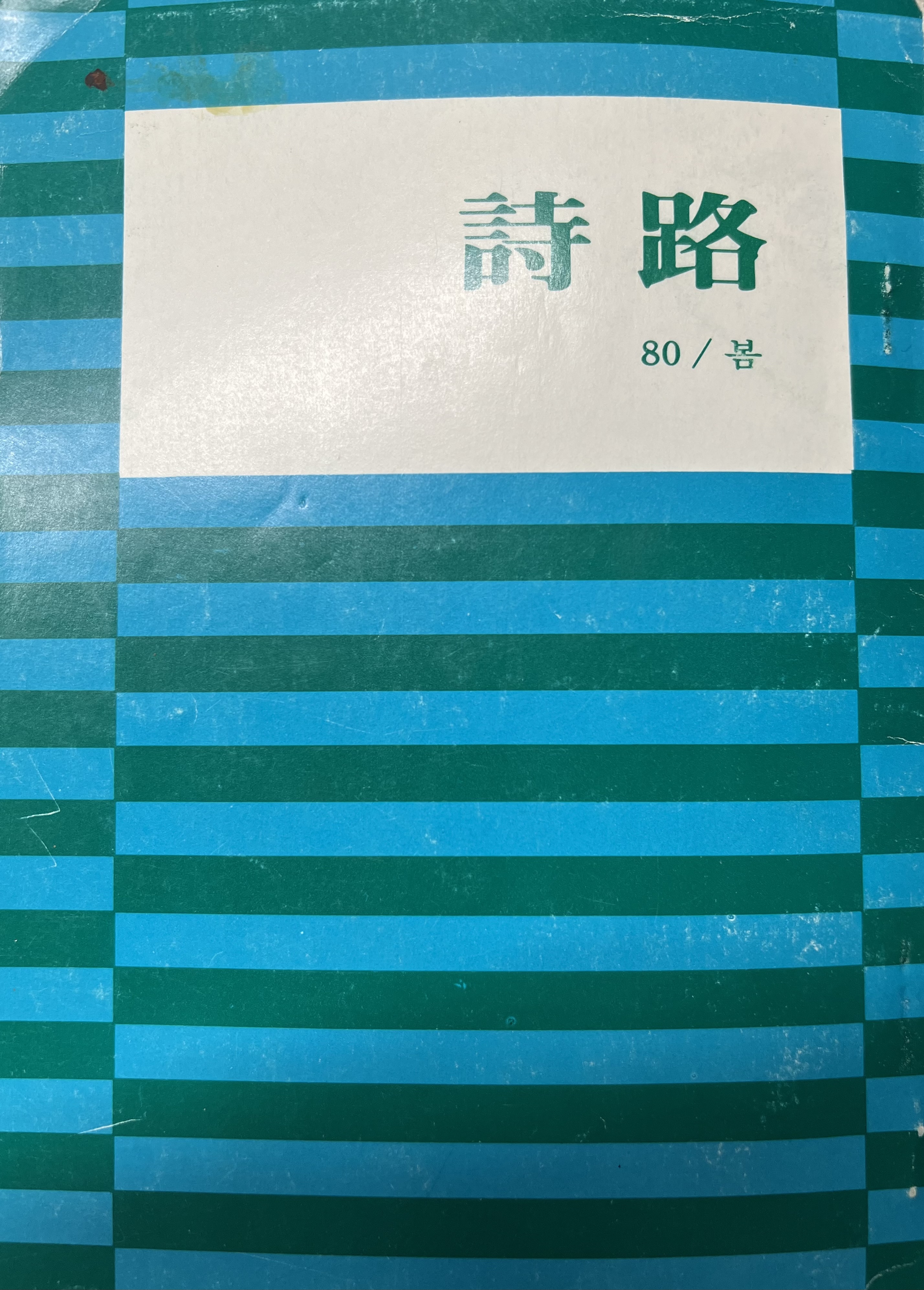
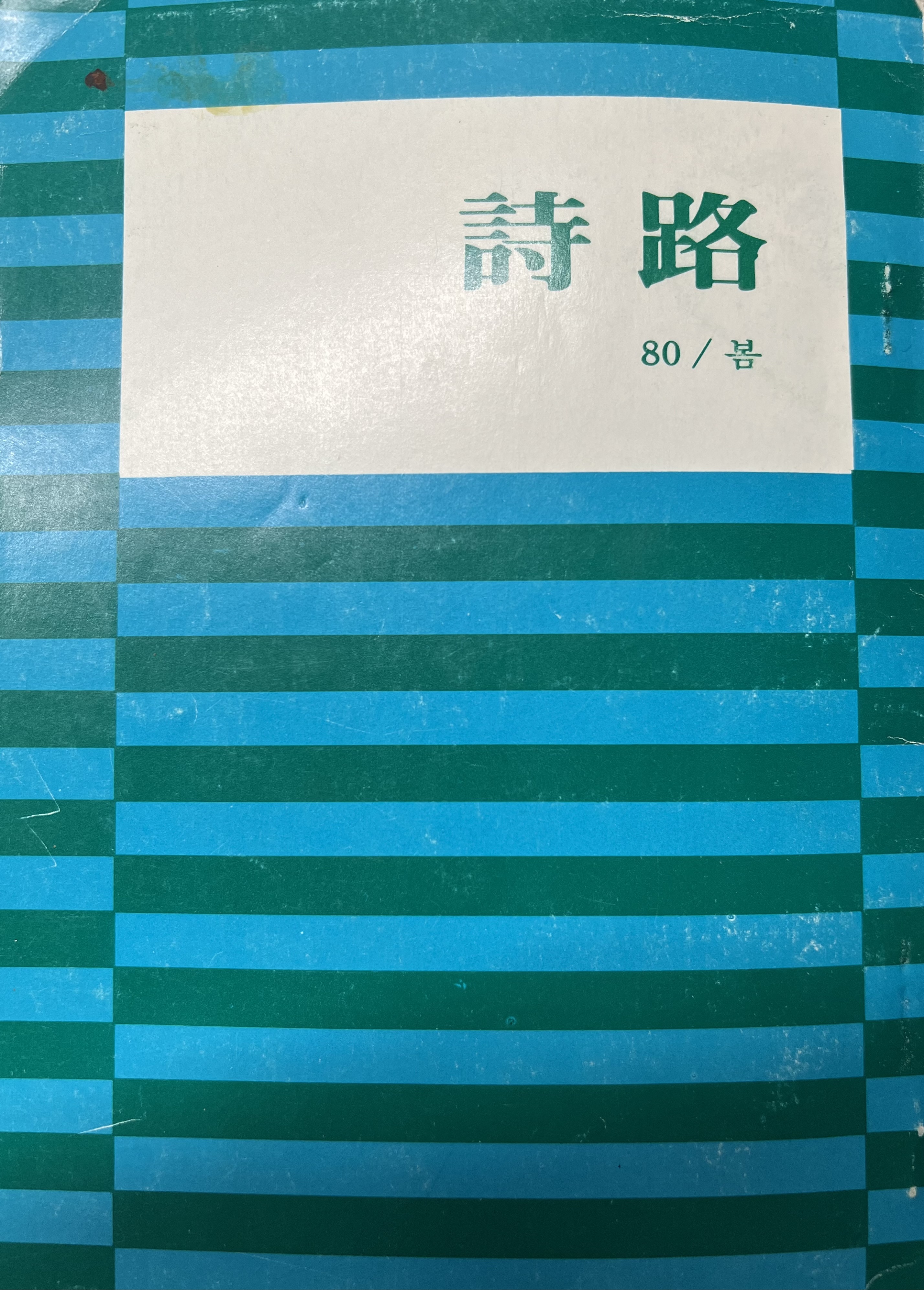
(Note: After the May 18 Gwangju Uprising and pro-democracy movement in 1980, I gave voice to the pain of life under Chun Doo-hwan’s military dictatorship.)







You must be logged in to post a comment.